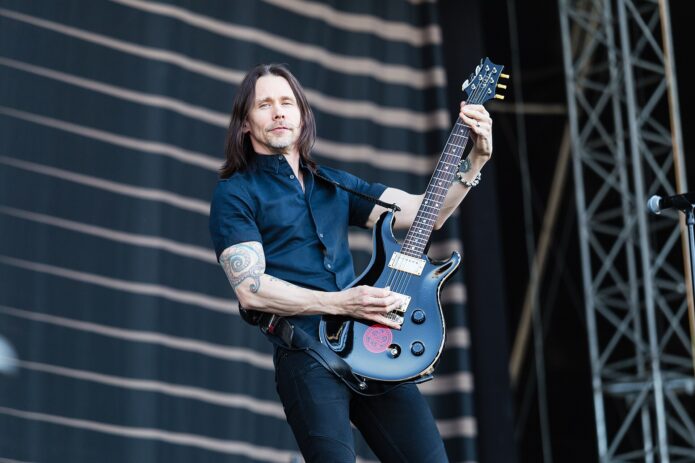
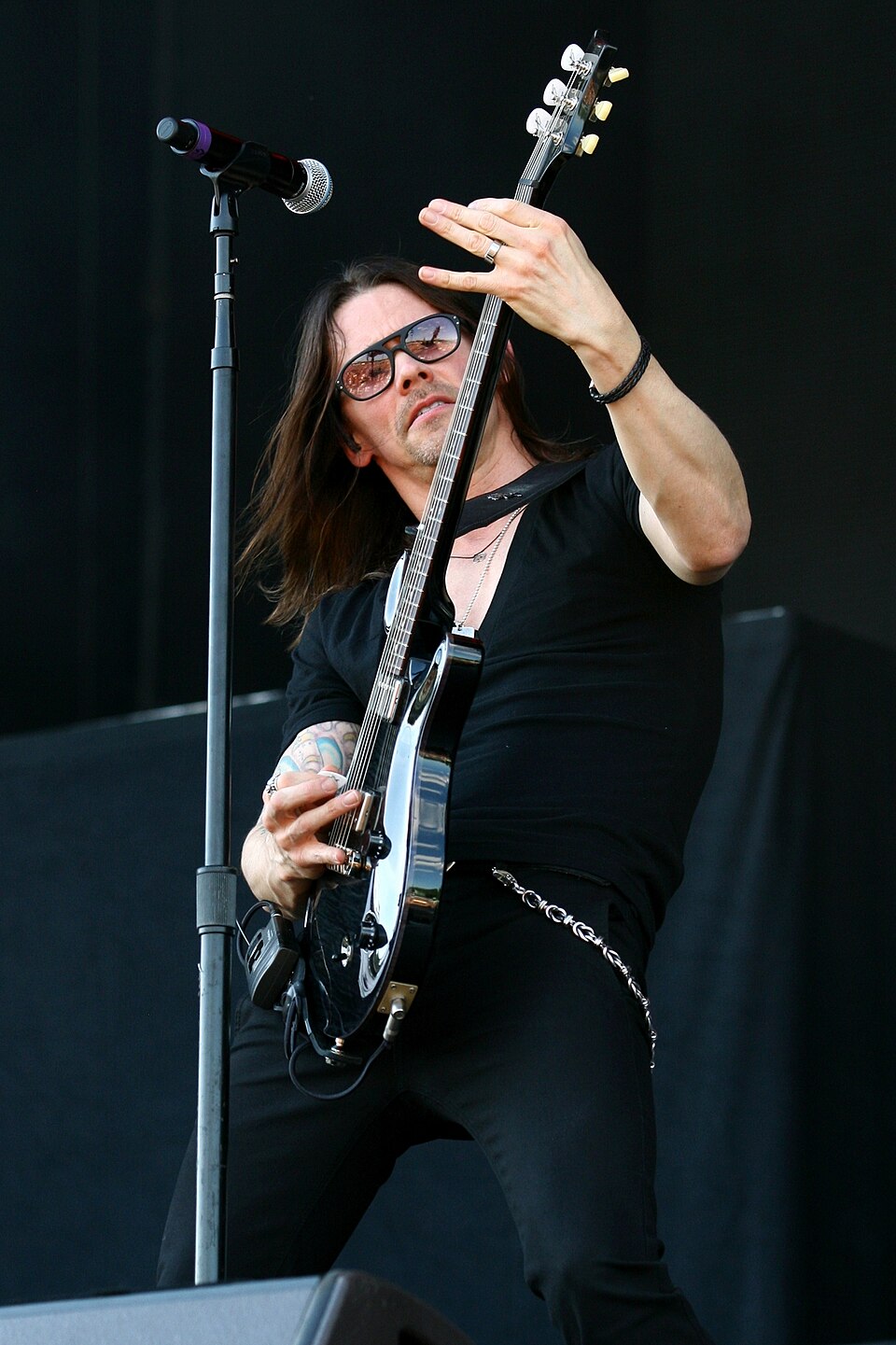
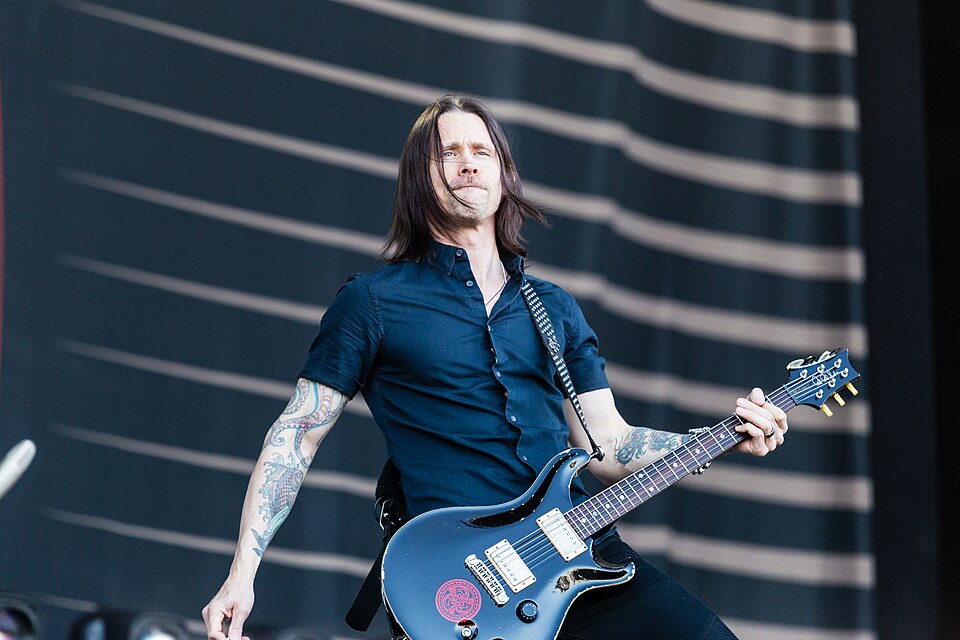
Myles Kennedy tattoos are easy to miss when he’s in a jacket or moving across a stage with a guitar. In a sleeveless shirt, the work on both arms is easier to see. The designs lean toward animals and curved forms, with space around each one.
The best-known pieces are a dragon on his left forearm, a koi on his right, an octopus higher on his right arm, and two elephant heads on his chest. Kennedy has connected the dragon and koi to Asian stories and imagery. He says the octopus is there because he likes the animal.
What tattoos does Myles Kennedy have?
Four subjects make up the set most often described: a dragon, a koi, an octopus, and a pair of elephant heads. Concert photos can blur small features, but the broad shapes on his arms are clear in closer views.
Kennedy often appears in stage photos through his work with Slash and the Conspirators. His arm tattoos stay visible as he plays, as they do in our Slash tattoos guide.
The dragon and koi are the clearest pair. In interviews about his ink, Kennedy has discussed the story of a koi swimming up the Yellow River and becoming a dragon. Loudwire’s tattoo reveal covers the background and how he relates it to the designs.
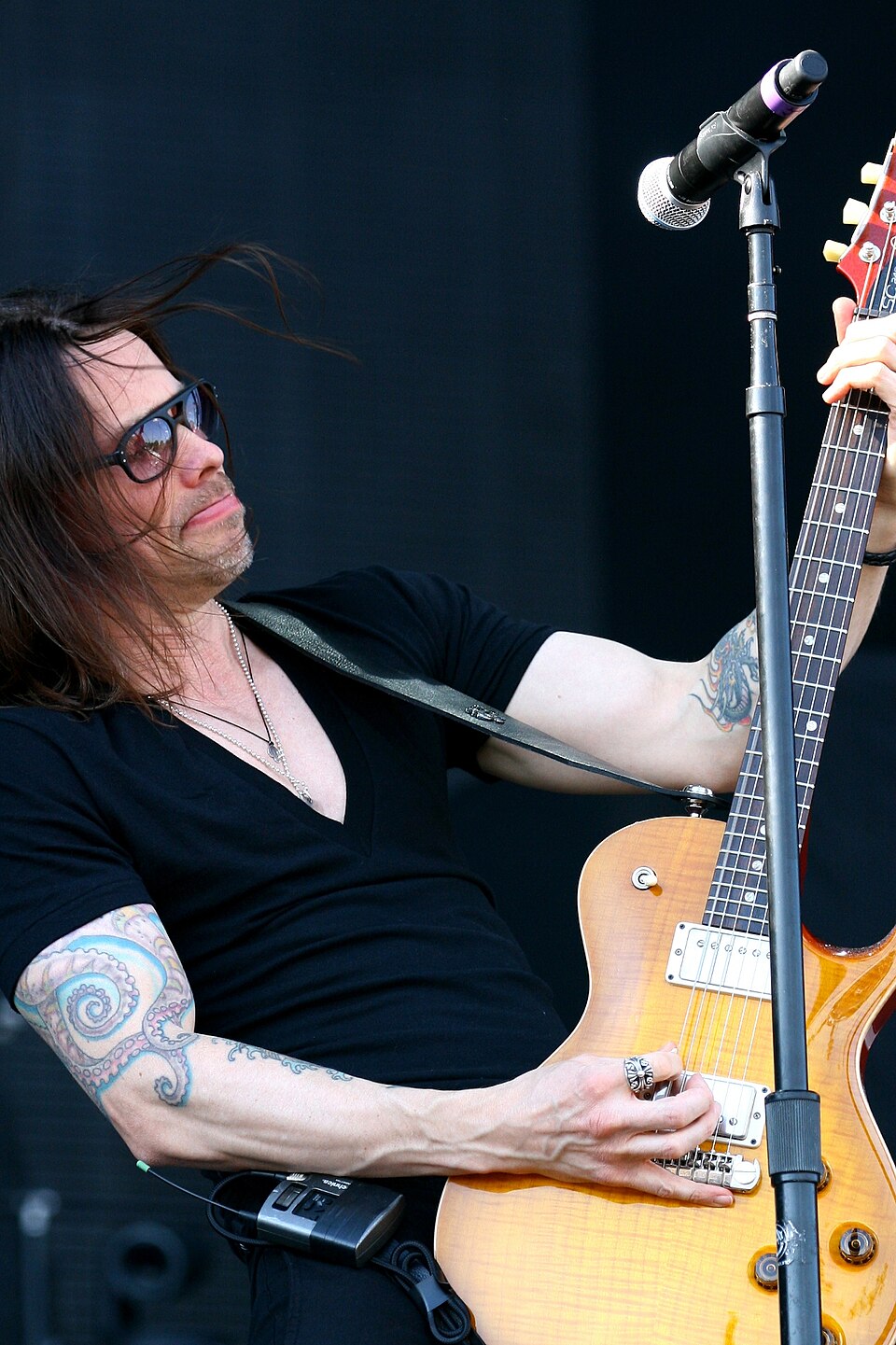
The dragon and koi tattoos
The dragon sits on Kennedy’s left forearm and the koi on his right. Related designs on opposite arms make a balanced pair; shared shading or line weight can link them while each animal faces the direction that suits its side.
The dragon’s sharper lines and scales contrast with the koi’s fins and long, curved body. They share a visual link without becoming the same image. Kennedy’s photos also show why an artist should plan how a design wraps around the arm, not just how it looks flat.
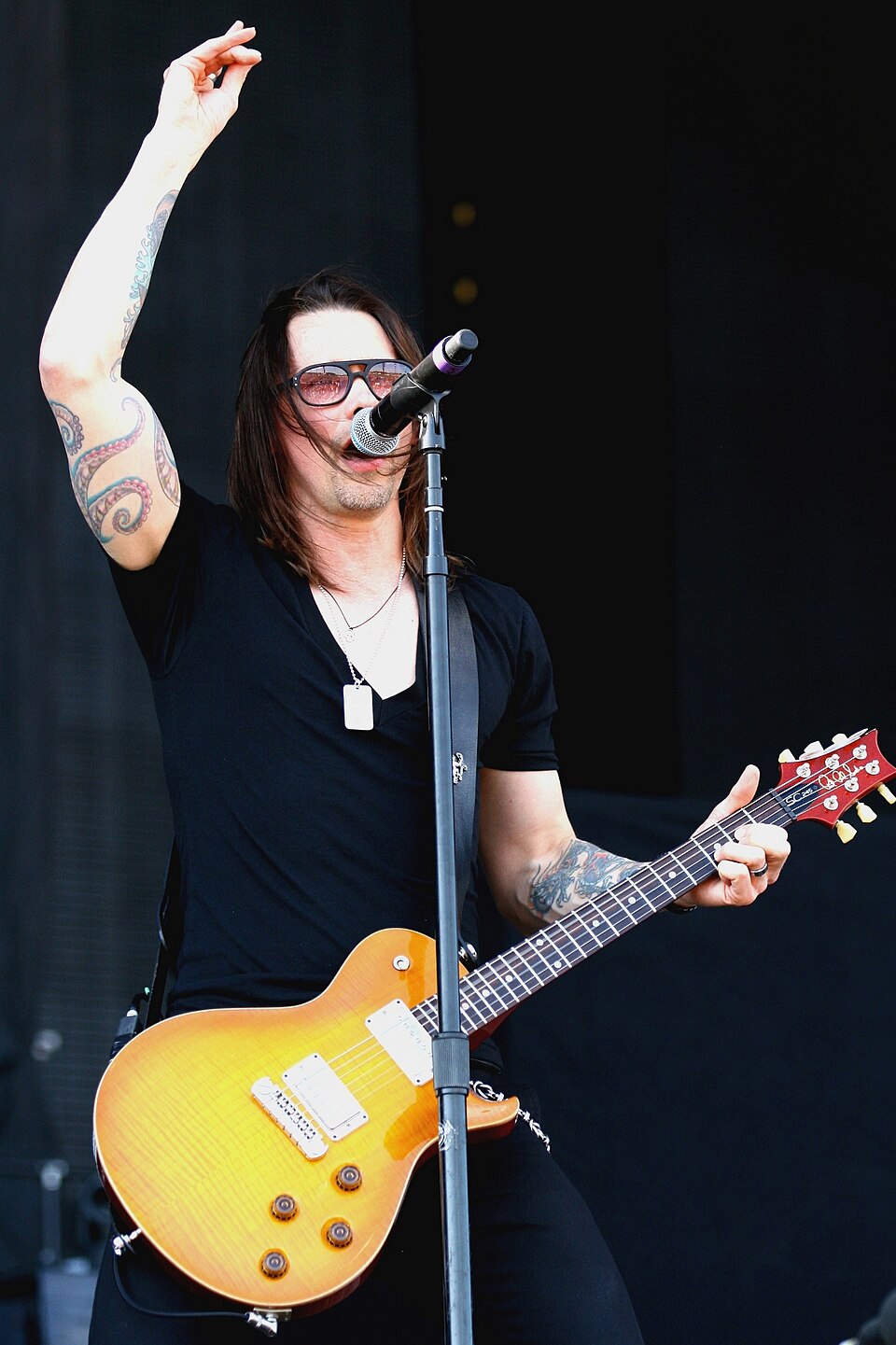
The octopus arm tattoo
His octopus sits higher on the right arm, adding a different shape to the group. Its tentacles curve around the arm, so the design shifts as he moves. It can read from a distance and still hold detail up close.
To adapt an octopus design, ask the artist to place the head first and map the tentacles around the arm. Fine lines can blur, especially inside the elbow. Strong outlines and open skin leave the main shape easier to read than packing in every detail from a reference photo.
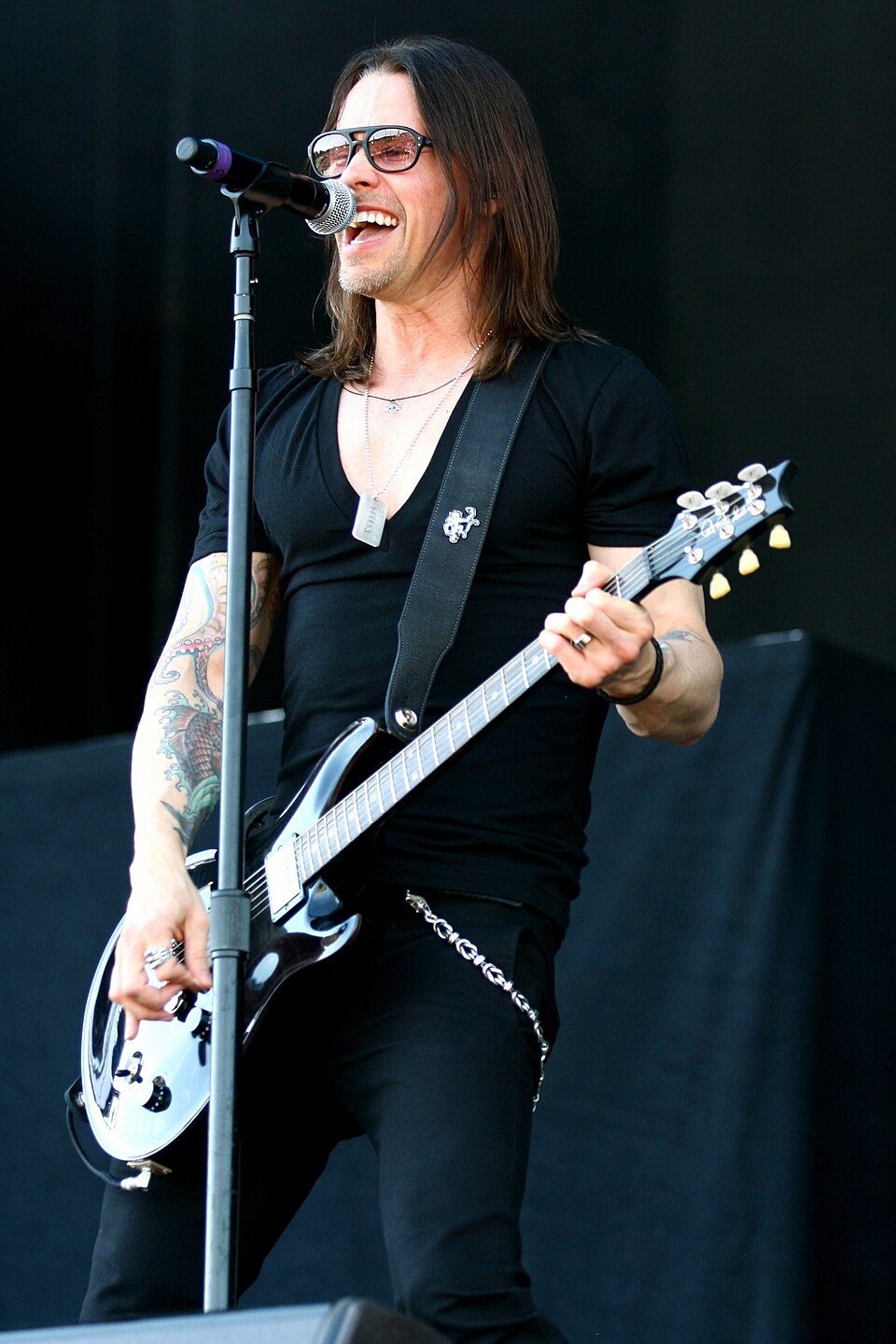
The elephant tattoos on his chest
The two elephant heads on his chest are harder to see because clothes usually cover them. They also balance a collection that is otherwise concentrated on the arms. Paired faces can angle toward each other; separate pieces can still feel related through their shading.
Elephant faces need room for the ears, eyes, and trunks to remain clear. If the piece has to be small, a simpler outline will hold up better than squeezing in every detail. An artist can help decide which features matter most.
What makes Myles Kennedy’s tattoos work?
The animals give Myles Kennedy’s tattoos a shared feel, but each piece still reads on its own. The shapes suit a stage performance too: forearm designs remain visible when Kennedy is holding a microphone or guitar.
There’s no need to fill every gap. A few larger pieces can be easier to read than a set of small symbols if they have room around them. Start with images you still like, then work with the artist to fit them to your body.
Ideas to take from the collection
Fans can borrow the layout without copying Kennedy’s designs: choose two animals with a shared reference, put a flowing piece on one arm, and save another idea for a shoulder, chest, or upper arm. Similar shapes can work in blackwork or color.
Bring reference images for mood, not one picture for the artist to trace. Talk through size, placement, movement when your arm bends, and how much detail will stay readable on your skin.
How to plan a tattoo with this kind of movement
In the concert photos, the lines follow Kennedy’s arms instead of sitting like decals. Heavier areas give the eye a focus while the lines bend around the muscles. Ask your artist to check how the stencil sits on your arm; a design may need to open up or turn once it’s placed.
His tattoos can disappear under sleeves and take focus when he wears a vest. Placement matters if you want to cover the work sometimes: forearm and upper-arm pieces are easier to hide than hand or neck tattoos. You can still choose a large animal design without making all of it visible every day.
Decide early whether you want color. A limited palette can keep an animal design clear, while black and gray can give it an illustrated look. Bring examples of both to the consultation and ask how each might heal on your skin.
Give the tattoo time to heal before judging the final look. Fresh ink can appear brighter, and swelling can distort the shape for a while. Follow the artist’s aftercare instructions, and take clear healed photos if you may add to the design later. Kennedy’s set has developed across several pieces.
Watch Myles Kennedy talk music and performance
The video below is an interview about touring, songwriting, and playing with Alter Bridge and Slash; it shows Kennedy beyond his stage photos.
One thought on “Myles Kennedy Tattoos: Dragon, Koi, Octopus and Elephant Ink”