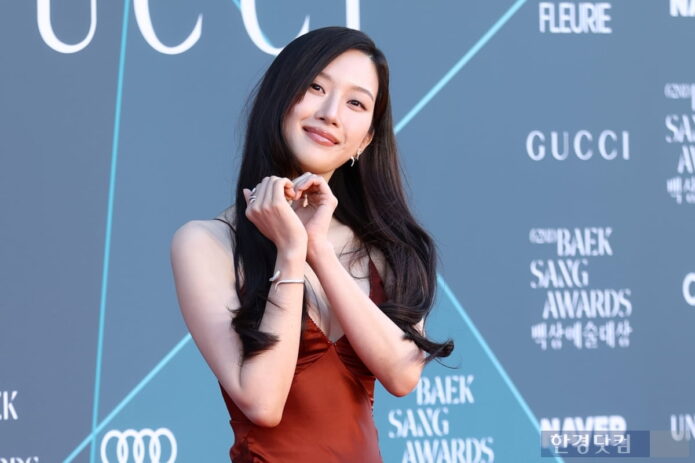
Mun Ka-young has one publicly documented tattoo, high on her back. It drew fresh attention in 2026 when photographs from the Baeksang Arts Awards showed it clearly above the back of her dress. The bird-like design has been called a phoenix in some coverage, but Ka-young has described a more specific inspiration: an Archaeopteryx from a dream her mother had while pregnant.
The red-carpet pictures help show where the tattoo sits and how its lines look against the skin. A Marie Claire interview supplies the part a photograph cannot: Ka-young confirmed that the tattoo is real and explained the family story behind it. Those are useful pieces of evidence to keep together, while remembering that a still image cannot establish every detail of the design’s meaning.
The phoenix tattoo on Mun Ka-young’s back
The clearest public view places the tattoo on the right side of Ka-young’s upper back, close to the shoulder blade. In the open-back view from the 2026 Baeksang Arts Awards, the design runs upward along the exposed skin. Its outline suggests a bird with a slim body, a long wing and feather-like edges. Korean reports have used the word phoenix; Ka-young’s own account points to an Archaeopteryx, a feathered dinosaur associated with her mother’s dream.
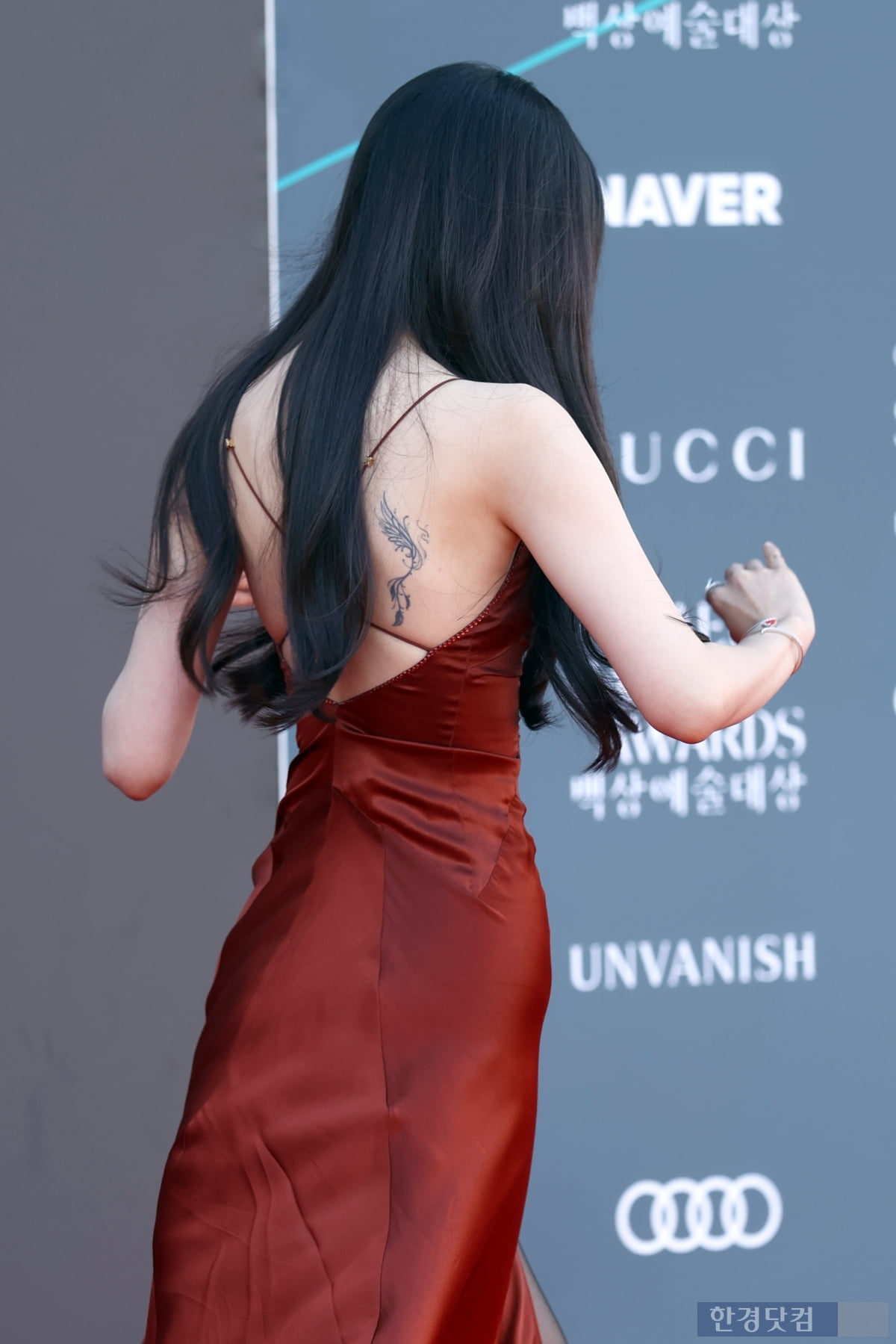
There is enough detail to describe the general shape and placement, though the photo is not a diagram. Fine lines blur at this distance, and it would be a stretch to assign a meaning to each mark. The part that is firmly established is simpler: this is a real tattoo high on the right side of her back, and its bird-like outline has a personal origin she has discussed herself.
The burgundy dress at Baeksang left the shoulder-blade area open, so the tattoo is easier to see here than in many event photos. Its position also explains why it can disappear under ordinary clothing or hair. A change in neckline or a turn of the shoulder can reveal it for a moment without making it a new addition to Ka-young’s tattoo record.
A second look at the wing-like linework
A separate broadcaster image from the same award-season period shows the design in a wider view. More of the gown and pose are visible, and the tattoo reads as part of the open-back look rather than as an isolated close-up. The added distance is helpful: it shows how the lines sit on her back at the scale most people would see in a photograph.
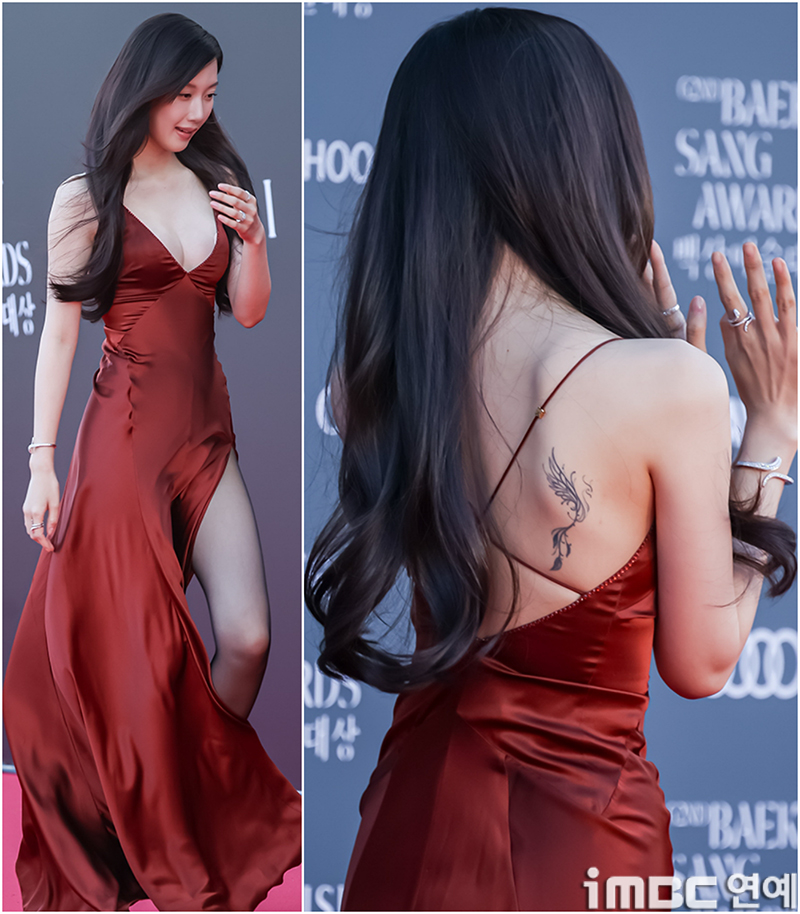
The linework looks fine rather than heavy. It has enough contrast to show against the skin, but it does not take over the frame. That subtlety helps explain why some viewers first wondered whether the image might be temporary. Ka-young answered that question in her Marie Claire conversation: she said it was a tattoo on her back and that she liked it.
This broadcaster photo is another angle on the same piece. It does not show a second bird or establish another tattoo. The Hankyung gallery and the separate broadcaster image serve different purposes, but both help document the right-back design and the way it appears with the burgundy dress.
The 2026 red-carpet setting
Ka-young’s Baeksang look gives the tattoo a clear setting. Her burgundy satin dress had thin straps, a plunging front and an open back. Photographers captured her from the front, at three-quarter angles and from behind. The front views show her face and styling; the turned poses explain why a small back tattoo became a talking point that evening.
These are named event photographs rather than fan edits or stills from a role. The dress, carpet and event backdrop connect the different views to the same appearance. That context matters when describing a tattoo from a public photo: it keeps the design tied to Ka-young herself and helps separate it from character styling or an unattributed image.
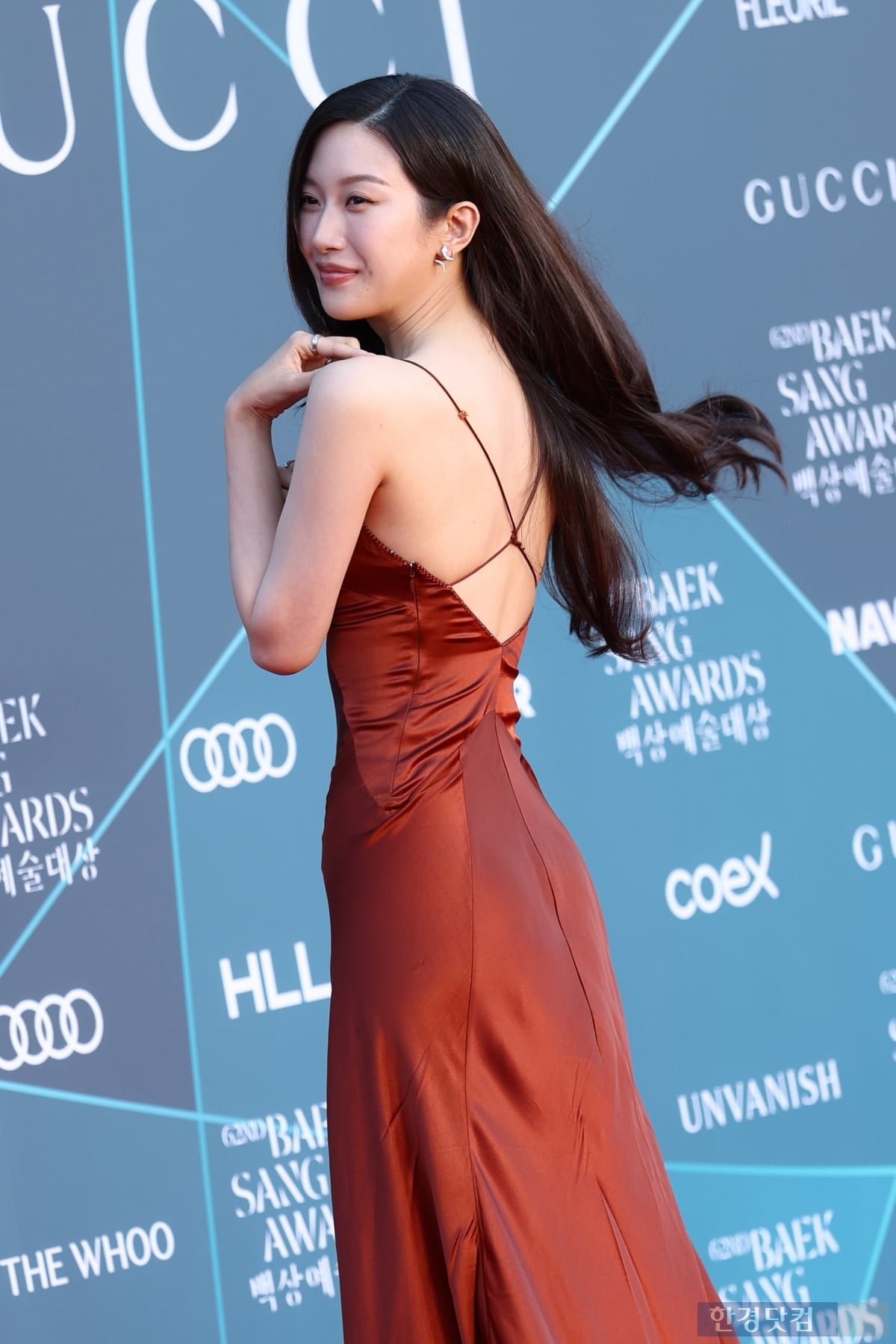
This three-quarter portrait is included for the event and outfit context. It does not show the tattoo clearly enough to serve as evidence of its linework. The back views do that job; this one helps identify the look around them.
The actress behind the moment
Ka-young works across television, film and fashion, and many public portraits present her in polished event styling. A tattoo high on the back can stay out of view in those settings. It appears when her hair, clothing and pose leave the shoulder-blade area uncovered, then disappears again when she faces forward or the fabric shifts.
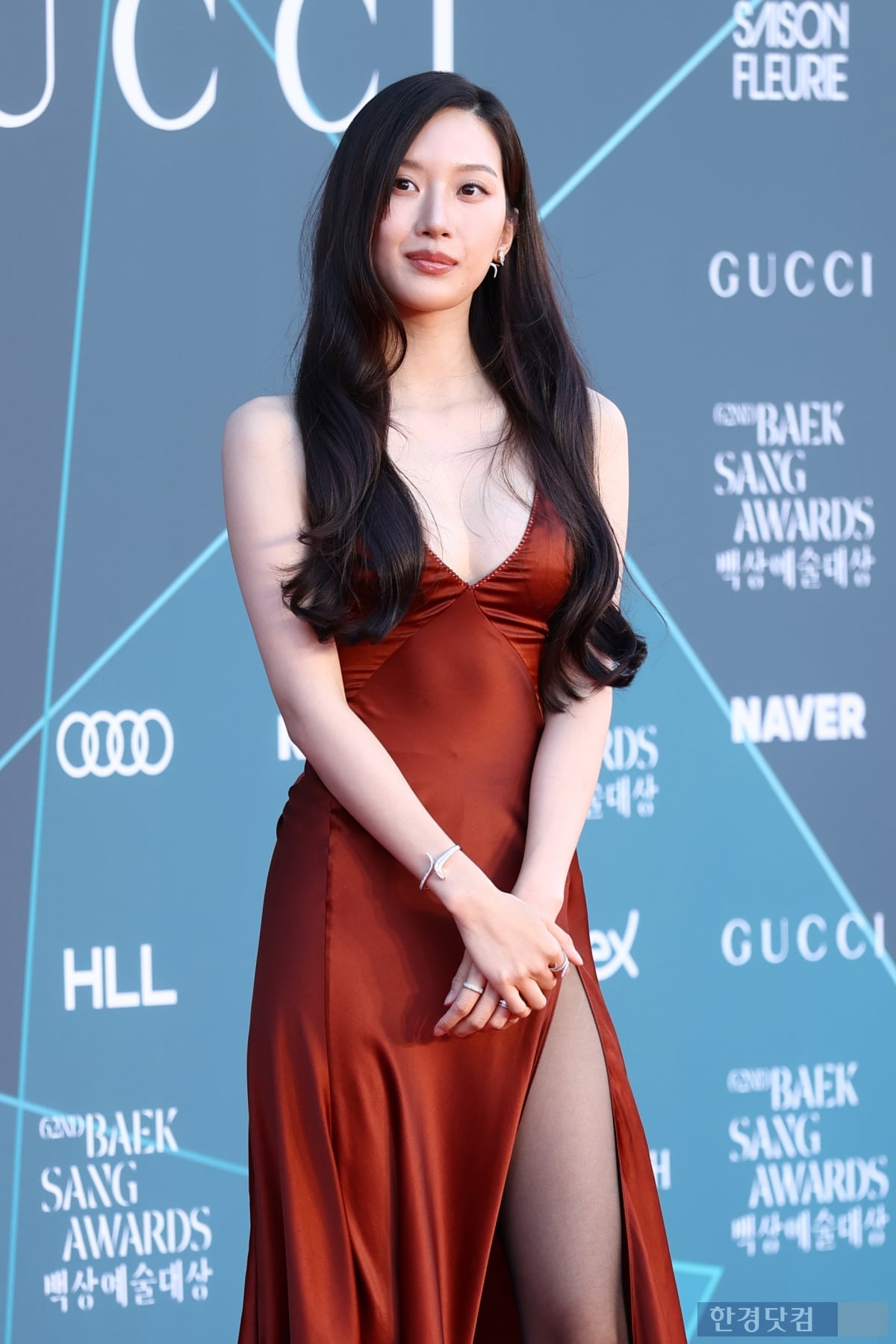
The face-visible portrait gives readers a clear look at Ka-young and the event styling, but it does not establish the tattoo. Keeping that distinction in the article makes the photo useful without asking it to prove something it cannot show. The close back views carry the placement details; this portrait supplies a different kind of context.
It also gives the page a break from a run of similar back views. Readers can see who is in the photographs, then return to the images where the tattoo itself is visible. That order makes it easier to follow which claims refer to the design and which refer to the event.
Why the image traveled so widely
The tattoo became a subject of conversation when the red-carpet neckline made a usually private placement visible. A small design can go unnoticed through many appearances, then prompt questions when one clear photograph circulates. In Ka-young’s case, the images brought renewed attention to a tattoo she had already discussed rather than announcing a newly added piece.
Her Marie Claire interview predates the 2026 event photos. It gives the design a first-person history; the newer pictures make its location and outline easier to see. The photos add visual detail, while the interview explains why she chose it. Keeping those roles separate avoids treating an outfit or a headline as the source of the tattoo’s meaning.
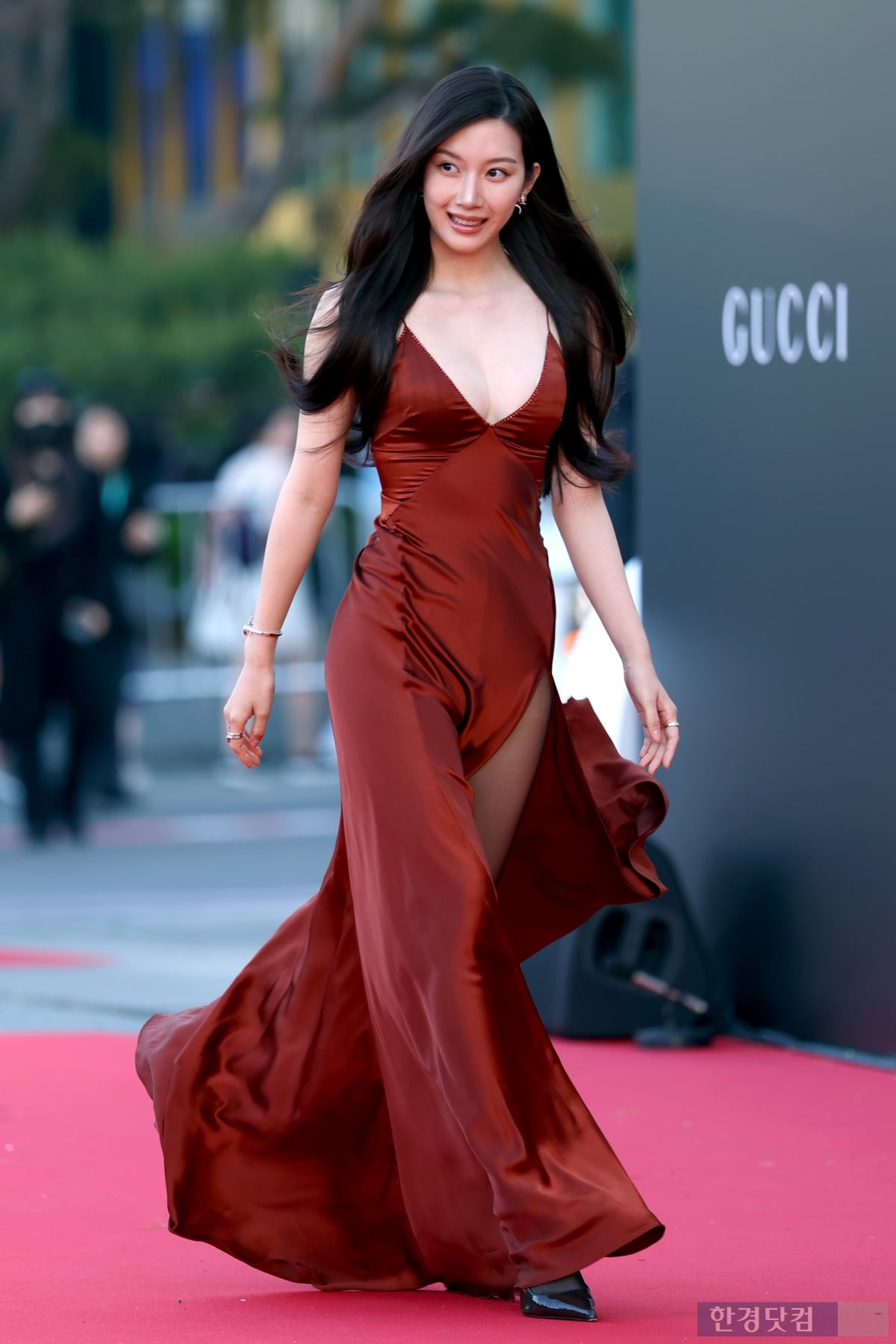
This walking portrait is another view of the public event, not a separate tattoo reveal. The same distinction applies across the gallery: some frames show the ink, and some establish the person and setting. The article keeps the latter as context rather than describing them as close-up tattoo evidence.
The meaning behind the family story
Ka-young’s explanation starts with a dream her mother had during pregnancy. She said the dream featured an Archaeopteryx covered in jewels, and that memory became the inspiration for the tattoo. Later headlines have called the image a phoenix, and some coverage connects the bird with her stage-name story. Those labels can describe how the design reads to viewers, but the family dream is the origin she has shared herself.
That account gives the tattoo a personal meaning without requiring guesses about every feather or line. The jewel detail may help explain why the image can seem ornate in photographs, but it should not be turned into a symbolic reading she has not given. The reported story is already specific: a memory from her mother’s pregnancy, carried forward as a design on Ka-young’s back.
How to read the public photo record
The photographs establish the tattoo’s general position, bird-like outline and appearance under particular clothing and lighting. They cannot tell us whether each line represents a separate symbol. Ka-young’s interview confirms that the image is real and gives the story behind it. Korean press coverage adds the event date and other views. Together, those sources are enough to describe one documented back tattoo without implying that a larger hidden collection has been confirmed.
That limit is useful when the same design appears in several pictures. Repeated angles do not turn one tattoo into several, and a face-visible portrait is not tattoo evidence just because it comes from the same event. In this gallery, the close back views show the design; the other portraits provide identity and red-carpet context. Each image can add something without carrying a claim beyond what it shows.
Mun Ka-young in context
Ka-young’s back tattoo is memorable for both its bird-like shape and the story she attached to it. The photos can resemble a phoenix, while her own account names an Archaeopteryx from her mother’s dream. Its placement means it can remain covered in one outfit and visible in another. The 2026 Baeksang images made the design easier to examine, but they did not necessarily mark a new tattoo.
It is a personal story told through a small, fine-lined piece: a family memory given a place on the body. The public record is clear about the design’s location and inspiration, even if photographs cannot settle the meaning of every line. The original interview, “Moon Ga-young tells us about her incredible tattoo,” is the first-person source behind that account.