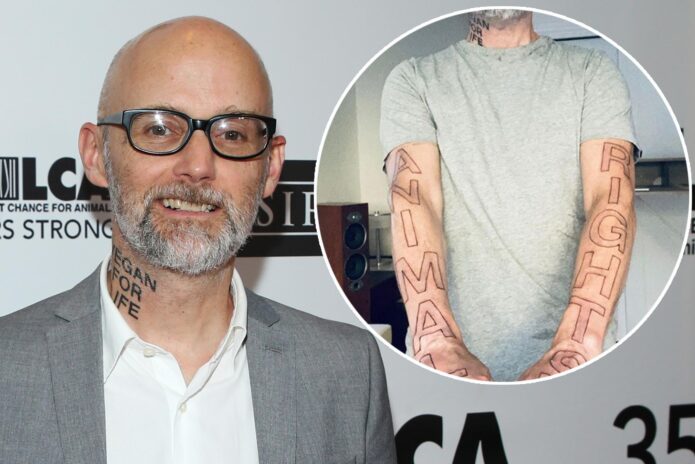
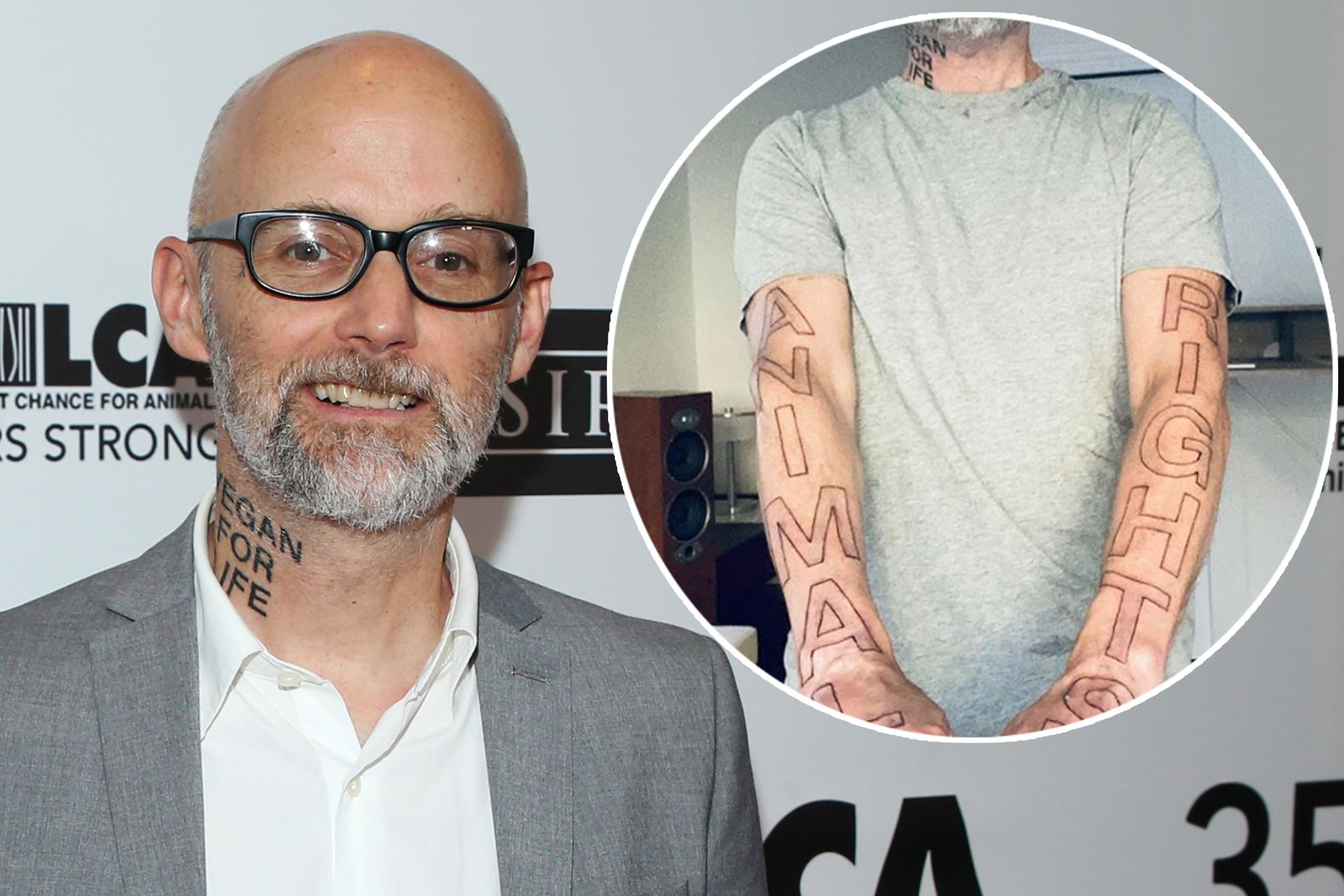
Moby’s tattoos are closely tied to convictions he has discussed for decades. His ink includes a small cross and “LRSC” on his cheekbone, “VEGAN FOR LIFE” on his neck, and large “ANIMAL RIGHTS” lettering across his arms. These designs are meant to be seen; they express how he wants to live.
The collection has grown over different periods and doesn’t follow one style. Some pieces feel personal and almost devotional; others state their message outright. The newer animal-rights tattoos are especially large, turning his body into a public statement about a cause he has supported for years.
Because Moby has explained several designs in interviews, the tattoos can be read as a timeline. The story starts with a black cross from his touring years in the 1990s and continues to the lettering that puts vegan activism front and centre.
The LRSC cheek tattoo is small but deeply personal
One of Moby’s best-known tattoos sits on his left cheekbone. It combines a small cross with the letters LRSC, which he has said stand for “love, reason, service and compassion.” Four words of personal principle sit beside his face.
That placement makes the message hard to miss. A cross on an arm can disappear beneath a sleeve; LRSC appears in photos and interviews. The design invites people to ask what the letters mean, and Moby has given them an answer.
The cross gives the acronym a spiritual quality without making it a simple religious label. Love, reason, service and compassion are broad ideals, but also practical ways to treat people and animals.
The tattoo looks modest until you know what each letter stands for. Its size is small; the explanation gives it weight.
A black cross goes back to Moby’s touring years
Moby has said he got his first neck tattoo, a black cross, while touring with Lollapalooza in the mid-1990s. He was young and moving through the punk and alternative music scene. That story gives the tattoo a different feel from the protest lettering he added later.
A first tattoo can hold both impulse and identity. At that point, Moby was a touring musician in a scene where tattoos were part of the look. The cross became a marker of that period.
Tattoos can outlast the mood in which they were chosen. Their meaning may deepen or shift while the design stays the same. In Moby’s case, the early cross now sits beside later messages about compassion and animal rights, linking personal belief with activism.
The image is visible, but the story is specific: it came from a particular tour, age and music community, not a random design pulled from a catalogue.
Vegan for Life makes the neck impossible to misunderstand
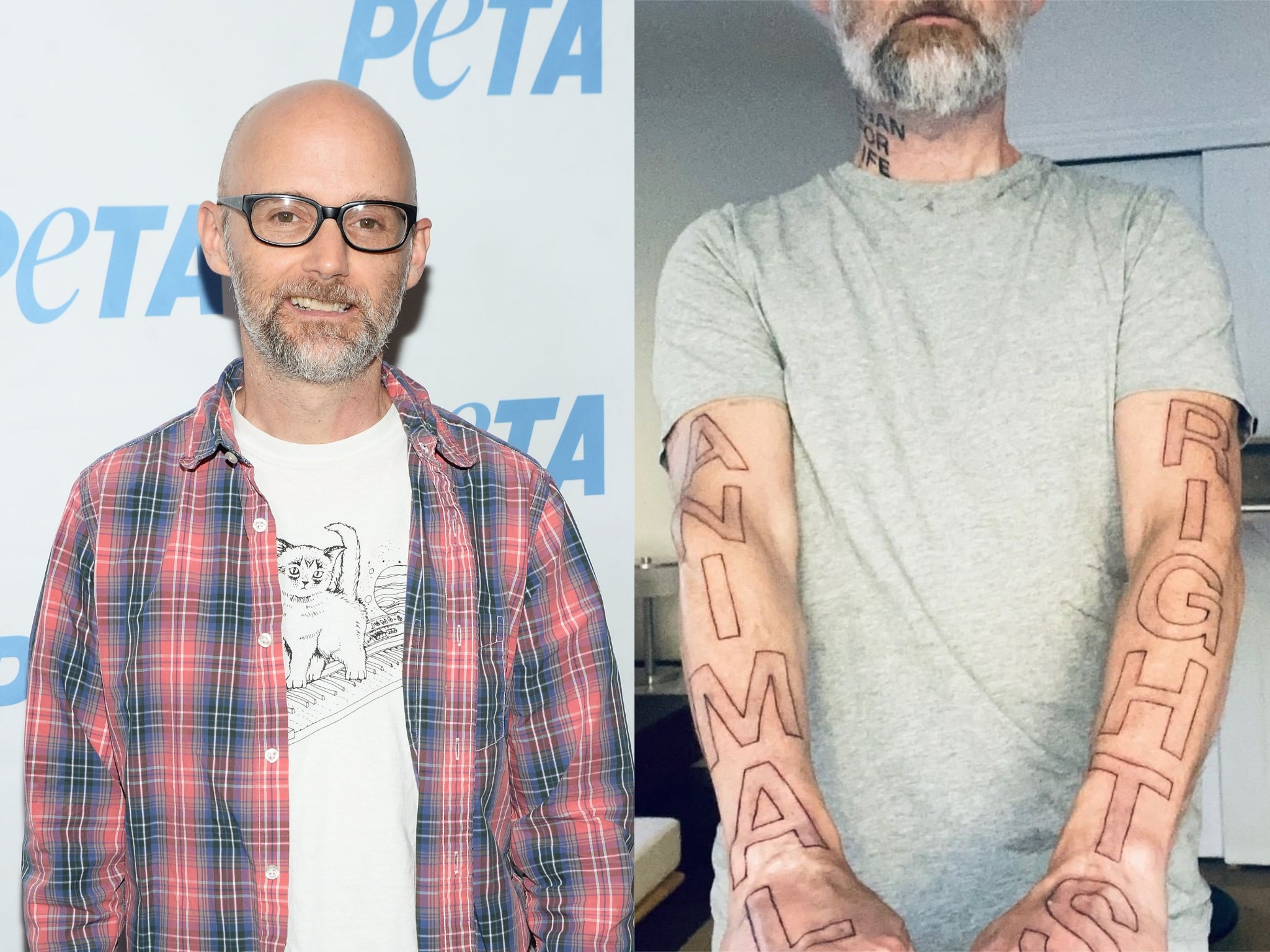
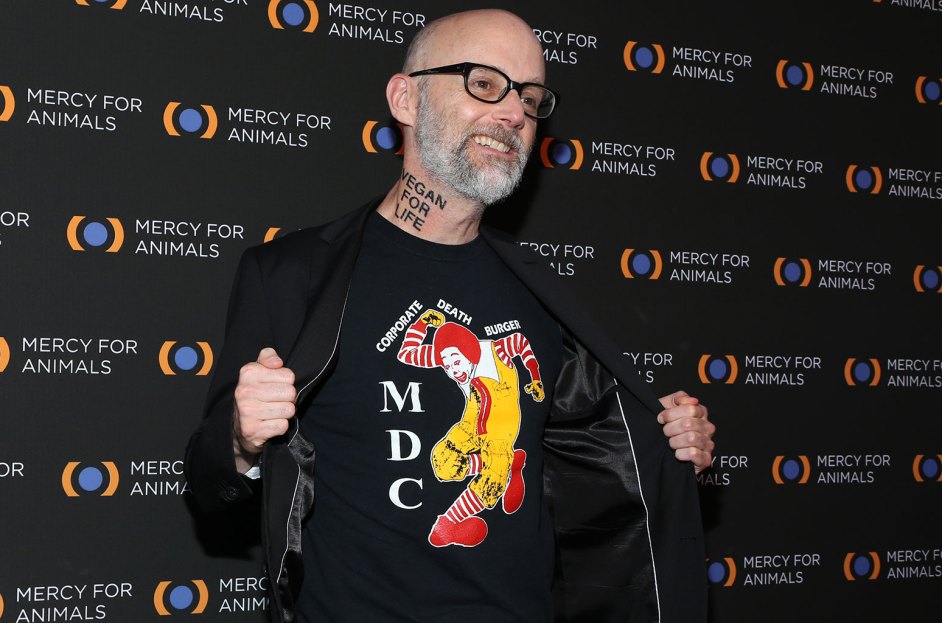
In 2019, Moby added large “VEGAN FOR LIFE” lettering to the side of his neck. The size and placement make the phrase clear. It reads more like a sign than a private symbol.
That directness fits his activism. Moby has been vegan for decades and has spoken about animal rights through music, interviews and public appearances. The tattoo makes the commitment part of his image whenever he speaks.
Neck lettering affects how a person is seen in every setting, from casual meetings to formal events. Putting those words there suggests that Moby values the message being visible more than keeping his appearance neutral.
The design leaves little room for mystery: “Vegan for life” is the explanation. The words are simple and hard to ignore.
Animal rights covers both arms
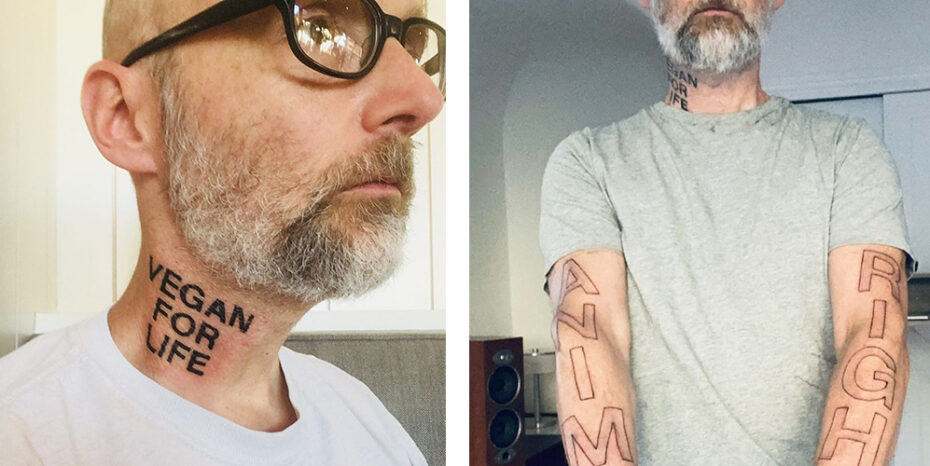
After more than three decades of veganism, Moby had “ANIMAL RIGHTS” tattooed across his arms. The lettering is large and difficult to hide. It’s the clearest example of his body becoming a public activist message rather than a private collection of memories.
The size drew attention. Large words across the arms change how shirts, photos and performances are framed. They become the first thing many people notice, which makes them effective as protest art.
Some coverage focused on the shock of seeing such a blunt phrase on his arms; supporters saw it as a natural extension of his advocacy. That disagreement is part of how a protest message works. It can make people uncomfortable.
The arms and neck carry related ideas. “Vegan for life” states Moby’s personal commitment; “Animal rights” names the cause. One says how he lives, the other what he believes animals deserve.
The tattoos are more than a celebrity image change
The large new tattoos could look like a sudden image shift, but the activism came first. Moby didn’t just discover veganism because bold lettering became fashionable. The tattoos made a long-standing belief more visible.
That distinction matters when looking at body art. A large piece can seem like a branding choice from the outside, but the person’s history can show whether it is a new pose or a continuation. Moby’s interviews and activism make that history clear.
LRSC adds a more personal note. It isn’t a slogan aimed at strangers like “ANIMAL RIGHTS”; it reads as a private code. His collection carries both kinds of message: values he keeps close and an issue he wants others to see.
The cheek tattoo works like a small private compass beside a large public sign. That contrast keeps the collection from being one-dimensional.
What the early punk connection adds
Moby’s first cross and touring story place his tattoos in the alternative music culture of the 1990s. Tattoos could signal independence or belonging, or simply mark a permanent choice made while living an unconventional life.
The newer vegan designs use that same willingness to be visible, but with a more explicit purpose. Instead of a symbol that scene insiders might recognize, Moby chose words anyone can read. The message moved from a scene marker to an activist sign.
That progression feels natural. People often add tattoos as their priorities become clearer. The cross doesn’t have to predict the later “Animal Rights” lettering; it records an earlier part of his life. The newer pieces show where that life led.
A list of symbols alone misses the timeline. The tattoos trace a story about music, travel, personal belief and animal advocacy.
A careful inventory of Moby’s documented tattoos
The best-documented pieces are the black cross from his touring years, the LRSC cheekbone tattoo for love, reason, service and compassion, “VEGAN FOR LIFE” on his neck and “ANIMAL RIGHTS” across his arms. These designs have clear visual evidence and reporting.
Other tattoos may appear in photos, but they can be difficult to identify from a distance. It’s safest to treat the cross, LRSC and large phrases as the core of the collection, and describe other details only when they’re clear.
Those pieces already tell a story. The cross marks an early touring chapter; LRSC puts his values into a personal code; “Vegan for life” states how he lives, while “Animal rights” makes a public appeal.
Moby’s tattoos aren’t meant to disappear. They’re written to be read, and their meaning is clearer when the history behind them stays in view.
Watch Moby explain his vegan neck tattoo
This tattoo interview gives context for the neck design and the activism behind Moby’s most visible ink.