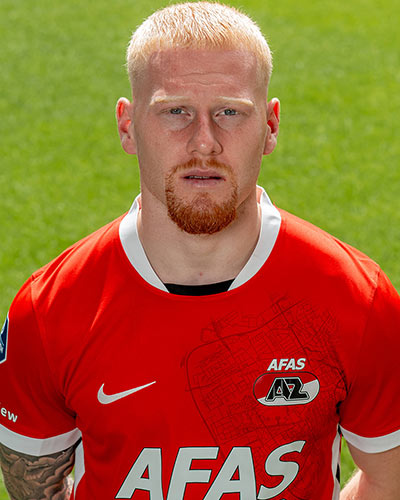
Mexx Meerdink’s tattoo record combines a newly documented back portrait with an established arm sleeve visible in football coverage.
Mexx Meerdink’s new back portrait tattoo
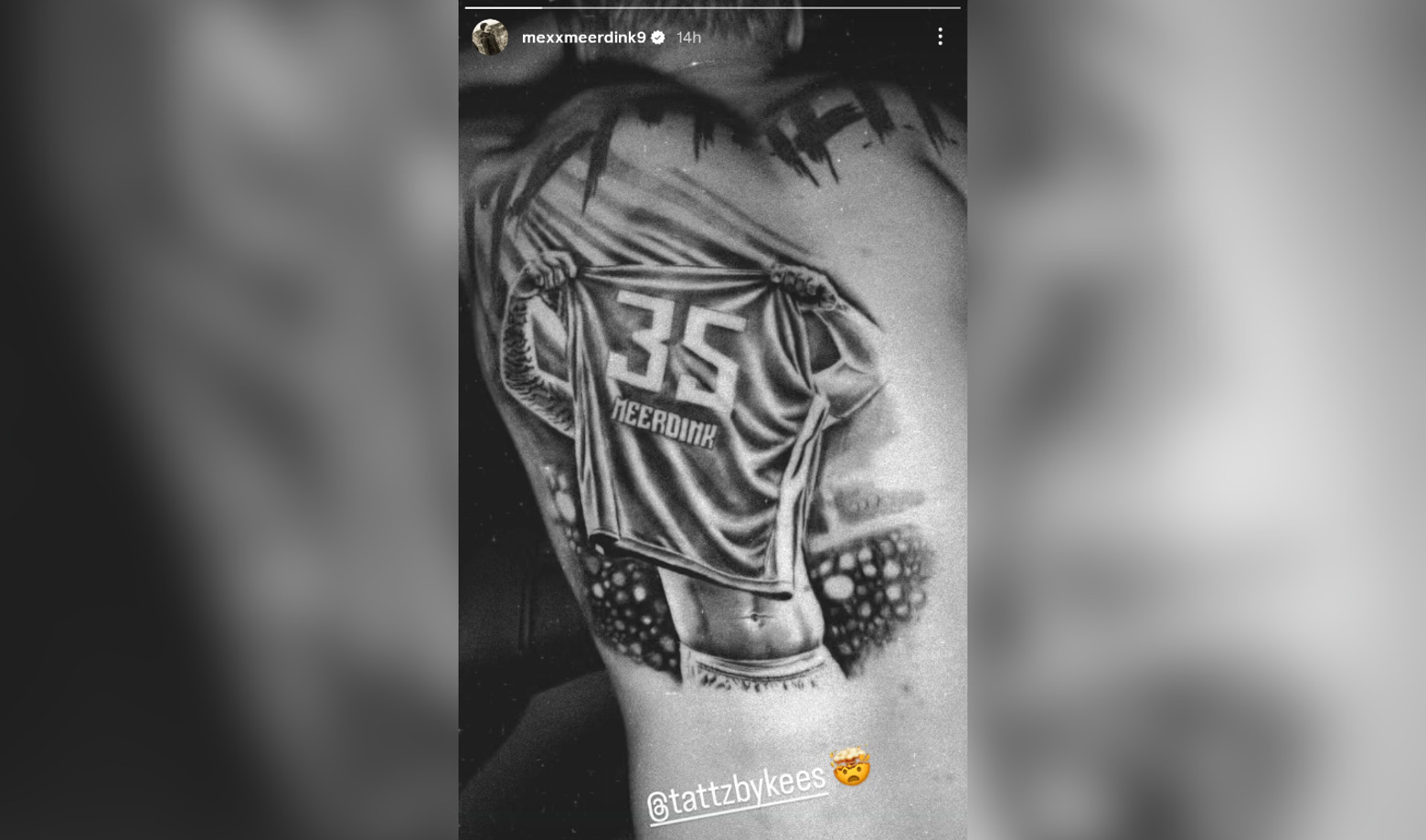
Mexx Meerdink’s 2026 tattoo reveal is unusually specific: the AZ striker had a large portrait of himself placed on his back, showing the moment he lifts his shirt after scoring. FCUpdate reported the reveal after Meerdink shared images from the Amsterdam studio Tattzbykees. The design is not a generic football emblem. It reproduces a personal goal celebration and includes the shirt name and number that connect the image directly to Meerdink’s career.
The clearest tattoo evidence is the monochrome Instagram-story frame reproduced by FCUpdate. Meerdink is photographed from behind with his shirt raised, and the finished work fills a broad section of the back. The portrait is readable inside the folds of the drawn AZ shirt. The source describes the design as an image of Meerdink celebrating a goal, so the article can identify the subject without guessing at symbolism that has not been published.
The placement matters. The design sits centrally across the upper and middle back rather than being a small mark on the shoulder. The photograph shows the lower edge of the piece near the waist and the dark linework around the drawn shirt. Above it, other back work is visible, including the earlier word ‘mentality’ across the shoulder blades. Those are separate visible elements, and they should not be collapsed into one invented design.
The newest portrait uses football language as its visual structure. A raised shirt, a large number and the name Meerdink make the moment legible even before a reader knows the player. The tattoo records not just a face but a pose: arms lifted, shirt stretched upward and the scorer celebrating in front of supporters. That is why the image reads as a personal sports memory rather than a standard player portrait.
Match-day identity
The published frame also shows the limits of the evidence. It establishes the existence, placement and broad subject of the back tattoo, but it does not identify every artist, session date or line of the original reference photograph. The responsible description stays with what the image and FCUpdate report support. It does not claim that the tattoo is a complete autobiography or that every visible mark has a documented private meaning.
Meerdink’s arms provide important identity context in the match photographs. The images show a young red-haired forward with a dense right-arm sleeve, familiar beard and the red AZ shirt. The face, hair and club colours make the subject easy to match across different settings, while the new back piece joins an existing collection of visible ink.
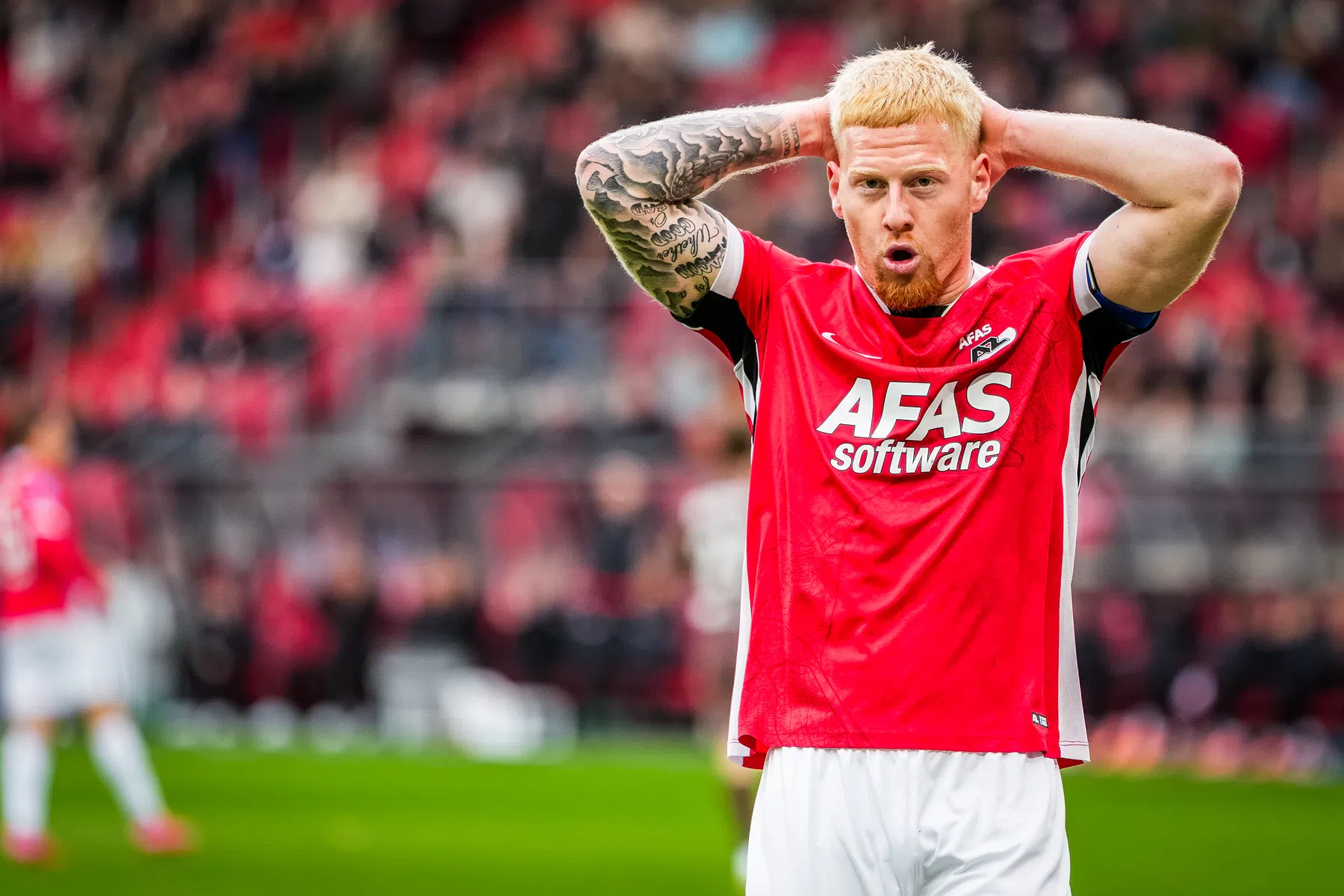
One wide match frame catches Meerdink with both hands behind his head. His face is front-facing, his hair and beard are clear, and the sleeve runs from the upper arm toward the forearm. The red AZ kit and stadium crowd establish a real football setting, giving readers a strong reference point for the player shown in the tattoo photograph.
A second published view
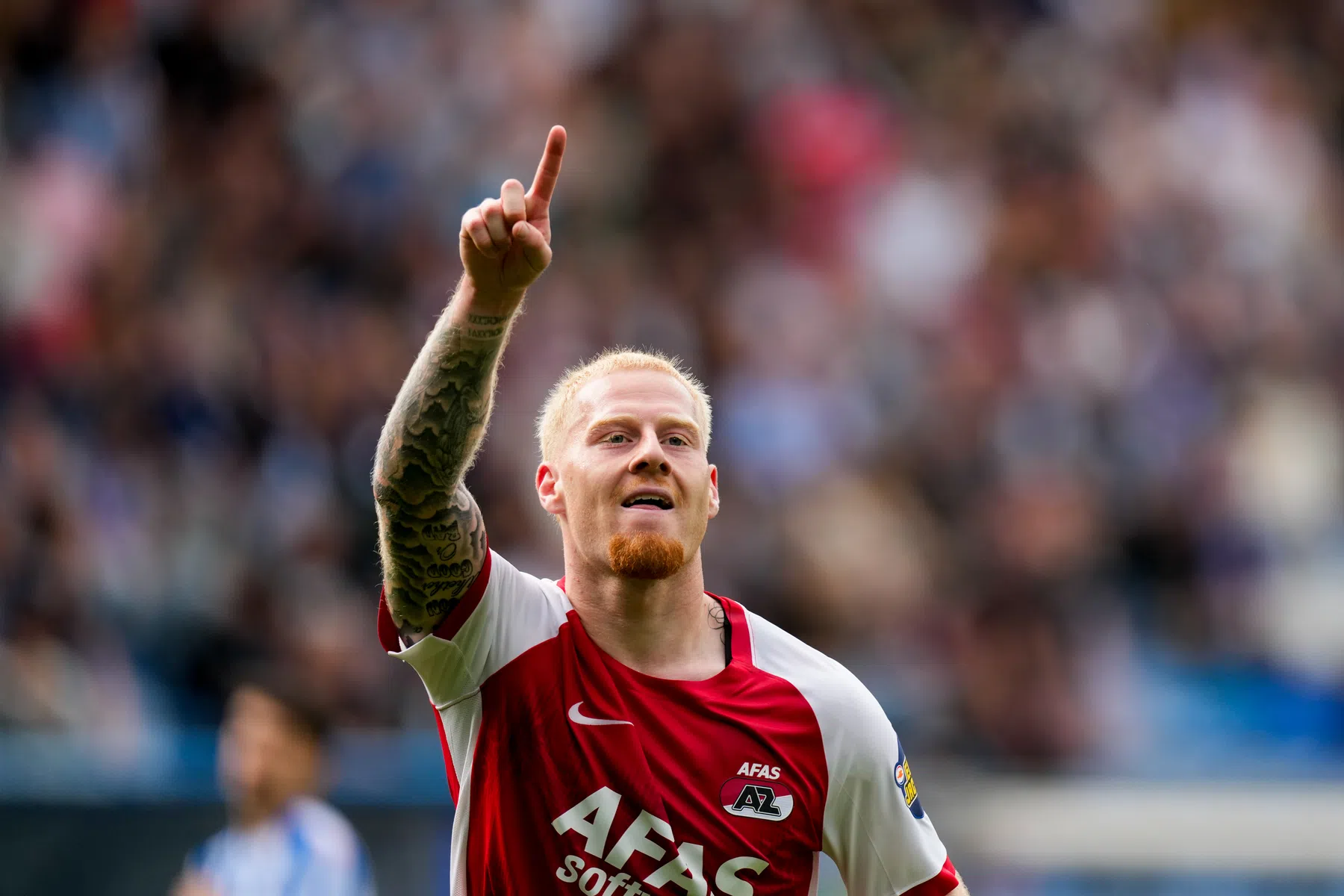
A second published celebration image shows Meerdink raising one arm and pointing upward. The camera is closer, so the black-and-grey sleeve is easier to see along the forearm and upper arm. The expression, beard and kit details make the identity match straightforward. The photo helps map his established arm coverage, while the FCUpdate story remains the source for the newly revealed back design.
The third match portrait gives a slightly different angle. Meerdink reacts with one arm raised and the camera keeps his face central. The tattoo coverage returns in the same place even though the pose and background change. Repeated visibility across separate sports photographs is useful because it distinguishes permanent body art from a temporary graphic, a jersey print or an isolated editorial crop.
The fourth frame comes from earlier AZ coverage and places Meerdink in bright stadium light. His face is turned upward as he celebrates, and the image is distinct from the later close-up. The chest remains covered by the shirt, so the description stays with the visible player portrait and does not invent details outside the frame.
The striker in a stadium setting
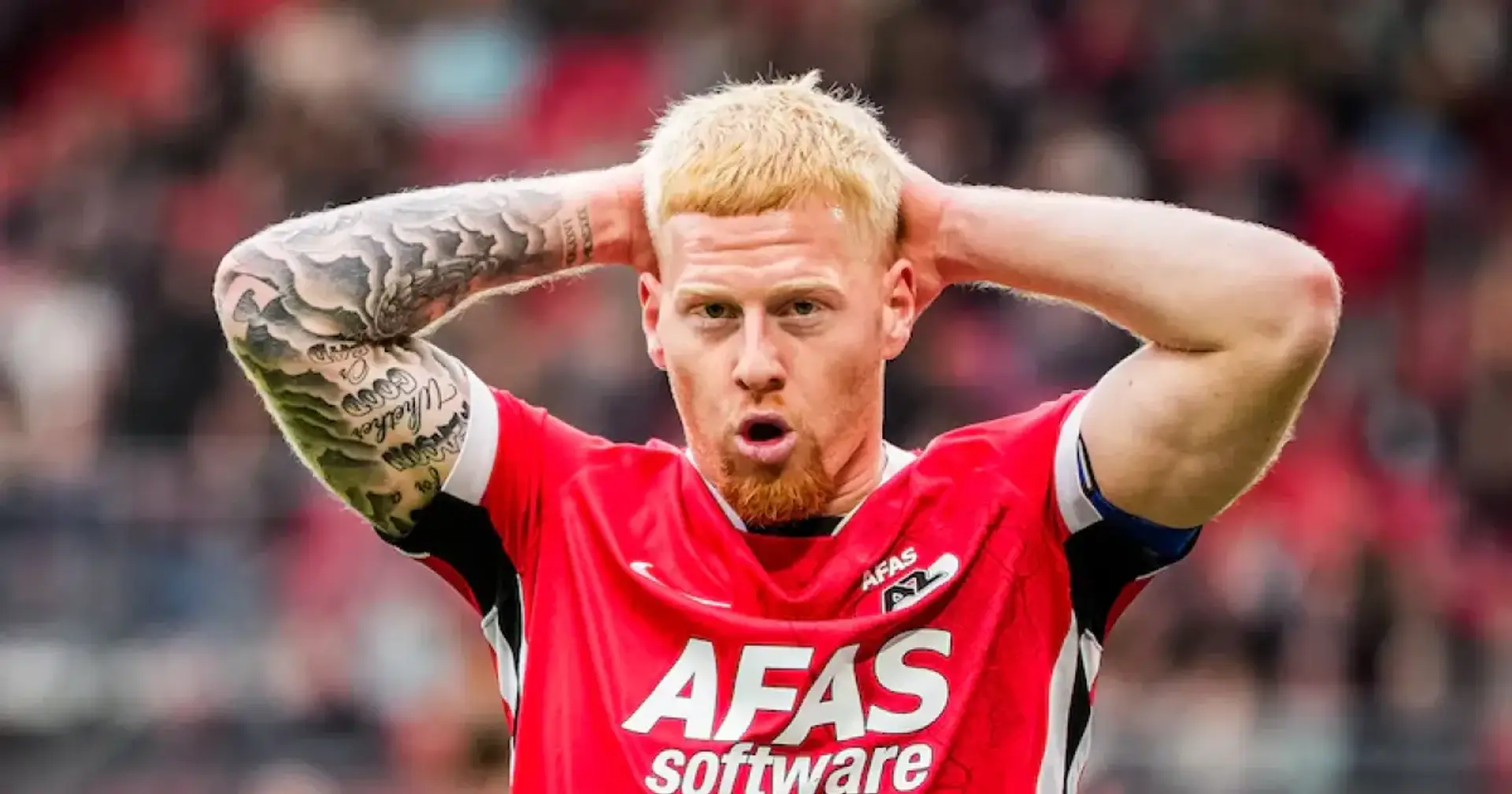
Together, the photographs create two related visual lanes. The FCUpdate frame carries the finished back portrait, while four face-visible AZ photographs show Meerdink as the same footballer in match settings. That separation keeps the design description precise: the back image supplies the new tattoo detail and the sports portraits supply identity and career context.
The portrait tattoo is also a record of Meerdink’s relationship with AZ. The drawn shirt carries the club identity, while the visible name and number point to the player himself. The image does not need a speculative explanation to be meaningful. It documents a footballer choosing to preserve a goal celebration on his body and doing so with details that supporters can recognise.
FCUpdate’s report says Meerdink had already added the word ‘mentality’ across his back in an earlier session. The new portrait was added later during the summer break, again at Tattzbykees in Amsterdam. That broad sequence is supported by the report. It is safer than assigning an exact appointment date or claiming that every section of the back was completed in one sitting.
An earlier player frame
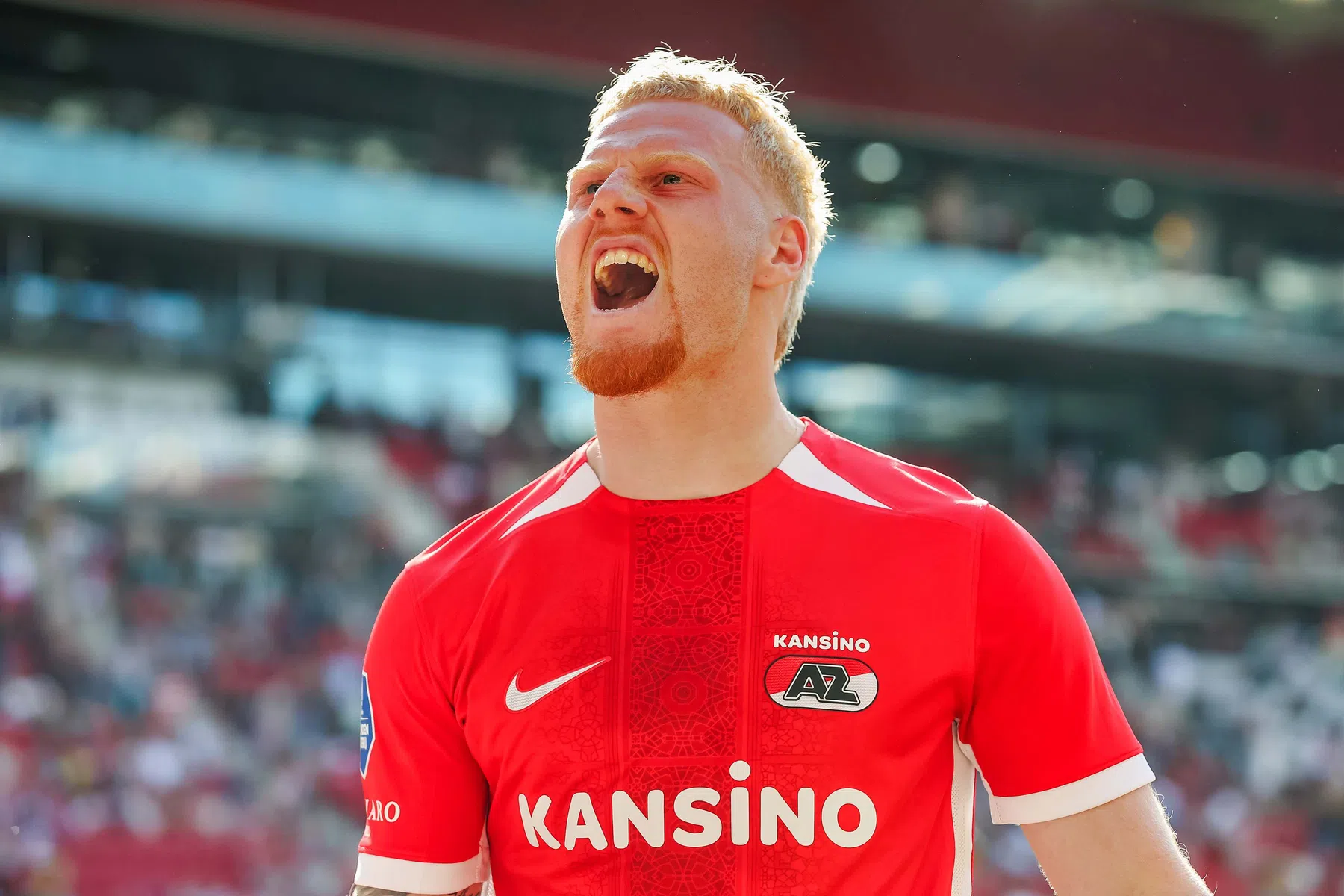
The earlier lettering and the newer figure therefore form a visible progression. The first piece reads as a word-based statement across the shoulders. The newer work adds a much larger figurative scene underneath it. In the available photograph, the two ideas share the same back but remain visually distinguishable. The article treats them as adjacent parts of the collection, not as one single portrait design.
Meerdink’s football context explains why the image is so easy to identify. He is an AZ forward who broke through around the 2025–26 season, received attention around the Netherlands setup and scored goals that became part of the club conversation. A tattoo showing his own celebration turns a fleeting match moment into a permanent reference point. That career context comes from the sports coverage, not from reading a private meaning into the ink.
The match portraits show how the sleeve changes the silhouette of his raised arm. Dense shading and lettering run along the arm, while the face remains recognisable above the red shirt. Different light levels alter the apparent contrast, but the location and overall coverage remain consistent. Keeping the caption tied to what each frame actually shows makes the visual record easier to trust.
Career context before the reveal
A careful tattoo profile should also say what cannot be verified. The public source does not provide a complete inventory of every arm mark, a full explanation of the ‘mentality’ lettering or a confirmed list of artists for all of Meerdink’s ink. It does provide one strong, candidate-specific image of a finished tattoo and a clear report about what the design represents. That is enough for a grounded article without inflating the record.
The back portrait has a documentary quality because the original social post is part of the story. The tattoo is shown in a frame that preserves the account name, the raised shirt and the studio context. The image is not a stock photograph selected because it resembles Meerdink. It is a direct visual record of the work being shown to followers and then described by a football publication.
The separate face-visible featured portrait gives readers a clean reference for Meerdink’s identity. It is taken from a player-photo archive and shows him in an AZ shirt against the pitch. The featured frame establishes the person before the article turns to the tattoo detail, much like a portrait at the top of a sports profile.
What the images establish
The collection is therefore best understood as a combination of a personal back scene and a heavily tattooed footballer’s existing arm work. The back image is the hard evidence for the new portrait. The match frames supply distinct context and show how Meerdink appears during play and celebration. Readers can compare the face, hair, beard, shirt and sleeve without confusing a normal match photograph with a close-up of the tattoo itself.
The design’s strongest readable details are the illustrated AZ shirt, the large number and the name Meerdink. Those elements make the central figure legible even though the photograph is monochrome and framed from behind. The image does not reveal every fine line at equal clarity, so a measured caption is more useful than a speculative breakdown of the portrait’s facial features or the exact stadium moment being reproduced.
Meerdink’s story also shows why athlete tattoo coverage benefits from multiple source types. The football report documents the reveal. Match photography establishes identity and the existing sleeve. The player profile supplies a clean portrait. None of those sources alone provides the entire article, but together they form a coherent visual record with a clear distinction between the design close-up and the surrounding sports context.
The safest conclusion is modest. Mexx Meerdink has a documented back tattoo showing his own goal celebration, with his AZ shirt, name and number visible in the published image. He also has substantial arm coverage that recurs in independent match photographs. The available reporting does not explain every mark or private motivation, but it does show a footballer turning a recognisable moment from his career into a permanent piece of body art.