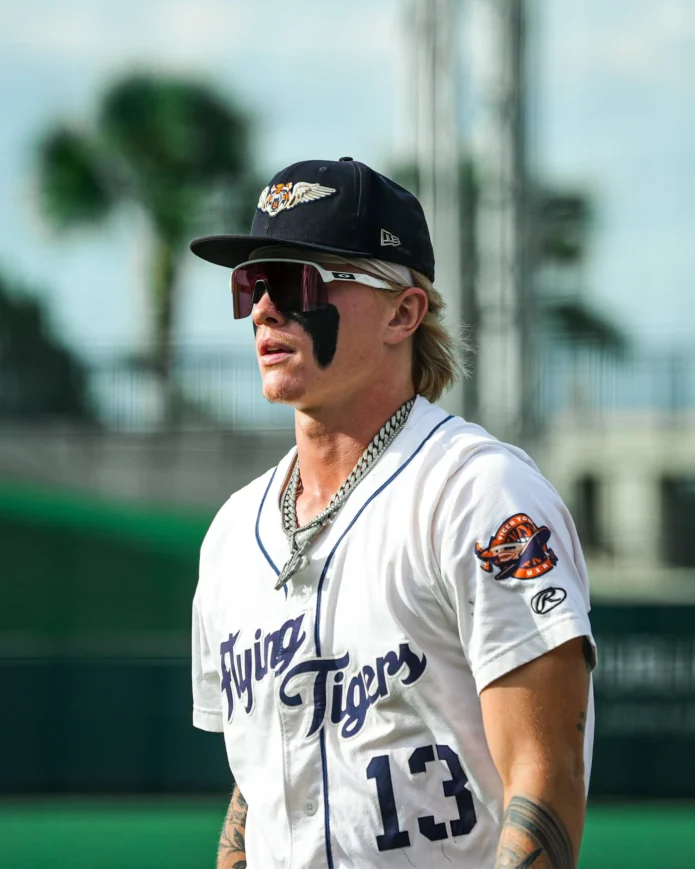
Max Clark’s tattoo collection has become part of the visual record of his rise through professional baseball. The most clearly documented addition is the vertical phrase placed down the right side of his body after a difficult spring with the Detroit Tigers. A separate report from January 2025 identified a chest piece built around Roman numerals and two angels. Photographs from Clark’s baseball work also show substantial black-and-grey coverage on both arms. Taken together, the pieces describe a player whose visible ink is tied to family, recovery and a changing baseball life.
Max Clark’s “Every Fall Is a Chance to Rise” Tattoo
The phrase that has received the clearest explanation is “Every fall is a chance to rise”. MLB reported that Clark had the words tattooed vertically down his right side in March 2026, one day after the Tigers reassigned him to minor league camp. The timing is central to the piece. Clark had gone 2-for-18 in spring action, and the reassignment turned a difficult stretch into a moment he wanted to mark on his body.
Clark told MLB that the line “really resonated with me, stuck with me, hit me hard” while he was struggling. The tattoo therefore has a confirmed connection to that particular setback rather than an invented explanation based only on the lettering. Its design is text-led, with the words running in a narrow vertical arrangement along the side of his torso. The placement gives the quotation a long, directional shape that is different from the compact numerals on his chest and the denser work on his arms.
The Vertical Side Tattoo Runs Down Max Clark’s Right Side
The right-side placement changes how the phrase appears in photographs. In a straight-on baseball portrait, only part of the wording may be visible, while a turn of the torso can reveal the line as a continuous column. MLB’s report identifies the right side specifically, making the placement more reliable than a guess based on a cropped image. The vertical format also explains why the phrase can look fragmented when Clark is wearing a jersey or standing at an angle.
That arrangement separates the message from the arm tattoos. The side lettering follows the length of the body, while the arm work wraps around the limbs and changes with every pitching, batting or fielding position. The pieces are therefore easy to distinguish even when a photograph shows several of them at once. The phrase is the motivational text piece, and its location is the right side rather than the forearm or upper arm.
Max Clark’s Roman Numeral Chest Tattoo
A separate piece was reported on Clark’s chest in January 2025. The visible numerals are XII XIII MMXXV, a compact date written in Roman-numeral form. The report connected the date to December 13, 2025, after Kayli Farmer discussed the image in a comment that drew attention to the design. The numeral sequence gives the chest tattoo a precise visual identity even though the surrounding photography does not reveal every line with equal sharpness.
The date piece has a different scale and rhythm from the later side phrase. Instead of words extending down the torso, the numerals sit as a short horizontal sequence. The chest location also places the design near two angel figures that appear in the same reported tattoo. Because the available coverage identifies the numerals and the angel imagery but does not establish an official explanation for every detail, the safest description stays with the visible date and its documented context.
The Angel Details in Max Clark’s Chest Piece
Reports describe two angels around the Roman-numeral date, creating a small memorial or ceremonial scene across the chest. The figures give the compact date a visual frame, while the Roman lettering keeps the central information readable. In photographs, the angels are more illustrative than the text, so the piece reads as a combination of figures and a specific date rather than as lettering alone.
The chest design is also important because it predates the right-side phrase. That chronology shows that Clark’s visible collection was already developing before the spring 2026 setback produced the most widely explained addition. The pieces do not have to be treated as one continuous design. The chest tattoo is date-based and figure-led, while the later side tattoo is a long quotation connected to a baseball turning point.
Max Clark’s Arm Tattoos in Game Photos
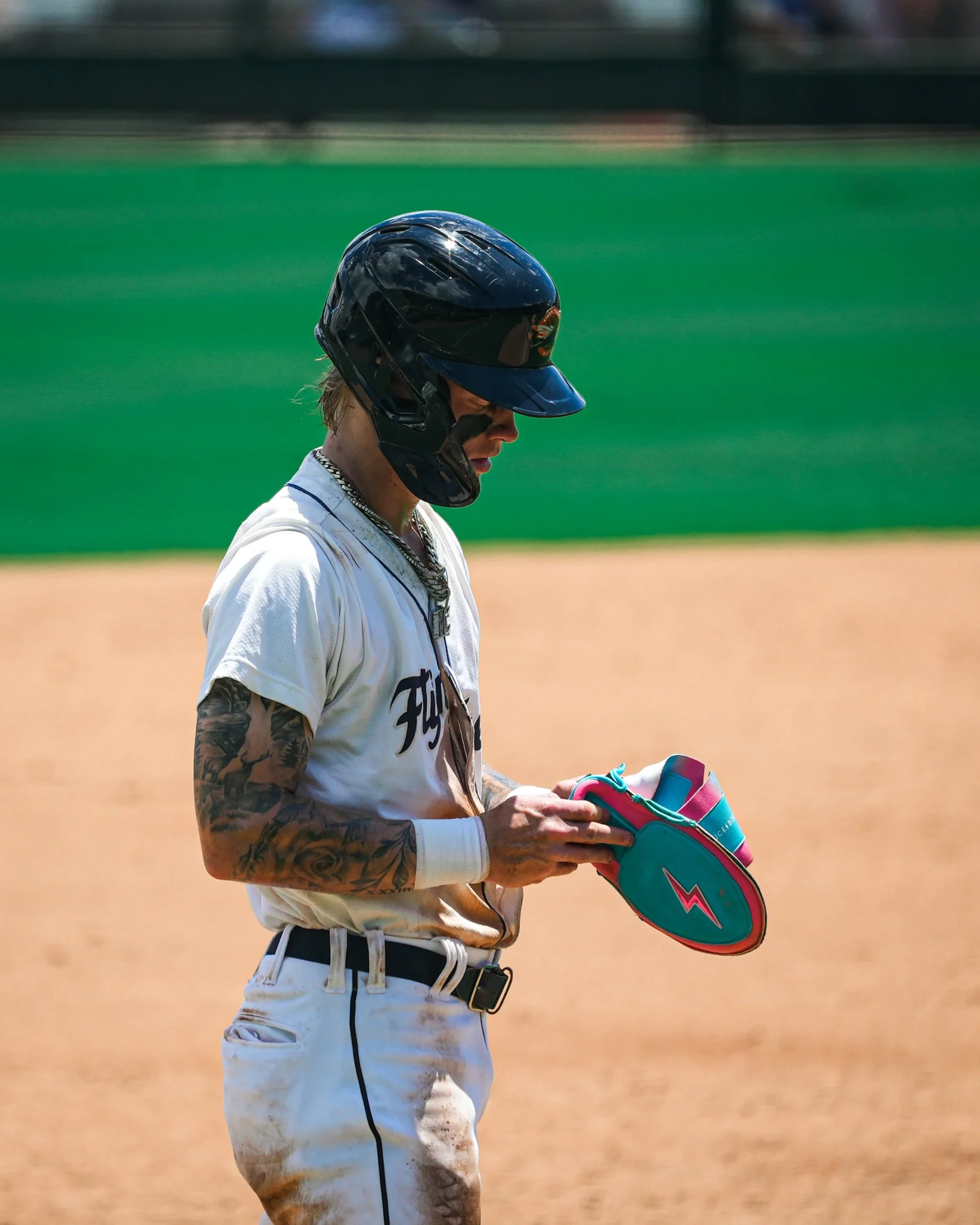
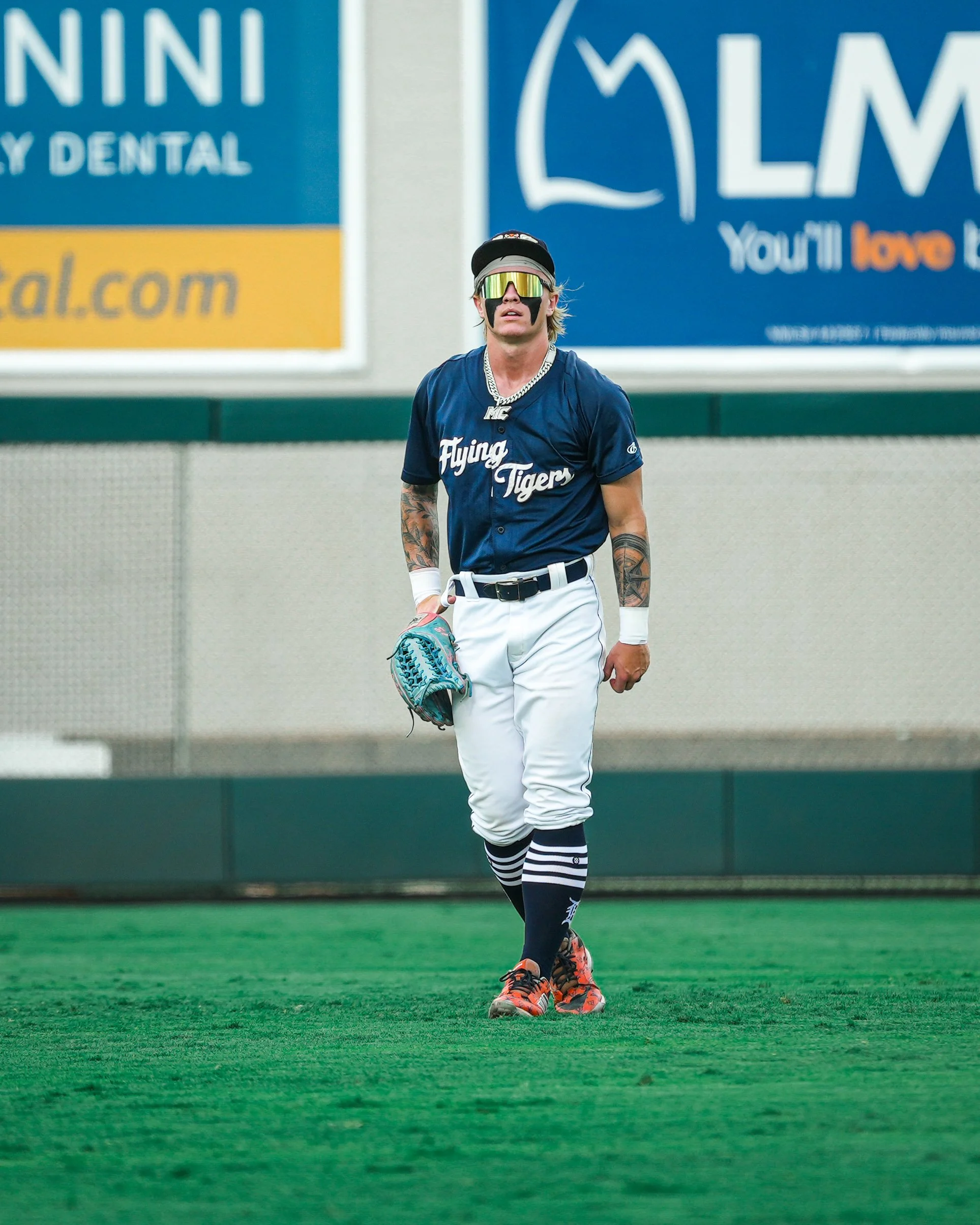
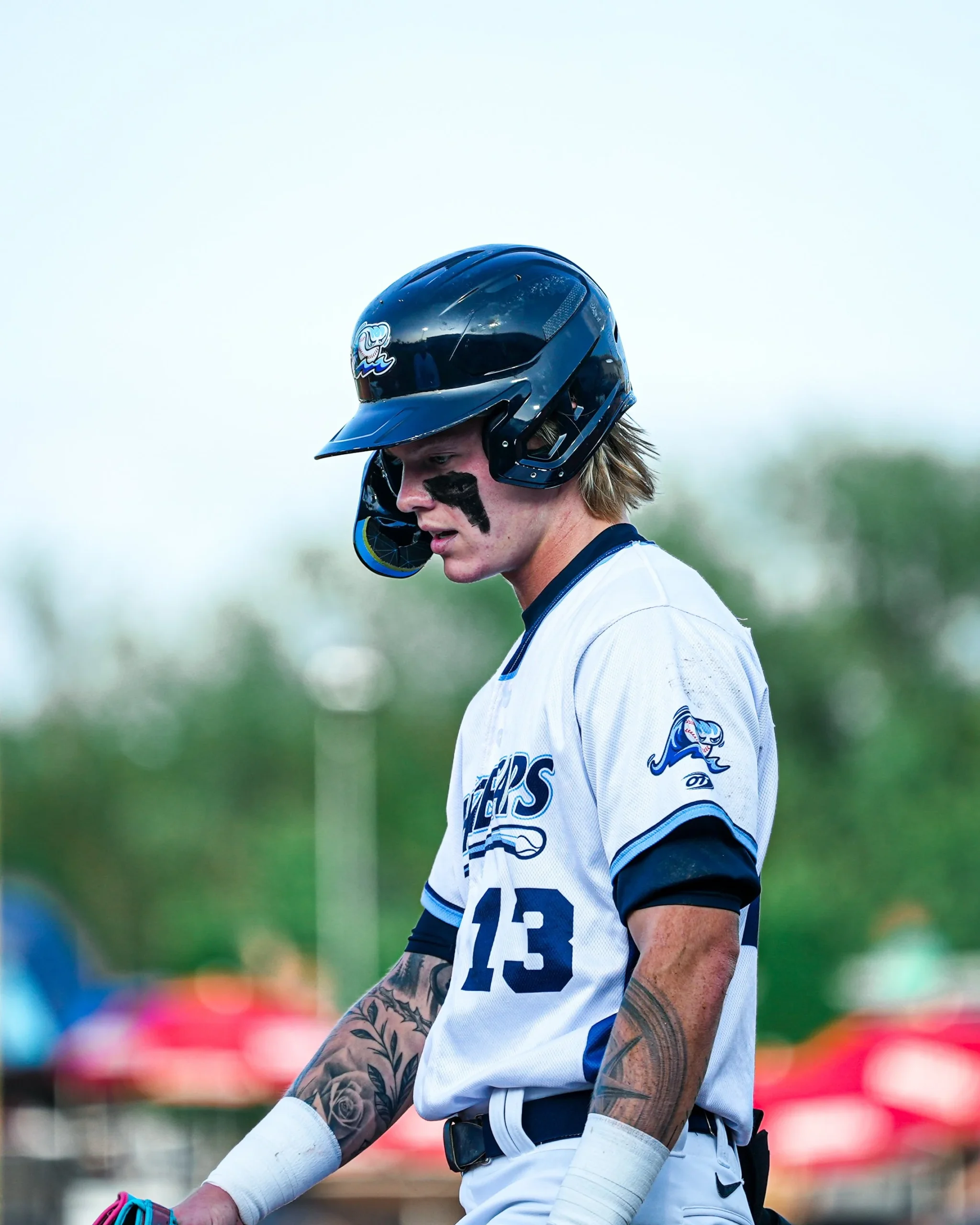
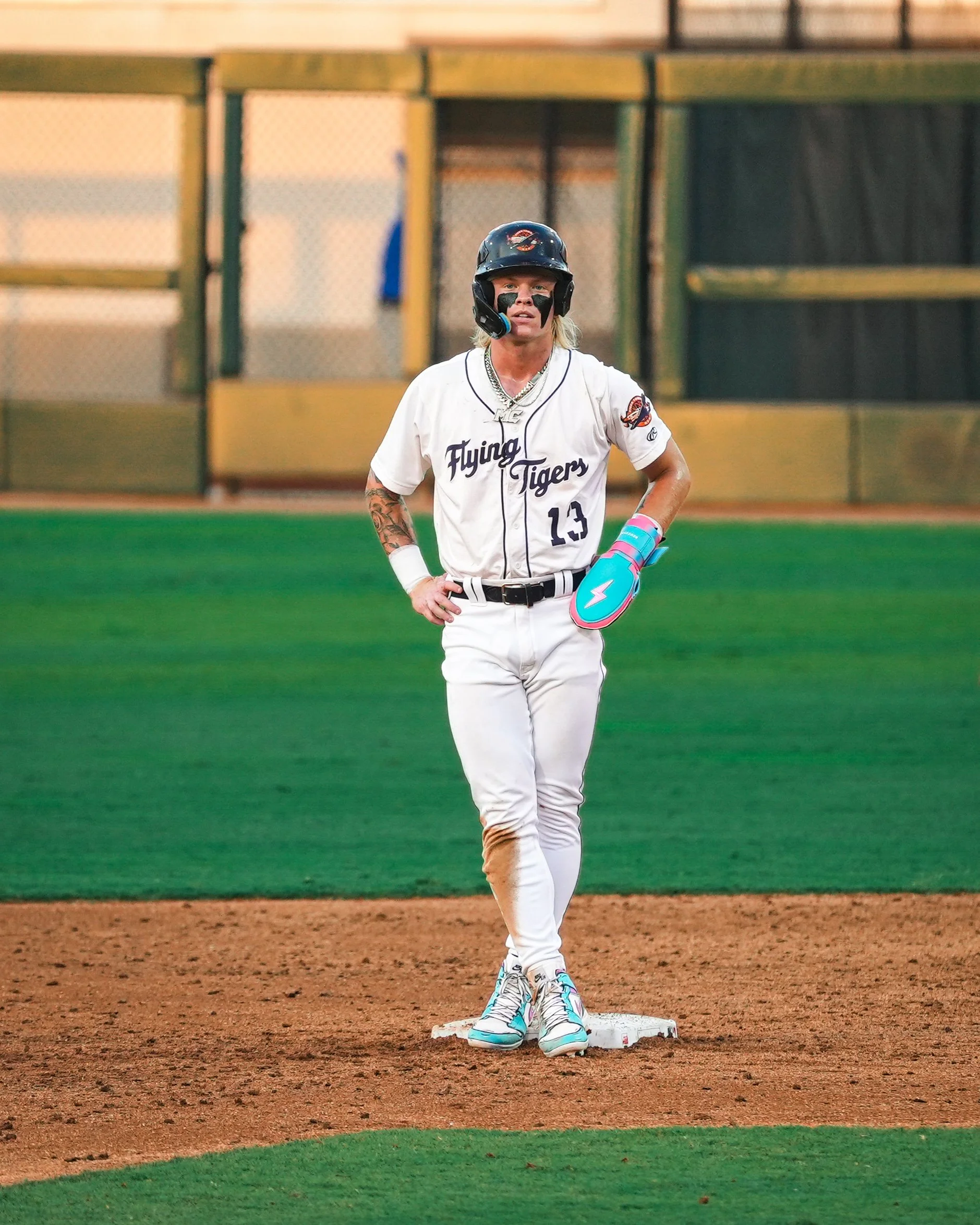
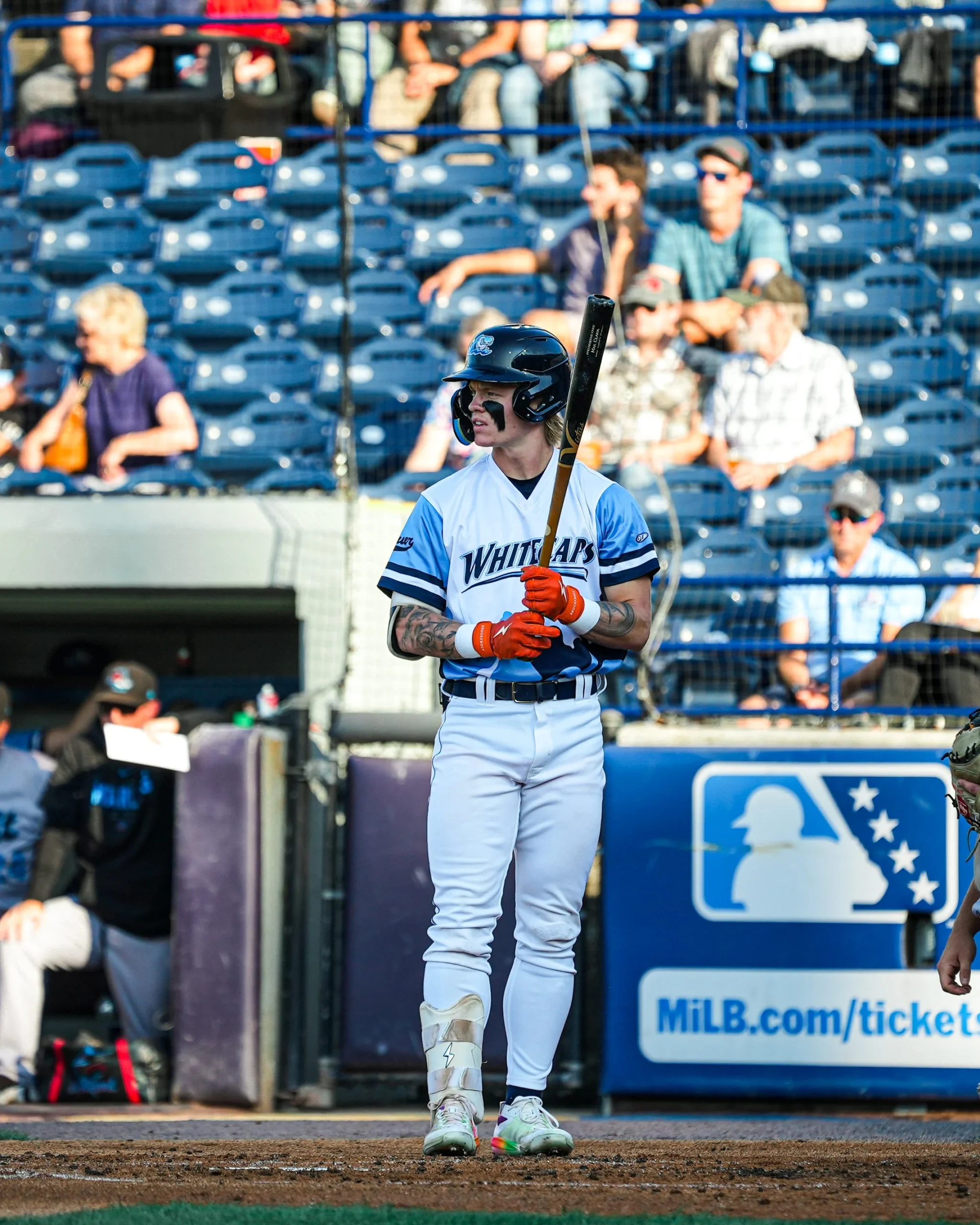
Clark’s arms carry the broadest visible group of designs in the available baseball photographs. The Creative Juice portfolio presents him in several distinct settings, including batting, fielding and portrait positions. Those images show black-and-grey work across the upper arms and forearms, with different motifs meeting as the sleeves wrap around each limb. The photographs support a description of layered arm coverage without requiring a name for every partially obscured symbol.
Several views make the contrast between the arms especially clear. A three-quarter field photograph shows the larger sleeve areas as Clark holds his glove, while a closer seated image brings the forearm sections nearer to the camera. A batting image shows how the same ink shifts when the elbows bend. The important visual fact is the breadth of the arm coverage, not a speculative catalogue of small marks that cannot be identified consistently across the photographs.
A Difficult Spring Reshaped the Season
The new side phrase is inseparable from the baseball circumstances that produced it. MLB described the tattoo as a response to the reassignment, and Clark’s own explanation gives the wording its meaning. The line is not presented as a generic slogan detached from his career. It arrived immediately after a disappointing spring and remained visible as he worked through the next stage of his development.
That context also explains why the piece stands out among Clark’s other visible designs. The chest numerals point to a date, the angels provide a surrounding image, and the arm sleeves form a larger visual field. The right-side phrase is the piece with the clearest spoken story attached to it. Its meaning comes from the sequence of struggle, reflection and return described in the reporting around the 2026 season.
How the Visible Work Appears in Baseball Photography
Baseball photographs reveal different portions of Clark’s ink depending on clothing, posture and movement. A sleeveless or short-sleeved uniform exposes the arms but may cover the side phrase. A turn toward the camera can make the chest numerals easier to see, while a fielding pose changes the angle of the sleeves. The result is a collection that never appears in exactly the same arrangement twice.
The Creative Juice photographs are useful because they provide more than one pose and setting. The arm tattoos remain recognizable across the series even as the distance and lighting change. That repeated visibility supports the description of genuine arm coverage. It also keeps the visual account grounded in photographs rather than treating one dramatic crop as a complete map of Clark’s body.
Details That Can Be Identified Without Guessing
Three features are especially secure. The first is the phrase on the right side, including the wording and its connection to the spring reassignment. The second is the chest sequence XII XIII MMXXV, reported alongside two angels and associated with December 13, 2025. The third is the extensive black-and-grey work visible on both arms in the portfolio photographs. These elements can be described without assigning private meanings that Clark has not publicly stated.
Some smaller motifs disappear under sleeves, gloves or the angle of the shot. A careful account does not turn those indistinct areas into confirmed portraits, symbols or names. The visible photographs are strong enough to establish placement, scale and overall treatment, while the written reporting is strong enough to establish the story of the date and phrase tattoos. Keeping those two kinds of evidence separate makes the description more accurate.
What the Photographs Keep Clear
Across the images, Clark’s tattoos are part of his public baseball presentation without replacing the subject of the photographs. The arm work is most visible in action and uniform portraits, the chest piece appears in closer views, and the right-side message emerges when his torso turns. Each design has a distinct visual behavior, which is why multiple photographs add useful information rather than repeating one identical view.
The documented collection therefore has three connected but separate visual stories. The chest combines a date with angel figures. The arms carry layered black-and-grey coverage that changes with motion. The side phrase records a particular professional setback and the response Clark attached to it. The photographs and reporting support those distinctions, while leaving any unconfirmed small details undescribed.
The Timeline of His Career
Placed in sequence, the tattoos follow Clark through different stages of his young career. The chest date and angel figures were reported first. The extensive arm work appears throughout his public baseball photography. Then, after the spring 2026 reassignment, the right-side quotation gave a specific setback a permanent visual marker.
That order matters because it prevents the pieces from being collapsed into one undifferentiated sleeve or one motivational theme. The date has its own numerals, the angels have their own framing role, and the phrase has its own location and explanation. Max Clark’s documented tattoo history is a set of distinct additions that happen to appear together when a photograph catches more than one area at once.
The Collection Stays Specific
Clark’s visible ink is most accurately understood through the details that can be checked: a vertical right-side phrase about rising after a fall, a chest date written as Roman numerals, two angel figures around that date, and extensive black-and-grey work across both arms. The reported meanings belong to the phrase and the family-linked date context. The smaller arm motifs remain visual details rather than claims about private symbolism.
Seen together, the tattoos track family, time and resilience. The chest piece anchors one date in a figure-led design. The arm work creates a broad, changing backdrop across baseball photographs. The side phrase gives a difficult spring a direct sentence and a defined placement. Those are the parts of Max Clark’s tattoo story that the available reporting and images make clear.