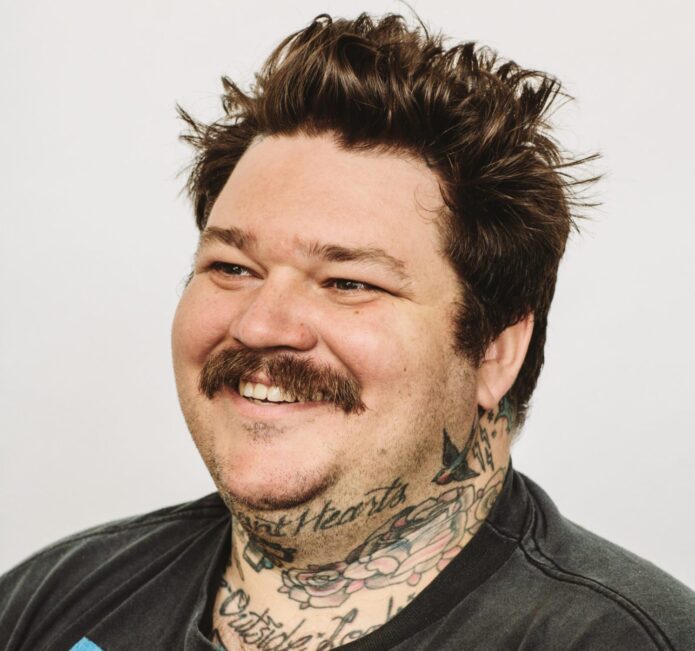
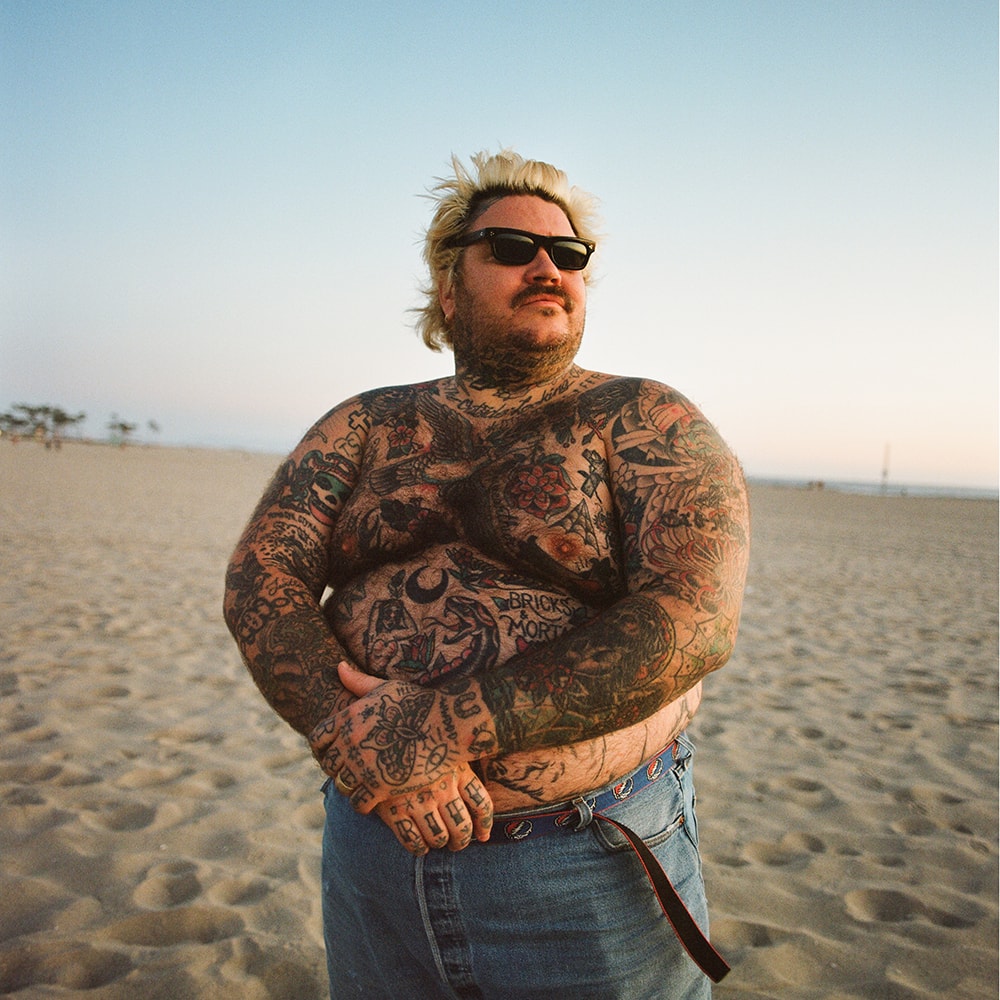
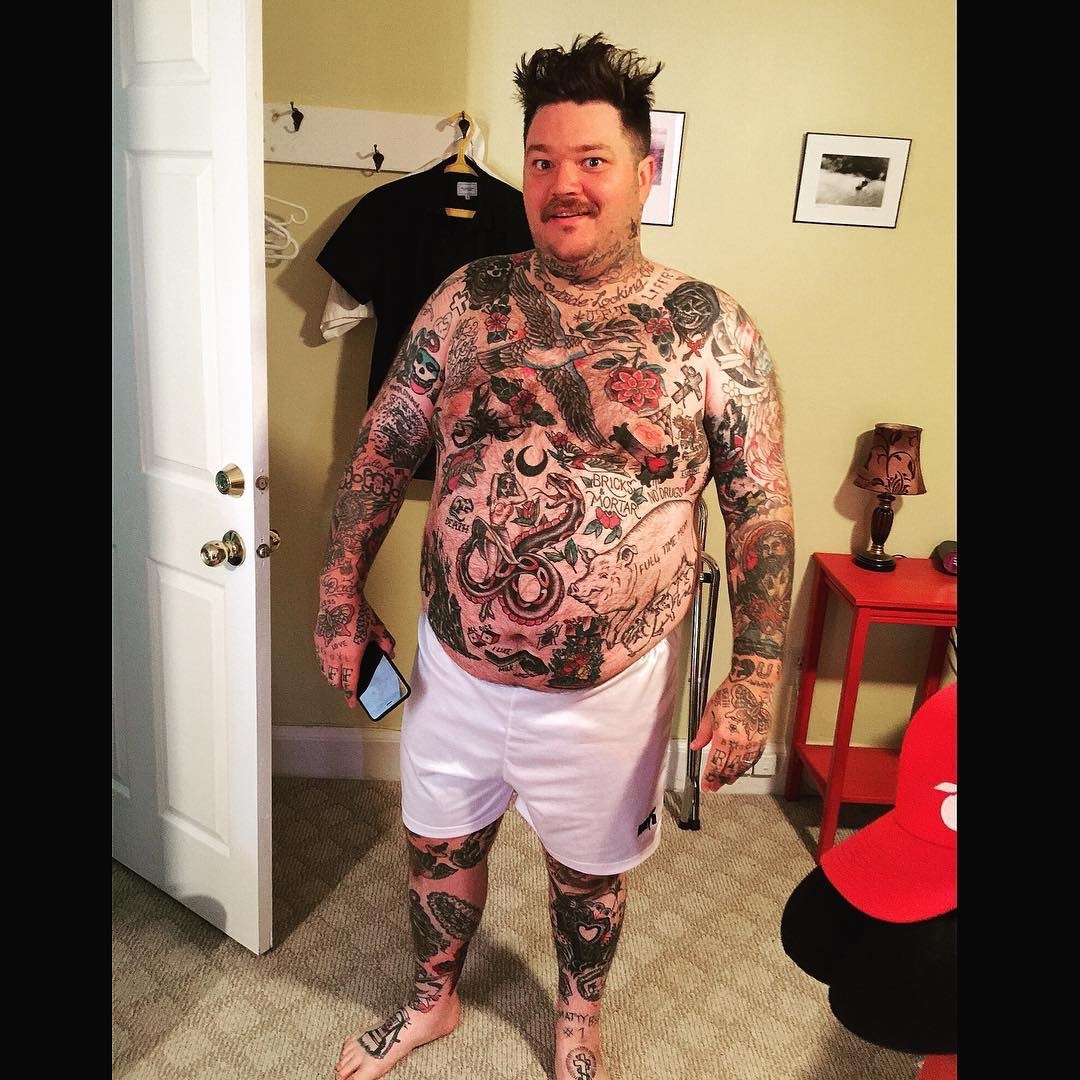
Matty Matheson’s tattoos cover much of his body: eagles, flowers, crosses, lettering, portraits, animals and smaller oddities. The pieces don’t follow one matching style; they’ve accumulated over time.
His sleeves are dense, and a close photo won’t always show how each tattoo sits in the larger collection. This guide describes visible details and keeps reported meanings separate from what can be seen.
Matheson is known for food and television, and he also plays in the hardcore band Pig Pen. Revolver has written about the band and his tattooed sleeves alongside his work in music, cooking and clothes.
The right shoulder and upper arm hold an eagle, a nearby mask and snake, and a growling face below. Above the snake is a cross with the letters “TS” inside a heart.
The eagle spreads across the rounded shoulder; the mask and snake make a tighter cluster below it, and the darker face adds weight at the bottom. Each image has its own outline, so the arm reads as several connected pieces.
The shoulder and elbow turn as he moves, which changes what a photo can show. One angle gives only part of the composition.
The arm work and chest lettering
Another right-arm piece combines an intricate cross, a red eye and a daggered heart. The cross carries the letters “NNG”; a banner around the heart reads “SHAT”, according to the documented inventory.
The eye, heart, cross and dagger each pull the design in a different direction: a focal point, a curved shape, a vertical line and a sharp edge.
A daggered heart has familiar associations, but that doesn’t establish Matheson’s personal reason for getting it. The image confirms the shapes and placement, not a private story.
The rounded bicep gives the design a clear surface from the front. When the elbow bends, part of the image turns away.
The roses and script around his neck
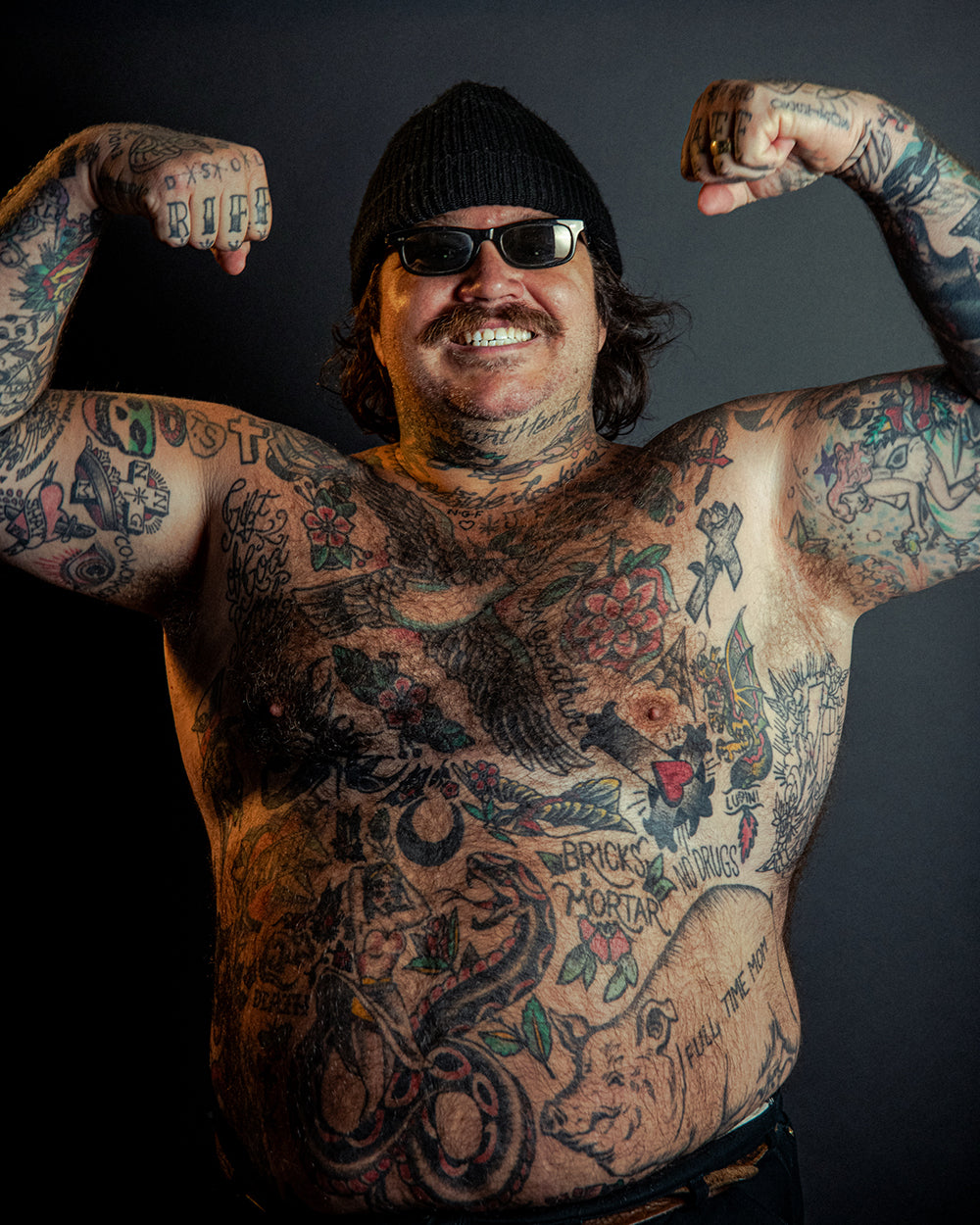
On Matheson’s right forearm, an eagle sits above a rose, with chain detail and the letters “JS” inside it. The eagle and rose form the larger shapes; the chain closes the lower part of the design.
The forearm moves into view during ordinary gestures, so the piece is visible without needing to be shown off.
Eagles appear more than once in the documented collection, but their scale and surrounding details change from one placement to another. The repeated subject doesn’t read like a single logo.
Busy doesn’t have to mean cramped. Around this forearm piece, the skin between motifs gives the eagle, rose, chain and letters room to read.
The wide portrait of his upper-body ink
Matheson’s hands carry a butterfly on the left, small knuckle marks and finger lettering: “RIFF” on one hand, “RAFF” on the other. The documented inventory also includes “ENDLESS LOVE” and other letters and symbols.
The words break across separate fingers and come together when the hand opens. As the fingers bend, the lettering shifts with them.
The butterfly adds a lighter outline to the same area, beside the blockier finger lettering.
Hands are exposed to washing, friction, sunlight and constant movement. Small lines can soften, and a design that crosses knuckles may be difficult to touch up.
The full-body tattoo coverage
A Jesus portrait sits on Matheson’s upper arm, with red flowers beneath it. The face carries most of the attention; the flowers add color and follow the shape of the arm.
The upper arm gives the portrait room for its features, while the flowers soften its lower edge. Small changes to a face can alter its expression, so the reference drawing matters.
The portrait sits beside crosses and other faith-related imagery in the collection. The visible subject is clear, but the image alone doesn’t explain Matheson’s personal reason for choosing it.
The red flowers are the strongest color in an otherwise mostly black-and-gray group of tattoos.
Closing thoughts
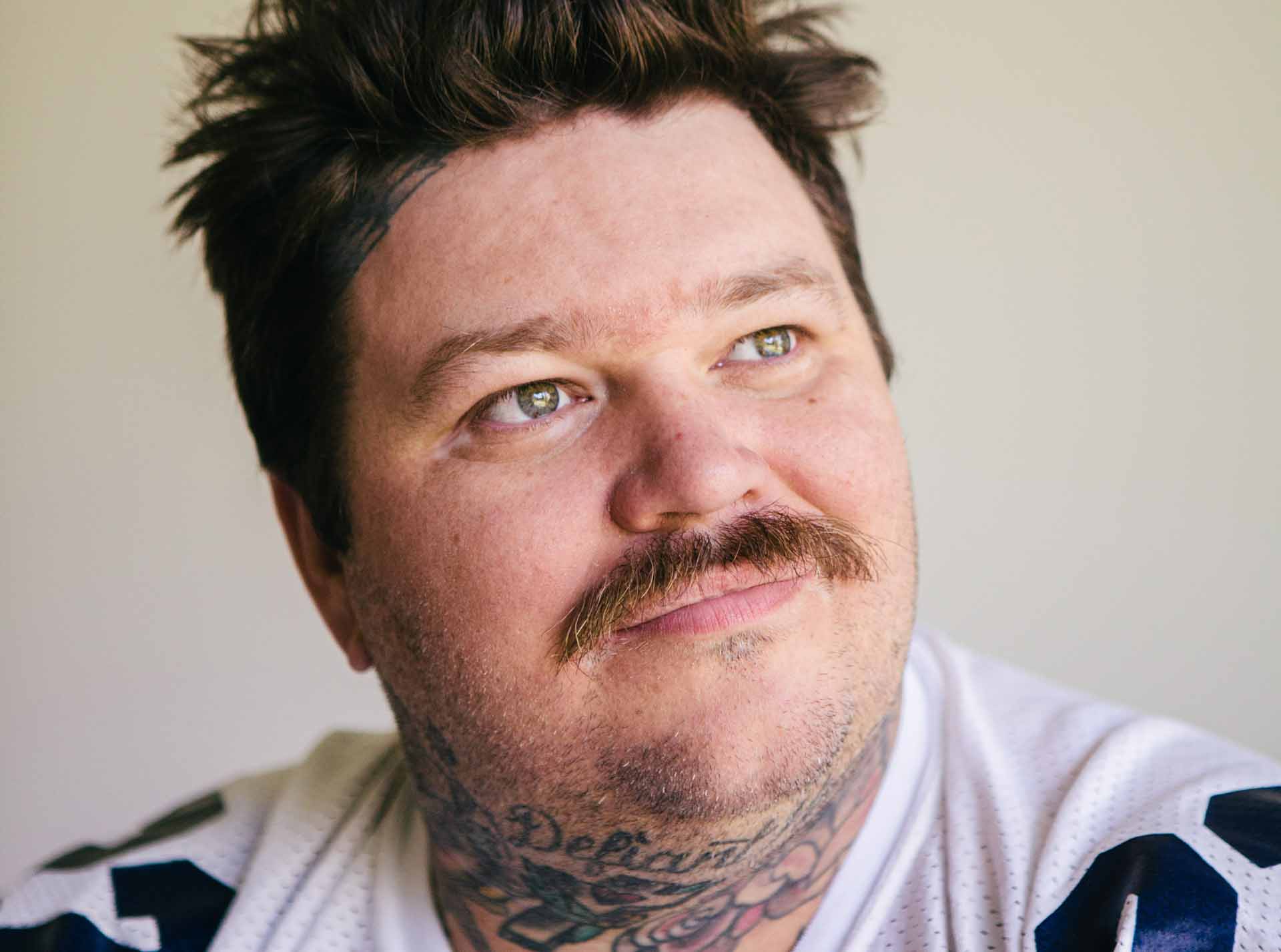
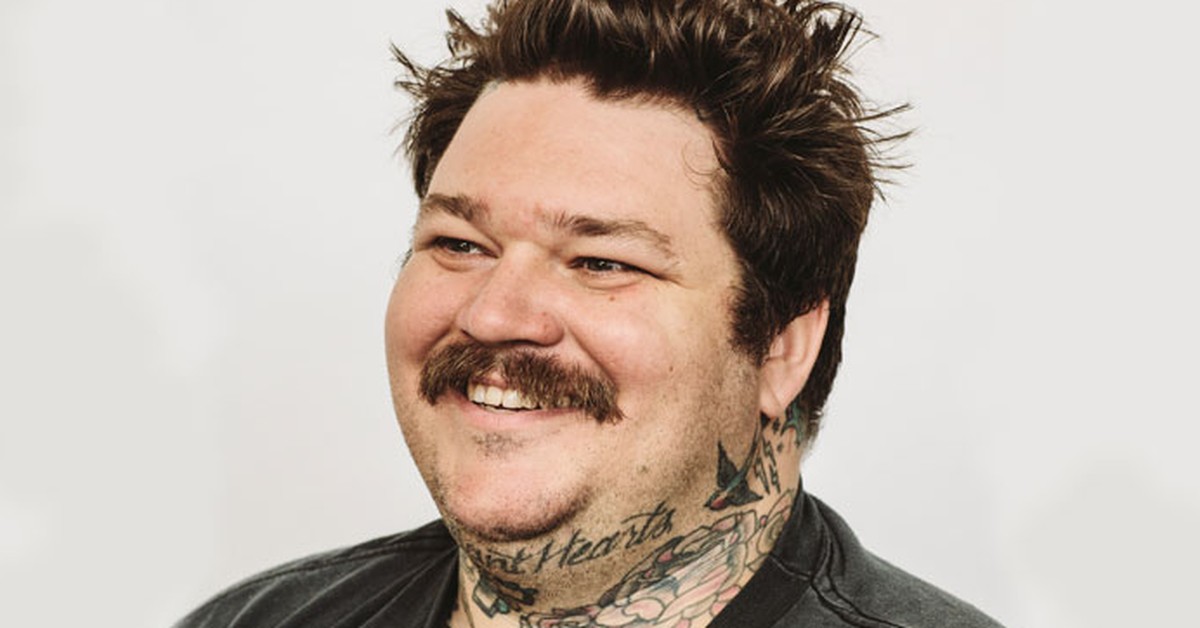
On Matheson’s neck are the words “Defiant Hearts” and “The Outside Looking,” alongside a small cross, a heart and floral details around the throat.
Neck lettering is hard to miss: the words sit close to the face and can be more or less visible depending on a collar or open shirt.
The artist also has to account for how the skin turns when the head tilts. A phrase that looks balanced in a stencil may feel crowded once the neck moves.
The placement makes the words public, but it doesn’t tell us whether they are a private reminder, a statement or simply lettering Matheson liked.
A collection built for movement
Across Matheson’s arms, hands, neck and torso, the collection uses different styles and scales. It reads as a group of separate scenes rather than one continuous sleeve.
His work has moved through restaurants, television, cookbooks, online videos and music. The tattoos can sit alongside those different chapters without needing to represent just one job.
A close photo helps identify one design; a wider portrait shows how it sits beside the rest. The shoulder eagle, for example, reads differently once the neck and chest tattoos enter the frame.
A large collection doesn’t have to be finished in one style. Traditional portraiture, lettering and small hand pieces can coexist, with the wearer’s taste providing the connection.
How to borrow the useful parts
Matheson’s tattoos are useful as references for scale and placement, not as a list to copy. Look at how each image fits its part of the body and how much skin is left around it.
Decide how visible a tattoo should be before settling on the detail. A hand stays in view through daily tasks; a back piece is easier to keep private.
For lettering, keep reported readings qualified. One inventory links the hand design to “RIFF RAFF”, while not every photo makes each letter equally clear.
A final look at Matheson’s style
There isn’t one motif tying every piece together. The collection leaves room for traditional images, religious references, lettering and jokes to keep their own character.
One thought on “Matty Matheson Tattoos: Eagles, Lettering and Full-Body Ink”