Mark Hoppus’s forearm tattoos tell two different stories: a cartoon grim reaper linked to his cancer recovery and the name “Skye,” for his wife. The designs sit close together but have little in common visually.
The small collection behind the big story

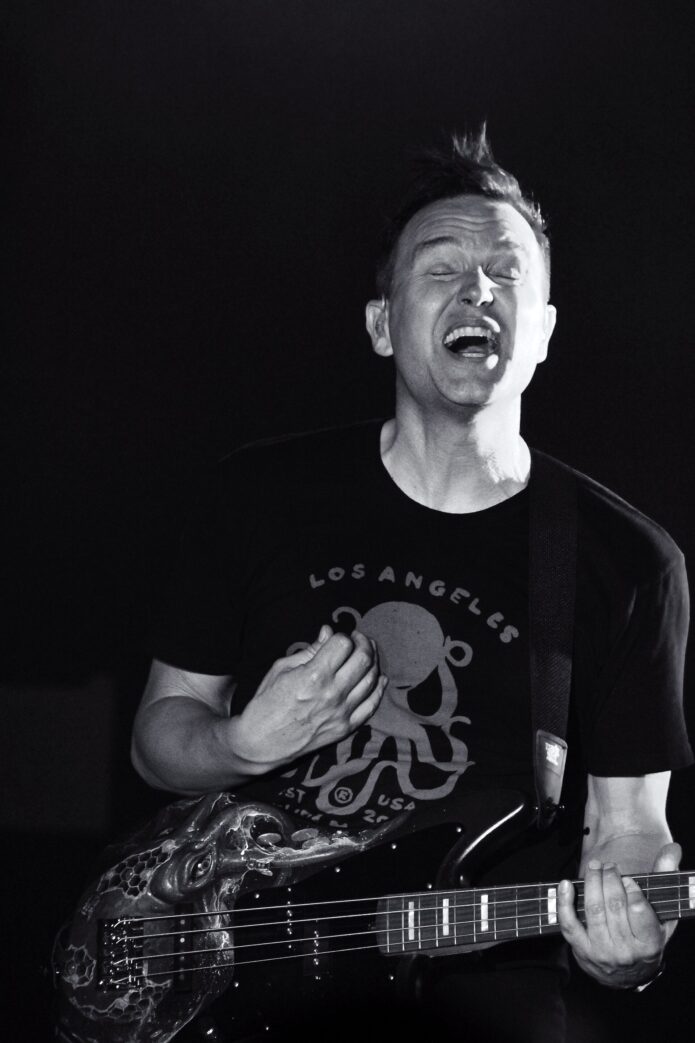
Mark Hoppus performs with Blink-182.
The coverage of Hoppus’s tattoos centres on the reaper and the Skye lettering. Dabs Myla designed the reaper, and Dan Smith tattooed it. Hoppus shared the finished piece after his cancer treatment; the artists also posted about the collaboration.
The second design is Skye, his wife’s name. Hoppus and Skye Everly have been together for decades. In the photo, the loose script sits lower on the arm, separate from the larger figure.
One is a colorful illustration; the other is a handwritten name. They share an arm without needing matching styles.
The cartoon grim reaper on his forearm
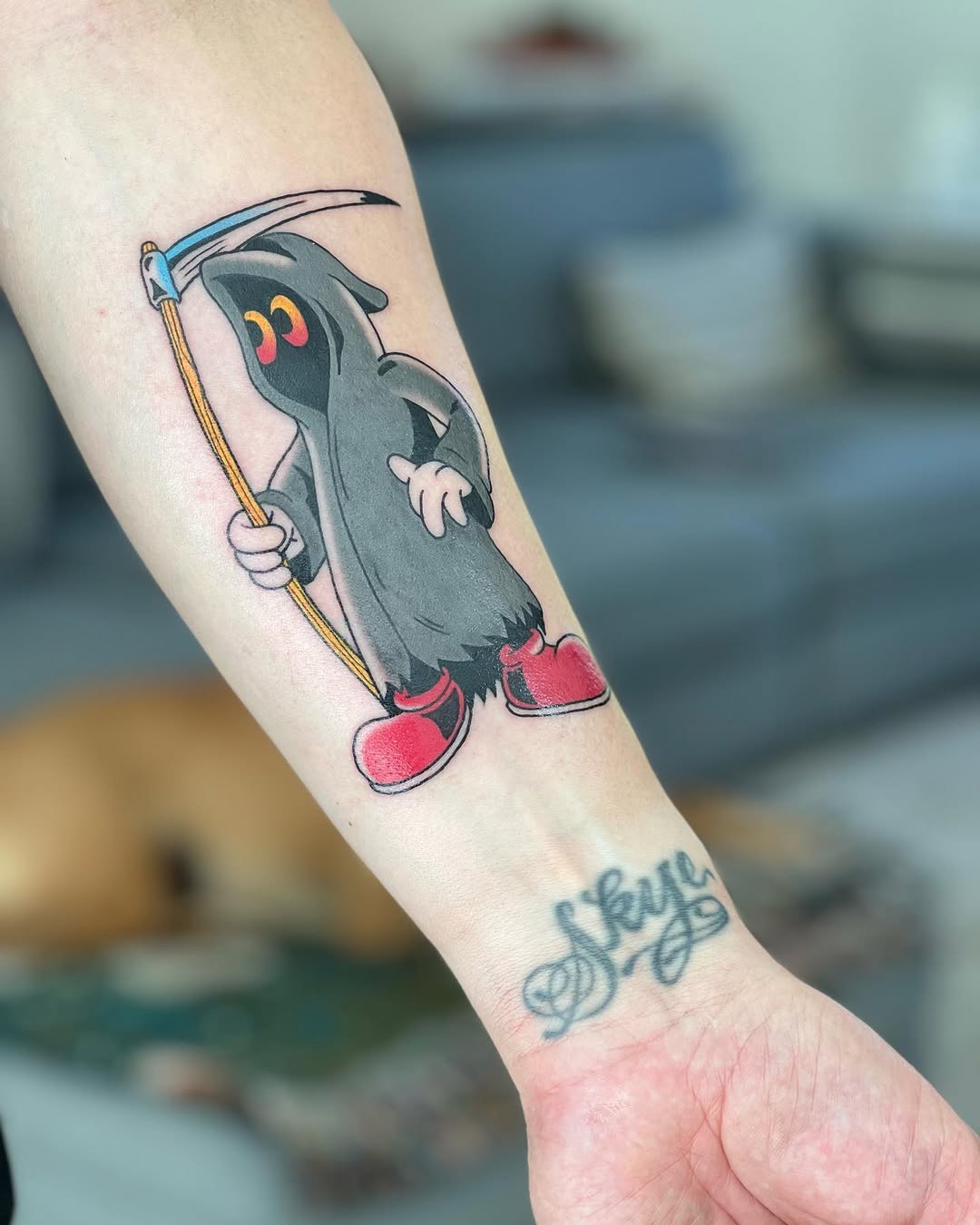
Mark Hoppus’s cartoon grim reaper and Skye lettering.
The close-up shows a gray hooded figure with a curved scythe, pale hands, yellow details and bright red shoes. The script tattoo sits below it.
The reaper doesn’t look frightening. Its rounded face, wide eyes and red shoes give it a cartoon feel; the scythe keeps the familiar link to mortality.
The open shapes leave the hood, face, arms and scythe easy to distinguish. There’s room for the figure to read as a character instead of a mass of small details.
Why the reaper fits the story behind it
Hoppus announced his lymphoma diagnosis in 2021 and later said he was cancer-free. iHeart’s report describes the reaper as a way to mark his recovery. Dabs Myla’s message, “Not this time, DEATHY!” gives the image its defiant, joking tone.
The cartoon doesn’t make the illness itself funny. It puts an absurd face and red shoes on the reaper, turning a grim subject into a character Hoppus chose to carry with him.
The humor sits beside the meaning, not in place of it. The tattoo can mark a hard chapter without looking like a monument.
Hoppus’s visual world outside the stage

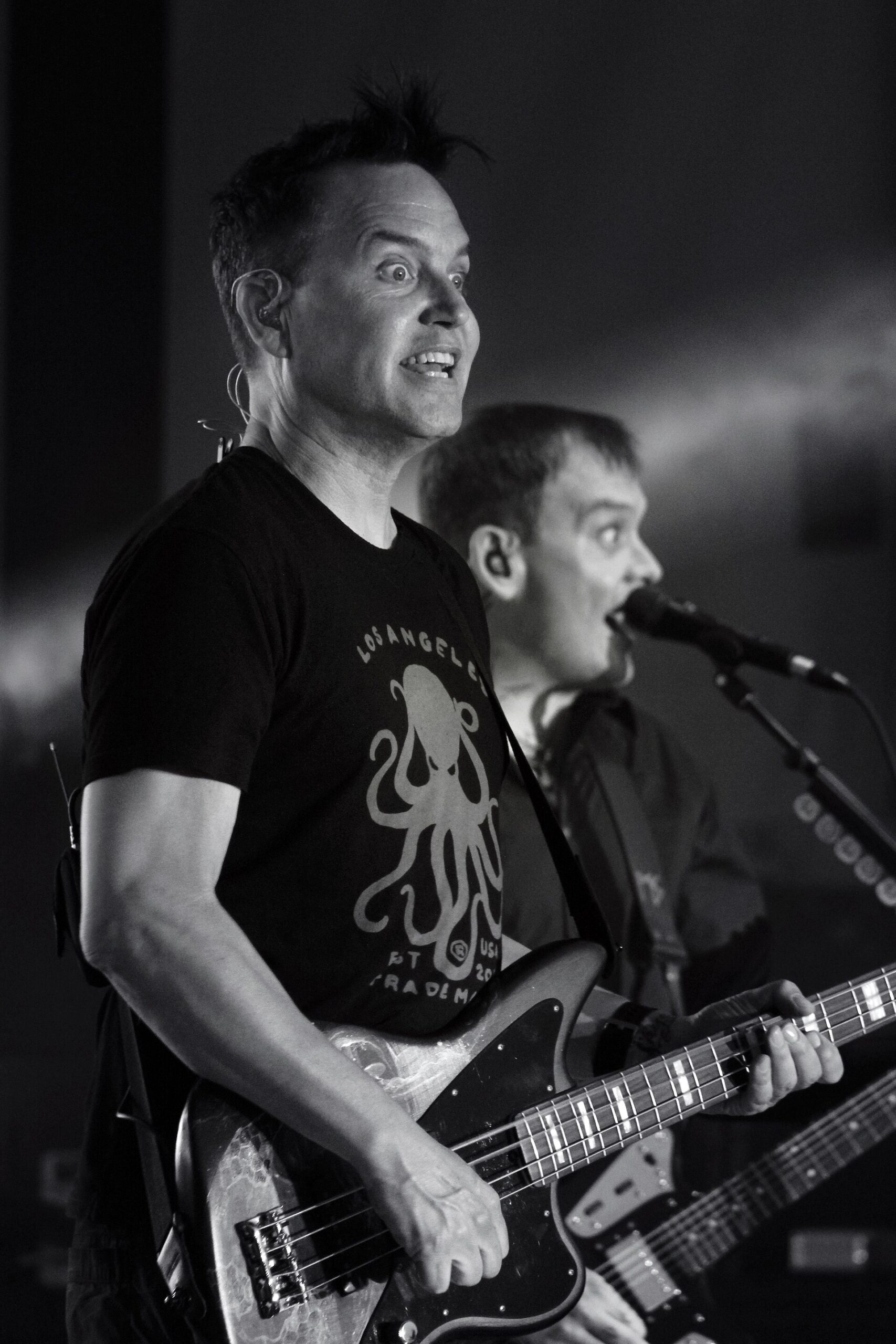
Mark Hoppus on stage with his bass.
The performance photos put Hoppus in his pop-punk setting, but they’re context, not close-up evidence of the tattoos. The two designs discussed here don’t rely on a band logo: one is a cartoon figure, the other a name.
The forearm gives the reaper room for its face and scythe, while the lettering stays smaller. Different scales let each design keep its own character.
Color that keeps a character readable
Mark Hoppus performing in black and white.
The reaper uses mostly gray, black and muted tones. The yellow scythe handle and red shoes provide the brightest color, so the figure stays readable without every detail competing for attention.
For a colorful character tattoo, decide where you want the eye to land, then let the other shades support it. A limited palette can keep the image clear.
The outer line separates the figure from the skin, while lighter marks show the cloak’s folds. That contrast gives it shape without filling every space with heavy black.
The right tone for a serious story
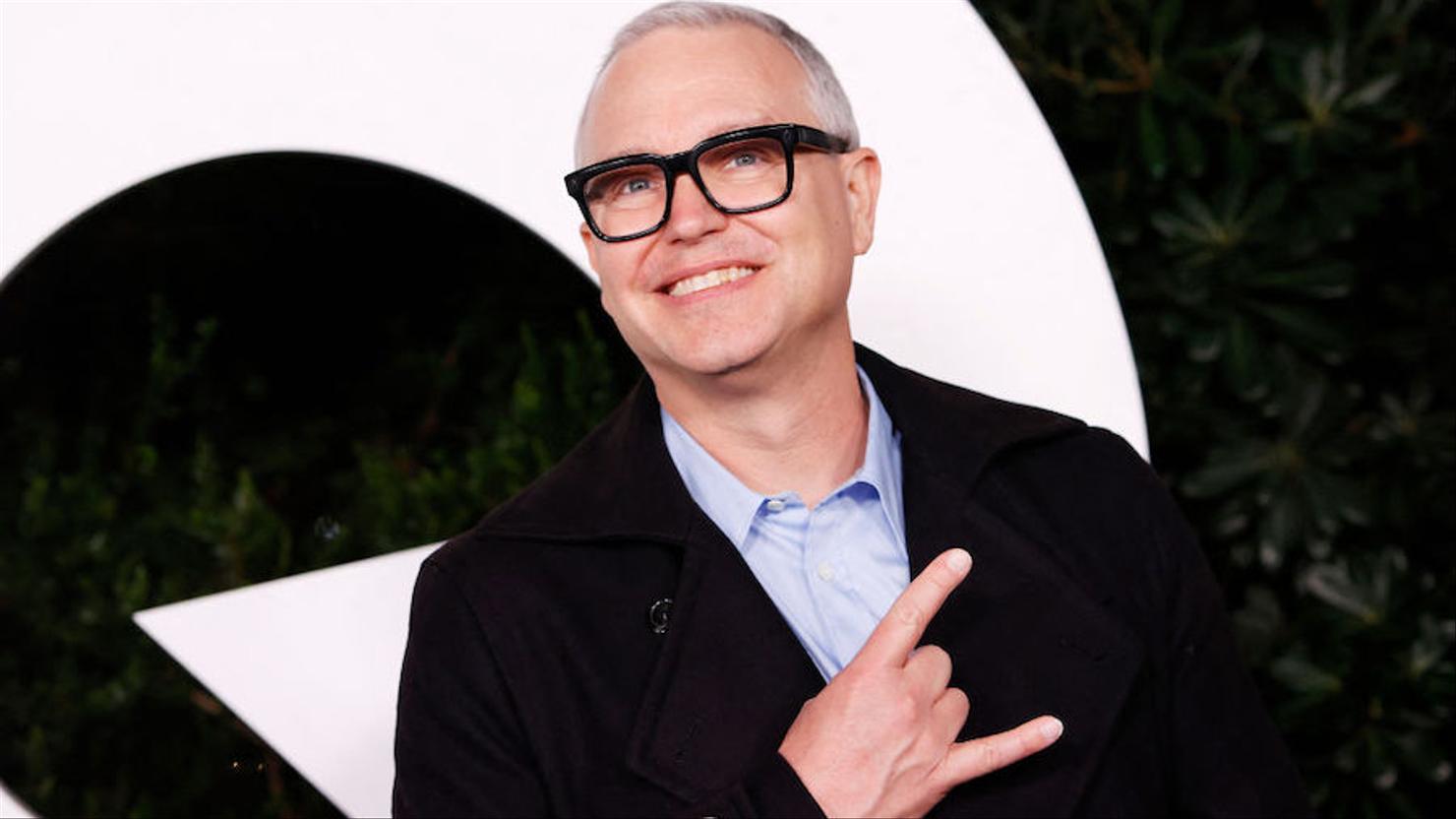
A portrait of Mark Hoppus.
Hoppus’s reaper connects a serious experience to an image with humor. If you’re planning a tattoo about recovery, choose a tone that feels like you; it doesn’t have to look solemn to matter.
Give a character enough space for its face, hands and small objects to stay legible. An artist can simplify a reference and adjust its proportions instead of squeezing every detail into a small area.
The same principle applies to lettering: consider whether the words will still mean something beyond the moment that inspired them. Hoppus’s Skye tattoo is tied to a long relationship, not a passing trend.
A small collection with a lot behind it
The public coverage here focuses on two tattoos on Hoppus’s forearm. The reaper marks a chapter he spoke about publicly; the Skye script is a name tied to his marriage.
They can sit together without becoming a matching set. One is bright and cartoonish, the other quiet and personal.