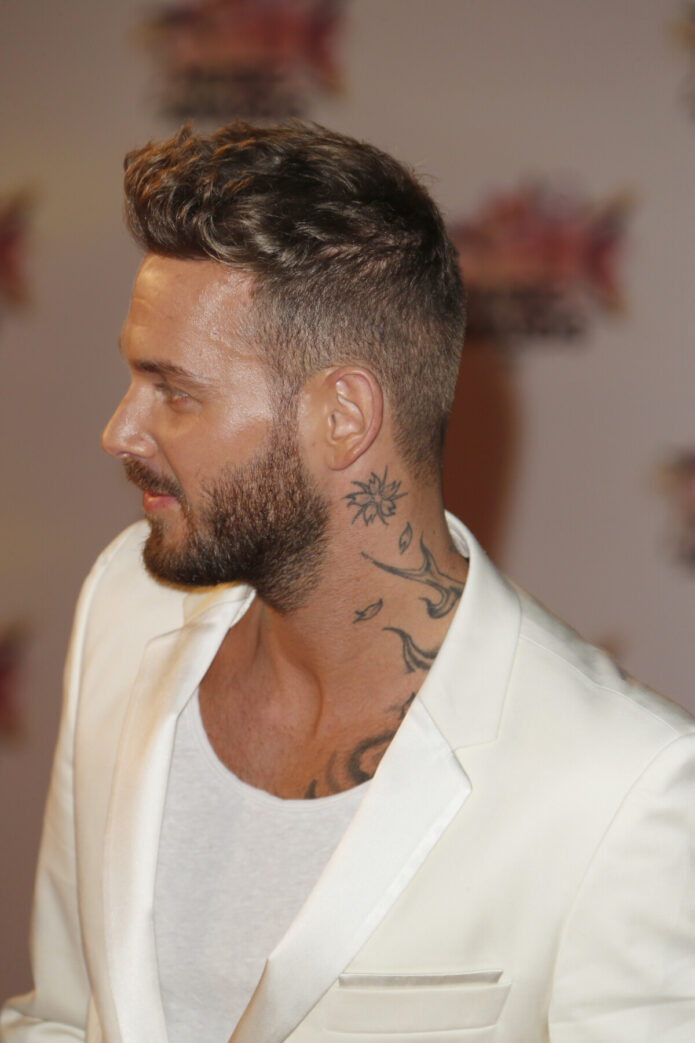
M. Pokora has tattoos across his arms, chest, shoulders, neck, back and legs. Interviews explain some pieces, while photos record others without giving their meaning. His neck work also changed over time: he later said he regretted some designs and began removing them.
The collection is built around visible black-and-grey work
Much of the photographed collection is black and grey, with lettering, figures, flowers and shaded designs across the arms and upper body. The forearms and shoulders appear often in performance and portrait photos, while back and leg pieces are less consistently visible.
The images span different periods, so smaller early marks appear alongside denser later work. They show how the collection grew without making every tattoo part of one planned sleeve.
A family-linked word begins the record
“Pokora” is a Polish word for humility. In a televised interview reported by Ouest-France’s MCE TV, Pokora said he chose the tattoo with his grandmother. The word sits on his right forearm and connects his stage name to that family relationship.
Early photographs show it among the later lettering and imagery on the arm.

The right forearm phrase becomes a signature
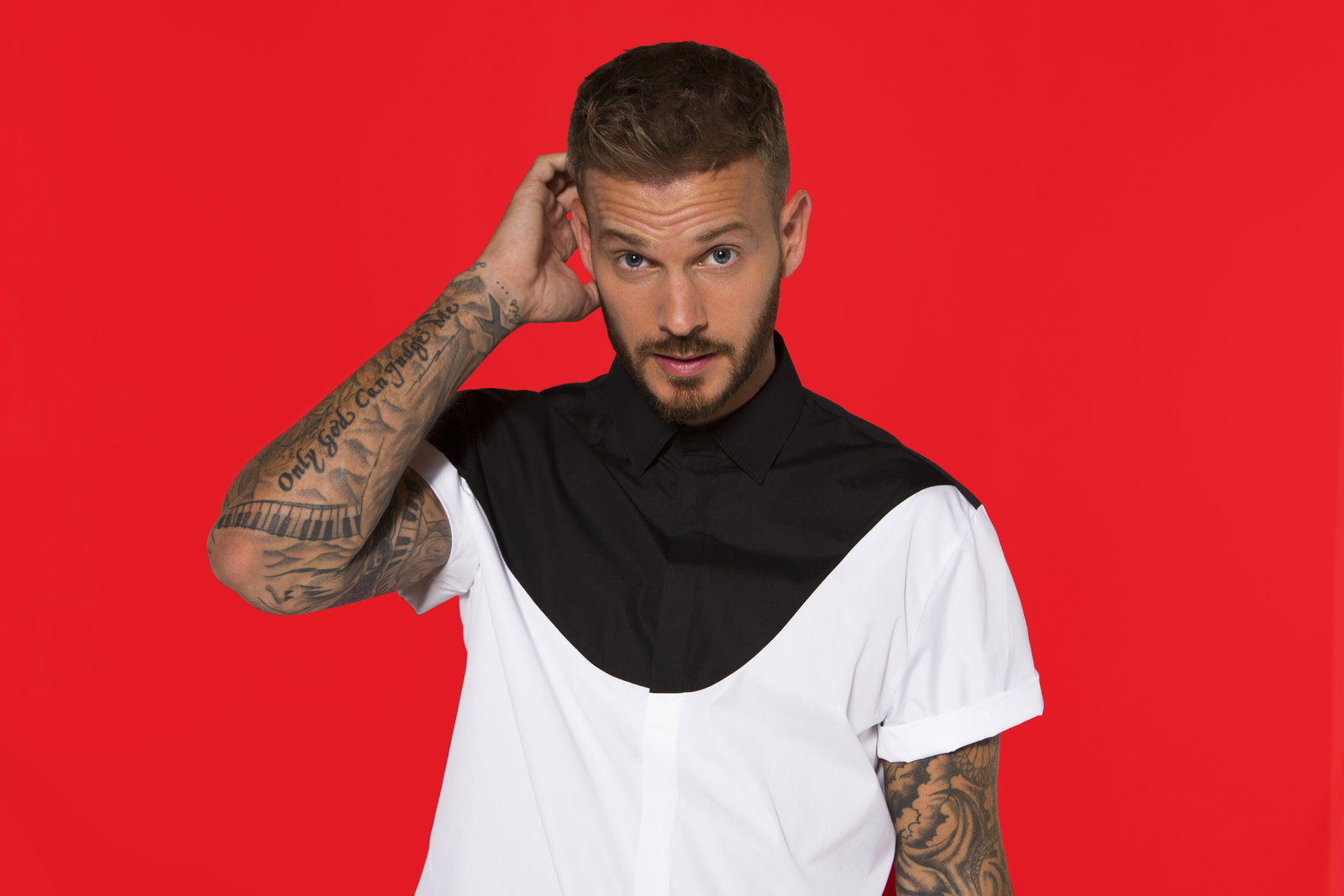
The phrase “Only God Can Judge Me” is another prominent tattoo on Pokora’s right forearm. Photos show it within a larger black-and-grey composition, where the words remain readable among the surrounding shaded work.
A Purepeople photograph from July 2020 shows the lettering alongside the sleeve and chest tattoos.

A close portrait reveals the larger figures
An IMDb portrait from a music-video context shows a large dragon- or Asian-inspired figure across Pokora’s shoulder and upper chest. Its darker shading and broad placement make it stand out from the simpler forearm lettering.
The available interviews don’t give a confirmed meaning for every part of the figure. The images establish its shape and placement, not a private interpretation.

The M and flames belong to an early body-art era
Older photos and French coverage identify an “M” with flames among Pokora’s early tattoos. The letter relates to his name and stage identity. He later said he regretted some early roses, flames and neck pieces; some were covered, altered or considered for removal as his style changed.
The rose and Virgin Mary expand the upper silhouette
In 2016, NRJ reported a large rose on Pokora’s right shoulder extending toward his chest, along with a Virgin Mary inspired by imagery from a church in Mexico. The rose adds a botanical shape among the darker upper-body work; the Mary design is a larger figurative piece.
The Mexico connection comes from the coverage of the artist’s post. The sources don’t give a more detailed explanation for either design.
Neck tattoos became the part he later removed
Older coverage describes an Arabic proverb on Pokora’s neck, later covered by roses, branches and cherry-blossom forms. The flowers frame the sides and front of his neck below the jaw.
By 2015, Pokora had said he regretted some of the neck work. Purepeople documented removal sessions in 2022, so current photos may look different from archival portraits.

Hidden coverage adds a second layer to the record
Photo coverage identifies a broken-chain tattoo across Pokora’s lower back, usually visible only in shirtless or changing-room images. He has also said tattoos cover his back, legs and both arms, though published photos show only parts of those areas clearly.
The chain is a reported detail; other marks that can’t be identified in the photographs remain undescribed.
The collection includes a star, the number seven and an ankle arrow
Coverage identifies a star on Pokora’s left hand, a lucky number seven and an arrow associated with Robin Hood on his left ankle. These small marks sit apart from the larger shoulder and arm pieces.
The arrow’s reported Robin Hood connection gives it a named reference; the star and seven are described as small symbols.

Photographs show a collection that changed with his public image
Rehearsal shots show more of the arms, chest and legs; event portraits often focus on the neck and shoulders. The images capture different periods, particularly before and after the neck-removal sessions.
Clothing, pose and cropping affect what is visible. A photograph shows placement at a particular time, not a complete or unchanged inventory.
Names, faith and memory share one record
Pokora has explained the family meaning of “Pokora,” and the right-forearm phrase states a faith-related message. Reports also identify the Virgin Mary, the lucky seven and the Robin Hood arrow. Other large figures and floral work are better described by their appearance because the sources don’t provide a personal explanation.
The right side remains visually dominant
The right arm brings together the forearm lettering, “Pokora” and surrounding shaded work, making it one of the collection’s clearest clusters in sleeveless photos. Neck, shoulder and lower-body tattoos extend the record beyond that side.
The documented record ends with a changing silhouette
Pokora’s interviews explain selected tattoos, while photos show pieces that have changed or been removed over time. The record is a mix of family, faith and visual detail, not a full explanation of every mark.