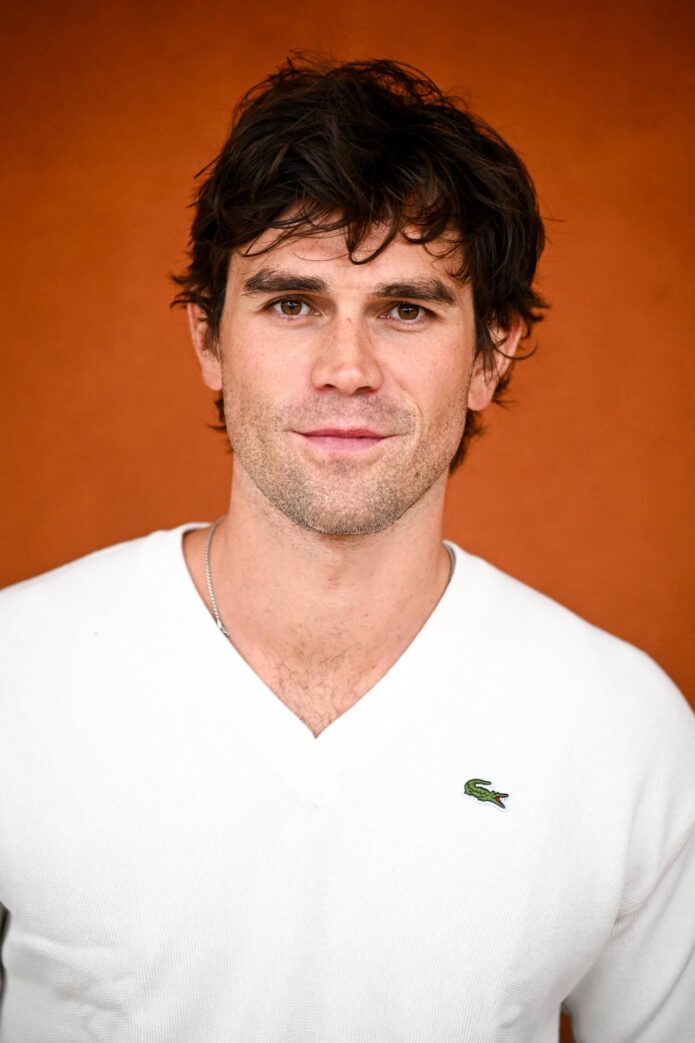
KJ Apa’s tattoos sit at the intersection of family, Samoan heritage, music and the practical demands of an acting career. The Riverdale star has spoken about loving the art and the experience of getting inked, while interviews and portraits show designs that range from traditional shoulder work to a Van Halen tribute and small matching symbols.
That mix makes Apa’s collection more interesting than a simple list of celebrity tattoos. Some pieces are tied to family and cultural responsibility. Others come from his love of guitar music or from the spontaneous pleasure of working with a tattoo artist. The photographs also show why his ink sometimes appears and disappears on screen: makeup teams have to cover it whenever Archie Andrews is shown shirtless.
Samoan shoulder work carries family history
The strongest starting point is the pair of shoulder tattoos that frame Apa’s upper body. His Samoan background is not a styling detail added after his acting career. In interviews about receiving a chiefly title, he connected one tattoo with his father becoming chief of their family’s village in Samoa. That places the design inside a living family story rather than treating it as a generic tribal pattern.

The V Man portrait shows the geometric shoulder work in a clean fashion setting. Repeated lines and curved shapes create a visual rhythm that holds its form even when the arm turns. The tattoo reads as a deliberate structure, not a random cluster of small marks. On the opposite shoulder, the darker design gives the composition balance while leaving the centre of the chest open.
The important point is context. Traditional Samoan mark-making has cultural weight, and Apa’s comments connect his own design with family and chiefly responsibility. It would be inaccurate to assign a universal meaning to every visible line from a photograph alone. What can be stated confidently is that the tattoo is part of his relationship to Samoa and to the role his father holds in their village.
The bee tattoo is a family match
One of Apa’s clearest personal explanations concerns a bee tattoo on his arm. He told People at the Teen Choice Awards that his mother and grandmother have the same bee. The design therefore works as a family match, and the wreath that surrounds it was connected to the time he spent waiting for another tattoo on his shoulder.

A gym photograph from the tattoo coverage gives a close look at the shoulder and upper-arm work while Apa wears a red Nike tank. The crop does not show every small detail, but it makes the density of the black geometric pattern easy to see. The tattoo is not just a prop for a red-carpet outfit. It remains visible in a casual setting where the body art is part of his everyday appearance.
The bee also shows how Apa talks about tattoos differently from the way fans often do. He has described himself as addicted to the art and the experience, which leaves room for both carefully planned family designs and impulsive additions. The matching bee has a clear emotional anchor, while the surrounding work can still be appreciated for its shape, line weight and placement.
Small matching designs can carry more personal information than a large sleeve. The bee links three generations through a simple image. Its scale does not make it less important. In this case, the relationship behind the tattoo is the story, and the photograph is useful because it shows where the symbol sits among the larger shoulder pieces.
Omnia Vincit Amor adds a visible chest statement
Apa’s chest carries the Latin phrase “Omnia Vincit Amor,” usually translated as “love conquers all.” The lettering sits below the collarbone and becomes especially visible in shirtless portraits. It gives the collection a readable text element that contrasts with the geometric shoulder work and the more illustrative designs on his arms.
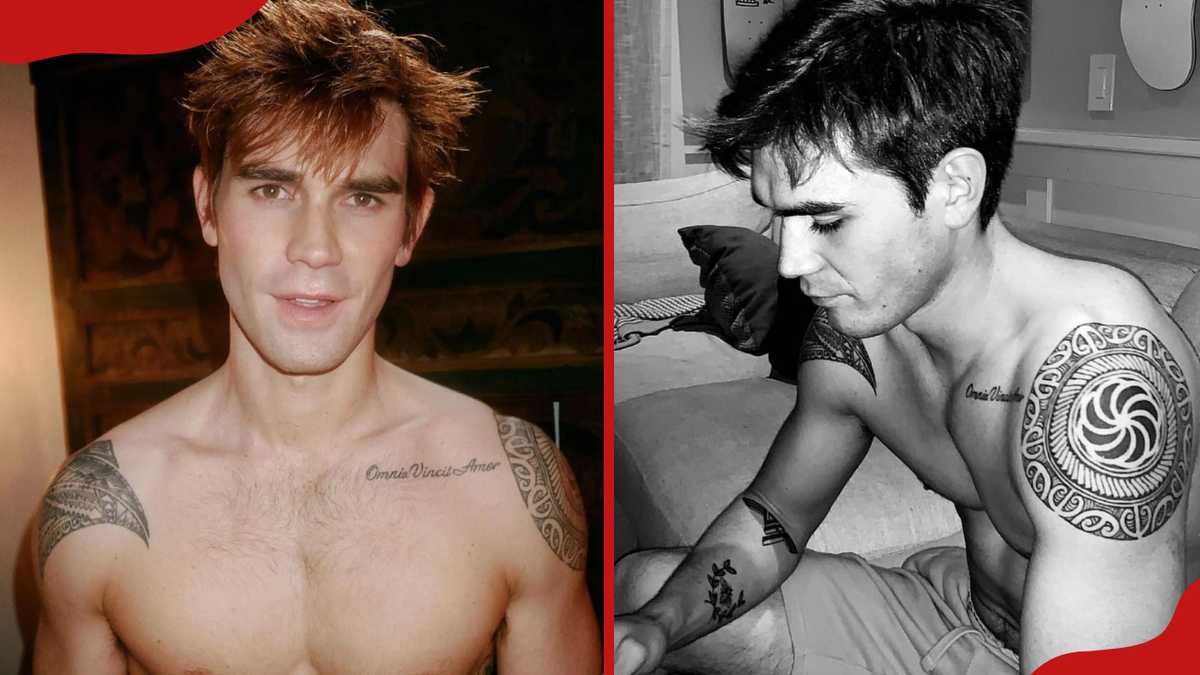
The Tuko image presents a two-panel view of Apa’s chest and shoulders. The left panel shows him facing the camera with the phrase clearly legible, while the right panel shows the shoulder pattern from a side angle. Together, the panels demonstrate how the lettering and the larger designs occupy separate visual zones without competing for the same space.
The phrase also explains why the collection can feel both culturally specific and broadly accessible. The Samoan designs are tied to family and heritage. The Latin text communicates an idea that is immediately readable to a much wider audience. Neither element cancels the other. The chest phrase is a personal choice, while the shoulders carry the stronger family and cultural reference.
The lettering acts as a visual pause between larger pieces. In a full-body photograph, viewers can move from the shoulder work to the centre of the chest and then down toward the forearm designs. That movement makes the tattoos feel composed, even though Apa has added them at different points in his life.
The Van Halen tribute connects ink with music
GQ identified a Van Halen tribute among Apa’s tattoos. That detail fits his long-standing relationship with guitar music. He has posted guitar performances and spoken about music as a serious part of his creative life, so the tattoo is not an isolated reference chosen only for visual impact. It connects the body art to one of the sounds that shaped his interests outside Riverdale.

The black-and-white beach photograph shows the shoulder and upper-arm work in a wider frame. The contrast makes the curved tattoo lines easy to follow against the skin, and the relaxed setting changes the tone from television styling to personal portraiture. There is no costume character to explain the ink. The designs belong to Apa himself.
Music references often work differently from family tattoos. A family symbol can mark a relationship that is expected to remain constant. A band tribute can mark a period of discovery, a creative influence or a private connection to a particular sound. Apa’s public comments support the Van Halen identification, but they do not require an invented story about the exact moment he chose the design.
The safest interpretation is also the most useful one: the tattoo records an artistic influence. The photograph supplies the placement and the shape. GQ supplies the identification. Keeping those two layers separate allows the design to remain interesting without pretending to know a private memory that Apa has not described.
Different photographs reveal different parts of the arm
Celebrity tattoo coverage is often built from a few recurring poses, but Apa’s photos show why multiple angles matter. A close fashion portrait can reveal fine lines on the forearm. A gym image can show the shoulder pattern under ordinary lighting. A beach portrait can place both arms in the same frame. These are not interchangeable views.

The beach portrait gives the cleanest wide view of the two shoulder designs. The arm nearest the camera carries a large curved pattern, while the other shoulder shows a darker shape that follows the upper arm. The composition leaves the chest phrase outside the crop, which is useful because it forces attention onto the shoulder work itself.
Comparing the images also helps separate permanent ink from Riverdale production makeup. The television series frequently covered Apa’s real tattoos when Archie appeared shirtless, and viewers sometimes had to work out which marks belonged to the actor and which were part of the character’s styling. A consistent tattoo that appears across fashion, gym and beach photographs is strong evidence of genuine body art.
Coverage is part of the design story. A tattoo can look like a small black mark in one frame and a large architectural pattern in another. That does not mean it changed. The skin is moving, the camera is changing distance, and the arm is rotating. Reading the collection through several photographs produces a more accurate impression of scale.
Back tattoos and newer additions expand the map
More recent coverage has pointed to additional work on Apa’s back, including the words “Super Position” and an ornamental shape. Those pieces are harder to document visually than the shoulder tattoos because they appear in fewer editorial photographs. They should therefore be described as newer additions reported in coverage, not treated as fully mapped designs from a single low-resolution image.
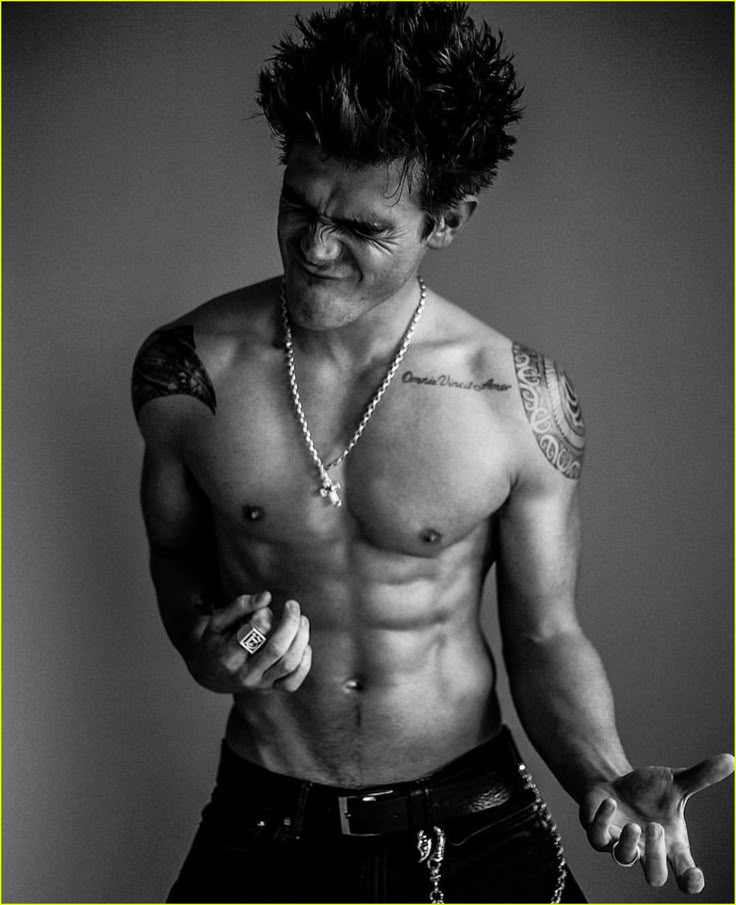
The distinction matters when a celebrity’s tattoos are still evolving. Apa has said he enjoys the process, and newer work can appear between interviews, film projects and personal photographs. A design that is only briefly visible may later be expanded, covered or photographed from a different angle. The responsible approach is to note what the source shows and leave uncertain details open.
The back also creates a different relationship with performance. Shoulder and forearm tattoos are easy to see in sleeveless clothing, which is why they appear in portraits and red-carpet coverage. Back tattoos are more private and more dependent on the setting. They may surface in a beach photograph, a gym post or a music-related image rather than in a formal press portrait.
That change in visibility does not make the newer pieces less genuine. It simply means the evidence is thinner. The documented shoulder and chest designs provide the stable core of Apa’s tattoo story, while the back additions show that his collection continues to develop.
Behind the scenes on Riverdale
GQ noted that the Riverdale makeup crew had to camouflage Apa’s tattoos for his shirtless scenes. That production note reveals how visible the ink is in real life. When a character is meant to appear as Archie Andrews, the production has to cover designs that would otherwise identify the actor and change the character’s look.
Covering tattoos is not unusual in film and television, but Apa’s case is especially visible because Archie is often placed in athletic or shirtless scenes. The designs are spread across the shoulders, chest and arms, so wardrobe alone cannot always hide them. Makeup becomes part of the continuity process, and small differences in coverage can affect how a scene looks from one episode to the next.
This also creates a useful contrast between public images. In a Riverdale frame, the tattoos may be intentionally absent. In a V Man or beach portrait, they are the subject of the photograph. Neither image is more authentic. One documents a character being maintained by a production team, while the other documents Apa’s own body art.
The screen-versus-life contrast is central to understanding his collection. The tattoos do not belong to Archie, even when the audience sees them being covered for Archie. They belong to KJ Apa, and the meaning of the family bee, the Samoan shoulder designs, the chest phrase and the Van Halen tribute comes from his life outside the role.
Family, music, and a career in motion
Apa’s documented tattoos form a layered portrait. The Samoan shoulder work connects him with family heritage and chiefly responsibility. The bee links him to his mother and grandmother. “Omnia Vincit Amor” adds a readable phrase across the chest. The Van Halen tribute reflects his musical interests. Newer back designs suggest that his relationship with tattooing is still active rather than finished.
There is no need to force all of those pieces into one grand theory. The collection is coherent because it contains several kinds of memory. Some marks identify where Apa comes from. Others record who he loves or what he listens to. Some are simply part of the pleasure of making art on the body.
The most defensible summary is that Apa treats tattoos as both archive and experience. They preserve family links and cultural identity, but he also enjoys the process, the collaboration and the visual result. That combination explains why his collection includes a matching bee beside larger traditional designs and a music tribute beside direct text.
Photographs add the final layer. The same tattoos look different in a studio, at the beach, in a gym or under television makeup. A careful view of those settings shows not only what the designs are, but how they move with the person wearing them. KJ Apa’s tattoos are therefore not just decoration around a celebrity image. They are part of the family, cultural and creative story he carries from one role to the next.