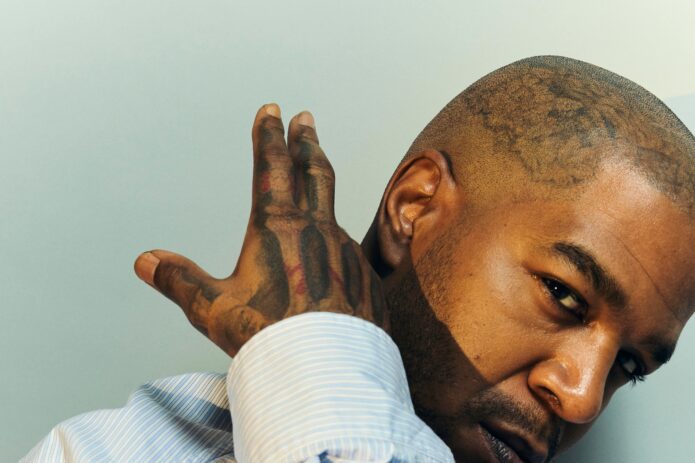
Kid Cudi’s tattoos aren’t random decoration. Some tie back to music and memory; others belong to the visual world he has built around himself. The clearest pieces show onstage. Others appear only when he wears a tank top, raises a hand to his face or posts a close-up.
There’s plenty of guesswork around his collection. I’m sticking to tattoos visible in clear photos or discussed in tattoo coverage; where Cudi has explained a meaning, I’ll say so. The rest stays open.
Kid Cudi’s big head tattoo
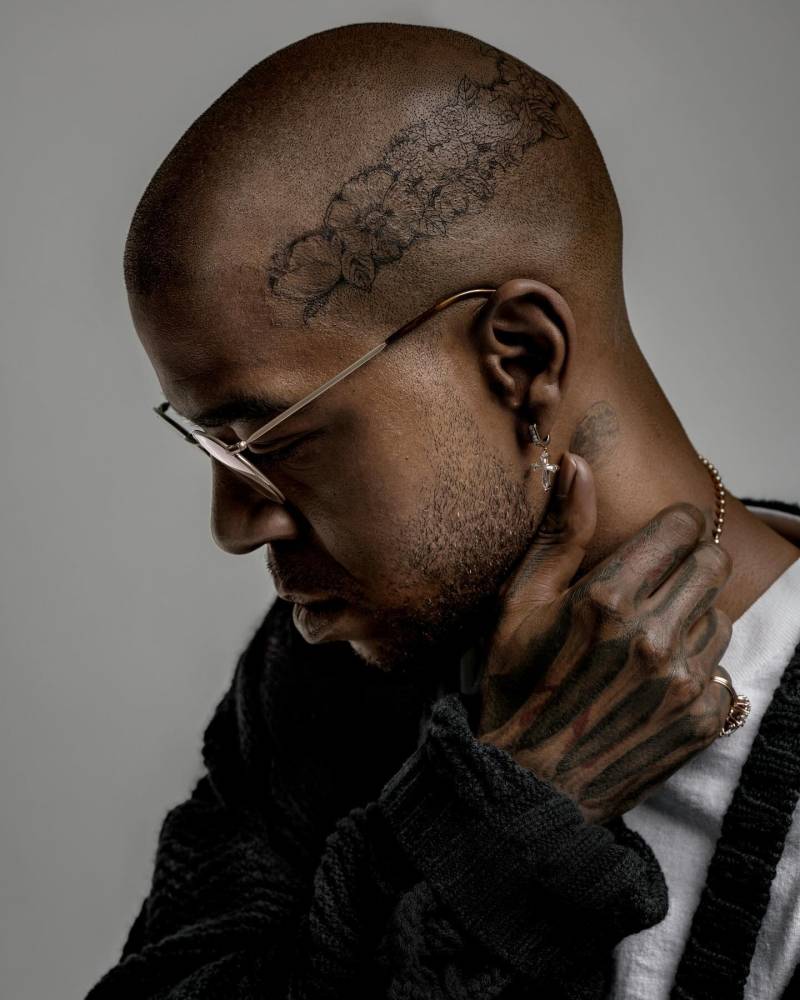
The largest recent piece runs over the top and side of Cudi’s head. Fine-line details frame the words “a view into my mind”. It’s a bold place for a tattoo, and it suits a musician whose work often lets listeners hear what’s going on in his head.
Tattoo coverage links the work to Dr. Woo, the Los Angeles artist known for small needles, clean outlines and plenty of open space. In photos, the design reads as a fine-line map across the scalp rather than a block of black; the shape of the head stays visible around it.
Cudi showed the tattoo around 2024, and viewers quickly focused on the words. They read like a statement about how he uses music to explain himself. The phrase also fits the rest of the collection, where many pieces connect to a person, a memory or a private idea.
The Kurt Cobain tribute on his arm
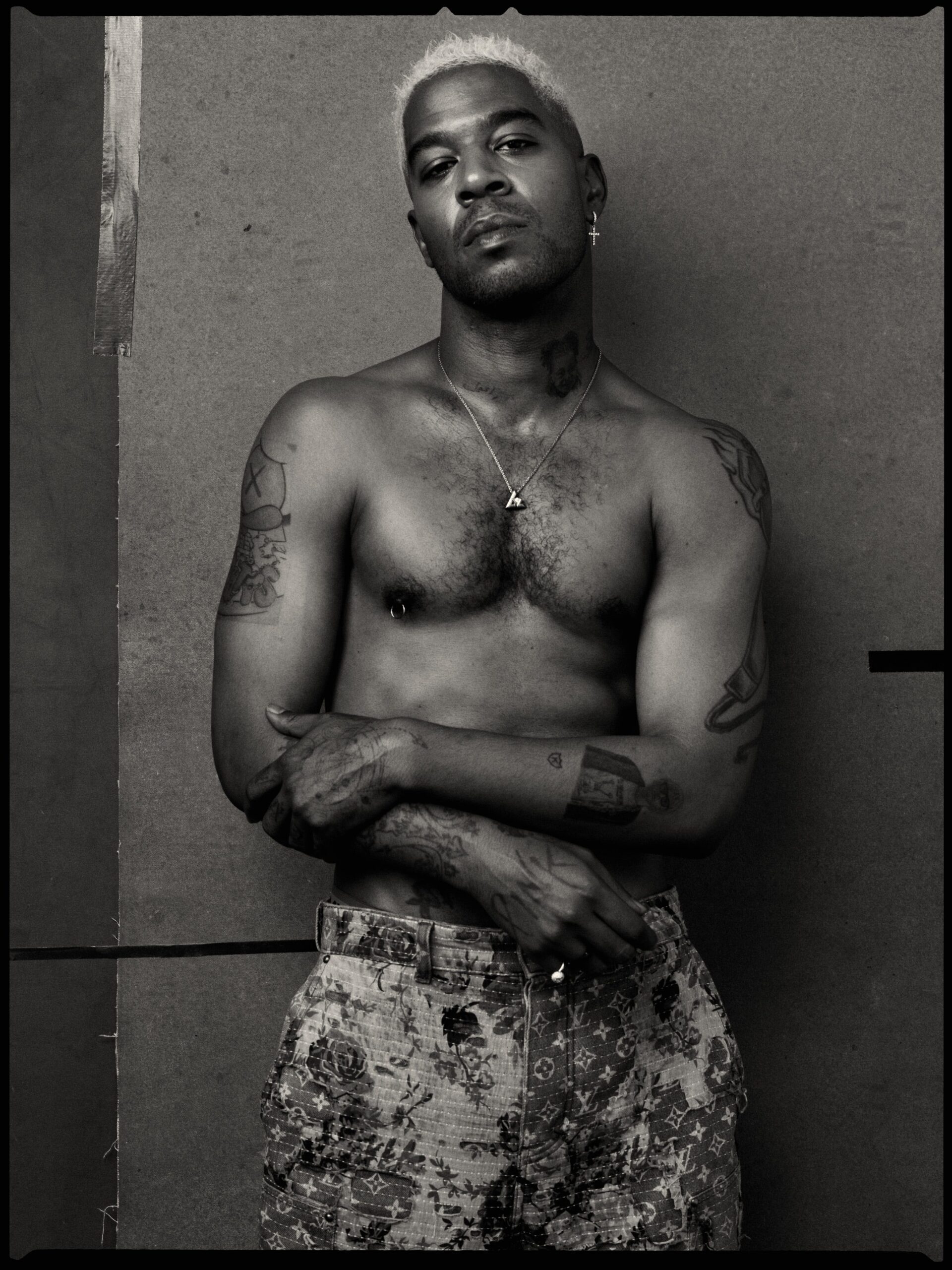
One of the clearest stories in Cudi’s collection is the Kurt Cobain portrait on his forearm. It appears in shirtless and live photos. Cudi has spoken about Cobain with respect, making the tattoo a direct tribute rather than a design fans have to decode from a blurry picture.
Cudi has called Cobain an influence. Both artists turned uncomfortable feelings into music other people could hold onto. The portrait reads as a lasting reminder of that kind of honesty, which Cudi values in music.
Portraits can lose definition when they’re small or the photo is soft. In sharper images, the shape of Cobain’s face and hair is visible. The surrounding arm work gives the portrait space, so it doesn’t look like a sticker on otherwise bare skin.
The documented point is the link to Cobain’s influence, not a story about every line in the portrait. Cudi’s comments support the tribute. The finer details and the date he got it are less clear, so there’s no reason to invent a deeper explanation.
Hand tattoos, including the pinky ink
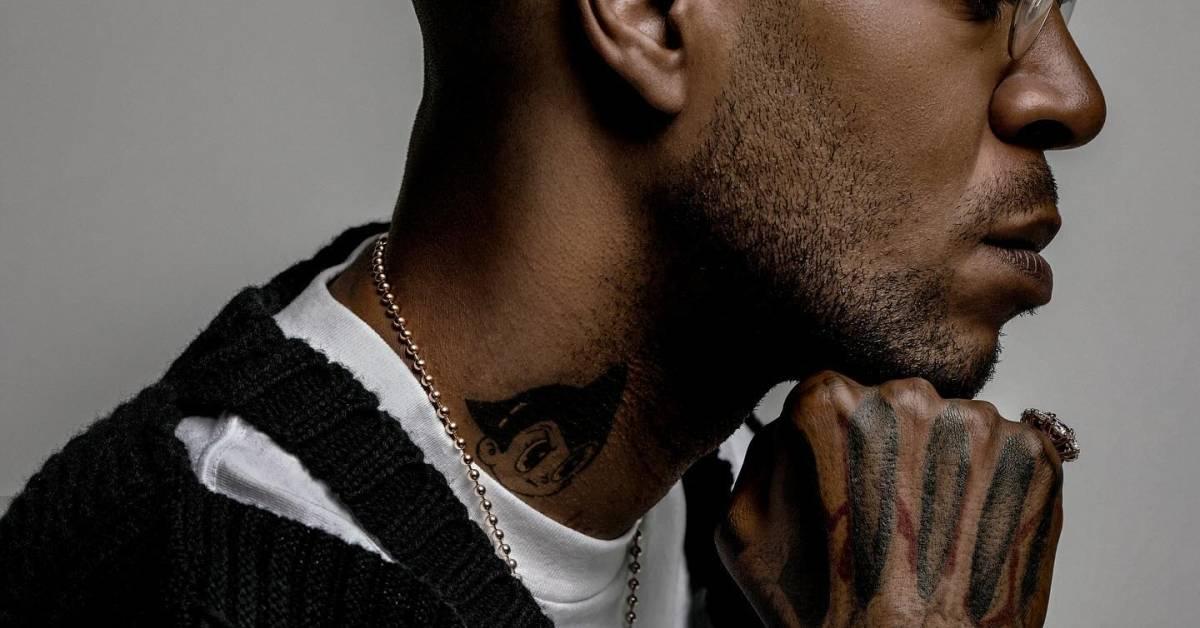
Cudi has tattoos on his hands and fingers. They show in photos when he holds a microphone, covers his mouth or poses with a hand near his face. One small design is often called a pinky tattoo, though that label seems to come from where it sits on the hand.
Hand tattoos tend to fade and soften faster than upper-arm pieces. They’re washed, bumped and exposed every day, so clear close-ups help. The photos show a group of small designs, not one glove-style tattoo.
Fine lines also climb from his hand toward the wrist and neck. They sit beside his rings and stage clothes, which helps them stand out in performance photos. There’s no full public guide to what each small mark means, so it’s better not to assign a story to every shape.
Moon Man and the space-themed ideas
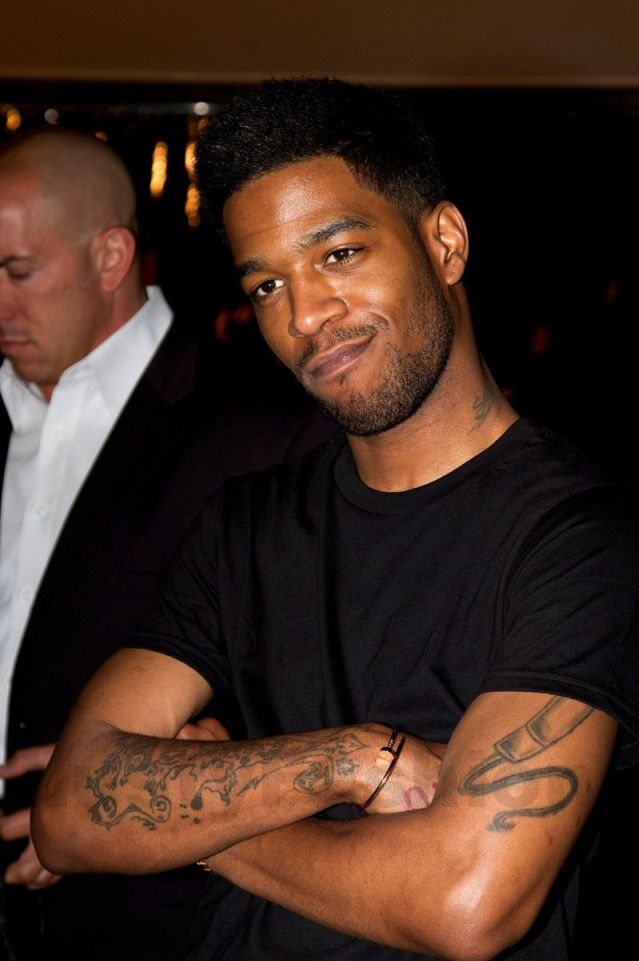
Cudi’s Moon Man character has been part of his music and visual world for years, especially through the Man on the Moon albums. Some tattoos have a spacey, map-like feel, with moon, sun and orbit details that sit naturally beside that identity.
A crescent or circle in a photo isn’t automatically a Moon Man tattoo. Online posts sometimes make that connection too quickly. Cudi’s tattoo imagery does share themes that recur in his records: night, distance, isolation, dreams and looking at life from just outside the crowd.
The forearm tattoos fit that loose visual language. They weren’t made as one matching sleeve, but together they look like a collection of symbols. That seems more in keeping with Cudi than a symmetrical, planned design. The pieces look gathered over time, each with its own small history.
The older GOOD and BAD head design
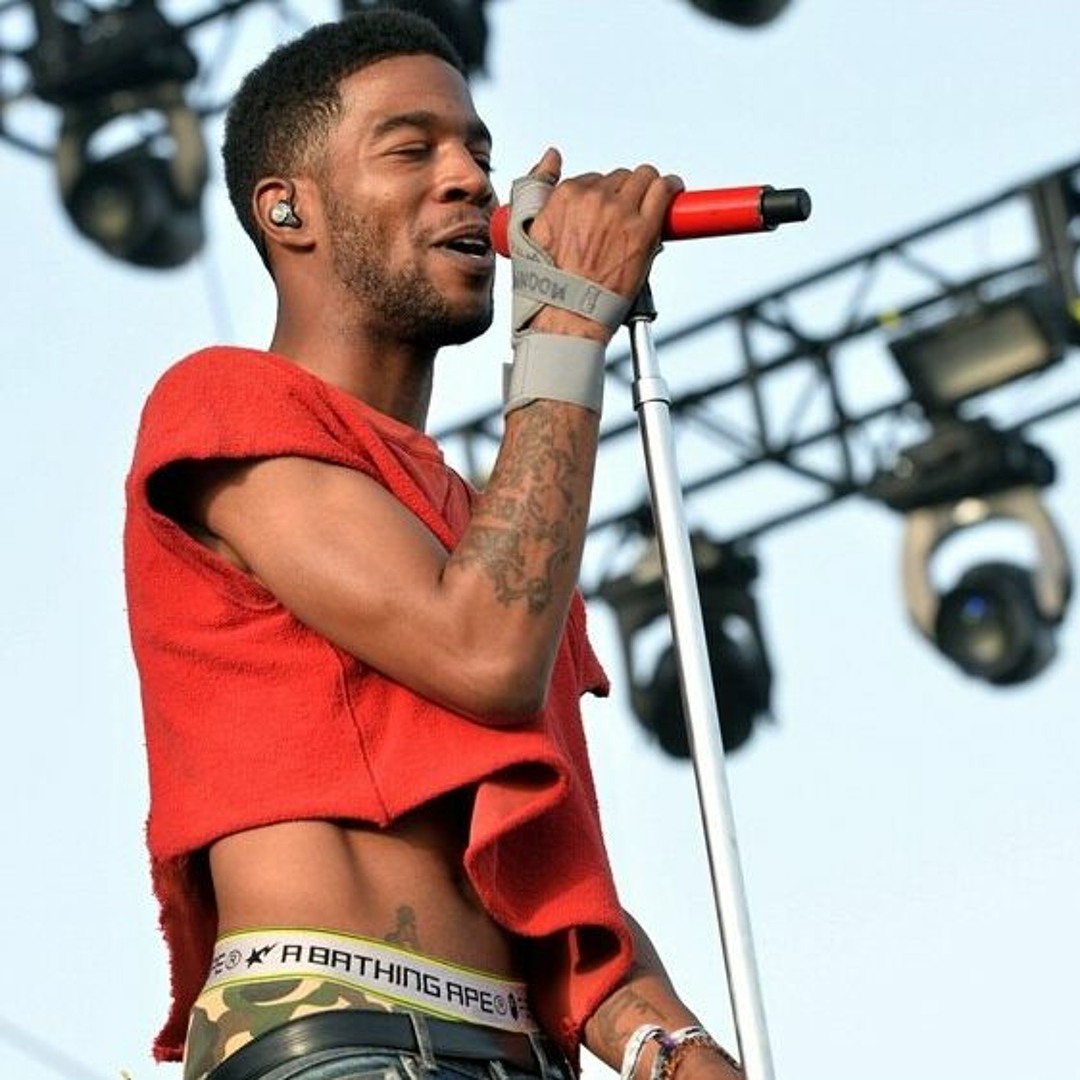
Before the newer head piece drew attention, earlier coverage had documented a GOOD/BAD split-face design on Cudi’s forearm. It’s one of the earlier tattoos that shows how his collection has changed: graphic, easy to recognize and built around a clear contrast instead of fine shading.
The good-versus-bad theme can be read a few ways. It might point to tension in his music, different sides of his personality or the idea that people aren’t only one thing. Cudi hasn’t given a long explanation, but the design can still feel personal.
Performance photos show the tattoo as Cudi moves. It isn’t hidden under a sleeve or heavy stage makeup. The lighting changes its appearance, but the main shape stays clear beside the other arm pieces.
What Kid Cudi’s tattoos seem to have in common
Cudi’s tattoos often connect to identity and inspiration, but he hasn’t confirmed every meaning publicly. The Cobain portrait has a clear artistic link; the words on his head are visible and direct; and the Moon Man themes line up with his music. Other interpretations need room for uncertainty.
His tattoos have changed over time. Earlier pieces look more graphic and direct; newer work uses fine lines and lettering that follow the shape of his head, hand and neck. Taken together, they look less like random flash and more like a visual diary built piece by piece.
Kid Cudi talks about his ink
The linked video gives a quick look at the newer head tattoo and some older pieces: Kid Cudi got a new head tattoo.
For more music tattoo stories, browse the musician tattoo section. Here, I’ve stuck to designs visible in clear photos or tied to Cudi’s comments and published tattoo coverage, leaving fan theories out when there’s no evidence for them.
One thought on “Kid Cudi Tattoos: Head Ink, Kurt Cobain Tribute and More”