
Kane Brown’s tattoo story goes well beyond that old Batman photo. His collection includes Bible lettering, angel wings, family names, a Chinese character, a wolf, three skulls, Georgia script, microphone and guitar designs, a gorilla, and a chest cover-up that is still changing. Brown has explained some pieces himself; others are best described by what the photos show.
The tattoos have changed over the years. His first chest piece came before the larger Batman design, the wolf was made with members of his touring crew, and the Batman image has since become a hawk. Following that timeline keeps an older photo from being mistaken for the latest version.
The Chinese symbol for love connects Brown to his family

The black Chinese character on Brown’s neck means love, according to an iHeart tattoo interview. He got it to match his mother’s, which gives the small design a personal story beyond its size. It sits behind his jaw, so it shows in profile and can disappear when he faces a camera straight on.
This is one of the family tattoos with a meaning Brown has actually discussed. The translation did not come from a gallery guessing at the symbol afterward. Brown and the interview identify the idea, and the matching tattoo with his mother explains the connection. The character is easy to spot, but the family story is what makes it worth its own section.
Other small marks show up around Brown’s neck and shoulders, but they should not be confused with the Chinese character. A close portrait can show one tattoo while cropping out the skin around it. The clearest account sticks to the character, where it sits, and the family connection Brown has described.
Angel wings spread across the shoulders and upper arms
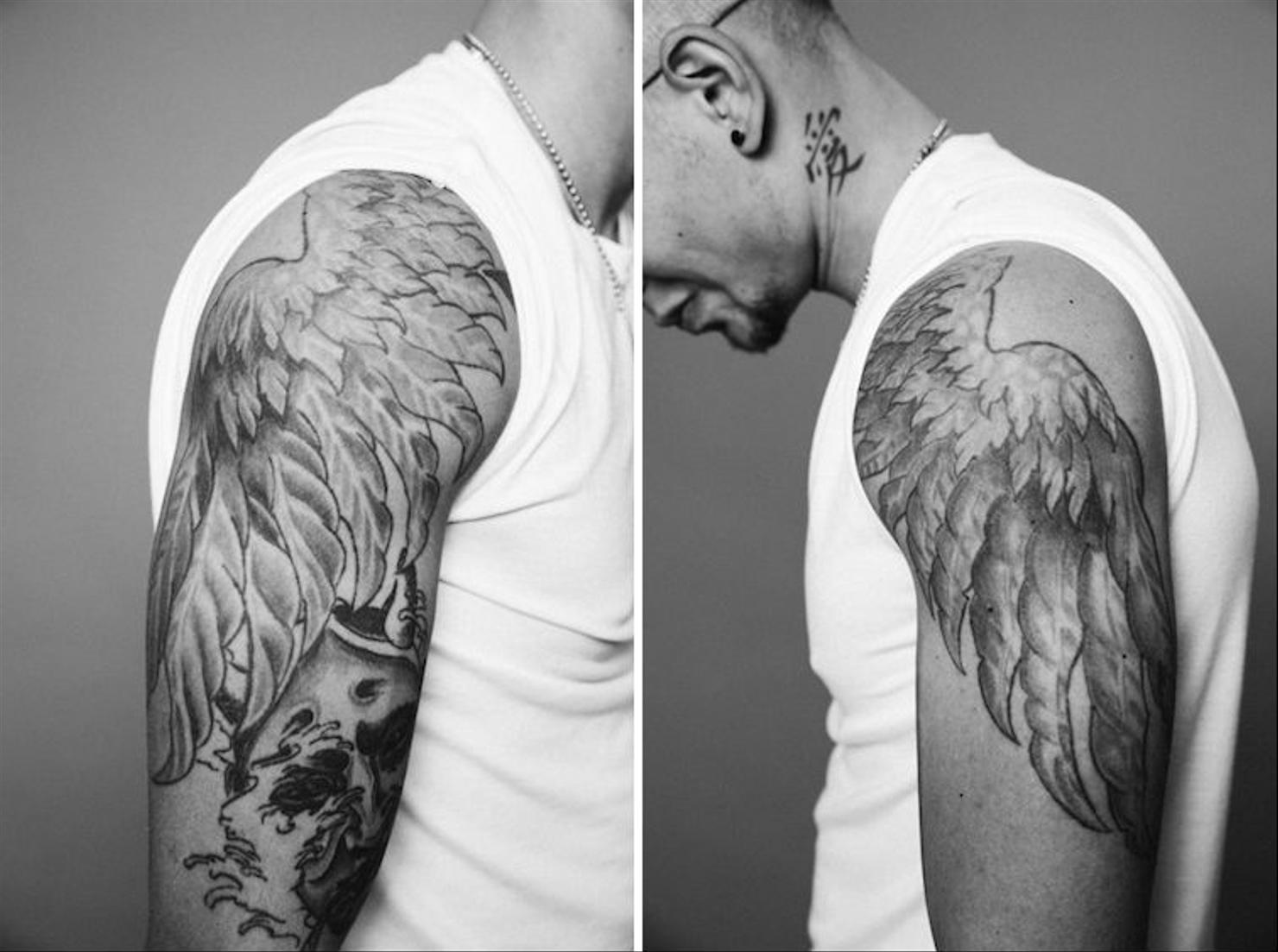
The large angel wings across Brown’s shoulders help give his upper body its heavily tattooed look, even from a distance. Their feathers extend over the shoulders and upper arms, creating a broad shape around the chest rather than a small, separate emblem.
Wings are tricky to photograph because the design wraps around his body. A straight-on portrait may show the centre while hiding the outer feathers; from the side, one wing can look larger than the other. A wide shot gives a sense of scale, but it does not prove that every feather or nearby mark has been identified.
The wings sit close to other chest tattoos, including the Bible verse and the Batman-to-hawk cover-up. That overlap can make older pictures hard to read. The upper body may look like one large composition, but the tattoos were added at different times and carry separate stories.
The wolf represents Brown’s touring pack
Brown has described a wolf on his left forearm as a matching design for members of his touring team. He said the crew worked like a wolf pack, staying together through shows and travel. That gives the tattoo a specific meaning tied to his work, rather than a general message about being tough or wild.
The wolf uses black-and-grey shading and a compact outline. It is clearer in a close-up of his forearm; in a concert shot, it may look like a dark patch under his sleeve. Its meaning comes through a group bond, rather than a family tribute.
Brown’s explanation separates the wolf from his family ink. The Chinese symbol for love connects him to his mother and grandmother; the wolf represents the people who tour with him. Both are matching tattoos, but they mark different relationships. Keeping that distinction makes the collection feel more personal and specific.
Three skulls turn the three wise monkeys into a darker forearm design
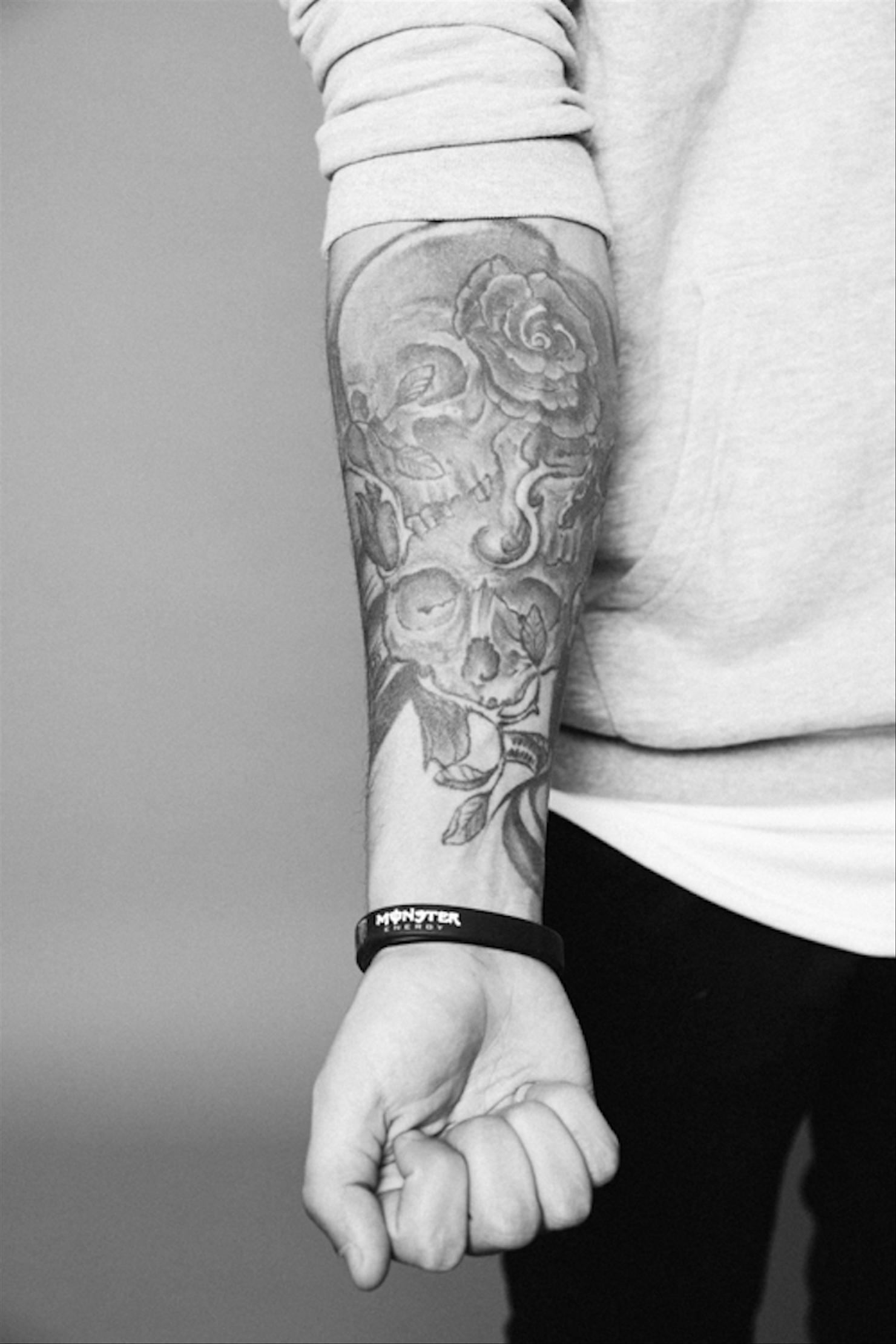
One forearm tattoo uses three skulls and roses to revisit the “see no evil, hear no evil, speak no evil” idea. The skulls are arranged so flowers cover or frame the eyes, ears and mouth. It is a darker take than the familiar three-monkey image, but the reference remains clear.
The roses soften the design without making it cheerful. Their rounded petals balance the heavier skull imagery, while the shading ties the three figures together. A large photo helps here; small versions can lose the detail around the eyes and mouth.
The tattoo also shows Brown reworking a familiar image in his own style. Instead of copying three monkeys from a flash sheet, he chose skulls and flowers. That choice suits the darker side of his collection while leaving the original proverb easy to recognise.
Georgia, the microphone and guitar marks keep music close to the skin
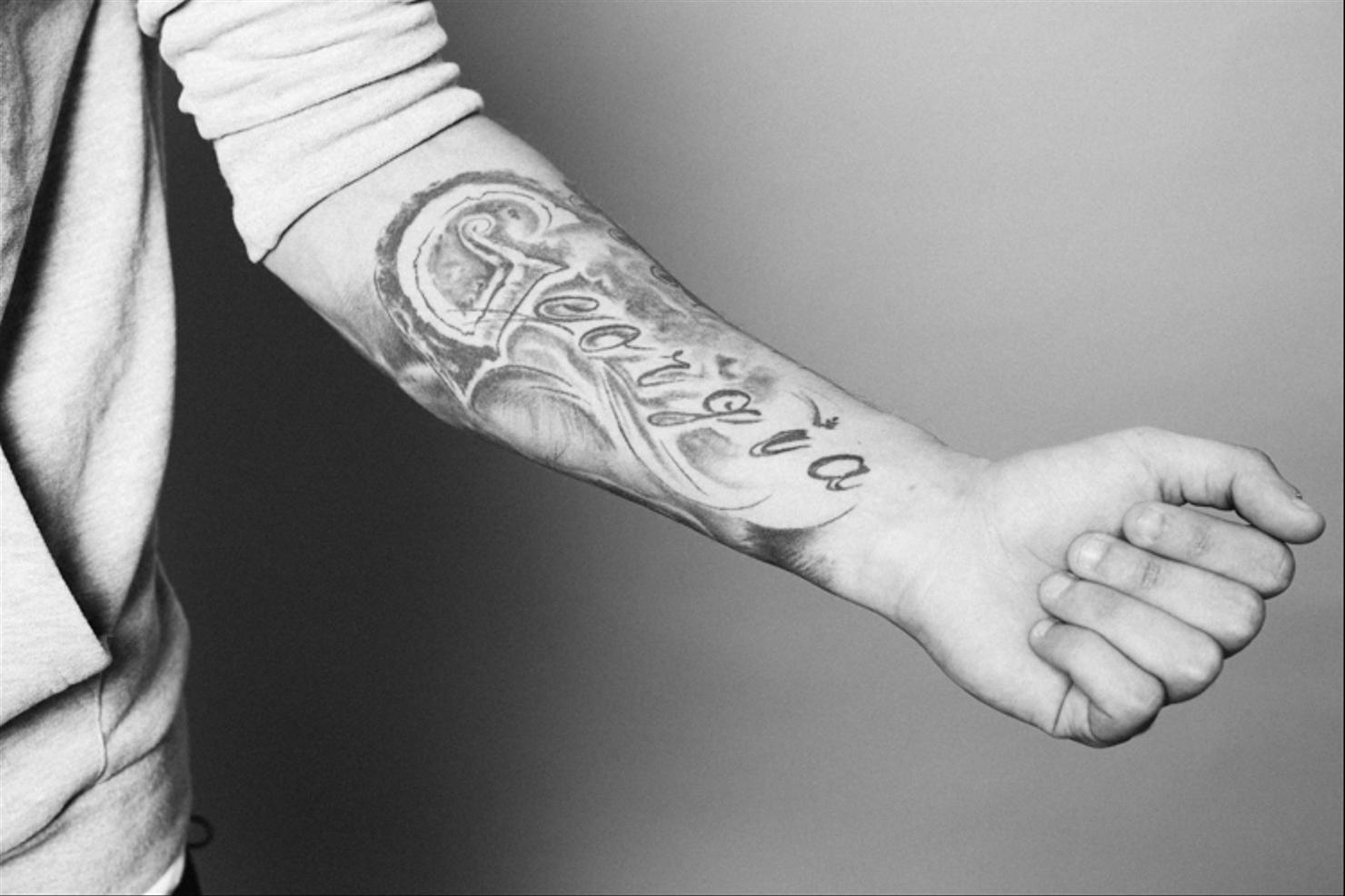
The word Georgia runs in script along Brown’s forearm. It is a simple place marker, but it carries more than a random state name: Georgia is part of his background and identity. The flowing lettering makes it feel like a personal inscription.
His arms also carry music imagery, including a microphone and guitar details. Those designs fit his career, but each should still be treated as its own tattoo. A microphone is a visual reference; it does not tell us which song, tour or moment inspired it.
Together, the script and music objects give the forearm a different feel from the wolf and skulls. Georgia points to home, the instruments to his work, and the wolf to the people who travel with him. They sit side by side without becoming one oversized music slogan.
The gorilla and headdress add a heavier piece to the arm

Brown later added a snarling gorilla with a headdress worked into the larger arm design. Tattoo artist Bubba Irwin made the piece, which sits among the wolf, microphone, guitar and wing imagery. It gives the sleeve a heavier focal point than the smaller lettering.
Brown has linked his gorilla and hawk tattoos to his Cherokee heritage, but they are separate designs. The gorilla is an animal image on his arm; the hawk is part of the chest cover-up. Their stories connect through Brown’s comments, while their locations and timelines remain distinct.
A stage photo shows the gorilla in context, while a close-up is better for its details. The scale, teeth, head shape and headdress can disappear in a small thumbnail. A clear reference image helps show what makes this tattoo distinct from a generic portrait.
John 3:16 came first, before the Batman-to-hawk chest cover-up

Brown has said his first tattoo was John 3:16 on his chest. He called the Bible verse one of his favourite passages, so its place in his tattoo timeline is well established. It is not an identification based only on a distant photo; Brown has talked about the design himself.
The large Batman tattoo came later, when Brown was about 18. He liked the effect of the symbol breaking through his chest, but eventually regretted the design. He has described the cover-up as difficult and painful.
The replacement is a hawk, built through a lengthy cover-up. Brown has said it is still unfinished, with feathers meant to continue down toward his stomach. The chest tattoo therefore needs a date: older photos show Batman or an earlier cover-up stage, while more recent shirtless images may reveal more of the bird.
The chest story is more than a simple before-and-after. John 3:16 reflects an early choice rooted in faith; Batman captures a teenage pop-culture moment; and the hawk is an adult effort to change a design he no longer wanted. Each version belongs in the timeline.
Family names such as Katelyn and the children’s ink keep the collection personal
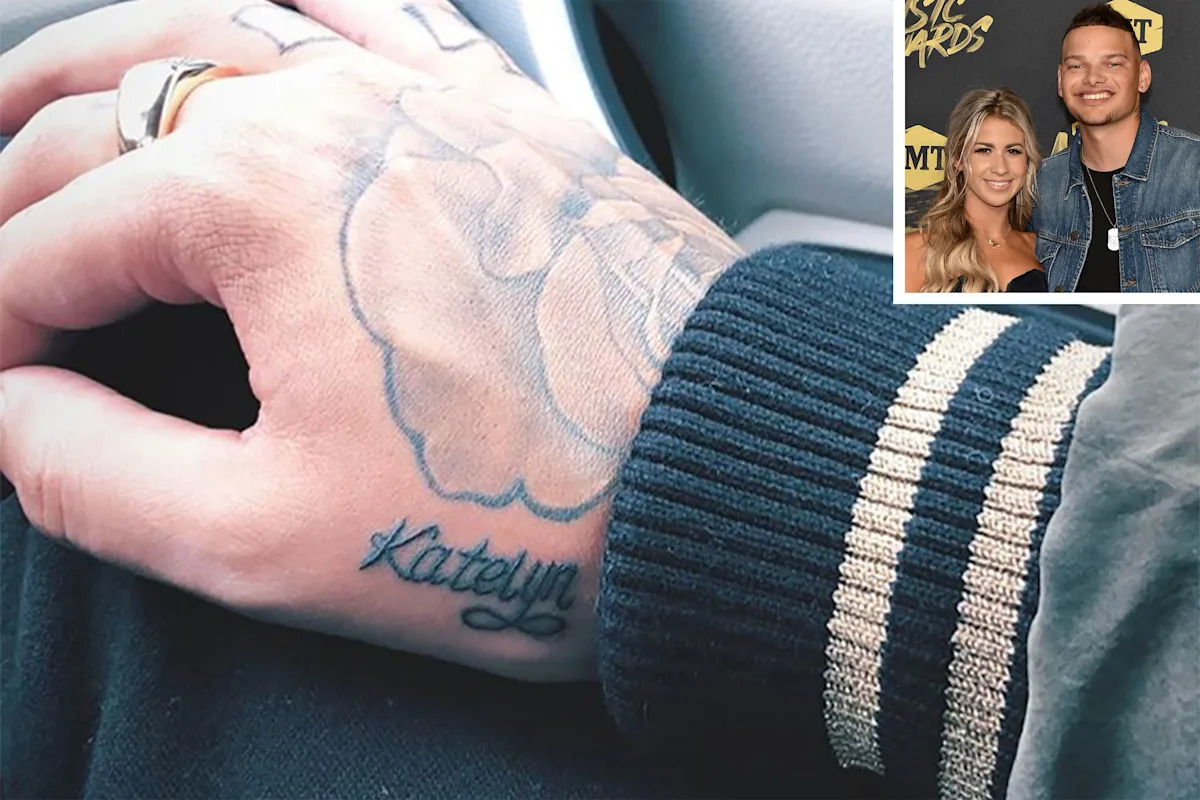
Brown has put family names on his hands, too. Katelyn was tattooed after he married Katelyn Jae, and later family ink included names connected to his daughters. A hand tattoo is difficult to hide, so it appears in ordinary photos as well as shirtless pictures.
Reports on the newer family tattoos describe shared or matching designs connected with the children, including KODI, added after Kodi Jane was born. These pieces came after the original John 3:16 and Batman tattoos, so they belong later in the timeline.
The hand photo also shows why names need a close look. From across a room, lettering can resemble a decorative flourish, especially next to a larger outline or a ring. A clear image makes the word readable and connects the family story to the tattoo that carries it.
Brown’s tattoos range from bold images to small reminders. The chest holds the dramatic changes, the hands carry names, the neck shows the family love symbol, and the arms collect the wolf, skulls, Georgia script, music designs and gorilla. There is a lot of ink, but the separate pieces make the map easier to follow.
There is no need to force every design into one theme. Faith, family, touring, music, pop culture and heritage all appear, but each tattoo came with its own reason. A clear description gives the design, its placement and its place in the timeline, then stops where the evidence does.
That is also why a couple of old photos never told the whole story. The chest cover-up is one chapter; the wolf, wings, skulls, Georgia script, gorilla, Chinese love symbol and family names each add another. Seen together, the photographs show a collection that has changed over time.
One thought on “Kane Brown’s Tattoos Tell Stories About Faith, Family and the Road”