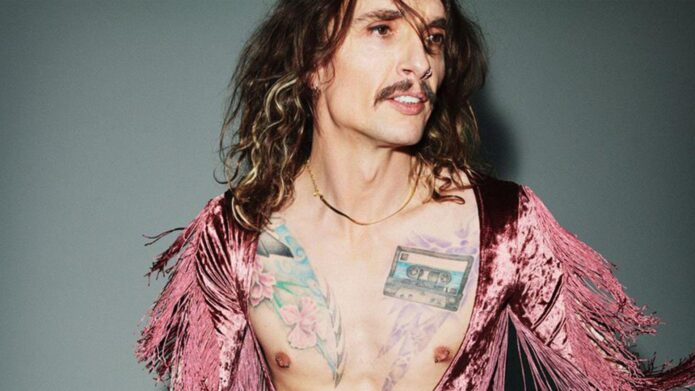
Justin Hawkins has described tattoos of a winged microphone, a “mind-sword,” the TDK logo, synthesizers, the word “Lowestoft” and Queen portraits from the Hot Space artwork. In interviews with The Guardian and Windy City Times, he named the designs and explained several of their connections. A later MetalTalk interview adds more synthesizer models to the list.
The named references
In a 2012 Guardian interview, Hawkins listed a winged microphone, a “mind-sword,” the TDK logo and a vintage DX7 synthesizer. He said the DX7 tattoo was completed in 2008 and connected it to the synthesizers he collects at home.
He also identified “Lowestoft” on his stomach as the name of the seaside town where he grew up. The Queen portraits across his left fingers come from the band’s Hot Space album artwork. In Windy City Times, he discussed the album and why he liked its Andy Warhol-influenced pop art.
The winged microphone tattoo
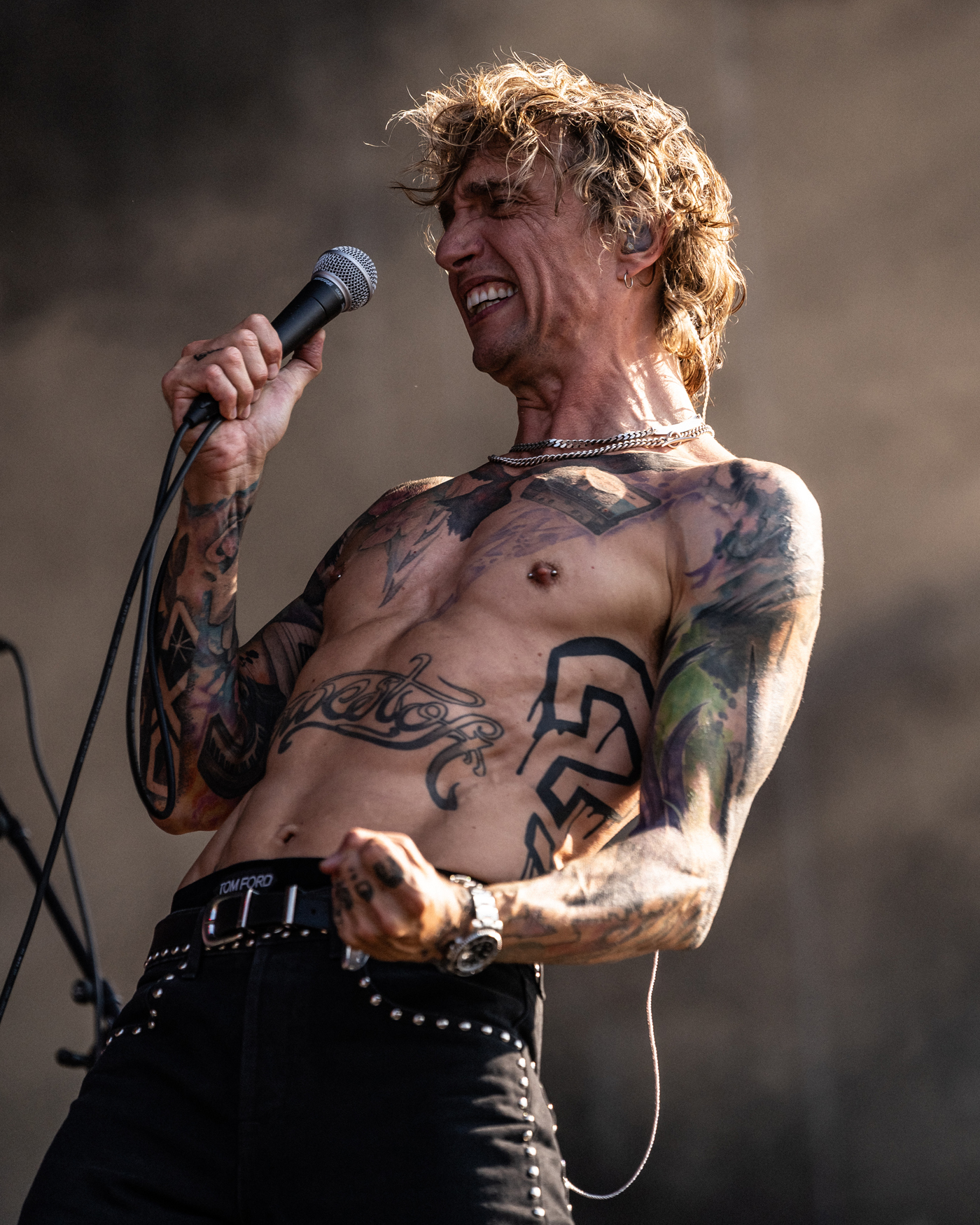
The Guardian names Hawkins’s winged microphone but does not specify its location or give a separate account of what it means to him. Concert photographs show colourful tattoos across his chest and arms, though they do not make every design easy to identify.
The confirmed detail is the subject: a microphone with wings. Hawkins’s interview connects it to his collection, but leaves its personal significance unstated.
The DX7 synthesizer tattoo
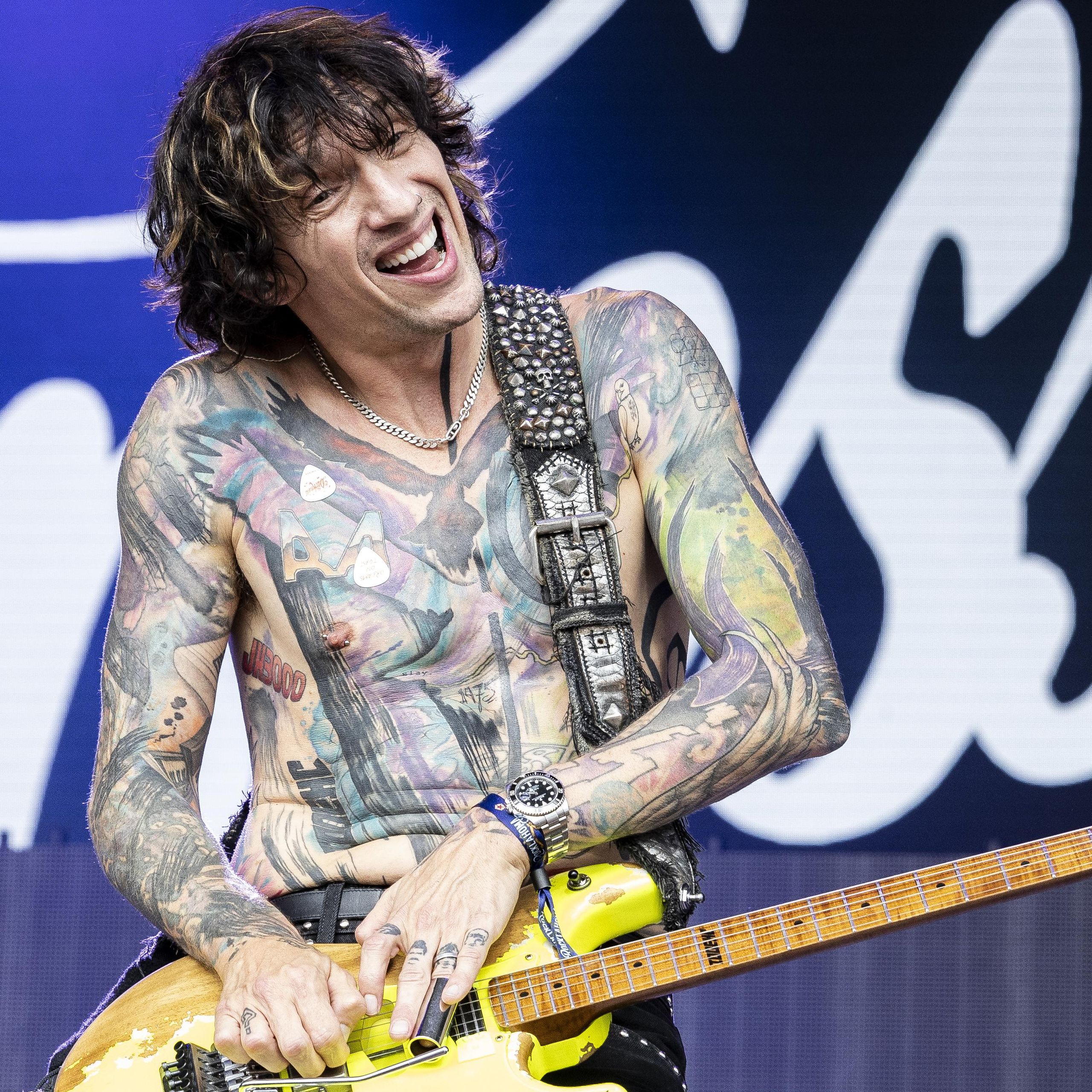
Hawkins said he had a Yamaha DX7 tattooed in 2008 because he owns synthesizers and finds them amusing. It is one named model among several pieces of music equipment in his collection.
In a 2025 MetalTalk interview, he identified a Moog, Mini Moog, DX7, Roland VP 330 and Juno across his torso. He named the instruments while discussing the piano and synthesizer parts in The Darkness’s music. The interview supplies the model names; the photographs show a colourful spread of chest and abdominal ink without mapping each machine to an exact position.
Lowestoft lettering
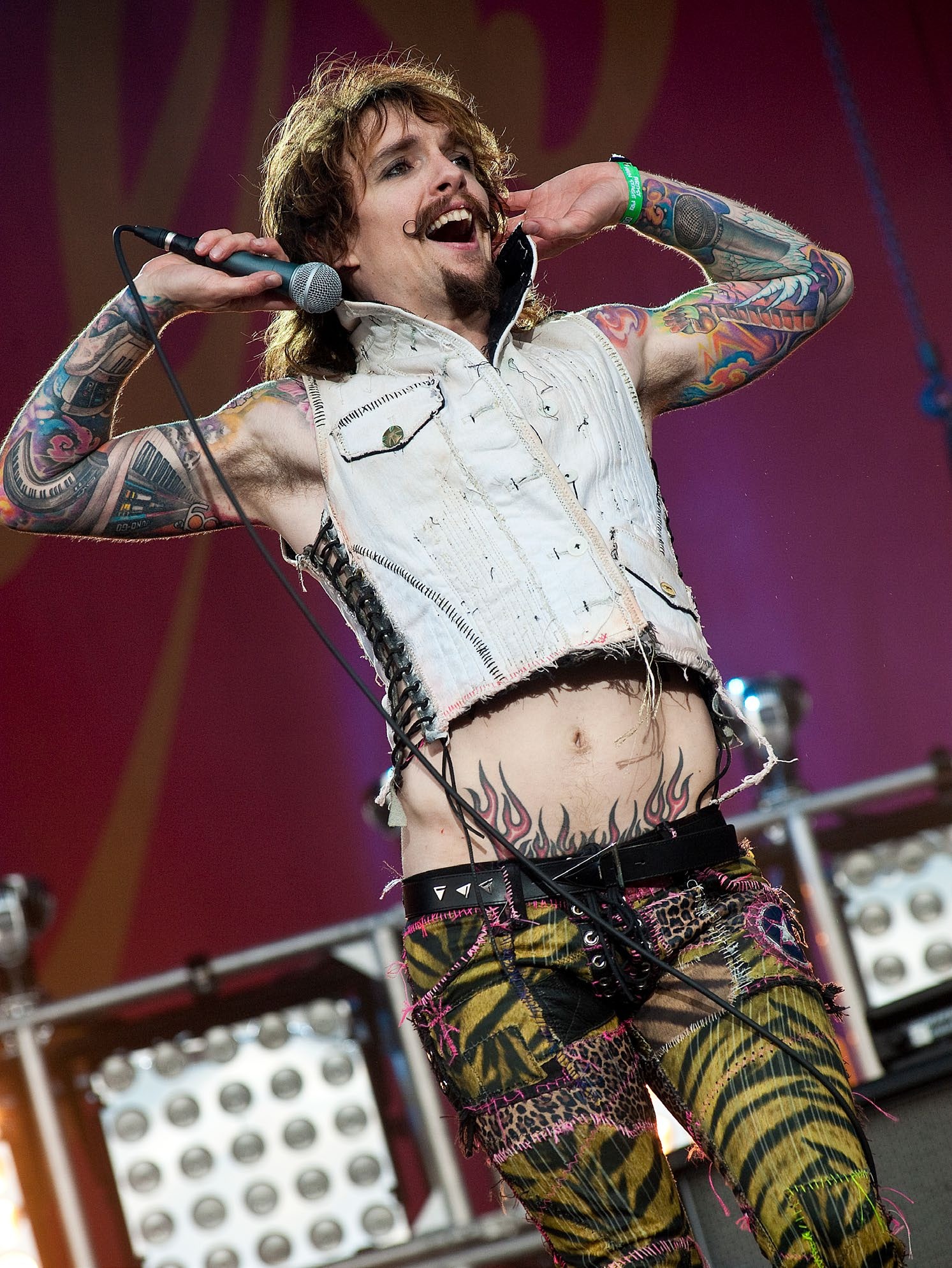
Hawkins has “Lowestoft,” the name of the seaside town where he grew up, tattooed on his stomach. Windy City Times recorded the lettering while asking about his favourite tattoo. In The Guardian, Hawkins compared the place name with the city names rappers use, making a joke while expressing pride in where he came from.
Stage photographs show his tattooed torso, but the interview is the clearest source for the word and its location.
The Queen hand tattoos
Images of Queen members from the Hot Space artwork run across the fingers of Hawkins’s left hand. He said he wanted to stand up for an album that had been contentious among fans and that he loved for its pop-art design. Windy City Times also records Freddie Mercury on Hawkins’s middle finger.
The reference is to a particular album and its artwork, rather than to a general Queen logo. Hawkins’s account gives the context; the hand placement makes the portraits visible in photographs and gestures.
Cassette chest ink
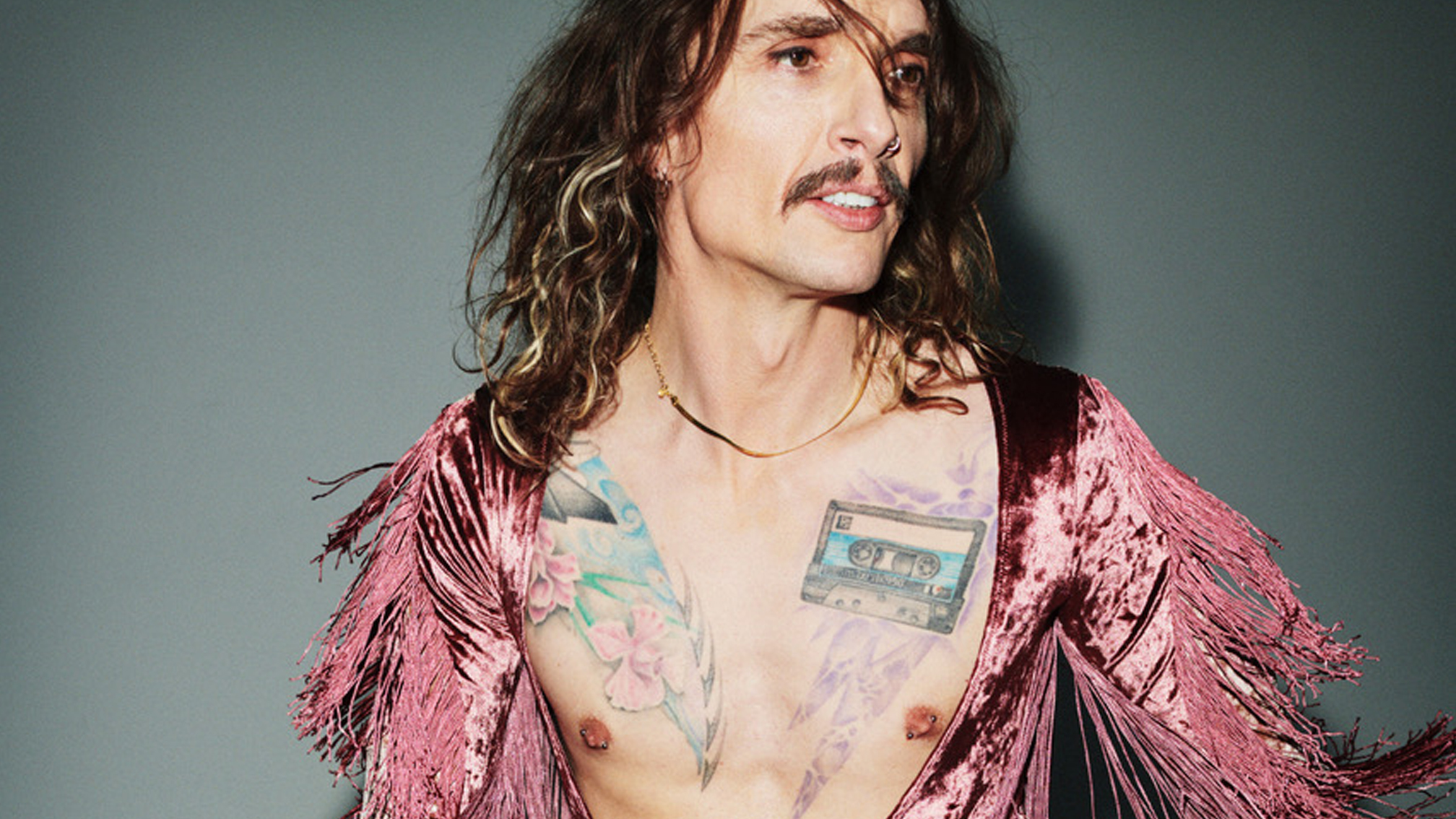
A Kerrang portrait shows a cassette tattoo on one side of Hawkins’s chest and colourful floral artwork on the other. A Grammy image description also identifies a retro cassette and floral chest tattoos. These images establish the designs and placement; they do not provide a personal explanation from Hawkins for either piece.
The stage photographs
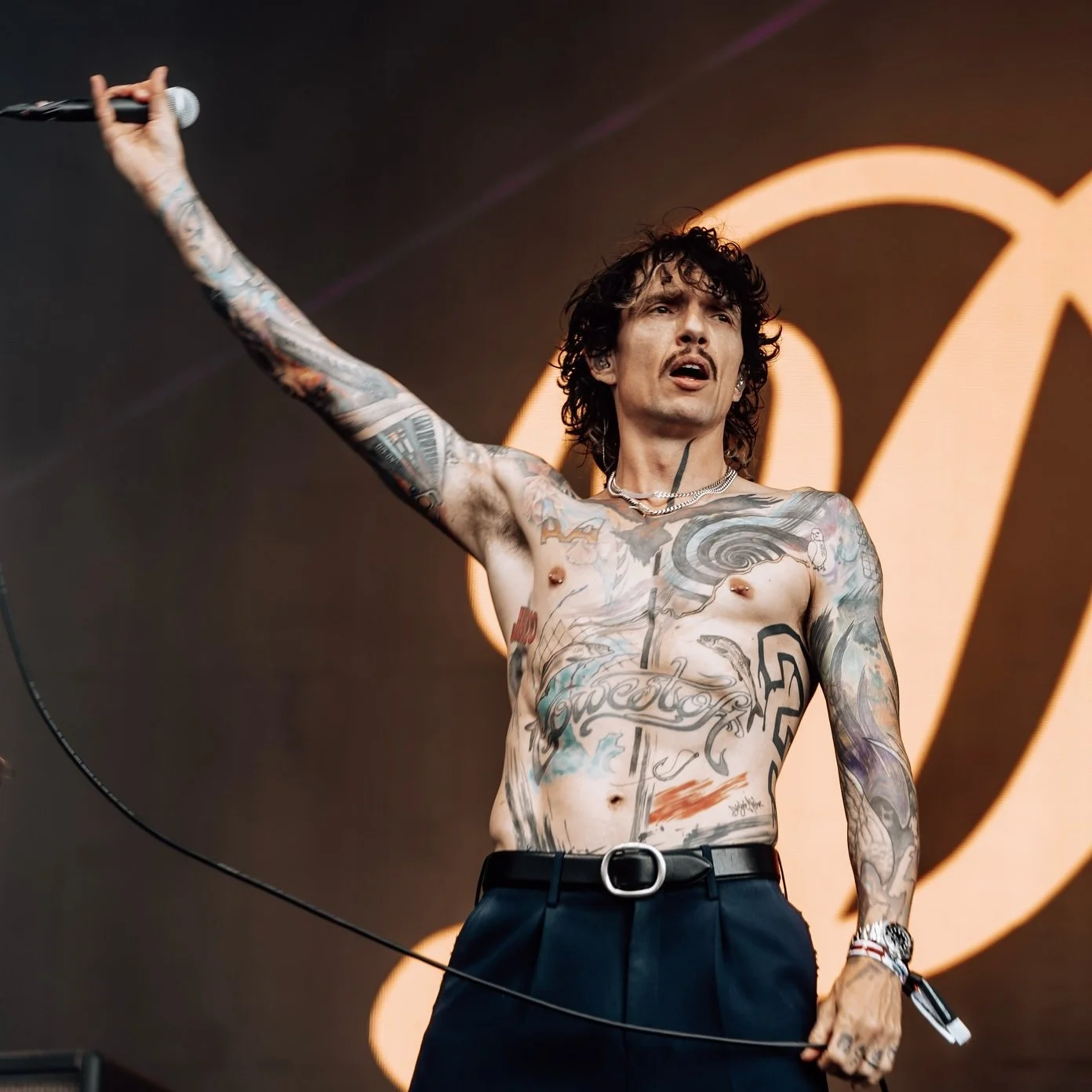
Performance photos show tattoos across Hawkins’s chest, abdomen and arms, but distant or brightly lit images do not always make individual designs readable. Close portraits offer clearer views of the chest pieces, while the interviews remain the source for the named DX7, Queen portraits, TDK logo and Lowestoft lettering.
Music technology as a theme
Several of Hawkins’s named tattoos refer to recorded music or its equipment: the TDK logo, cassette imagery and the synthesizer models. The winged microphone is another music-related design. The DX7 is the most detailed example in his account: he named the model and said he chose it because he collects synthesizers.
A record built over time
The interviews document different parts of the collection at different times. The Guardian listed the microphone, mind-sword, TDK logo and DX7 in 2012. Windy City Times discussed Lowestoft and the Queen images in 2015. In 2025, MetalTalk recorded several synthesizer models across Hawkins’s torso.
Together, those accounts establish the named designs and the connections Hawkins has explained. The photographs add views of the chest and arms, but they do not provide a complete inventory or a precise timeline for every tattoo.
The current stage picture
Recent performance and portrait images show Hawkins’s tattoos alongside changing jackets, guitars and stage lighting. The visible collection includes colourful chest and arm work, while the interviews give specific names and personal context for selected pieces.
Hawkins’s own descriptions connect “Lowestoft” to his hometown, the Queen fingers to Hot Space and several torso designs to synthesizers he collects. Other designs, including the winged microphone and “mind-sword,” are named in the record without a fuller explanation.