
Joe Jonas’s tattoos move between pop culture, music and personal memory. SpongeBob SquarePants, Mario, Chuckie Finster and other cartoon characters make the pieces on his upper thigh knowingly playful. A Freddie Mercury portrait nods to a musical hero, while one report linked an African symbol to an experience that changed him. There’s no single theme holding the designs together, and they don’t need one.
Photos of the thigh pieces are rare because they sit beneath ordinary clothes. The tattoos appeared in a short video and older music footage, not regular red-carpet photos. The dates and placement follow the sources that show them; where Jonas hasn’t explained a meaning, it stays open.
Cartoon characters cover Joe Jonas’s upper thigh
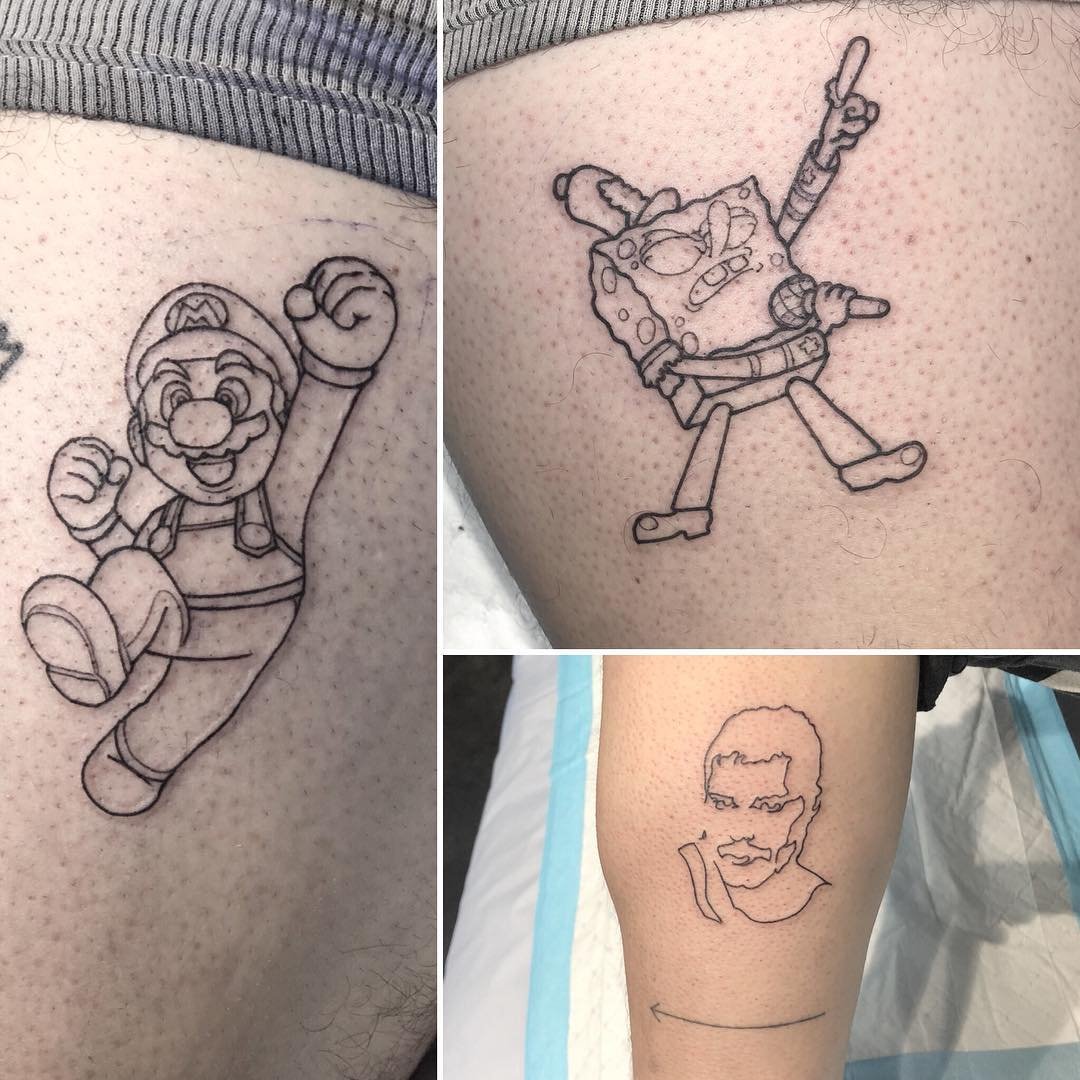
The thigh group is the most unexpected part of Jonas’s tattoo collection. Recent coverage identifies SpongeBob SquarePants, Chuckie Finster from Rugrats and Mojo Jojo from The Powerpuff Girls. Other reports add Mario, Dexter and Max Goof from later sessions. It feels like a mix of favorites gathered over time, not one coordinated scene.
Lauren Winzer is associated with several designs from a 2018 session. Fine black outlines do the work: the familiar shapes and expressions make SpongeBob or Mario easy to recognize without color or heavy shading.
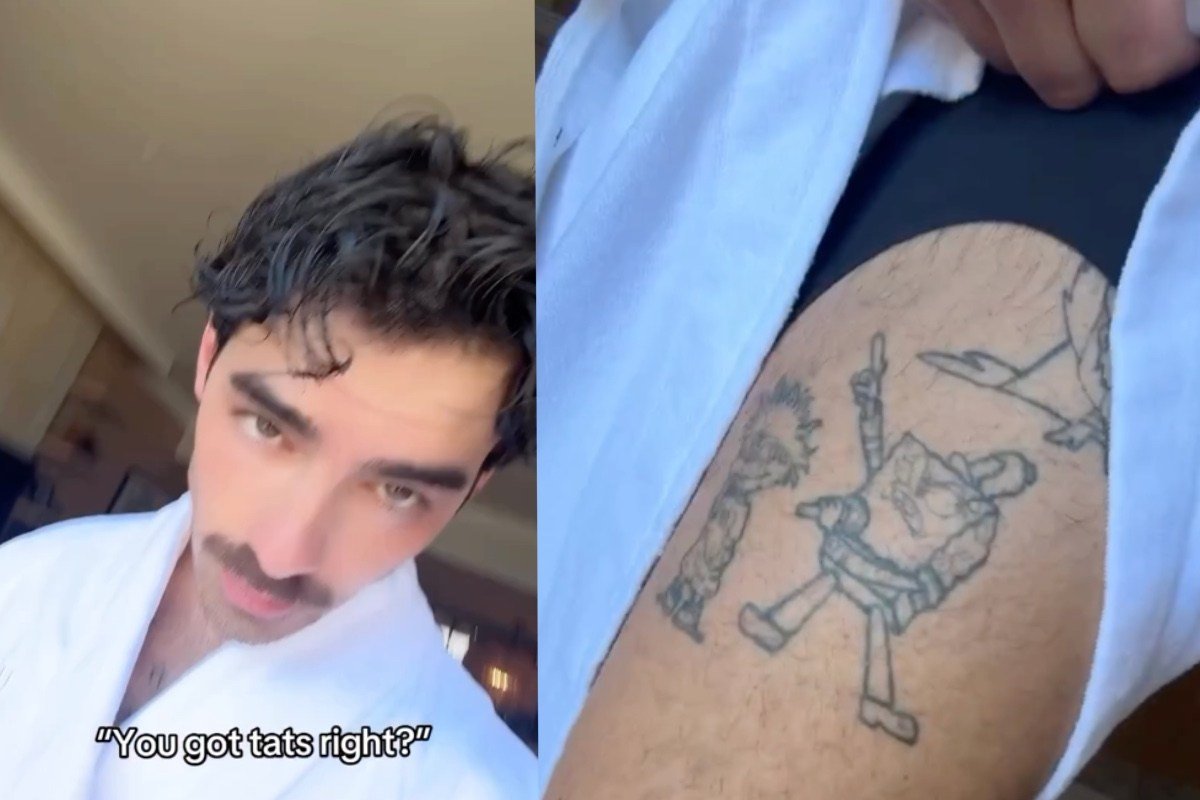
Jonas showed them off in a joking video while wearing a robe. That helps explain why the pieces rarely turn up in press photos: they sit high on the thigh and stay covered unless he chooses to reveal them. They feel more like a private joke than a visible bit of stage branding.
Nostalgia is the clearest read. Reports identify childhood characters and Winzer’s involvement, but don’t assign a personal story to each one. SpongeBob works as a tattoo subject on its own; Jonas has placed him alongside other familiar characters from television and games.
Freddie Mercury gives the collection a musical tribute
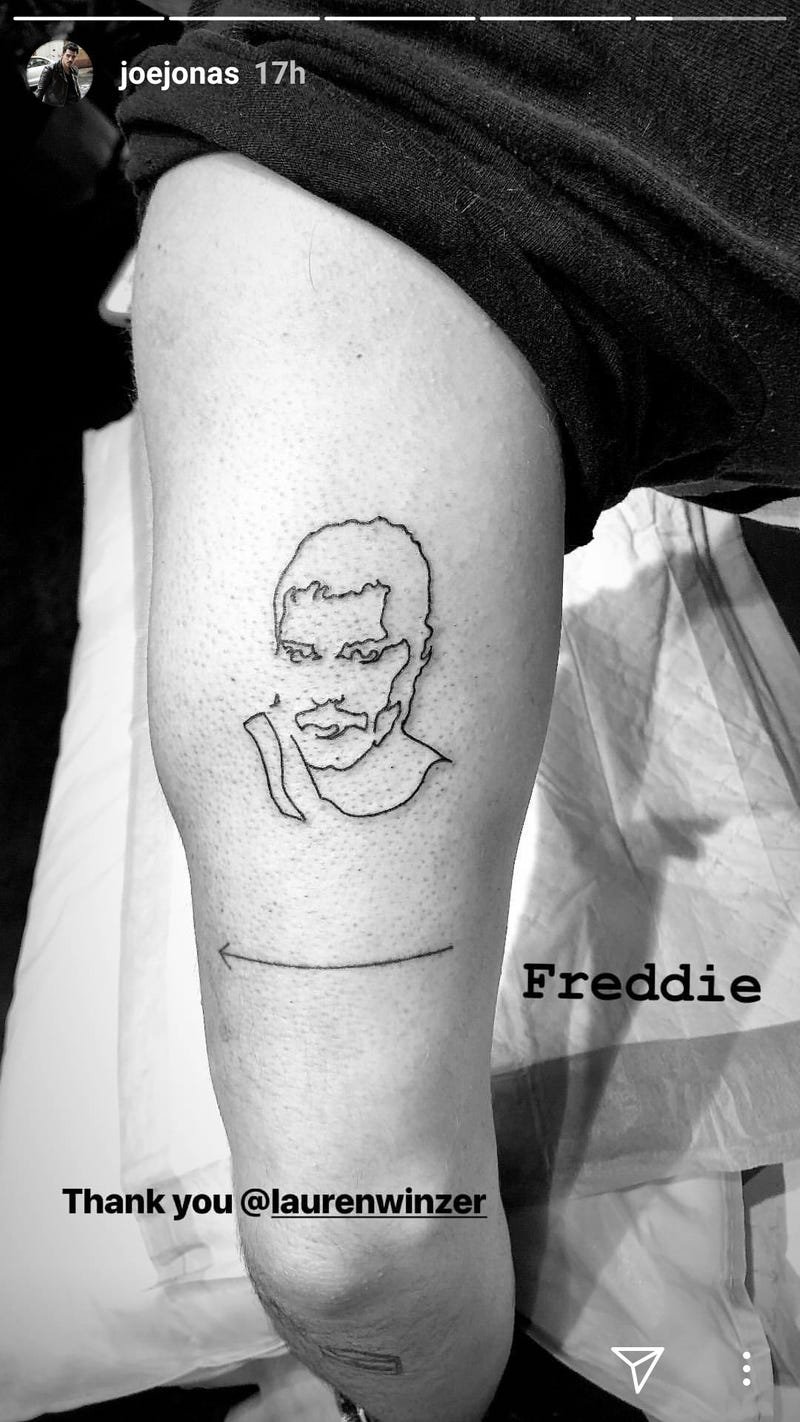
Joe Jonas has a fine-line portrait of Freddie Mercury, Queen’s frontman. Business Insider identified it from a monochrome photo of the fresh tattoo, alongside Jonas’s social post and artist tag. The portrait has a clearer connection to music than the cartoons, while its spare lines echo the lighter character work.
In a line drawing, a few marks have to carry Mercury’s face, hair and posture. The published photo lets readers judge the likeness instead of relying on a caption.
The cartoons are playful; Mercury’s portrait points to a performer whose voice and stage presence have influenced generations of musicians. A collection can hold a childhood character and a rock icon without settling on one tone.
The report supports describing it as a Freddie Mercury portrait, but says nothing about a particular song, concert or personal meeting.
An African symbol was linked to help and cooperation
An earlier report places an African Adinkra symbol on Jonas’s lower right forearm. It explains the symbol as meaning help me, help you and links his choice to a visit to Africa. That’s the published explanation; the short segment doesn’t say more about the trip.
The symbol looks quite different from the cartoons: it’s a compact geometric form that carries meaning without depicting a character. On the forearm, it can show in interviews, though some photos catch it at an angle and lose the finer lines.
The report ties the message of cooperation to a place and experience that mattered to Jonas. It doesn’t explain his other designs; the symbol’s meaning shouldn’t be applied to the rest of his tattoos.
Set beside the cartoons and Freddie Mercury portrait, the Adinkra mark adds another kind of reference. The thigh pieces are playful, the portrait is a tribute, and the forearm design carries a meaning attributed by the report. Each points to a different interest or experience, from television to music and travel.
Earlier linework fills out the map
Other guides mention linework and symbols on Jonas’s arms and elsewhere, but the available photos aren’t always clear. Treat those entries as tentative until a sharp image or reliable report confirms them. A blurry picture or recycled caption can misidentify a design, especially if it may have been covered since.
These well-documented pieces already sketch the collection: cartoon characters on the thigh, a musical influence in the Freddie Mercury portrait, and an Adinkra symbol that a report linked to mutual help. There’s no need to pad the list with shapes that can’t be identified.
Jonas’s tattoos make more sense as a collection of contrasts than as one single theme. The cartoons are playful; the Mercury portrait is a musical reference; the forearm symbol has its own reported context. The sources give enough to describe them without guessing at motives Jonas hasn’t shared.