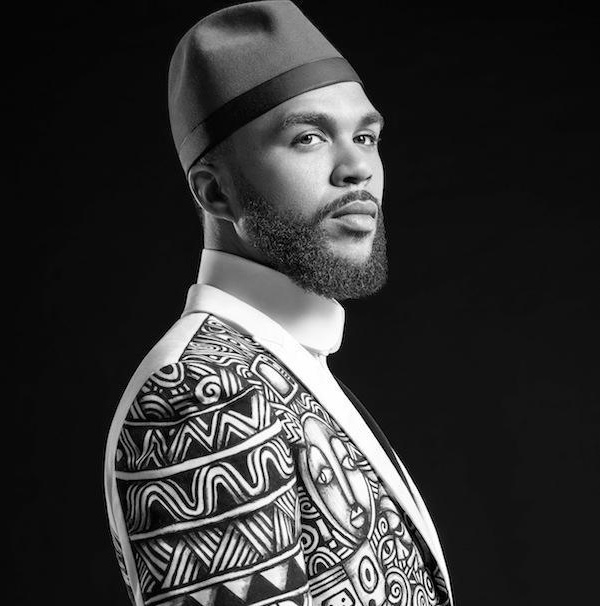
The Nigerian-American singer and rapper’s first tattoo became a large composition across his chest, shoulder and arm. It brings Nsibidi writing and Nigerian symbols together with Polynesian motifs. In interviews, Jidenna has explained the symbols and planning with tattoo artist Josh Elsas. He had spent years studying the traditions behind the piece, which he connects to family, leadership, music and heritage.
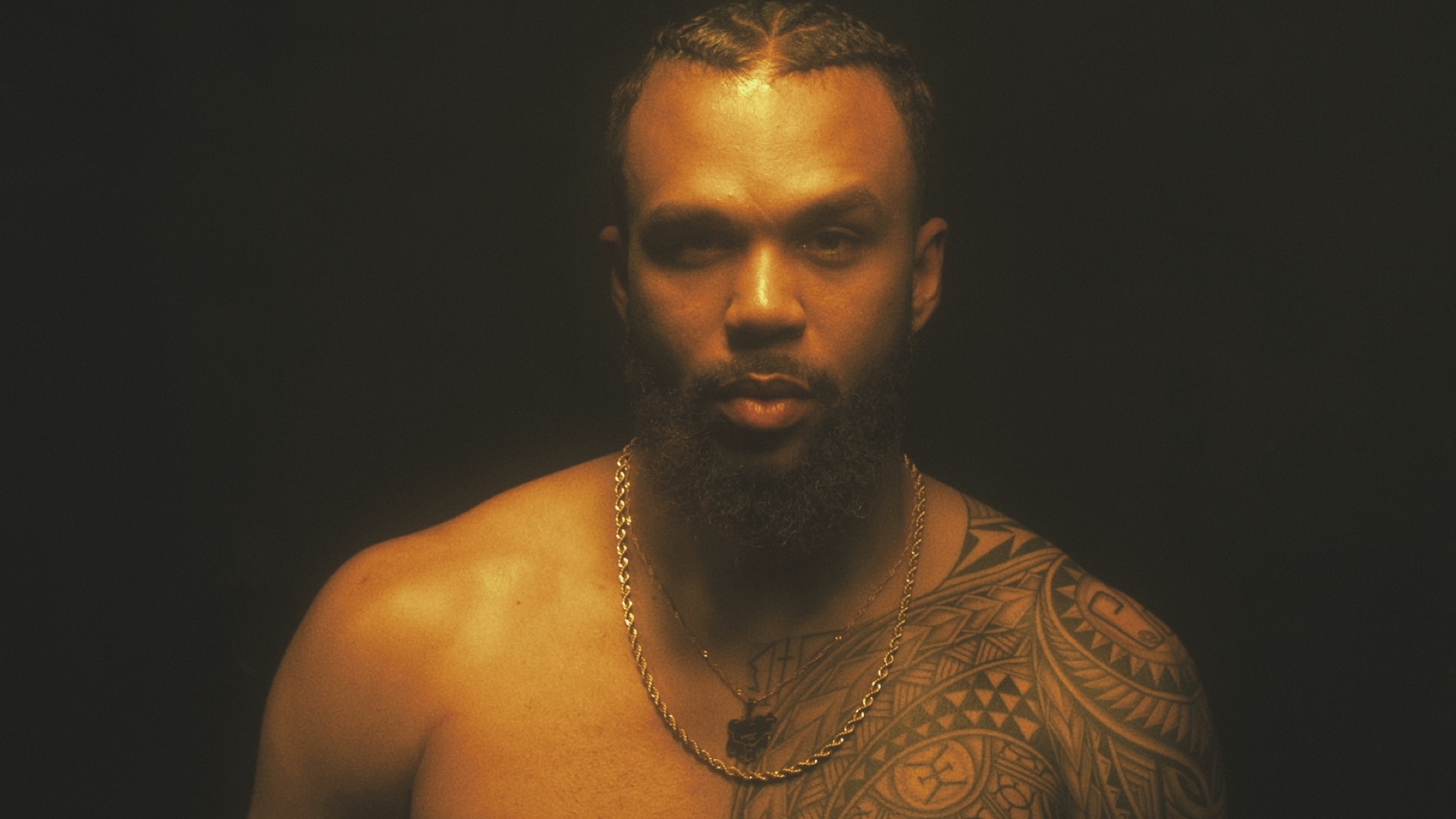
Photos from the “Tribe” period show how far the work travels: dark bands wrap around the shoulder and upper arm, while denser shapes cross the chest and continue down the arm. Some areas leave skin open between the lines, which breaks up the blackwork. The spacing leaves a clear path from the chest script to the arm patterns, even when a photograph shows only part of the tattoo.
From Classic Man to Tribe
Jidenna first reached a wide audience with “Classic Man,” in tailored suits and vintage-inspired clothes. The look emphasized polish and restraint. In the “Tribe” video, he performs with his chest and arm tattoos exposed. The ink became part of the song’s visual setting, alongside the music and Nigerian heritage he describes.
Guardian Life described the arm-length tattoo as a mix of Nigerian and Polynesian symbols. Jidenna has spoken about the work as a way to return to heritage and connect Africa with the diaspora. He has called it a cultural highway.
Jidenna’s Nsibidi chest and shoulder tattoo
In an interview with Inked, Jidenna identifies the writing across his chest and shoulder as Nsibidi, a system associated with southeastern Nigeria. He said he had come across accounts of Africa’s past framed almost entirely through oral history. Learning about written systems and intellectual traditions challenged that view. He wanted the tattoo to keep that history in sight, and says the script connects the piece to his heritage.
Before drawing the design, Jidenna and Elsas studied the characters and talked at length about his life and family. In photographs, the Nsibidi sits within a field of dark lines and angular forms. Bands run from the chest over the shoulder toward the upper arm, linking the script to the sleeve.

The EZE high-chief message across the chest
Within the Nsibidi, Jidenna points out the word EZE. He translates it as “high chief” or “higher chief,” saying “king” is too simple a translation. He says the surrounding statement calls for uniting people and creating prosperity.
He describes the leader as carrying the message while ancestors lift it.

Jidenna’s music symbol and Taurus bull mask
Jidenna identifies two shoulder images: a symbol for music and a bull mask. He connects music to the leader’s role in bringing people together and creating prosperity. The bull is tied to his Taurus sign, but his explanation centers on family. He has said that his father, a grandfather, his brother, his niece and another grandfather are Taurus.
He recalls seeing twelve bulls cross a dirt road in the Nigerian village where his father was buried, just after the burial. Jidenna links that memory to the bull tattoo, giving it a family story alongside the Taurus reference. In the shoulder photograph, the bull and music symbols sit among dense black shapes and curved bands.

Polynesian spear, leaf and armor motifs
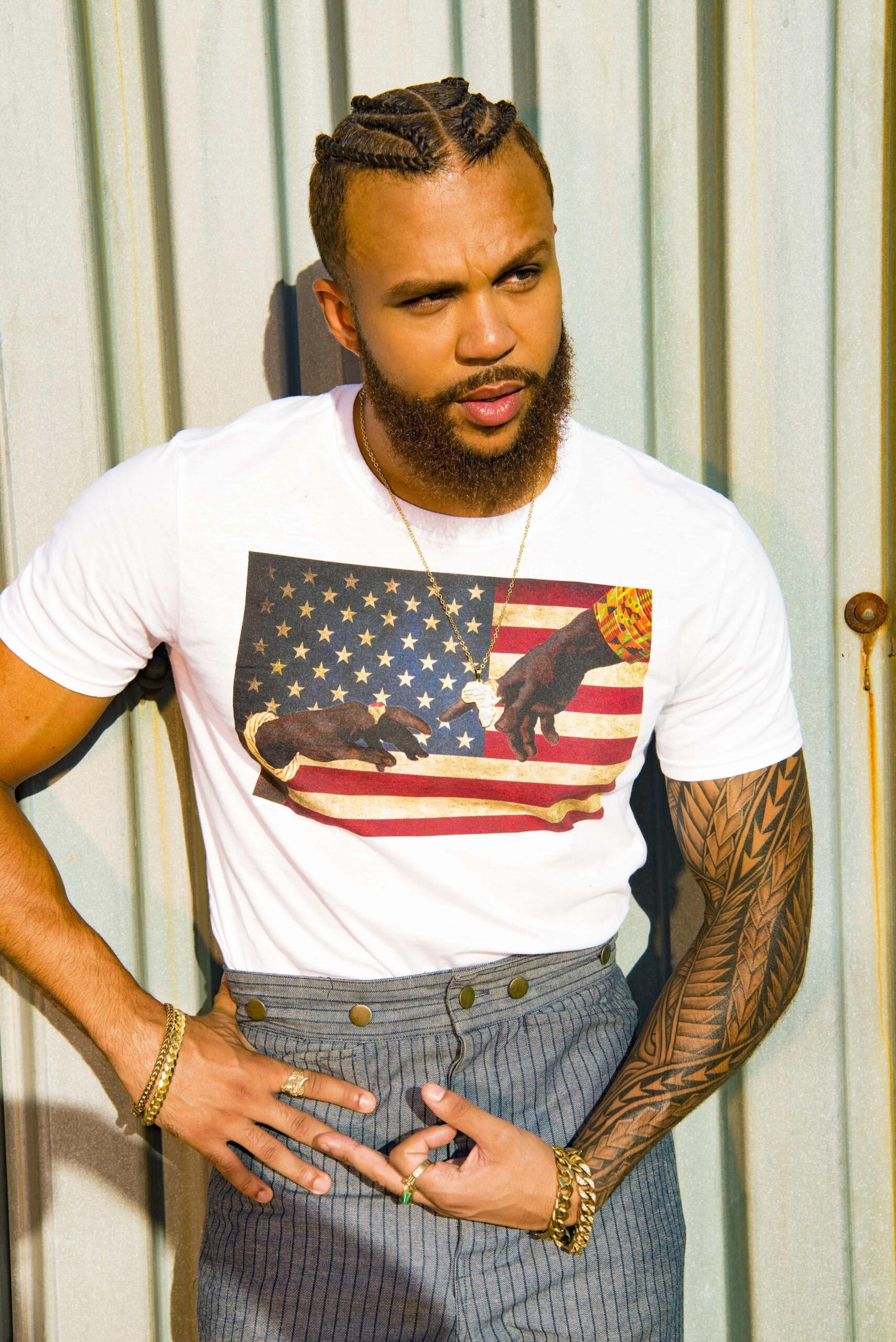
Jidenna describes the patterns around the sleeve as Polynesian and credits Josh Elsas of IslandTAT. In the Inked interview, he identifies forms that resemble spears and leaves and says they function as armor. The shapes repeat along the shoulder and arm: pointed ends, curved bands and dark borders that follow the body’s outline.
The pattern changes from shoulder to upper arm and forearm. Some sections are dense with black geometry; elsewhere, narrow gaps of skin separate the bands. Those openings keep the sleeve from becoming one solid patch. From farther back, the wide bands show first; closer photographs reveal the pointed ends and spaces between motifs. Jidenna says both traditions were researched in relation to his story.
The photos show dark ink against bare skin. One warm-lit close-up gives the skin a yellow cast, which makes the lines look softer than they do in a wider portrait. Jidenna describes the motifs and their meanings, but does not identify a colored ink section.
The crab and the sleeve’s layered meaning
Jidenna describes a crab peeling back the layers of its shell, surrounded by armor. He connects the two images: the armor suggests protection, while the crab represents shedding a layer. In photographs, dark bands overlap around the harder-edged forms, with open skin between them.
A first major mark
It was Jidenna’s first tattoo. He said the work took twenty-six hours, including about six hours of planning, across two consecutive days. He remembers sitting for twelve or thirteen hours a day, taking a nap between sessions, and keeping track of time with prayers before turning to films. He has called the experience a rite of passage.
Jidenna said the sessions changed how he understood pain tolerance. He also talked about the suffering of women in childbirth and of people subjected to war and imprisonment.
What the public photographs reveal
The photographs show the design at different scales. A chest-and-shoulder portrait keeps the Nsibidi writing and upper-body geometry in view. A longer shot follows the work toward the forearm, while a wider frame shows how the chest connects to the sleeve. Each crop leaves part of the tattoo outside the frame, so one photo rarely shows how the full design sits together.
The “Tribe” video shows the bands moving around his shoulder as he performs; a still portrait holds one pose. Neither the video nor the stills dates when the separate sections were added. Jidenna’s Inked interview gives the names and meanings he has shared; the photographs show where the shapes sit and how far the sleeve extends.
The repeated bands tie the tattoo together visually, while the chest lettering, music sign, bull and crab remain distinct images. A full view shows them within one composition; close portraits reveal their individual shapes. Jidenna’s interview gives the named elements their cultural and family context.