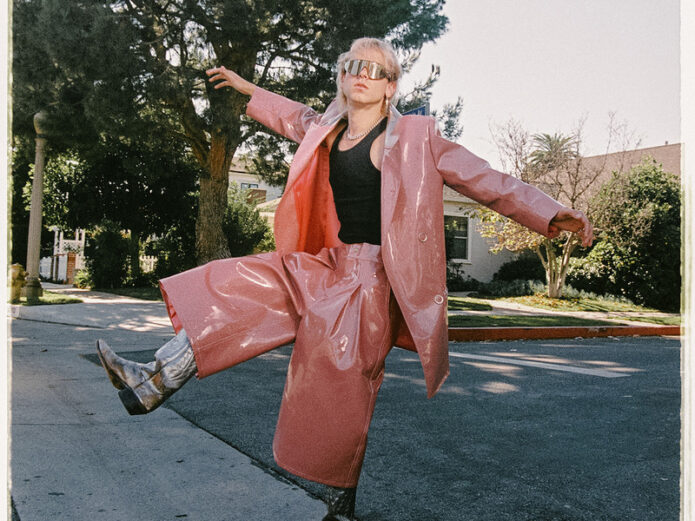
Jesse Rutherford’s tattoos span his chest, throat, arms, hands and back. The best-documented views show a central chest portrait surrounded by roses and birds, large lettering, a geometric throat symbol and layered arm work. In an Allure interview, he traced his interest in tattoos to sixth grade and said he started getting them at 16. The collection grew over time, rather than following one plan from the start.
A teenage beginning
Allure reports that Rutherford became interested in tattoos after discovering Travis Barker in sixth grade. He told the magazine he warned his mother that he would eventually cover himself in ink, then began at 16. By 20, his tattoos were prominent enough to feature in The Neighbourhood’s “Afraid” video.
Rutherford has said some early choices were made before he understood how much space later work would need. That history helps explain the mix of small, separate marks and larger pieces that now cover parts of his shoulders, arms and torso.
The central chest portrait and roses
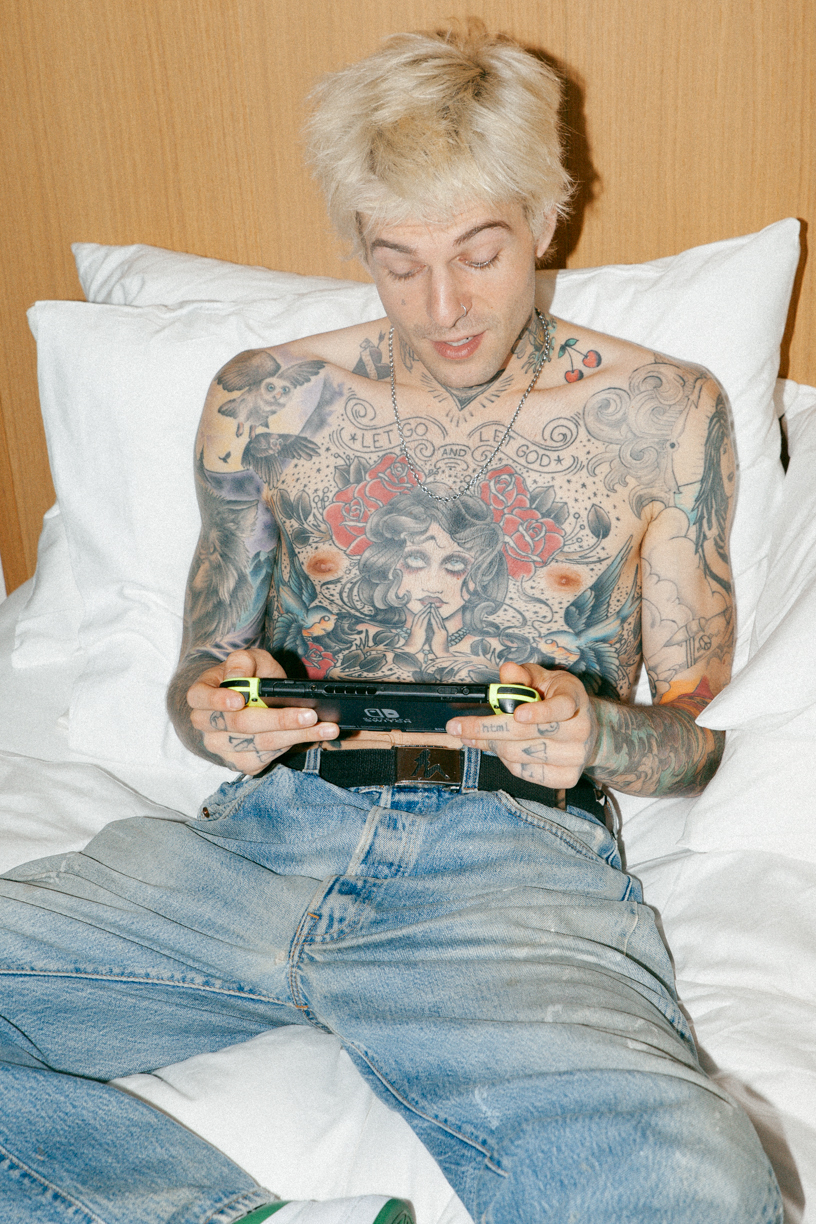
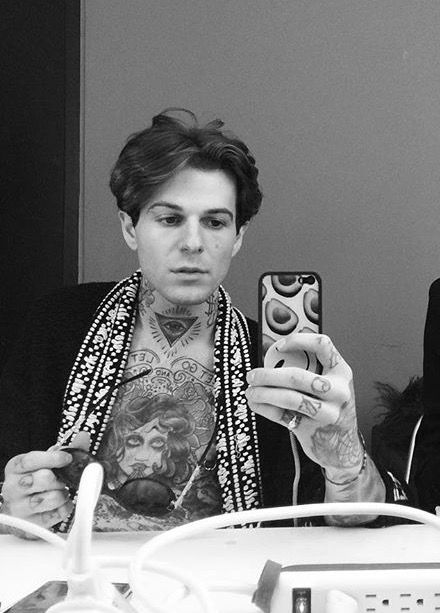
A large female portrait sits at the centre of Rutherford’s chest, framed by red roses, leaves and ornamental curves. Blue birds cross the lower part of the composition and draw the eye outward from the face. The flowers frame the portrait, which remains the focal point in the close view.
The roses carry saturated colour; the face and birds use darker outlines and grey shading. That mix connects the chest piece to the surrounding black-and-grey work without making every section look alike.
“LET GO AND LET GOD” across the upper chest
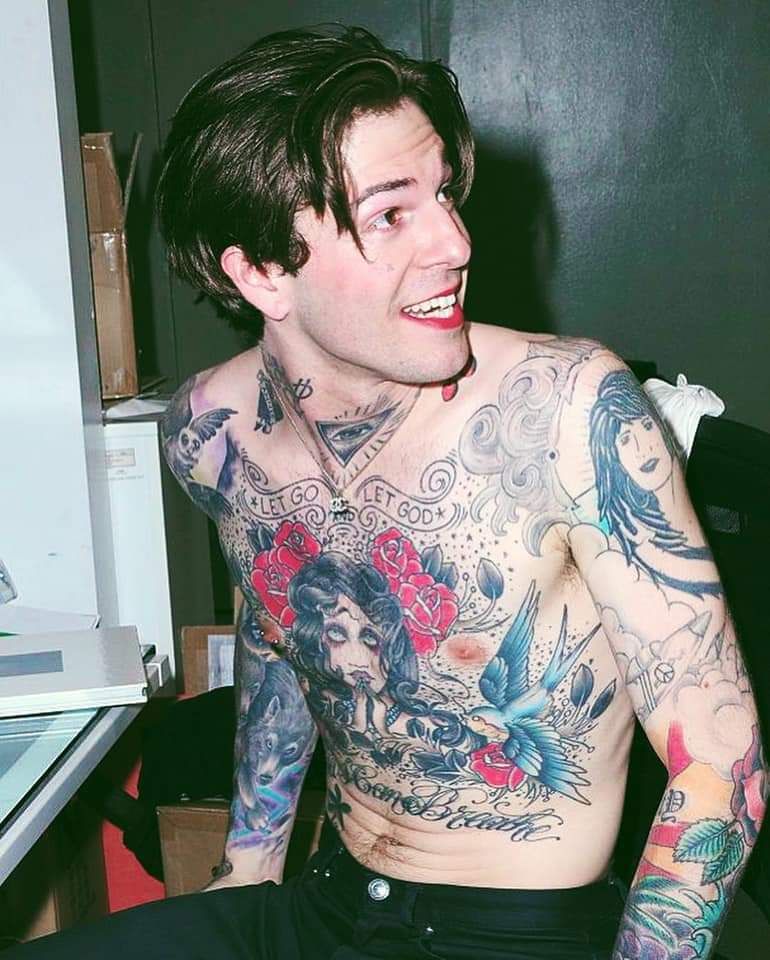
The words “LET GO AND LET GOD” curve across Rutherford’s upper chest in large lettering. The phrase is easy to read in colour and black-and-white photographs, where it sits above the portrait and flowers. The source coverage describes its placement but does not give a separate explanation of what the words mean to him.
Small dots and swirls around the letters soften the transition toward his shoulders. The chest lettering, face and throat design form a continuous arrangement, though each remains distinct.
The all-seeing eye and throat tattoos
A triangular eye sits in the middle of Rutherford’s throat, just below his jaw. Radiating lines surround it, giving the compact geometric design a sharper outline than the portrait and roses below. Script and smaller marks continue along the sides of his neck, so the ink reads as a cluster rather than a single isolated symbol.
In photos where clothing covers part of the chest, the throat eye and neck work remain visible. Their straight lines also contrast with the rounded flowers and birds on his torso.
The right-arm sleeve and overlapping panels

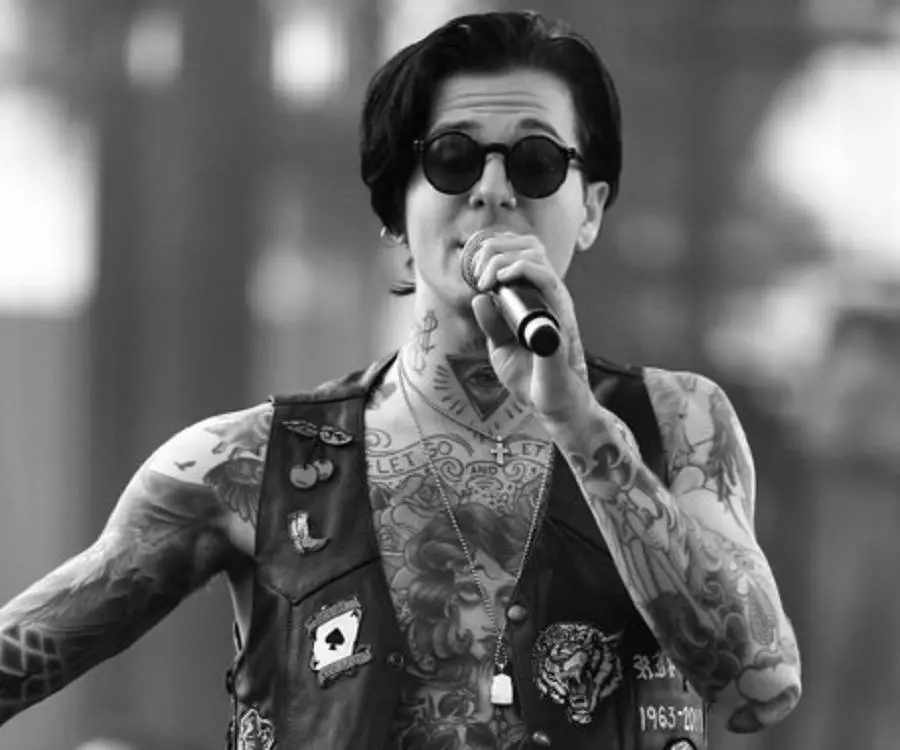
Rutherford’s right arm carries overlapping panels from shoulder toward wrist. The stage photo shows shaded figures, flowers and graphic shapes, including a bird near the shoulder and darker animal-like forms lower down. Dense outlines fill much of the upper arm, while smaller marks and heavier black passages appear on the forearm.
Some exposed skin remains between the larger designs, keeping the separate images visible. Together with the chest work, the sleeve adds a darker band of imagery down the arm.
The back landscape and shoulder pieces
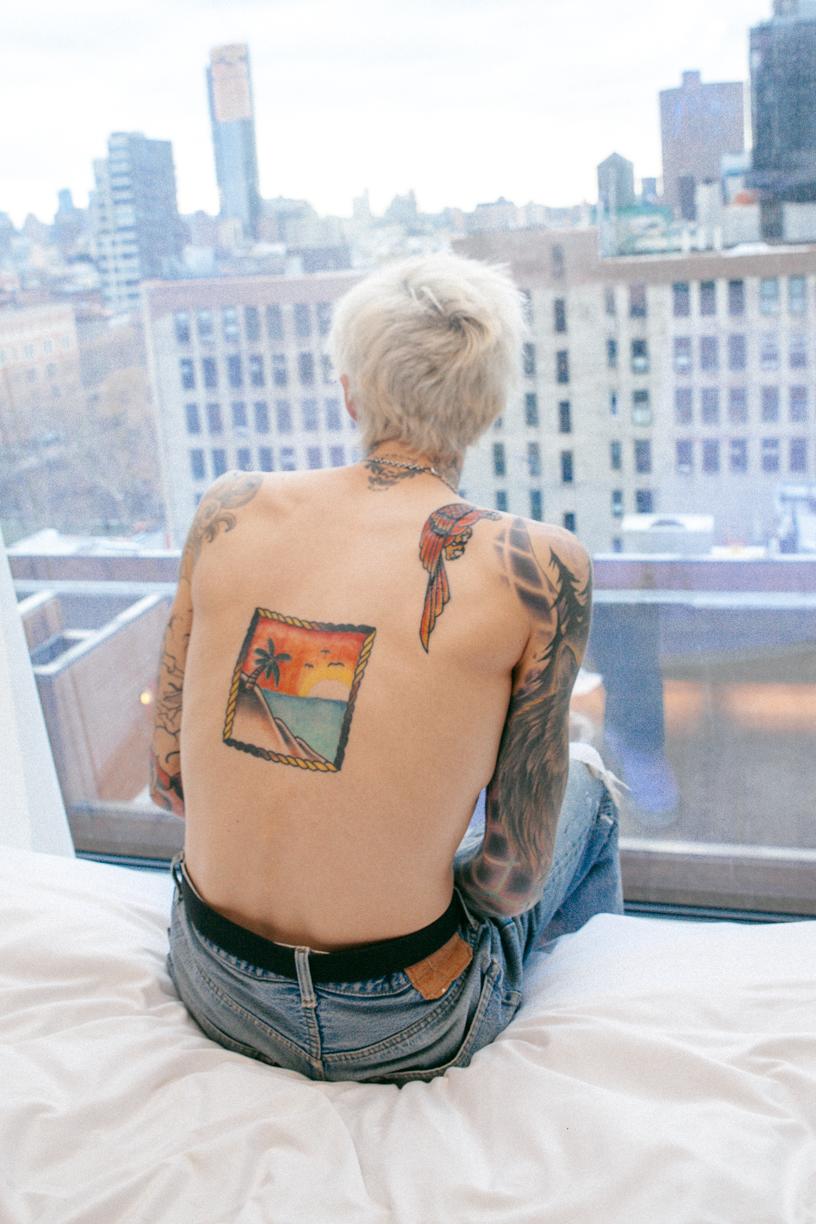
A separate Office portrait shows a framed landscape on Rutherford’s back: an orange sky above blue water and a dark horizon. Its rectangular border makes it look like a small picture, distinct from the looser chest and sleeve designs. Another vertical piece rises near the opposite shoulder toward the neck.
This rear view documents ink that front-facing photos do not show. The landscape’s broad blocks of colour sit beside darker shoulder work, adding a more contained scene to the collection.
Hand, finger and lower-arm details
Elle documented the word “love” across Rutherford’s fingers in a photograph published during his relationship with Billie Eilish. Other close views show smaller marks extending toward his wrists. The lettering is compact, while the lower-arm imagery continues the colour and shading of the upper sleeve.
These details make the tattoos visible even when a shirt or jacket covers the larger chest work. The photos show how the designs extend from his arms toward his hands without filling every patch of skin.
A rear view of the visual archive
Small lettering and linework at the back of Rutherford’s neck become visible when he turns away from the camera. The marks sit between the shoulder tattoos and the throat design, but the available images do not make their wording clear.
Camera angle changes which pieces stand out: front views show the chest and throat, the rear portrait reveals the framed landscape, and closer photographs pick up the hand and neck details.
What the Chip Chrome era concealed
During The Neighbourhood’s Chip Chrome period, Rutherford’s silver body paint changed how the tattoos appeared. Allure described the character as a full-body silver transformation that separated it from his earlier image. Paint and clothing obscured much of the ink in some photos and videos, while other scenes showed tattoos underneath.
The concealment was part of the performance; it did not mean the tattoos had disappeared. When the silver styling was absent, the chest portrait, throat eye, lettering and arm work were still there.
How the collection reads as a whole
The documented designs mix portraits, flowers, birds, animal forms, lettering and geometric symbols. Black-and-grey shading makes up much of the collection, with the red roses and blue birds adding colour across the chest. The framed back landscape brings in another distinct patch of orange and blue.
What the documented record establishes
Interviews and photographs establish that Rutherford began getting tattoos at 16 and had extensive visible work by the time he was 20. They show the chest portrait, roses and birds; the “LET GO AND LET GOD” lettering; a triangular throat eye; arm coverage; a framed back landscape; and smaller hand and neck marks.
The available sources do not offer a complete inventory or confirm the meaning of every symbol. The clearest account sticks to designs and placements visible in photographs, along with the history Rutherford has shared himself.
The continuity beneath changing personas
Rutherford’s tattoos have remained visible across different stages of his public image. The Neighbourhood’s “Afraid” video showed his ink early on; later, Chip Chrome’s silver paint covered parts of the same collection. Fashion portraits and performance photos have since shown the chest words, portrait, throat eye and arm work from different angles.
The styling changes, but the tattoos provide a recurring visual thread across those images. That continuity is documented; broader claims about what each design says about his identity go beyond what the interviews and photographs establish.