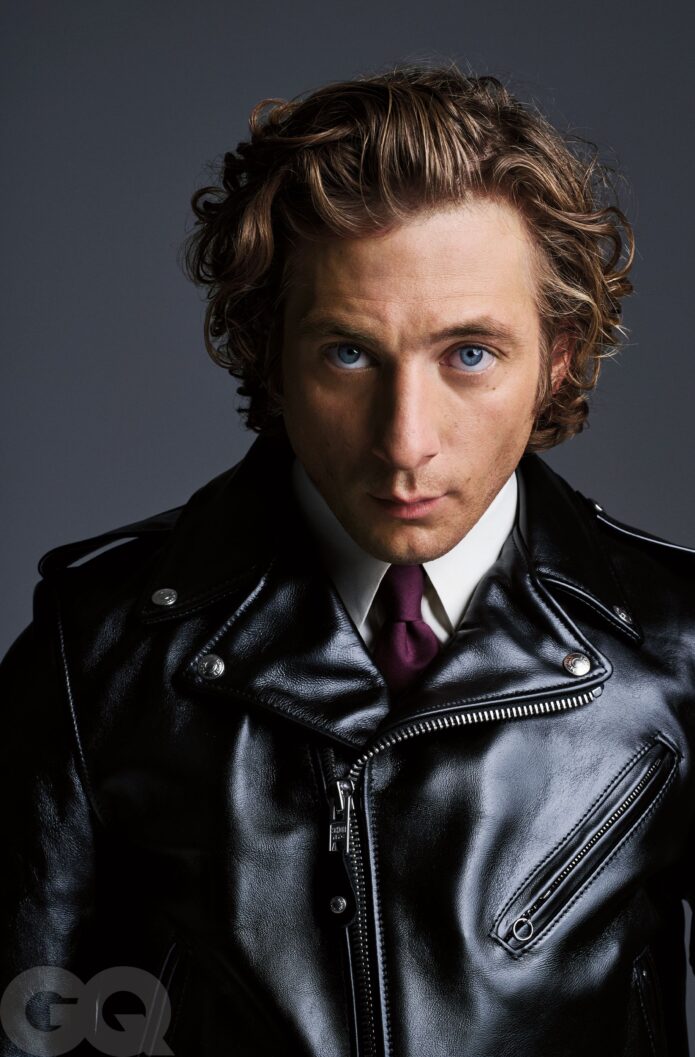
Jeremy Allen White’s tattoos get a little confusing once The Bear enters the picture. Carmy Berzatto has a whole collection of rough, character-heavy designs running over his arms and hands, while White’s own ink is much smaller and more personal. The actor helped shape Carmy’s tattoos with tattoo artist Benny Shields, so the two worlds overlap. They’re still not the same thing.
White’s real tattoos are easier to miss than Carmy’s. There’s a triangle on his chest, a heart-and-arrow piece on his forearm, a hummingbird connected to his daughter Ezer, initials and a few smaller marks. None of it feels like it was designed to shout across a room. The collection has the loose, slightly imperfect look of tattoos gathered over time, which suits White’s low-key style pretty well.
The clearest public record comes from a mix of interviews, close-up photos and tattoo coverage. Some meanings have been explained. Others are only reported or remain private. That distinction matters, especially with celebrity tattoos. A blurry photo can turn into a confident internet fact in about five minutes, so the useful version of this story is the one that separates what we can see from what we’re guessing.
Jeremy Allen White’s real triangle tattoo
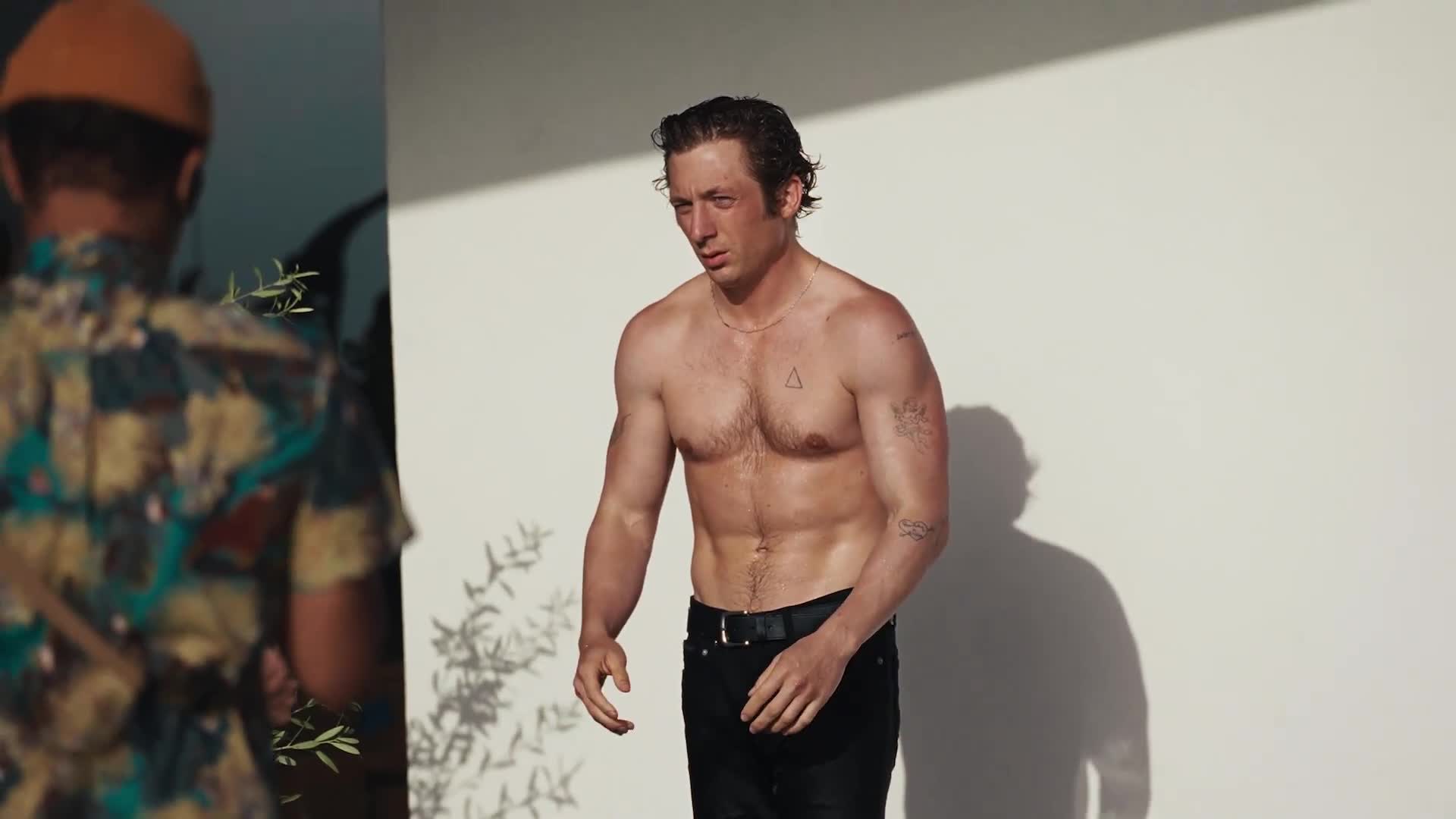
The triangle is the piece most fans noticed first. It sits high on White’s chest, slightly to the left, and uses a simple open outline rather than heavy shading or a filled-in black shape. In the GQ España campaign image above, you can see the triangle clearly, along with some of the lighter tattoos on his arms. The design is small, clean and a little wonky in exactly the way an old personal tattoo can be.
White has said the triangle was done when he was 17. He has also described it as having been done badly enough that it sits raised on the skin. That may not sound like the kind of detail people want from a tattoo, but it’s part of why the piece feels real. It wasn’t made for a magazine shoot. It was a teenage tattoo that stayed with him into adulthood.
The mark became familiar to viewers because White’s character Lip Gallagher also had it on Shameless. Makeup artists tried to cover the tattoo, but the raised texture made that difficult, so it was worked into Lip’s look instead. That’s a neat bit of screen history: White’s own imperfect triangle became part of a character audiences watched for years.
There’s no need to force a dramatic meaning onto it. White has connected it to a friendship and his younger years, which is enough. A triangle can mean balance, change, family or something completely private, but the interesting part here is that the tattoo survived because it mattered to him, not because it was a perfect piece of design.
If you like small tattoos with a little age and personality, this is the design to study. The lines are minimal, the placement gives it room to breathe and the history does more work than the artwork. It’s a reminder that a meaningful tattoo doesn’t have to look polished in the same way a new flash piece does.
What White’s personal collection looks like
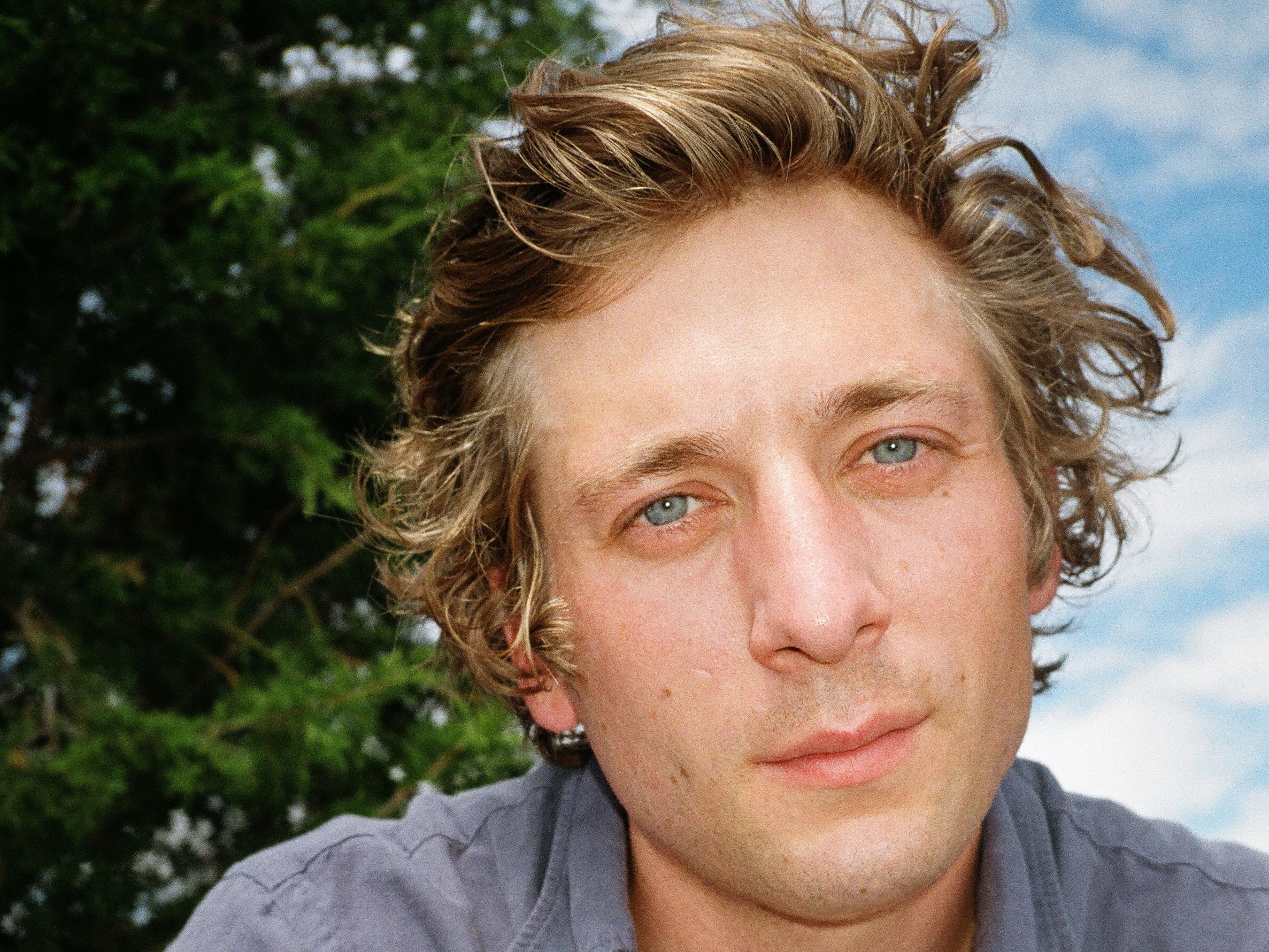
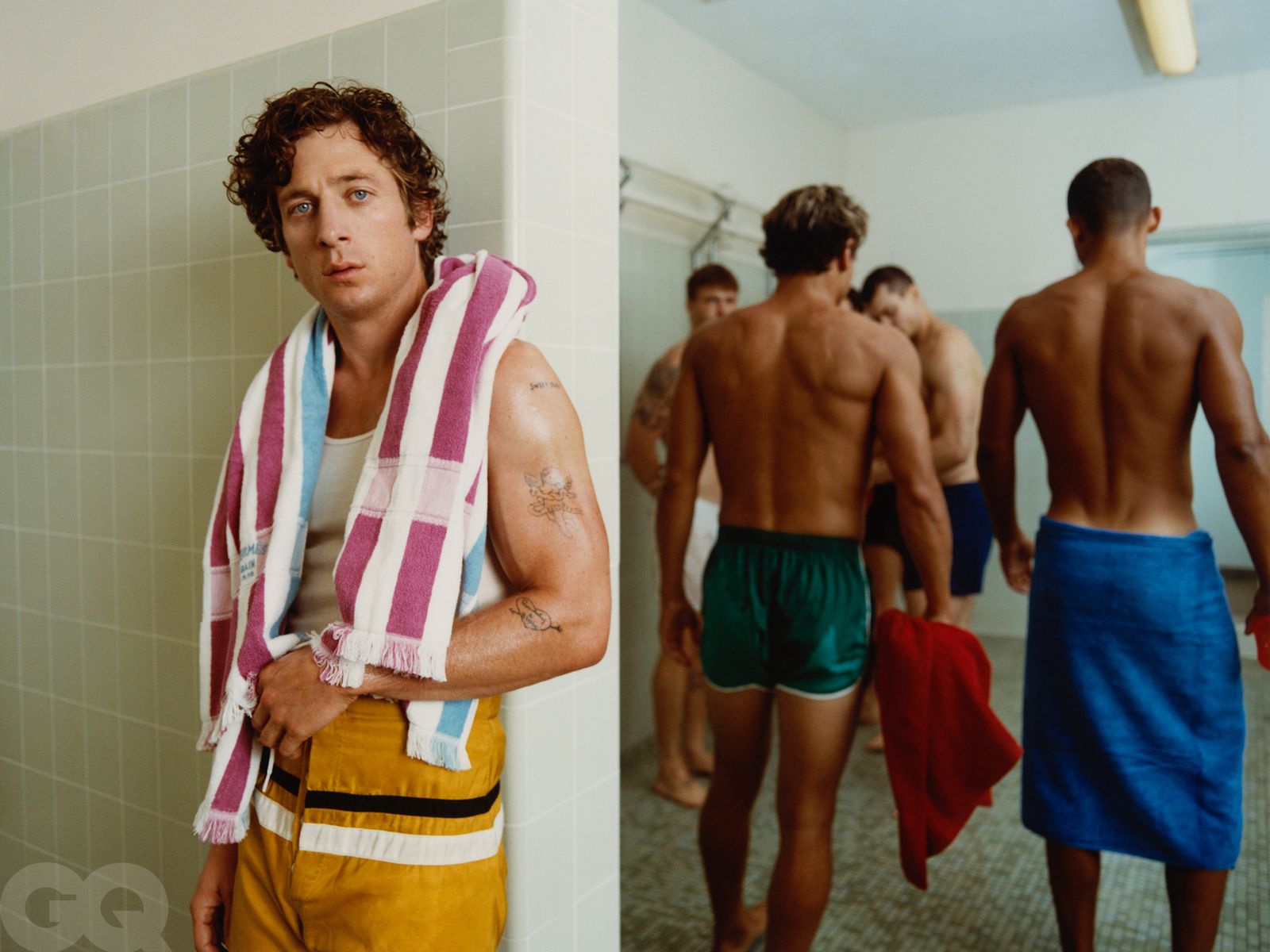
White’s overall collection is usually described as at least six known tattoos, though the count can change depending on which smaller marks are visible in a photo. Tattoo coverage has identified a heart pierced by an arrow with the words “Buddy & Billie” on his upper forearm, a hummingbird with a banner reading “Ezer,” the initials “R.W.” on a shoulder, “EZ” on an inner bicep and a two-word phrase beginning with “sweet” on the opposite shoulder.
Some of those pieces are easy to connect to people in White’s life, while others have not been fully explained by the actor. The hummingbird and Ezer banner are commonly linked to his daughter. The heart-and-arrow design has been reported as a tribute connected to Addison Timlin, and the initials may carry a personal meaning that White has chosen not to spell out. It’s better to call those reported connections than to present every interpretation as confirmed.
The designs share a hand-drawn quality. They aren’t all the same style, and they don’t look like one giant plan was mapped across his body in a single session. That gives the collection a lived-in feeling. One tattoo is a tiny outline, another uses text, another is a small illustrative image. The mix feels closer to how most people actually build a tattoo collection: one idea at a time, attached to different moments.
It also explains why White’s ink works so well in candid photographs. The tattoos don’t turn every image into a catalogue. They appear when a sleeve rolls up, when he’s in a tank top or when a campaign uses bare skin as part of the styling. In a formal portrait, they can disappear completely. That kind of flexibility is useful if you want tattoos that are part of your look without making them the whole look.
The actor beyond the role
White’s personal triangle and the ink worn by Lip are closely connected because the show used his real tattoo instead of pretending it wasn’t there. Carmy is a different case. The character has a much heavier collection, with designs across his arms, hands and upper body. White worked with Benny Shields to build that collection before filming, treating each piece as a clue about who Carmy was and how he had moved through the world.
In an interview with TheWrap, White explained that Shields could look at a stranger’s tattoo and make educated guesses about when and where it might have been done. That kind of knowledge helped shape Carmy’s ink. The designs were meant to feel like things the character would really have chosen, rather than random drawings placed on an actor because the role needed to look edgy.
White’s favorite Carmy tattoo was the image of a knife going through a hand. He described it as a reminder of how close Carmy always is to destroying the things he’s trying to build. That’s a character reading, not a statement about White’s own tattoo choices. Still, the creative process shows how seriously he takes body art as part of a role.
The difference between White and Carmy is worth keeping clear. White’s own tattoos are fewer, smaller and connected to family, friendship and his younger years. Carmy’s tattoos are visual shorthand for pressure, grief, addiction, ambition and the restaurant world he can’t quite escape. They may share a body on screen, but they do different jobs.
That distinction is useful if you’re borrowing inspiration from the show. A tattoo that looks great on Carmy may be telling a story about a fictional chef, not matching White’s personal style. If you like the rough blackwork, the hand imagery or the scattered placement, take those as design references rather than assuming every visible mark belongs to the actor.
How the production built the look
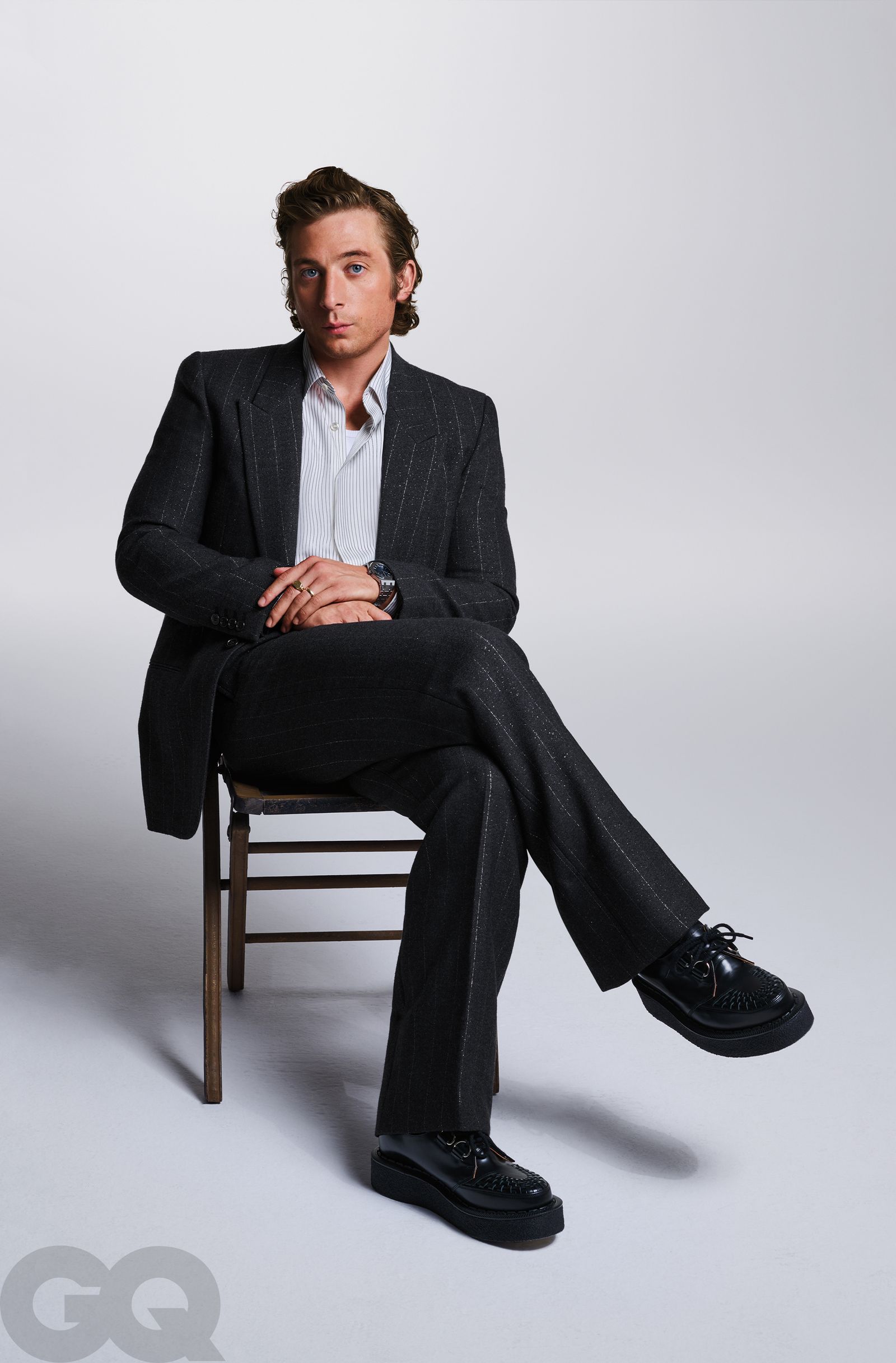
One reason the character’s ink feels convincing is that the designs aren’t all equally crisp. Some pieces look old, some look fresh, and some sit in awkward places where the body naturally bends and moves. That unevenness is intentional. Real collections collect history. Lines soften, ink spreads a little and later pieces have to find space around what came first.
White’s own triangle helped set that tone. Because it’s a real piece of ink with a raised, imperfect texture, the makeup team had to deal with an actual piece of skin rather than a perfectly flat reference drawing. NewBeauty’s behind-the-scenes coverage explains that White’s existing tattoos were covered before the temporary designs were applied. The production had to create a clean canvas while keeping the final look believable.
That process is a good reminder that screen tattoos are built in layers. A character may appear heavily tattooed in one scene, then look slightly different in another because of lighting, sweat, movement or makeup. On The Bear, the ink had to survive long kitchen scenes, heat, physical movement and close-up camera work. The designs were only one part of the job. Keeping them consistent was another.
For tattoo artists, the lesson is simple: placement and aging matter as much as the drawing. A great design can still look wrong if it’s placed against the body’s movement or surrounded by pieces that don’t make sense together. The collection works because the marks feel like they belong to the same messy life, even when each design has its own subject.
For anyone planning a real tattoo, it’s worth thinking past the reference photo. Ask how the design will look when your arm is relaxed, bent or turned sideways. Think about what the lines will do as they soften. Leave enough space for future pieces if you already know you want a larger collection. White’s tattoos aren’t a perfect blueprint, but they’re a good example of why tattoos should be designed for a body, not just a screen.
A style that leaves room to breathe
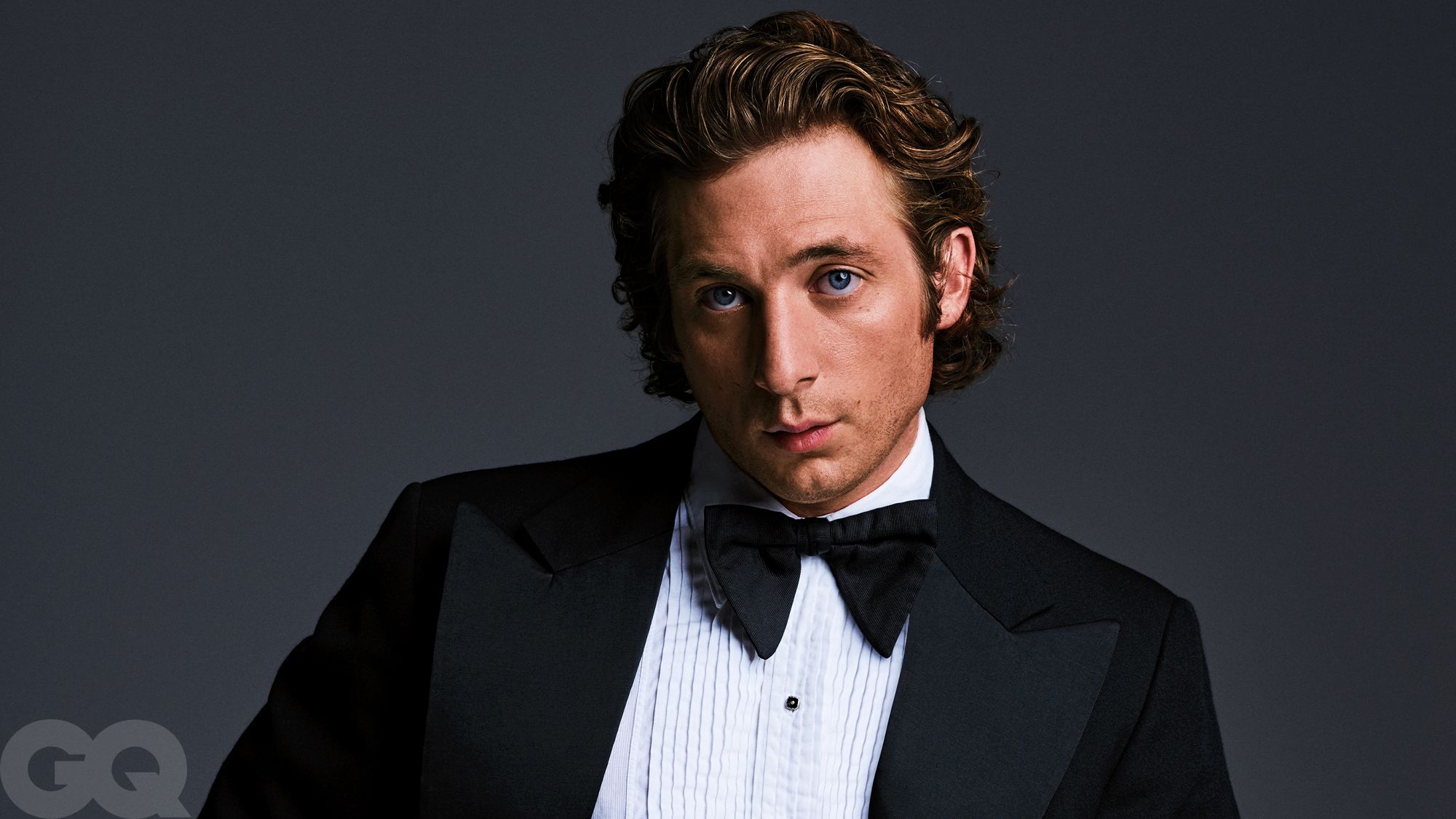
White’s real tattoos lean personal instead of ornamental. The triangle comes from his teenage years. The Ezer hummingbird connects to fatherhood. The heart-and-arrow piece has a relationship behind it. Even the marks with unclear meanings feel like they belong to specific memories rather than a general attempt to look tattooed.
That’s the strongest idea to take from his collection: choose the reason before you choose the shape. You don’t need to copy the triangle, the hummingbird or the exact lettering. Start with the person, place or moment you want to remember, then work with an artist to find an image that still looks good without a paragraph of explanation.
Keep the scale honest. A tiny tattoo can be powerful, but it can’t hold the same amount of detail as a large back piece. White’s triangle works because it’s just an outline. The hummingbird has more detail because it has more room. Text needs even more care, especially on an arm or near a joint where movement can change the way it reads.
Let different pieces look different. White’s collection doesn’t seem built around one strict rule. There are outlines, lettering, small illustrations and marks that are partly hidden. A mixed collection can feel more personal than a perfectly matched sleeve, especially if every piece has its own story.
If you want a more unified look, repeat one subtle detail instead. Use the same line weight, keep the scale within a certain range or ask your artist to echo one shape across different pieces. That gives the collection some rhythm without making every tattoo look like it came from the same flash sheet.
The clean version of the story
Jeremy Allen White has real tattoos, but the full collection is smaller and quieter than Carmy’s ink on The Bear. The best-documented piece is the triangle on his chest, which he got at 17 and carried into his role as Lip Gallagher on Shameless. Other reported tattoos include a “Buddy & Billie” heart-and-arrow, an Ezer hummingbird, R.W. initials, EZ lettering and a shoulder phrase beginning with “sweet.”
Some meanings are public, some are reported and some are still private. That’s not a problem. In fact, the mystery suits the collection. Tattoos don’t have to come with a full explanation to be good. They just need to make sense to the person wearing them.
Carmy’s tattoos are a separate piece of the story. White and Benny Shields designed them to make the character feel older, rougher and more emotionally complicated. The knife-through-hand image, the scattered arm work and the heavy temporary makeup all belong to Carmy’s world. White’s own ink helps ground that world, but it shouldn’t be mistaken for the whole collection.
That’s why the triangle remains the tattoo to start with. It’s simple, visible and tied to a real part of White’s life. There’s no overworked symbolism and no need to claim more than the evidence supports. Just a small outline, an old story and a little bit of history sitting on the chest of an actor whose characters often wear much more ink than he does.