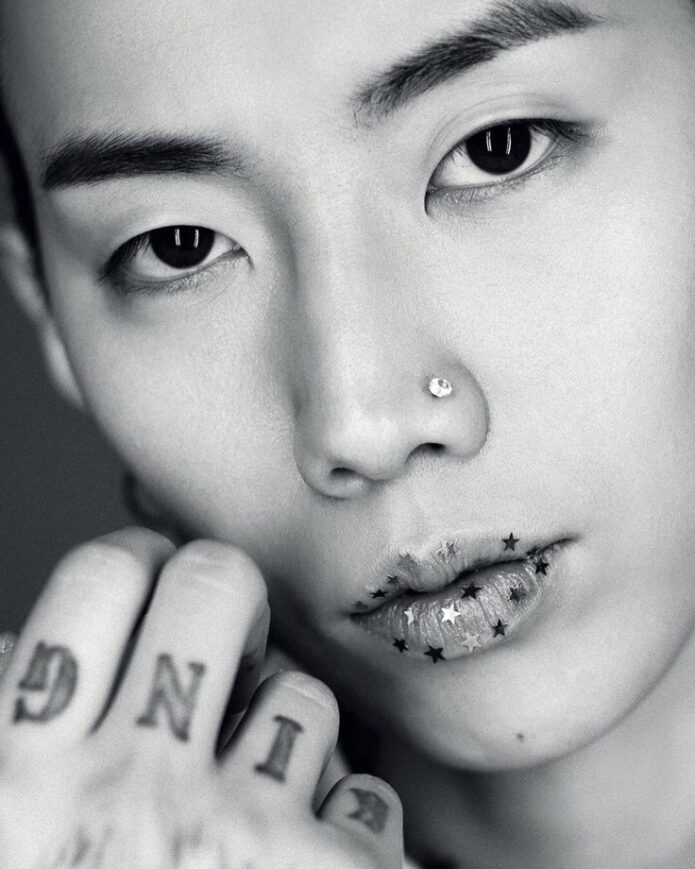
Jay Park’s tattoos are easier to follow when you look at the stories behind them. Some connect to his Seattle b-boy years, music, family, faith, fans and people who helped him move from dance into a music career. His ink stretches across his neck, chest, ribs, arms, hands, legs and back, so a single shirtless photo cannot show the full collection.
Jay has spoken about the designs in GQ’s tattoo-tour videos, including which ones hurt, which he sometimes forgets and why particular words and images matter. Other tattoo guides identify pieces and dates, though the evidence is not equally strong for every detail. The sections below keep Jay’s own explanations beside the visible designs without inventing a story for every star or line.
The first AOM tattoo sits behind Jay Park’s ear
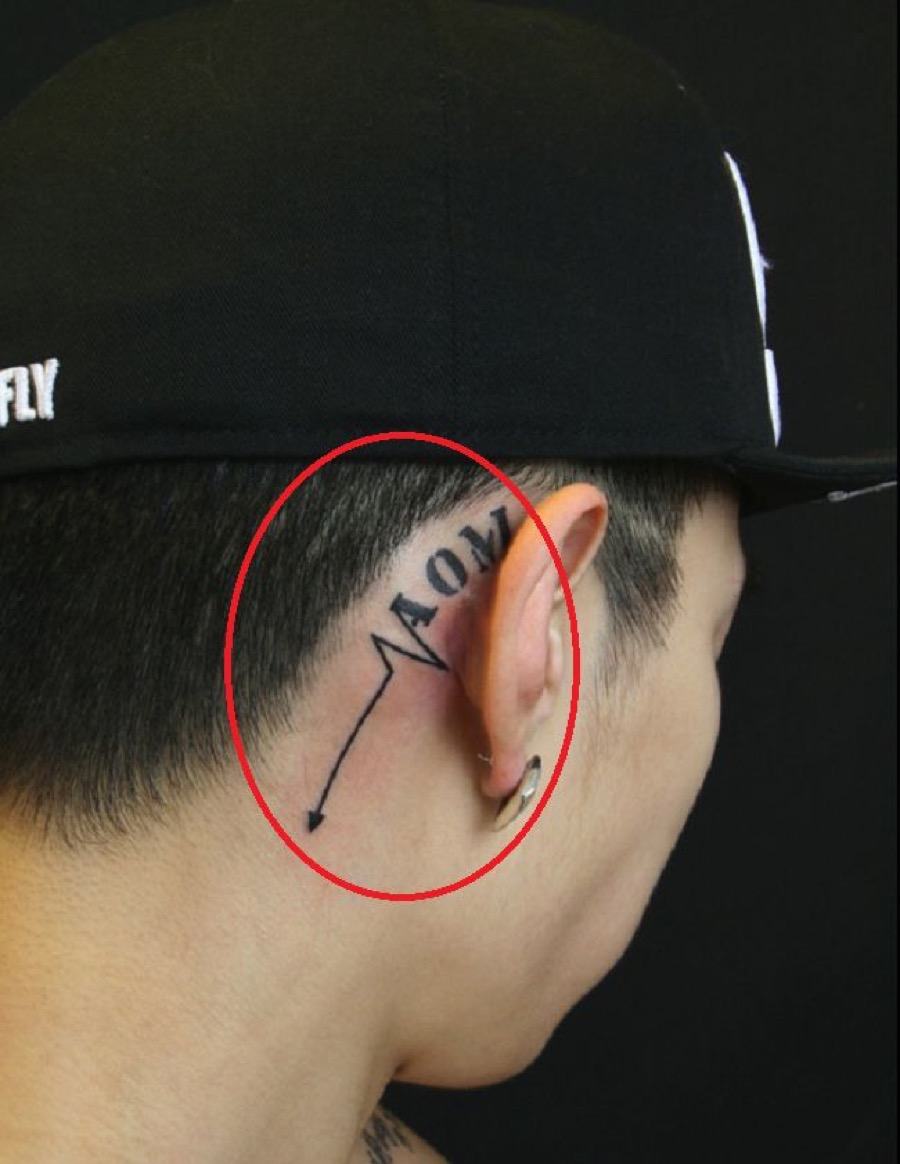
Jay’s first tattoo was a small AOM mark behind his right ear. AOM stands for Art of Movement, the Seattle b-boy crew tied to his early dance years. He has said the tattoo took about fifteen minutes. It may have been a quick session, but it connects the singer and label founder to the crew and street-dance scene he came from.
The placement is subtle beside the larger work on his chest and arms. Hair or a cap can hide it, then it appears when he turns his head. It is a useful starting point for his collection: Jay began with a short piece of lettering tied to the people he was moving with, not a huge chest panel.
A second AOMG tattoo appears elsewhere in his collection, and the names are easy to confuse. AOM refers to Art of Movement; AOMG is the record label Jay later founded. They belong to different stages of his career. Both matter to his working identity, but they are different inscriptions.
Jay’s angel tattoo covers the back of his head
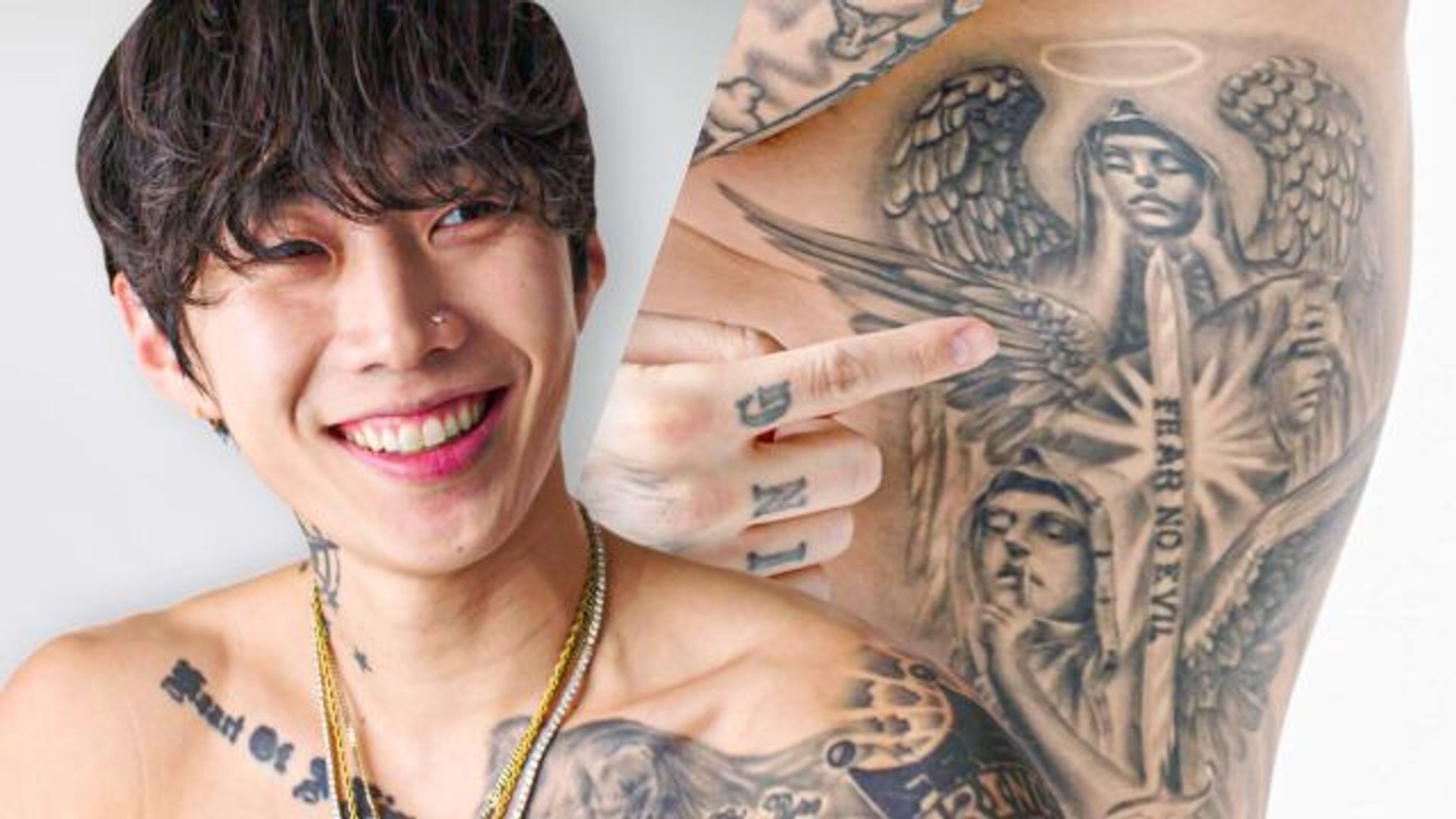
The angel on the back of Jay’s head is one of his most striking tattoos. The design stretches across the back of his head and upper neck, with wings and a central figure that read more clearly when he turns away. Its size also made it a talking point in Korean entertainment coverage, where tattooed performers have often had to cover their ink on television.
Jay has called this his most painful tattoo. He credited artist Sanlee and posted about the work in 2016, joking that his hair would grow back. The scale, discomfort and date give it a clear place in the timeline. It was a major session that changed the back of his head, not a small mark added between shows.
Angel imagery often gets assigned a stock meaning online, but Jay’s own comments are more useful. He has referred to angels watching over him and connected some of his tattoos with faith and protection. The photo shows the wings and placement; his comments add the personal context. There is no need to give each feather a separate meaning.
The lion, family dates and chest lettering build Jay’s front panel
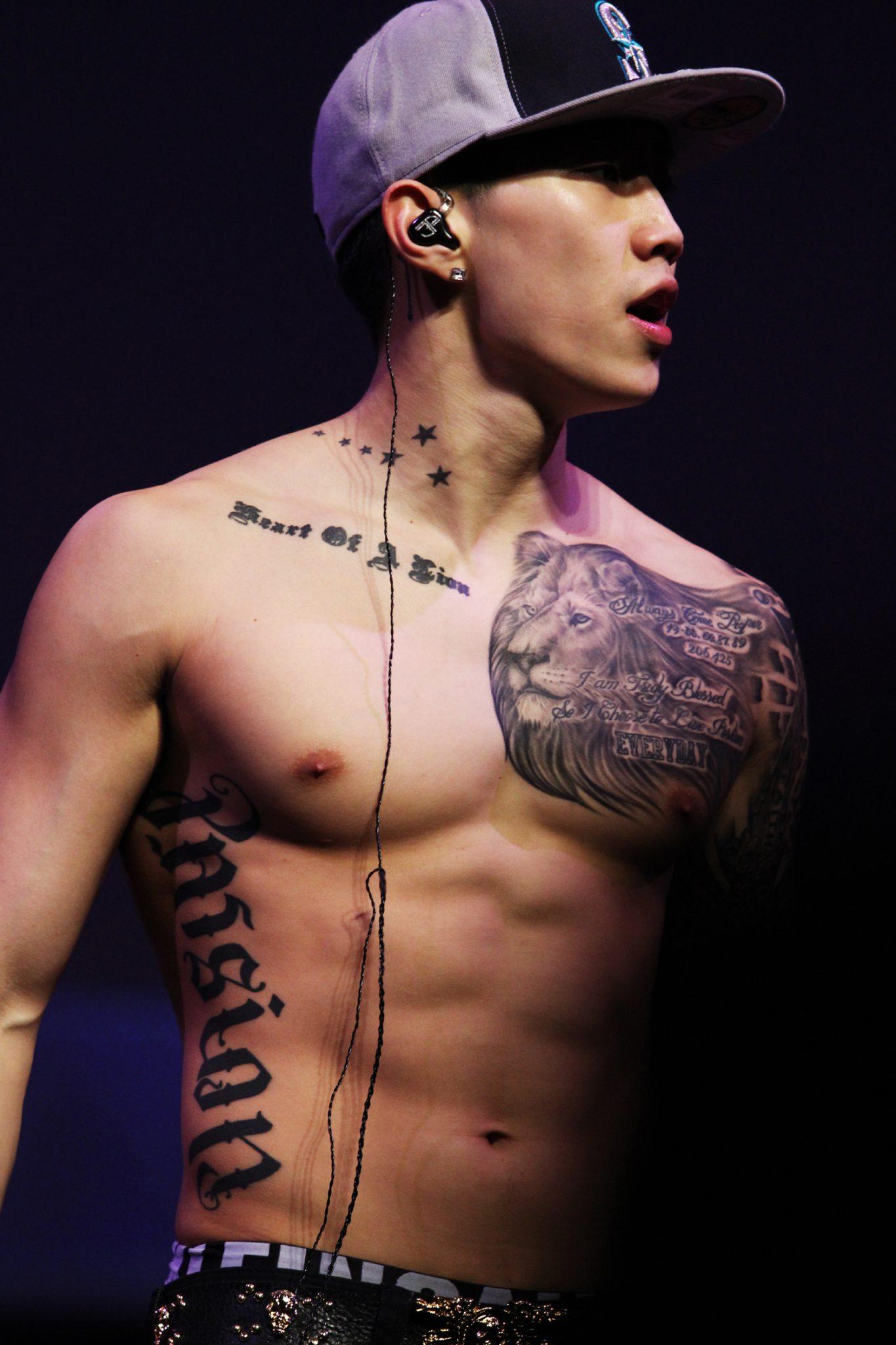
Several themes come together on Jay’s chest. The most prominent design is a lion across the right side of his chest and shoulder. It sits among script, stars and other lettering, which can make the area look like one huge tattoo in a stage photo. A closer view shows separate elements built around the animal.
Near the lion are phrases such as “Heart of a Lion”, “I am Truly Blessed” and “Always Come Proper.” Some have been described as reminders about his attitude and how he wants to carry himself. The words are visible; interviews and tattoo coverage offer the context for the importance Jay gives them.
Jay has also described a chest tattoo tied to the birthdays of his mother, father, brother and himself. It is one of the clearest family stories in the collection. The dates are a compact record of his family, placed beside the lion and music-related lettering, without needing a more dramatic explanation.
The front panel also includes the phrase “Start of J Park” and small stars near his collarbone. Photos show how the pieces sit across the upper chest, though posture changes their apparent shape. A performance photo may stretch the lettering, while a close selfie can make the lion seem larger because the camera is nearer to one side.
Stars, the compass and Seattle references mark the neck and collarbone
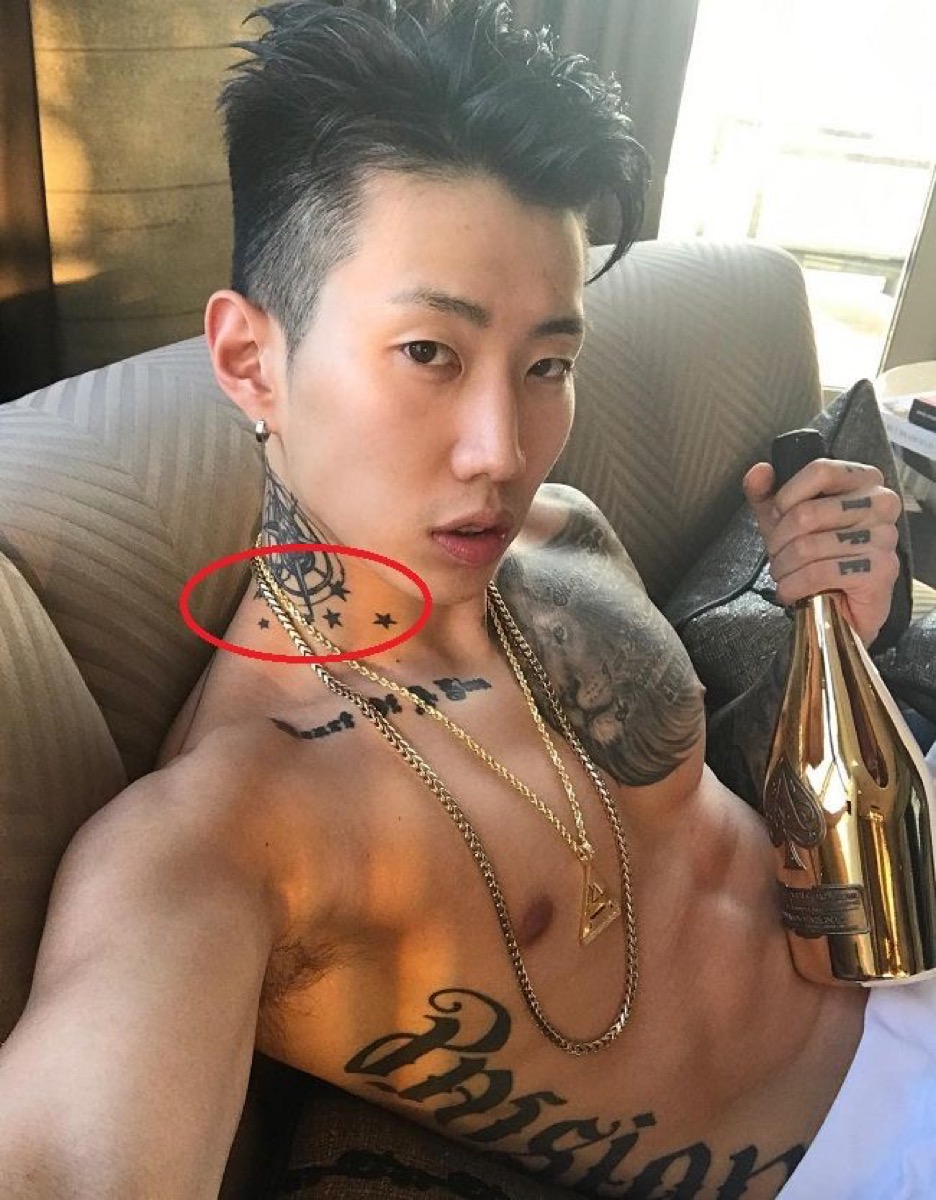
Stars rising from Jay’s collarbone toward his neck are among his easiest small tattoos to recognise. They sit beside darker script and a compass-style design, forming a narrow column rather than covering the whole neck. The stars show up in performance photos and close selfies, though dim light can soften their edges.
Jay has given the compass a personal explanation. He said it reminds him to follow his heart and also connected it with the Seattle Mariners. The Seattle reference matters because his collection often points back to where he grew up. It is not just a generic travel symbol; it sits among AOM references, family dates and lettering tied to his path through music.
Tattoo inventories also list 206 and 425, numbers connected with Seattle area codes. They are easiest to check in a clear upper-body photo. The placement should be dated, since later additions around the neck and shoulder can make the original group harder to isolate.
The neck tattoos work visually even though many are small. Stars draw the eye upward, the compass gives the grouping a central image, and lettering fills the flatter spaces around the collarbone. A photo establishes the arrangement; Jay’s explanation makes the Seattle reference specific rather than a vague claim about home.
Jay’s arms and hands carry the music, b-boy and AOMG lettering

Jay’s arms hold the most lettering. The left arm has been photographed with “Hip Hop Bboy Life,” “Art of Movement,” “New Breed,” “Live Free” and other phrases. His hands carry words such as “King”, “The Good Life” and “New Breed.” Some words are hard to read in every image, but the pattern is clear: the arms collect ideas from his music and dance career.
“New Breed” refers to Jay’s first Korean studio album, released in 2012. “Art of Movement” points to the crew that shaped his early identity. They are distinct references: one is an album and the other a dance crew, even if both belong to the same career timeline.
Other designs include a microphone, musical notes, a rose, a caricature of Jay with a Korean flag and a tattoo described as “Forever Stay Grindin.” Together they give the arms a scrapbook feel. Jay’s tattoos do not follow one visual style; lettering, small symbols, portraits and traditional subjects all circle back to music, movement and people he values.
The hands are easy to misread because rings and movement cover the ink. Close photos show knuckle lettering, small shapes and a crowned lion Jay has linked with the idea of being a king. A distant stage shot may show only dark marks, so it cannot establish a full hand inventory when his fingers are folded or partly hidden.
His legs and back add more detail. Tattoo coverage lists AOMG and musical notes on his right leg, along with a microphone, rose, feather and eye; another angel is on his left leg. The upper back carries “JWALKERZ,” a tribute to his fans. These pieces extend the collection’s themes, though the locations are harder to show together. It is more accurate to call this a documented inventory than promise one definitive current count.
What Jay Park’s tattoo timeline shows

Jay’s tattoos arrived in stages. The AOM mark belongs to his b-boy years. The family dates and lion make the chest personal, while album and crew lettering turn his arms into a record of the work that followed. The angel on his head and legs shows how the collection expanded over time.
Older photos are still useful. An early 2010s image may show the first chest lettering or Seattle stars before later work changed the layout. A newer tattoo-tour video can explain a design that older galleries could only show from a distance. Neither photo documents every stage of the collection.
Jay has said the tattoos mark things that matter to him. That is a more grounded way to read them than searching for a hidden message in every symbol. Some designs have direct explanations; others are clear visually but personally unexplained. The distinction does not make the second group less interesting.
Together, the tattoos follow a path through dance, Seattle, family, faith, music, albums, labels, fans and the physical work of building a career. The lion and angels make the collection immediately recognisable; the small AOM, compass and stars give it a timeline. The arm lettering fills in the working history between those larger images.
That mix is why Jay Park’s tattoos are worth looking at one by one. They are not a random pile of unrelated flash designs, but neither are they one perfectly planned sleeve. They grew as his life and career changed. The strongest photos show where each piece sits, and Jay’s explanations tell us which stories are his.