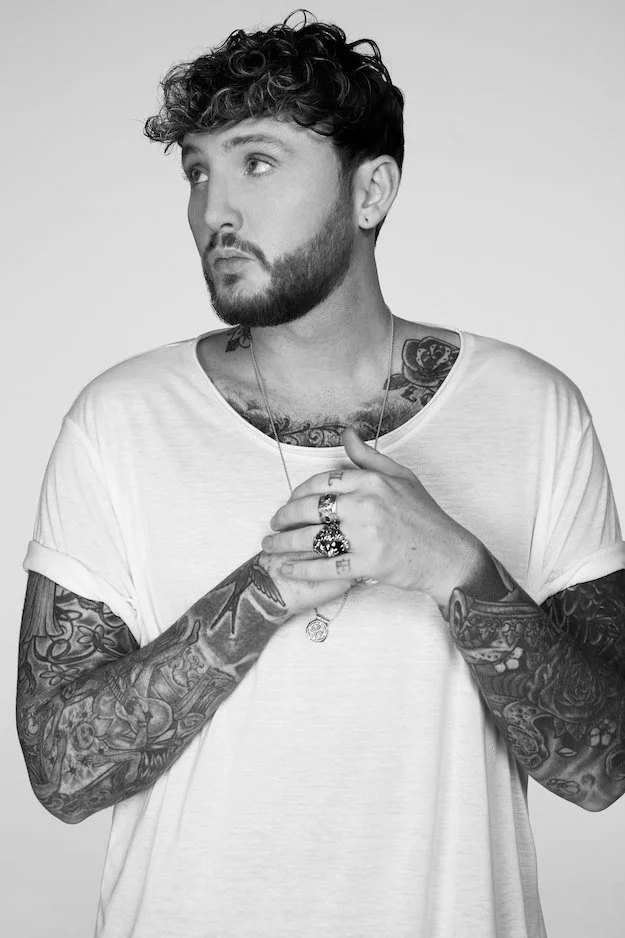
James Arthur’s tattoos include two sleeves, finger lettering, hand and neck ink, a small mark near his eye, and a chest design that is often covered by a T-shirt. The collection mixes colorful, old-school images with black-and-grey work.
Arthur has said that some tattoos were simply designs he liked, rather than pieces with a larger story. The photos show different stages of the collection, and older images don’t always reflect what remains after later edits or removal.
James Arthur’s hand tattoos mix lettering with small symbols
His fingers show lettering and small marks when he grips a microphone. Rings and bracelets add to the layered look, and the designs are not arranged as one perfectly uniform set.
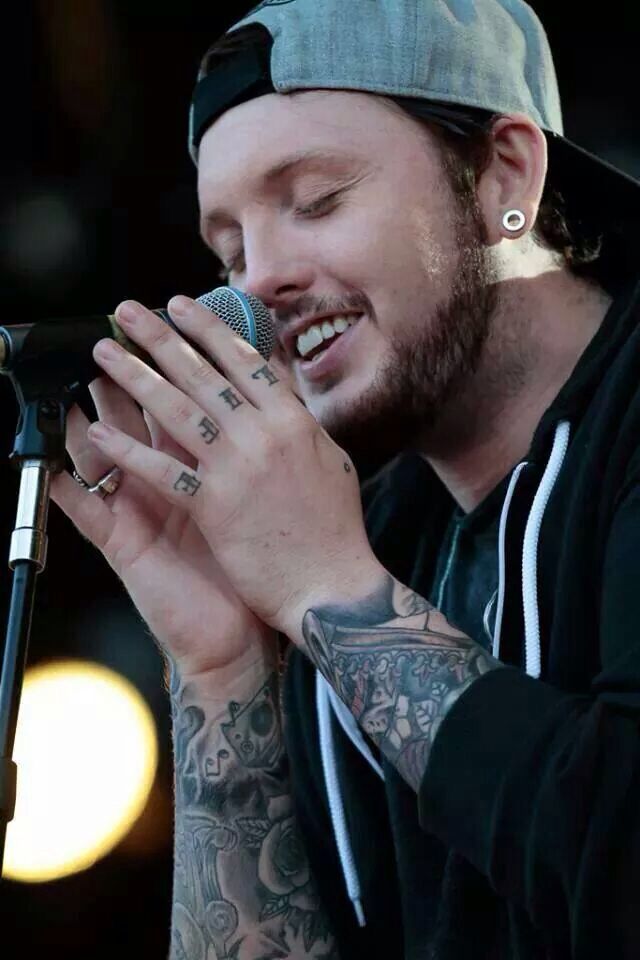
The live photo shows several finger tattoos alongside darker work on the wrist. The marks are small compared with the sleeves, but they are visible whenever his hands move on stage.
Finger skin gets washed and rubbed often, so fine details can soften. Short lettering or simple shapes are easier to read at that size than a tiny, detailed image. The placement and letter spacing matter as much as the design.
The crowned hand tattoo gives the collection an old-school centre
A close portrait shows a crowned figure on the back of Arthur’s hand, with dark outlines above the knuckles. The traditional-style image has a strong silhouette that stays clear when the hand bends.
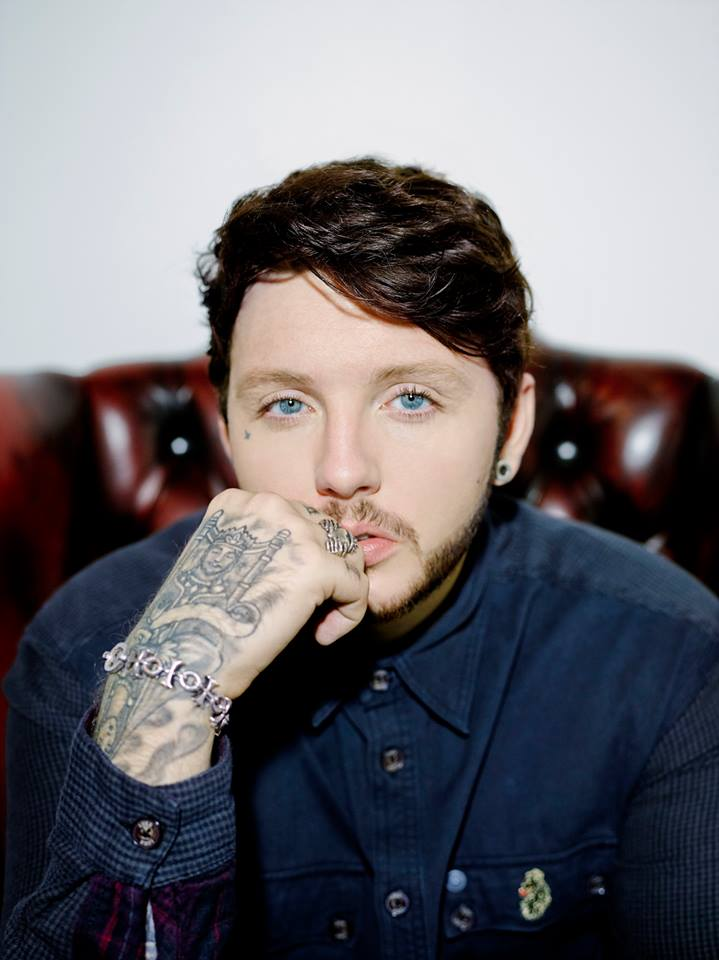
The other hand and arm tattoos are softer and less emblem-like, so the crown stands out as a distinct piece. The surrounding lines connect it to the wrist work without making it look like a separate sticker.
Arthur has not given a public explanation for every tattoo. The photo shows the central crowned figure, dark outline, and wrist linework; the rest of its meaning is not confirmed.
His black-and-grey sleeve is packed with overlapping pieces
In a black-and-white portrait, Arthur’s arm shows flowers, curved shapes, figures, and shaded sections layered together. The sleeve is dense, but different lines and textures keep the pieces visible.
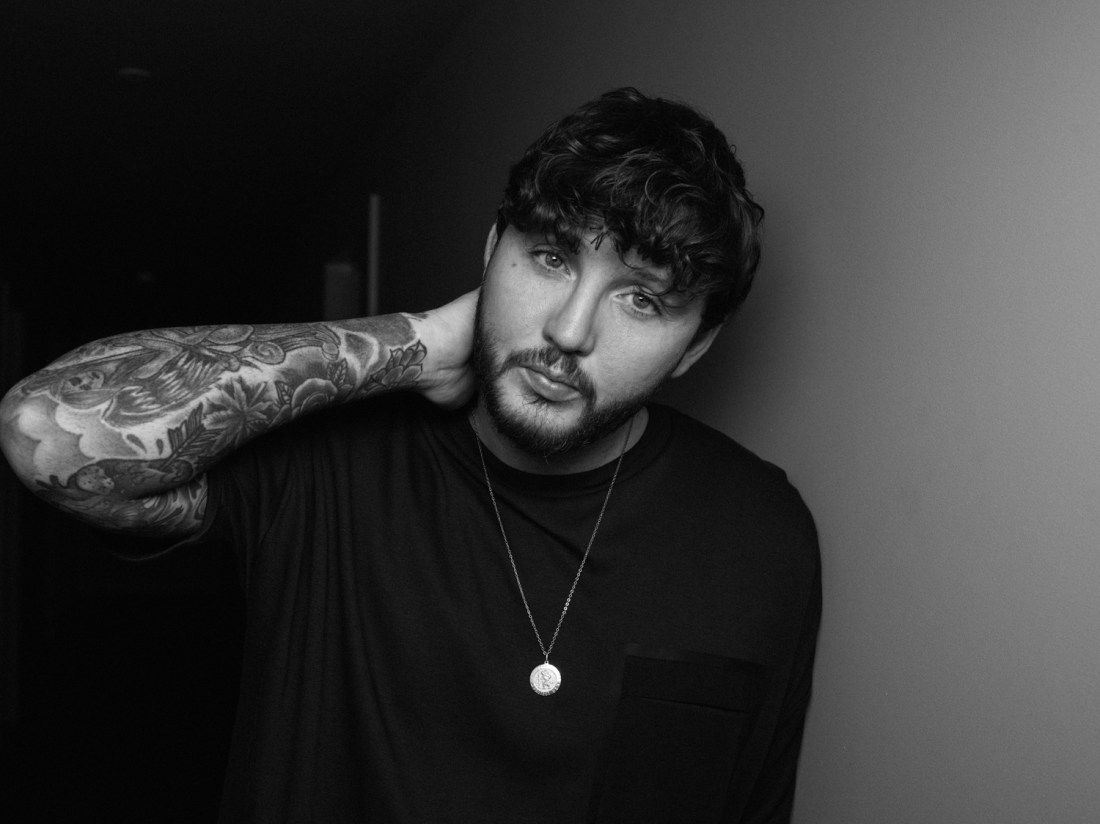
His arm is bent behind his neck in the photo, so some pieces stretch while others bunch near the elbow. Tattoos can look different as the arm turns; one image won’t show every section in the same way.
The black-and-grey work uses softer shading beside darker shapes. It appears to have been added over time, not as one design in a single style. The sleeve feels layered because the pieces have different textures.
The shapes and shading help the designs transition into one another. The arm is busy without every section having the same amount of detail, and the larger forms remain visible in a wider view.
The colourful sleeve brings flowers and bold panels into the mix
Another portrait shows a brighter sleeve, with blue, red, green, and pale highlights in separate sections. Flowers and rounded shapes sit inside strong outlines, making the arm look colorful even in a plain studio portrait.
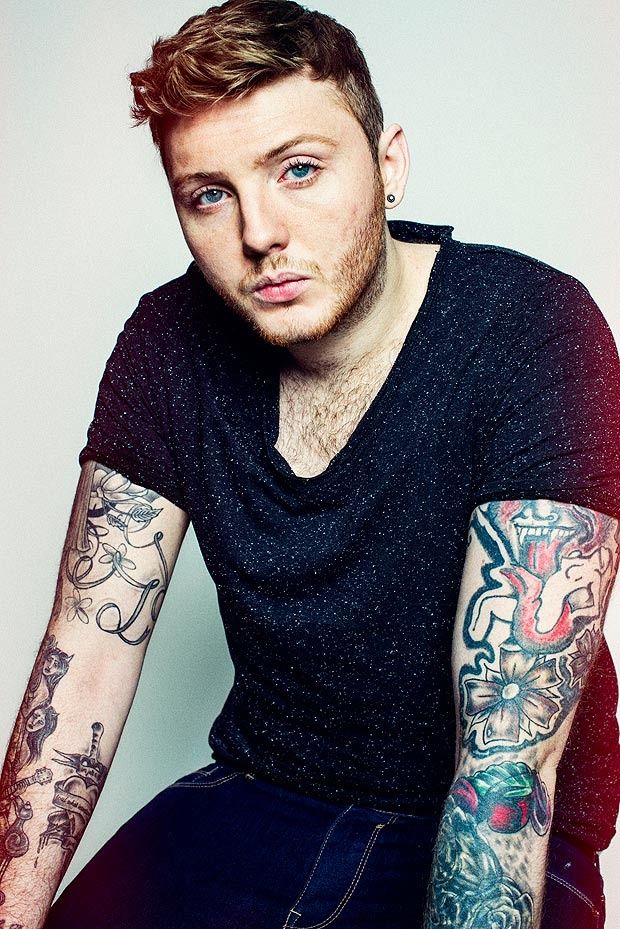
The two arms have different looks: one is mostly black and grey; the other uses more color. The contrast helps the sleeves remain distinct rather than blending into one dark shape.
Muted shading sits beside brighter areas, while the outlines separate the flowers and panels. Not every tattoo has a confirmed meaning; the color and composition are clear in the photo.
Stage lighting can change how red, blue, and green appear. A clear portrait shows the separate color areas more accurately than a dim performance shot.
Older photos show how James Arthur’s tattoos have changed
Comparing photos from different years shows changes in Arthur’s sleeves and the amount of skin left open around them. His hand tattoos can also look different depending on the angle, light, and how his fingers sit around a microphone.
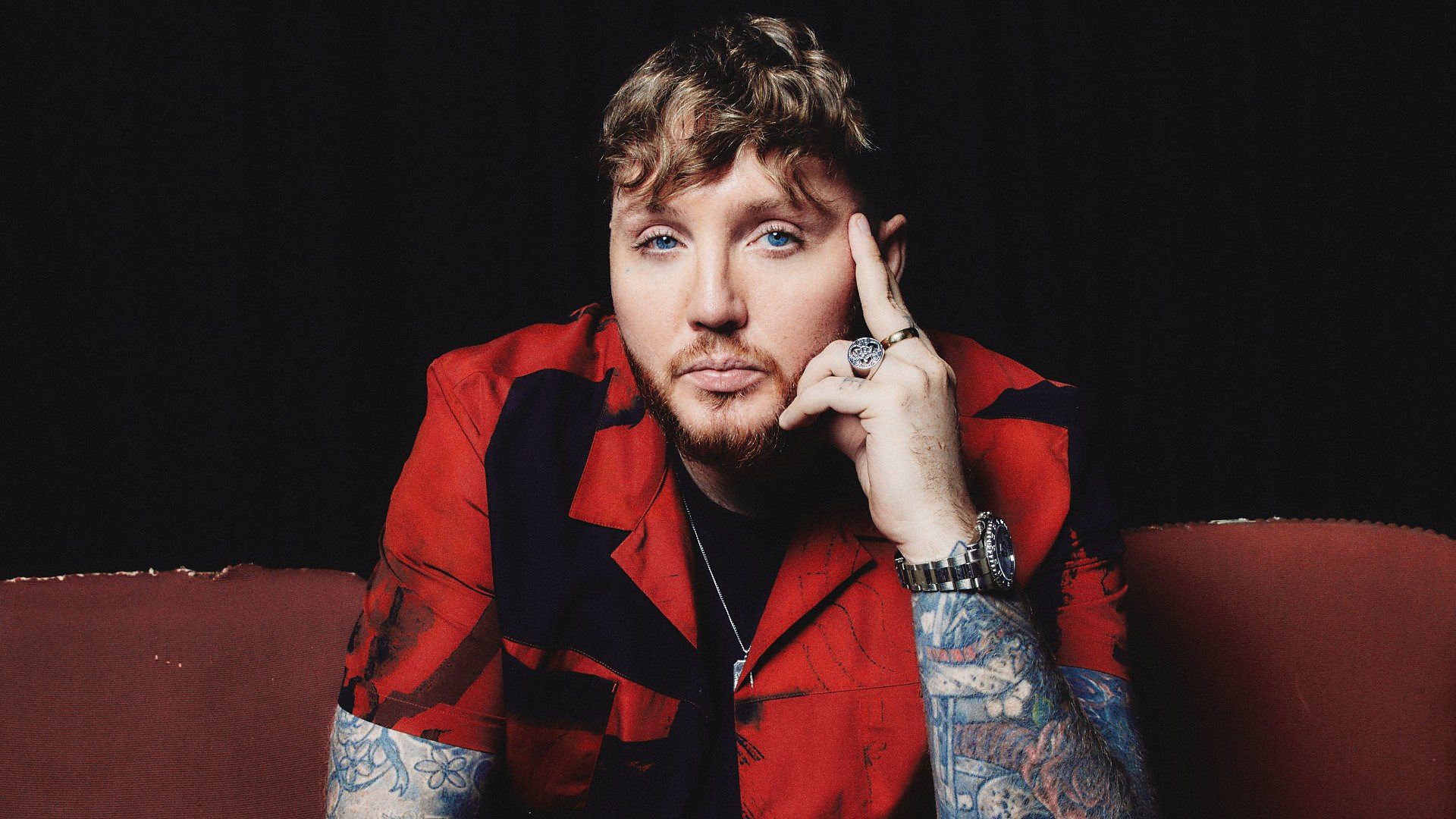
A close portrait can show lines that disappear in a wide stage photo. Lighting, distance, and editing all change how much detail is visible; a darker image doesn’t necessarily mean the tattoo itself has changed.
Arthur’s small facial mark is easier to see in a front-facing close-up than in a wide performance shot. The neck tattoos also show when his collar is open and disappear beneath a higher neckline.
He has spoken about tattoo removal and changes to the work on his hands, so older photos aren’t a full record of what remains today. The broad picture is more reliable: he has extensive ink across both arms, with additional tattoos on his hands, chest, neck, and face.
The collection includes traditional shapes, script, flowers, and dark shading without one single theme tying every tattoo together. Comparing photos from different years shows how later work sits beside earlier pieces and how the collection has changed.