
Hudson Williams became widely known through Heated Rivalry, and his tattoo collection is visible across his arms, shoulder and upper back. Harper’s Bazaar estimated that he has between 13 and 17 tattoos. The same interview identifies the Hobbes drawing on his bicep as his first and favourite.
Photos show a dark Hobbes figure, a bomb, fine floral and ornamental forearm work, and broader ink near the shoulder and back. No single portrait shows the full collection. The shape and placement change with the camera angle, clothing and light, so the images are best read as separate views of the designs they actually reveal.
Williams has given the Hobbes tattoo a personal context: it comes from his favourite childhood books, Calvin and Hobbes. His comments explain why that piece matters to him. The other designs can be described from the photographs, though their meanings are not all publicly identified.
The tiger and Hobbes piece on the upper arm
A close Harper’s Bazaar portrait shows a dark, rounded figure on Williams’s upper arm. Its stripes give it a tiger-like look, while Williams identifies it as Hobbes, the character from Calvin and Hobbes. Black and grey shading fills the figure, with lighter gaps that break up the darker areas.
He told Harper’s Bazaar that the Hobbes tattoo was his first and is still his favourite. He based it on the books he loved growing up and called Hobbes his imaginary best friend. That is the personal story attached to this design; the photo shows its rounded shape and how it curves around the bicep.

Because the bicep is rounded, the outer lines bend slightly with the muscle. In the close portrait, the arm rests near Williams’s torso and the image stays fairly tight. The larger dark areas catch the eye first; lighter shading and smaller details are easier to make out when the arm is shown from another angle.
Williams’s explanation and the photograph answer different questions. He has described the character and why he chose it; the image shows the tattoo’s size, shading and placement. The available account does not give a separate meaning to every line in the drawing.
The bomb and tiger grouping across the arms
A Yahoo Canada photograph shows Williams in a white sleeveless top, flexing both arms. The Hobbes design appears on one bicep and a compact bomb on the other. Smaller marks sit between the larger images. Bare skin remains visible around them, keeping the tattoos distinct instead of making the arms look like one continuous sleeve.
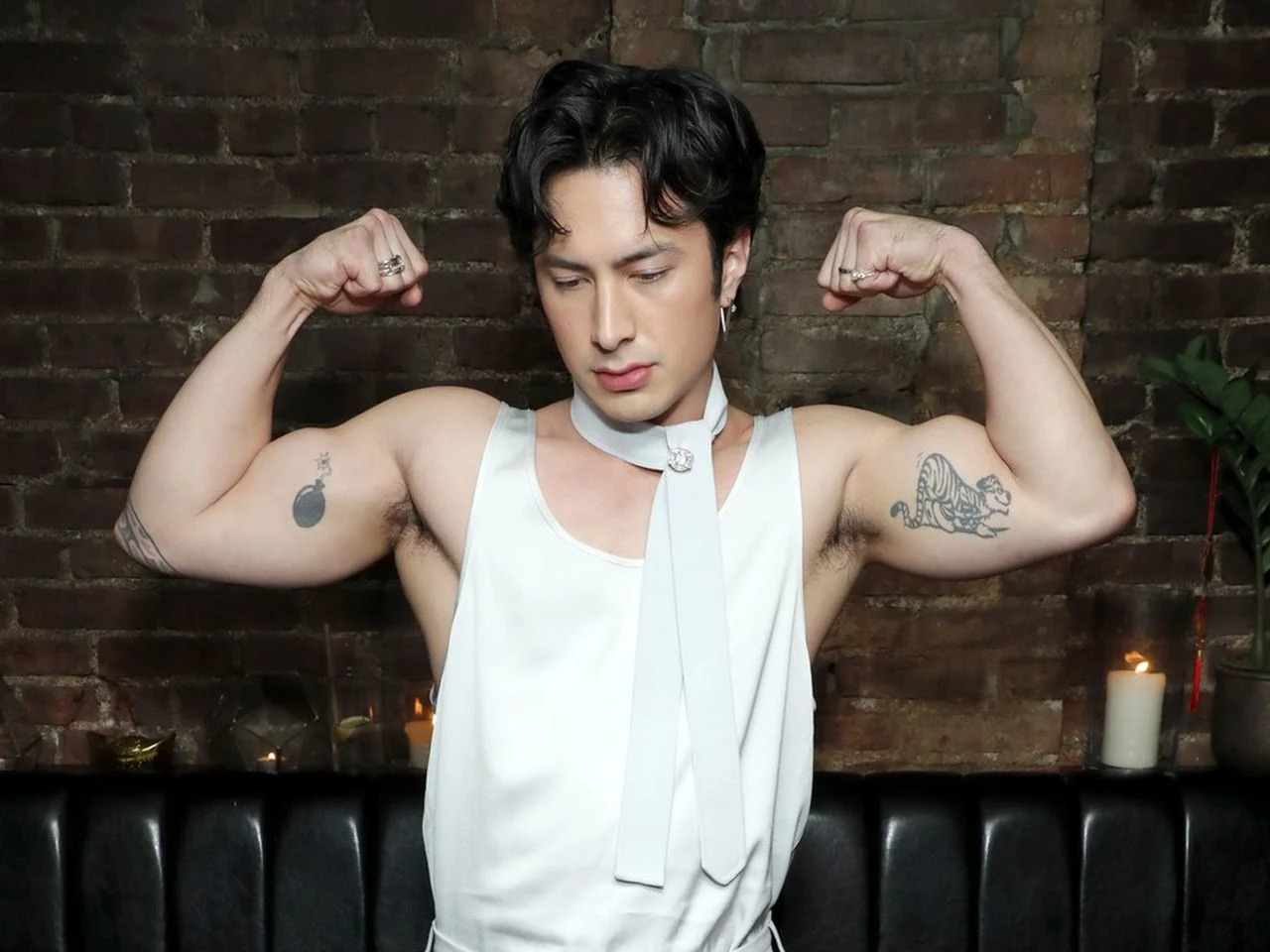
The bomb has a rounded outline and a small, readable silhouette. Its place on the arm makes it easy to spot when the sleeve leaves the skin uncovered. The public sources cited here do not give that symbol a confirmed personal meaning, so its design and placement are what can be stated.
The wider frame also helps with scale. The Hobbes piece that fills much of the bicep in a close-up has more room around it here, and both arms can be compared at once. The angle shows separate images and smaller marks, but it still does not reveal every tattoo Williams has.
Open skin between the larger designs gives each one its own outline. That spacing is easy to miss in a tight crop, where the darker ink can look like a single block. Seeing the two arms together makes the arrangement clearer without turning the photo into a complete tattoo inventory.
The floral and ornamental forearm tattoos
A photograph of Williams in a white ribbed tank gives a longer view of the floral and ornamental work on his forearm. The lines are finer than the dark Hobbes and bomb pieces. They branch and curve along the arm, with smaller shapes that are difficult to name from this view.
The pattern follows the forearm’s length rather than forming one broad horizontal band. Its thinner linework creates a different texture from the heavier shaded figures on the upper arms. As the arm turns, some of the design wraps toward the side and becomes harder to see.

The tank leaves the forearm and shoulder unobstructed, so the image shows where the visible work begins and ends. It also makes the contrast between the patterned forearm and the bolder upper-arm pieces easier to see. No named source in this article assigns a meaning to the smaller floral elements.
From a distance, the forearm work reads as a patterned band of ink. Closer in, its repeated curves and smaller shapes stand apart from the solid dark areas of the Hobbes and bomb designs. The photo supports that visual comparison, while the individual elements remain unnamed.
The bomb and tiger tattoos in a shirtless frame
A seated studio portrait gives another view of the bomb and Hobbes tattoos. Williams is shirtless, with his torso turned and both arms uncovered. The photo is different from the flexing shot: the pose, background and light change, and the designs sit within a wider view of ink on his shoulders and arms.

The darker parts of the tattoos remain clear, while the lighter sections show how shading shapes the images. Smaller marks appear around the two better-known pieces, but they are not distinct enough here to identify. In this pose the Hobbes design also turns toward the side of the bicep, where its full outline disappears from view.
That curved placement explains why one photograph cannot show the entire design. The shirtless frame gives more space around the edge than the close Harper’s Bazaar portrait, and the relaxed arm changes which parts are visible. These are two views of the same tattoo, not two separate pieces.
With the shoulders and torso in frame, the tattoos sit within a broader map of ink. The Hobbes and bomb are easiest to recognise, while smaller surrounding marks are only partly visible. That helps explain why Williams’s reported total is higher than the number of designs that can be named from one portrait.
The shoulder and back tattoo angle
A Timid Magazine portrait shows Williams in a black tank that leaves the shoulder and upper edge of his back exposed. Darker ink spreads across that area, though the design is harder to describe than the Hobbes or bomb. The shoulder turns away from the camera, and clothing covers part of the work, so its full outline is not visible.

The photo adds an area that the arm portraits leave out. The bicep tattoos are compact focal points; the shoulder ink extends toward the upper back and changes with the angle of his torso. In another outfit or a straight-on frame, much of that placement could be covered.
Light, dark fabric and the curve of the shoulder make the tattoo’s boundaries difficult to separate. The image supports a description of dark ink across the shoulder toward the upper back, but not a specific design name or a complete account of the lines.
What the published sources actually establish
Harper’s Bazaar puts Williams’s tattoo count between 13 and 17 and reports that the Hobbes tattoo on his bicep was his first and remains his favourite. The interview connects the figure to Calvin and Hobbes, his favourite books growing up. Teen Vogue also reported that Williams and Connor Storrie got matching “SEX SELLS” tattoos after filming wrapped.
Those reports provide context that the photographs cannot. The images show the bomb, forearm pattern and shoulder ink, but the sources cited here do not explain the meaning of every mark. Some designs are easier to identify than others, especially when a portrait catches only part of an arm or back.
The “SEX SELLS” tattoo is another example of why a source matters: Teen Vogue reports that the two actors chose the phrase together to mark their connection and the show. A photo can show the lettering, while the interview gives the reason they shared. Those details are separate from the older Hobbes tattoo and its childhood connection.
A body of work built through different moments
The photographs show several styles across Williams’s arms and shoulder: the shaded Hobbes figure, a small bomb, finer floral and ornamental lines, and darker ink that extends toward his upper back. The pieces differ in scale and line weight, and they appear in portraits made under different conditions.
Some tattoos are easy to recognise from across a room; the forearm pattern and shoulder work take a closer view. Clothing and pose determine which ones appear in a photo, so the collection can look different from one portrait to the next. Harper’s Bazaar provides the personal story behind Hobbes, while other designs remain primarily visual in the published record.
Williams has shared why the Hobbes tattoo matters to him. The other photographs show where the ink sits and how its styles vary, but they do not supply a story for every symbol. His interview clip below gives more context about his rise after Heated Rivalry.