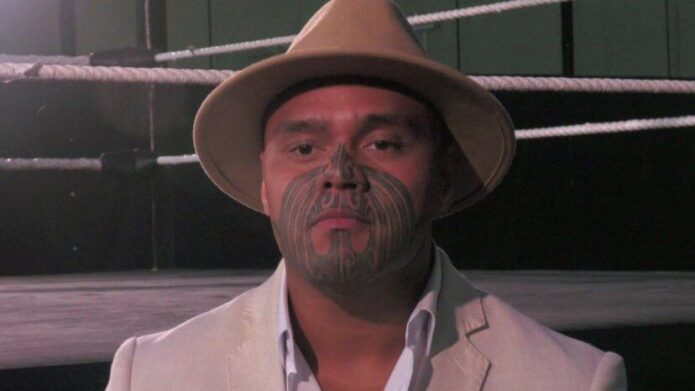
Henare’s facial markings are visible in the ring, but he has described them as mataora tied to his Māori identity and whakapapa. Calling them only a wrestling character detail misses what he has said about them.
Photos show the pattern; his interviews give the personal context. The lines can be described, but a match photograph can’t tell us the meaning of each mark.
Henare’s face tattoo: his mataora
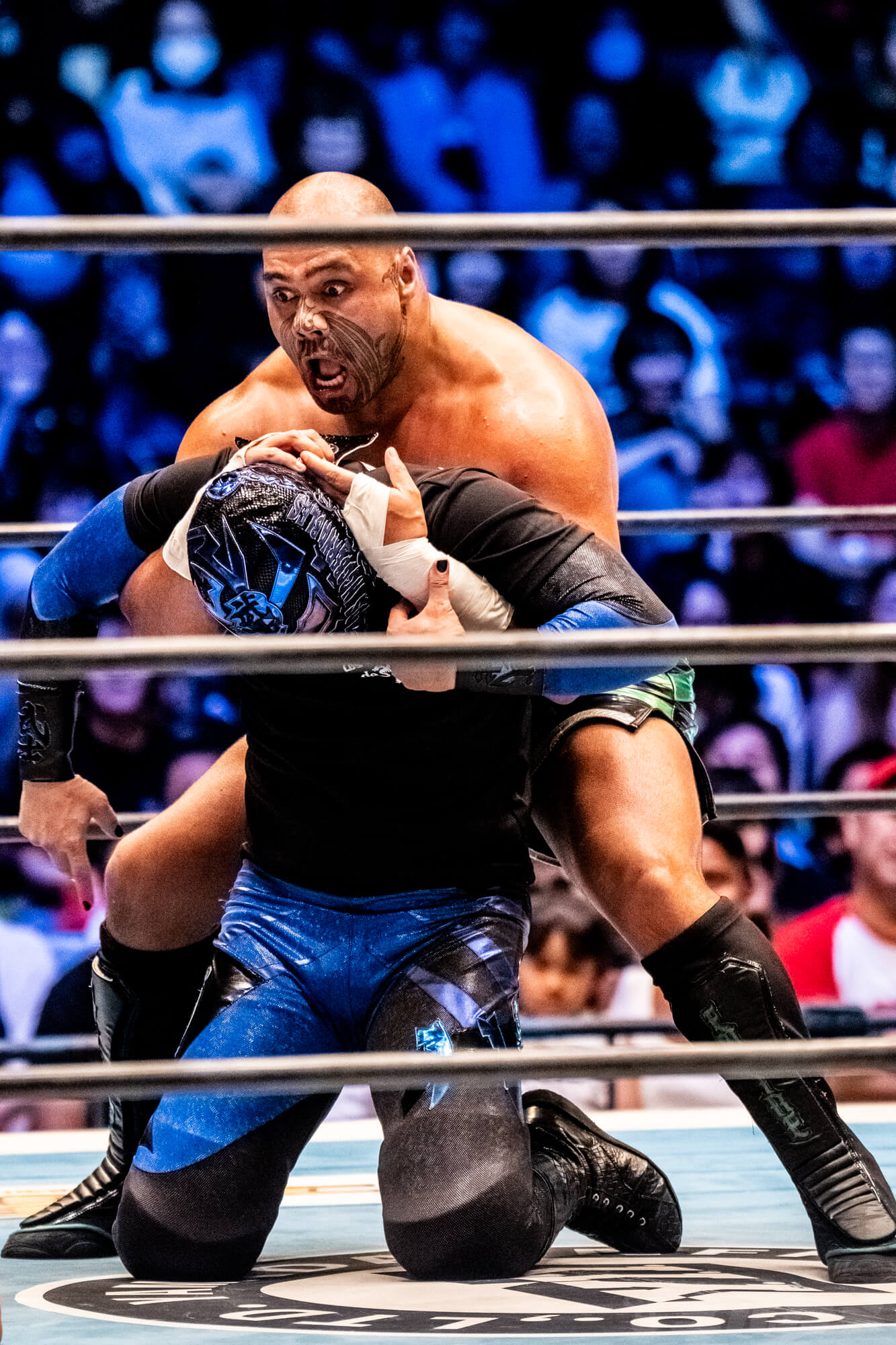
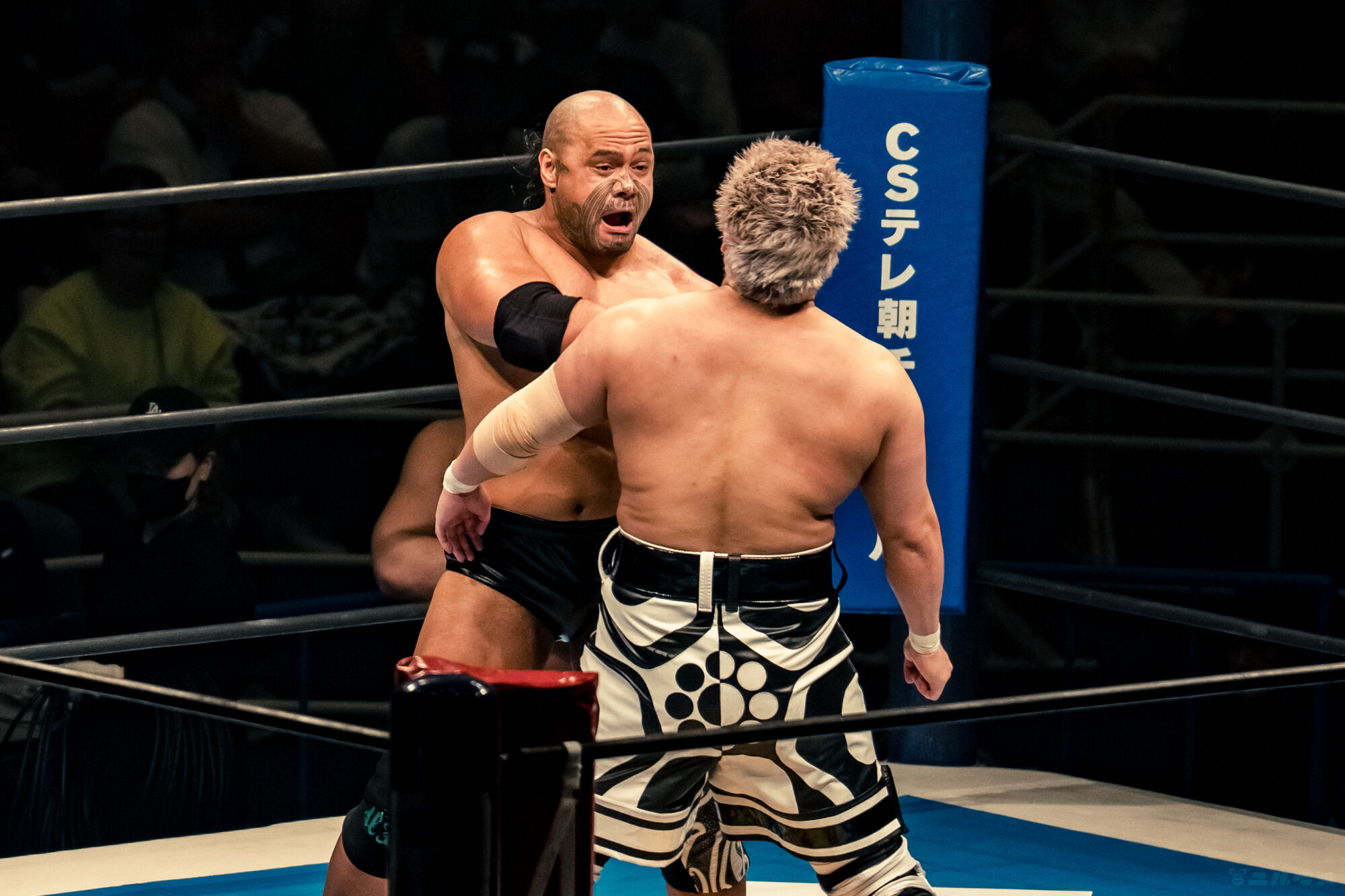
The mataora covers the lower half of Henare’s face. Dark curves run across his cheeks and around his mouth, continuing toward the jaw and chin. Smaller marks sit around the nose and connect the areas.
The lines follow the shape of his face rather than sitting on it like separate images. In this match photo, his head is tilted and his mouth is open, yet the pattern is still visible. A close image shows detail; a distant one shows the broader shape.
Henare identifies the work as mataora. Its placement may overlap the area where facial hair grows, but that doesn’t make “beard tattoo” an accurate description. The name he uses is the right place to start.
A personal identity beyond the character
A wrestler’s appearance can be read as part of a character. Henare gave a different explanation in a Monthly Puroresu interview, speaking about genealogy and ancestry. He also corrected the assumption that “Kiwi” was the identity he preferred and described his connection to being Māori and Ngāpuhi.
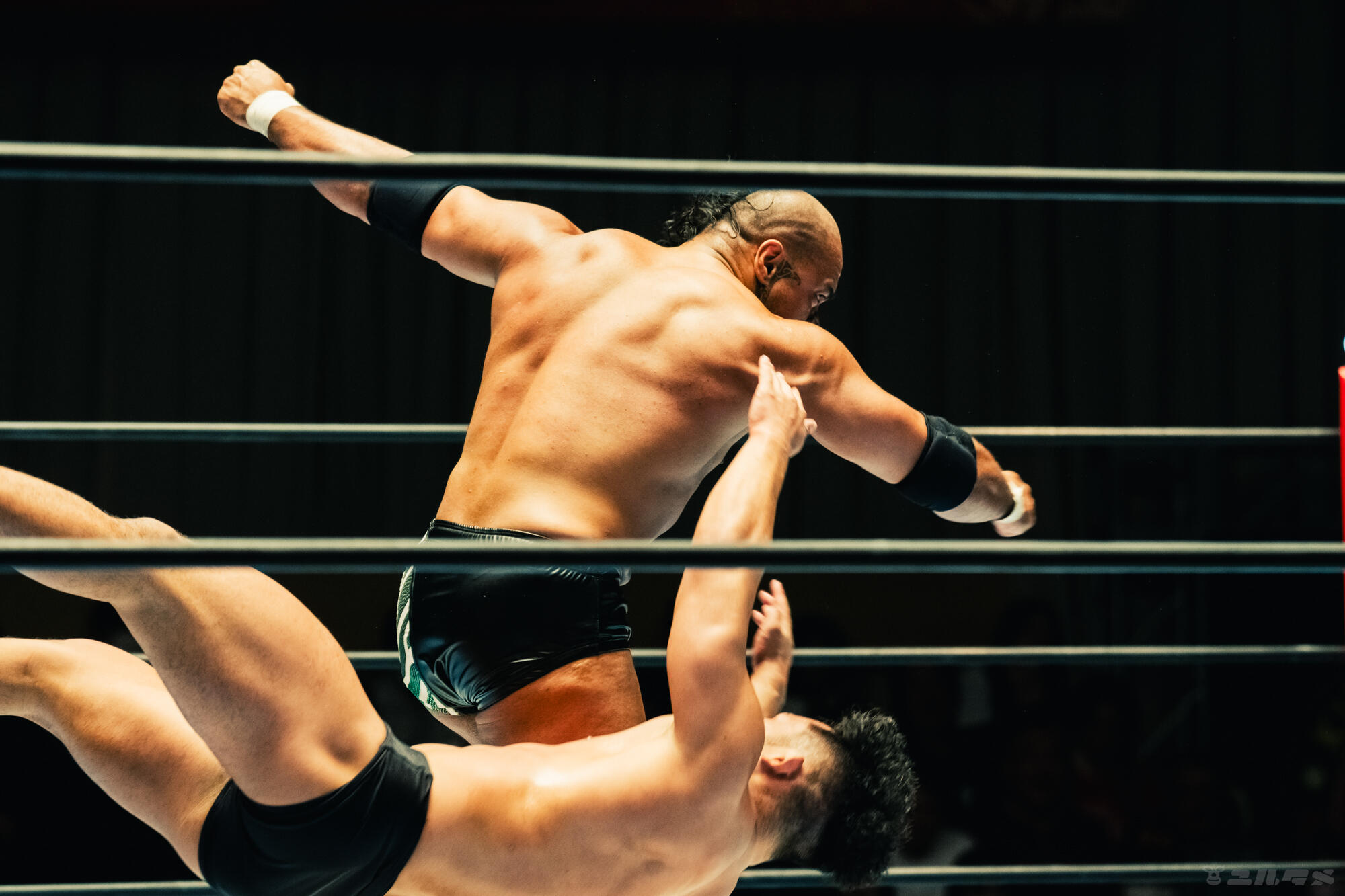
The action photo puts him back in the ring, where many viewers first see him. His performance and personal identity can be present at the same time; one doesn’t explain away the other.
Returning home for the work
Te Ao Māori News reported that Henare received his mataora on June 23, 2023, at Rotokura/Cable Bay. Kaitā Raniera McGrath did the work, and Henare’s whānau were there.
That gives the decision a place, date, artist and family context. The finished pattern is public, but the occasion was a personal family experience. There’s no need to turn it into a spectacle or guess at meanings he hasn’t shared.
Naming McGrath matters too. The wearer is not the only person involved in a tattoo, and the artist’s work shouldn’t disappear from the account.
How he reads in the ring
A match photo gives less time to study the lines. Ropes, movement and other wrestlers fill the frame. From a distance, Henare’s dark lower-face pattern is easy to recognize; closer up, its individual curves are easier to follow.
Expression and head position change how the same design looks. An open mouth pulls the skin differently from a relaxed expression, and arena light can deepen the shadows. Those changes don’t mean the tattoo has changed.
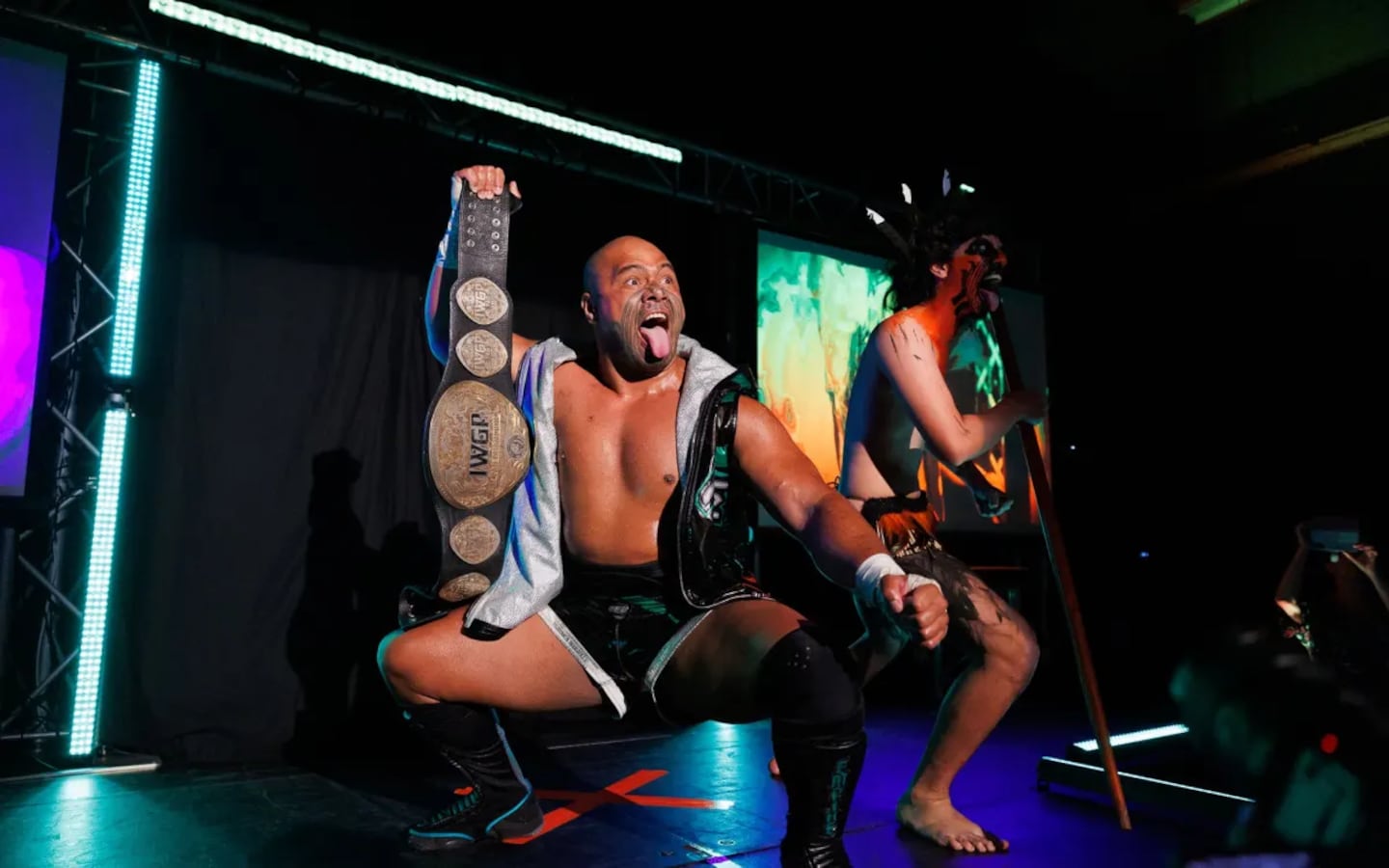
The homecoming photo shows Henare with a championship belt onstage, alongside another performer. It’s a wider view of the event, with the celebration taking up more of the frame than the facial details.
In a later 2023 interview with Te Ao Māori News, Henare spoke about bringing Māori culture to an international wrestling audience and described a positive response from people around him. That is his account of his experience; it shouldn’t be stretched into a claim about every fan or venue.
Bringing home into the public space
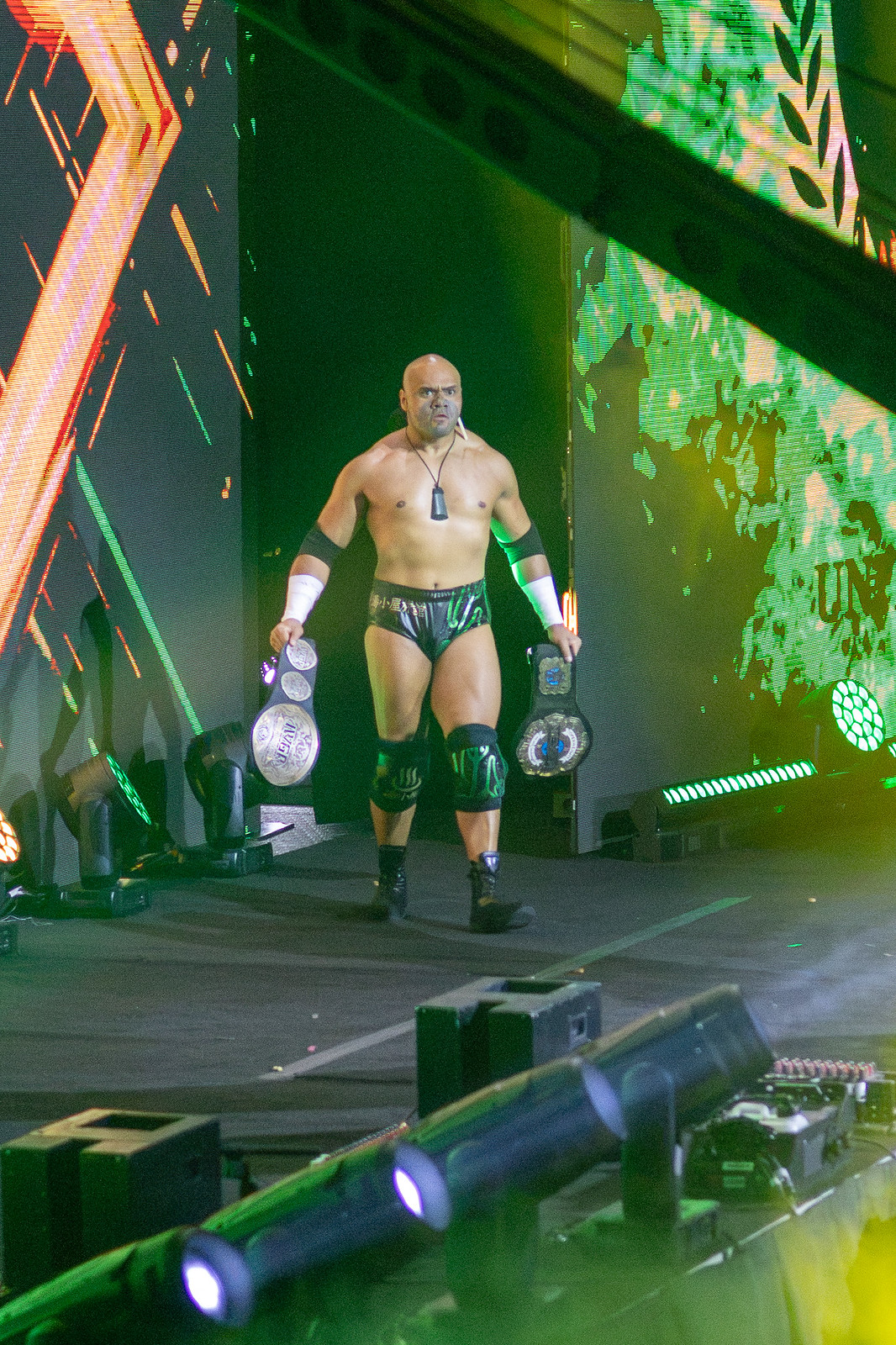
A full-length portrait shows Henare standing with his belts against the entrance backdrop. The mataora remains part of his appearance, but the wider image also shows his stance, gear and surroundings.
A close-up helps with the lines; a wider frame gives context. Neither view tells the whole story by itself, and the tattoo doesn’t need to become the only thing a viewer notices.
It’s possible to admire the precision and visual force of Henare’s mataora without treating it as a design to copy. These markings are connected to his ancestry and identity; his public appearance doesn’t make their meaning available to everyone.
If the way the lines follow the face interests you, talk with an artist about composition and movement in a design that fits your own background. Use the name Henare uses, credit Raniera McGrath, and leave personal meanings to the people who can explain them.
The interview below lets Henare speak about the experience in his own words.
Seeing the whole person