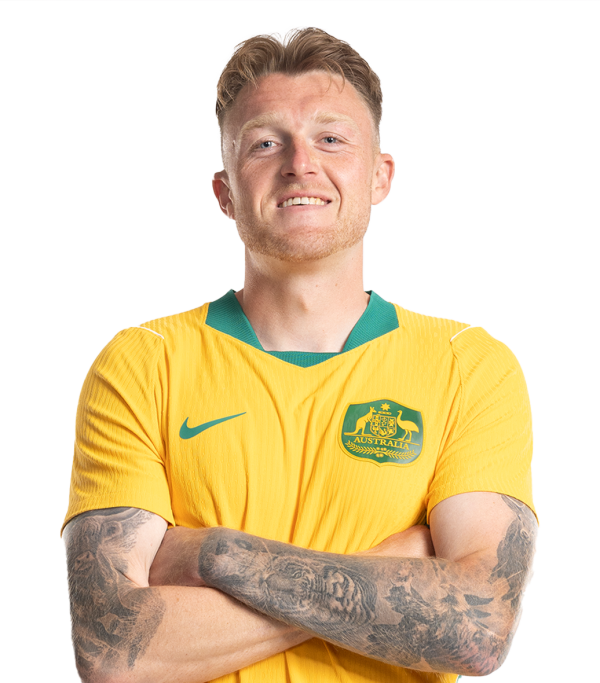
Harry Souttar’s documented tattoos include a memorial portrait of his brother Aaron on his left forearm, Australia’s coat of arms and the number 606 on his calf. Souttar spoke about Aaron’s portrait after the 2022 World Cup. Interviews and photos identify the main designs; wider football portraits show Souttar in club and national-team settings.
Harry Souttar’s memorial tattoo of Aaron
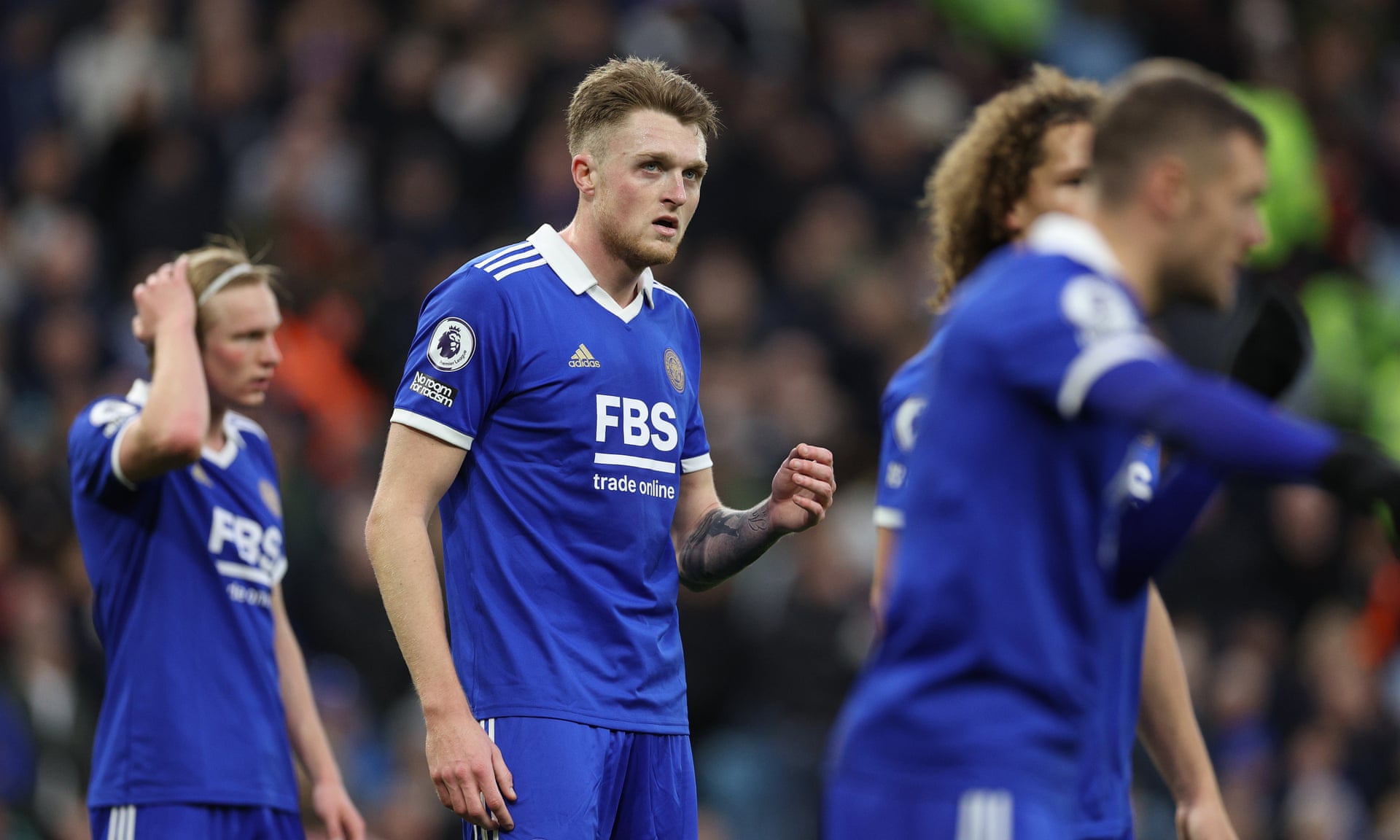
Aaron was a golfer who died in 2022 after motor neurone disease. The Guardian reported that Souttar had a tattoo made of his brother playing at St Andrews, a course Aaron loved. It is a portrait tied to a specific place and memory, not just a name or date.
The Guardian photo shows Souttar in a Leicester shirt, with the golfer visible within the larger sleeve on his arm. The image establishes the subject and placement; Souttar’s own account explains who the tattoo depicts.
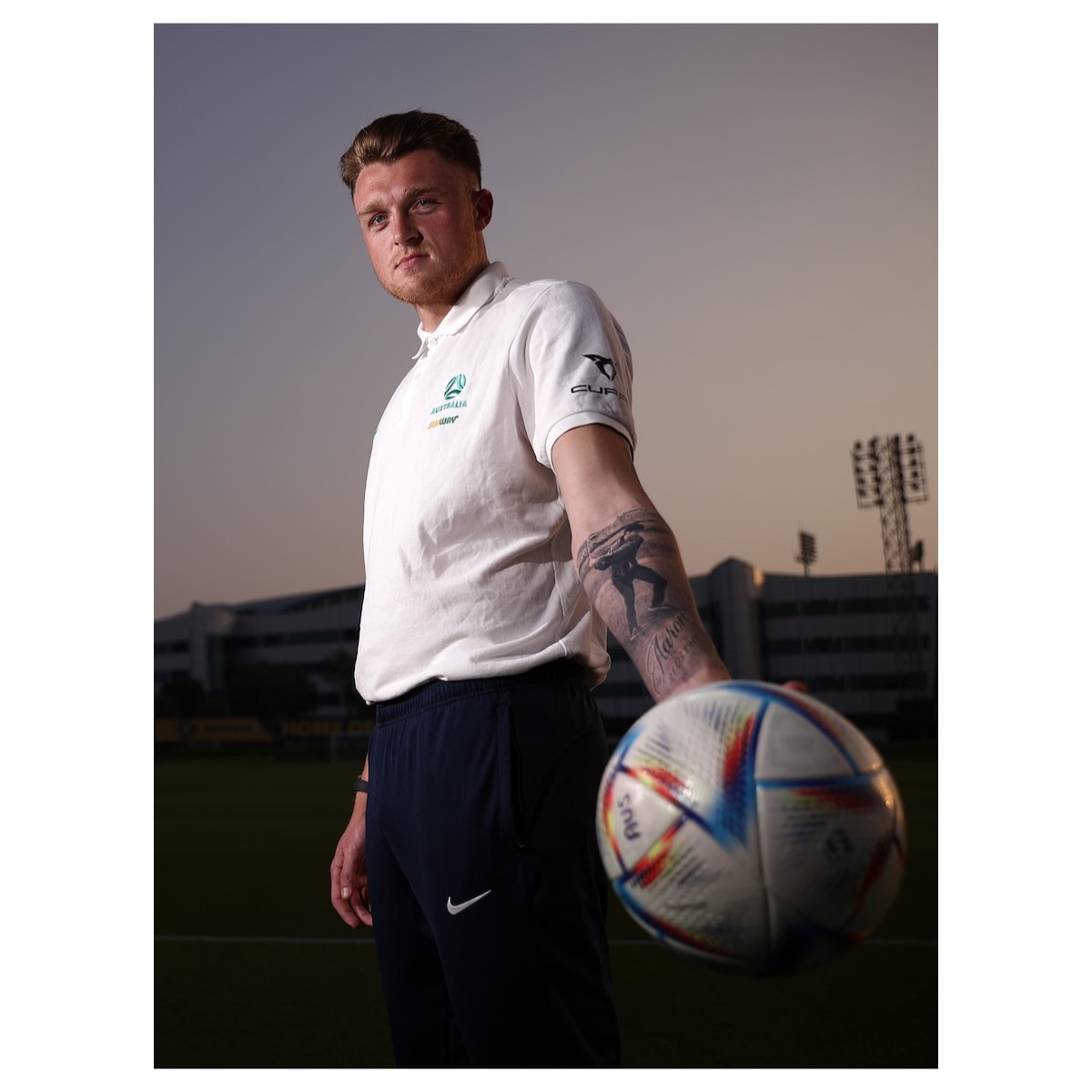
The golfer on the left forearm
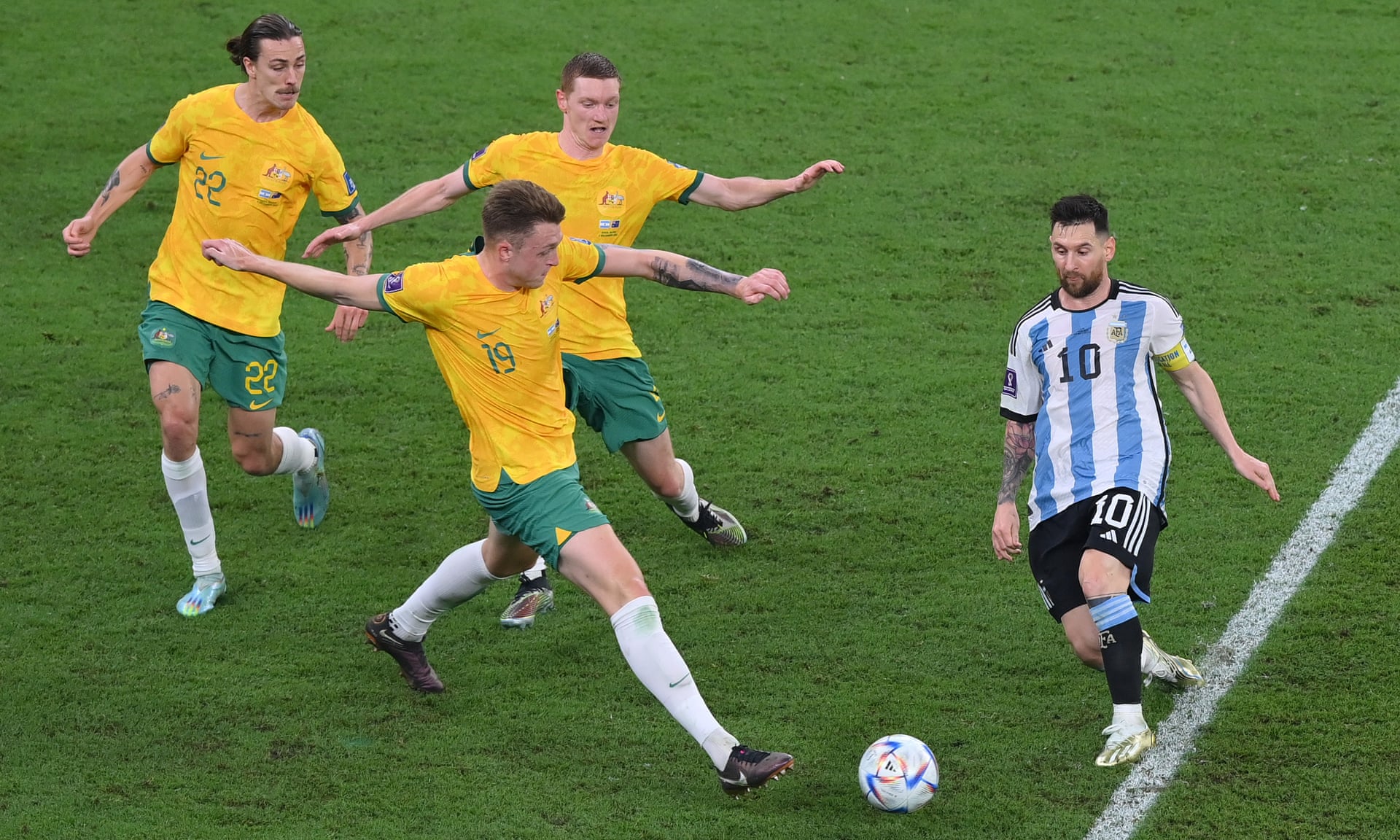
An Australia match photo gives another view, with Souttar’s arm extended and the figure visible during play. It is not a studio close-up, but it shows the memorial as the arm moves.
Souttar said he wanted Aaron with him at the World Cup. He recalled his father reminding him before matches that Aaron would have wanted a win. That is the source for the memorial’s personal meaning; the portrait itself doesn’t need an added symbolic reading.
The Australian coat of arms and number 606
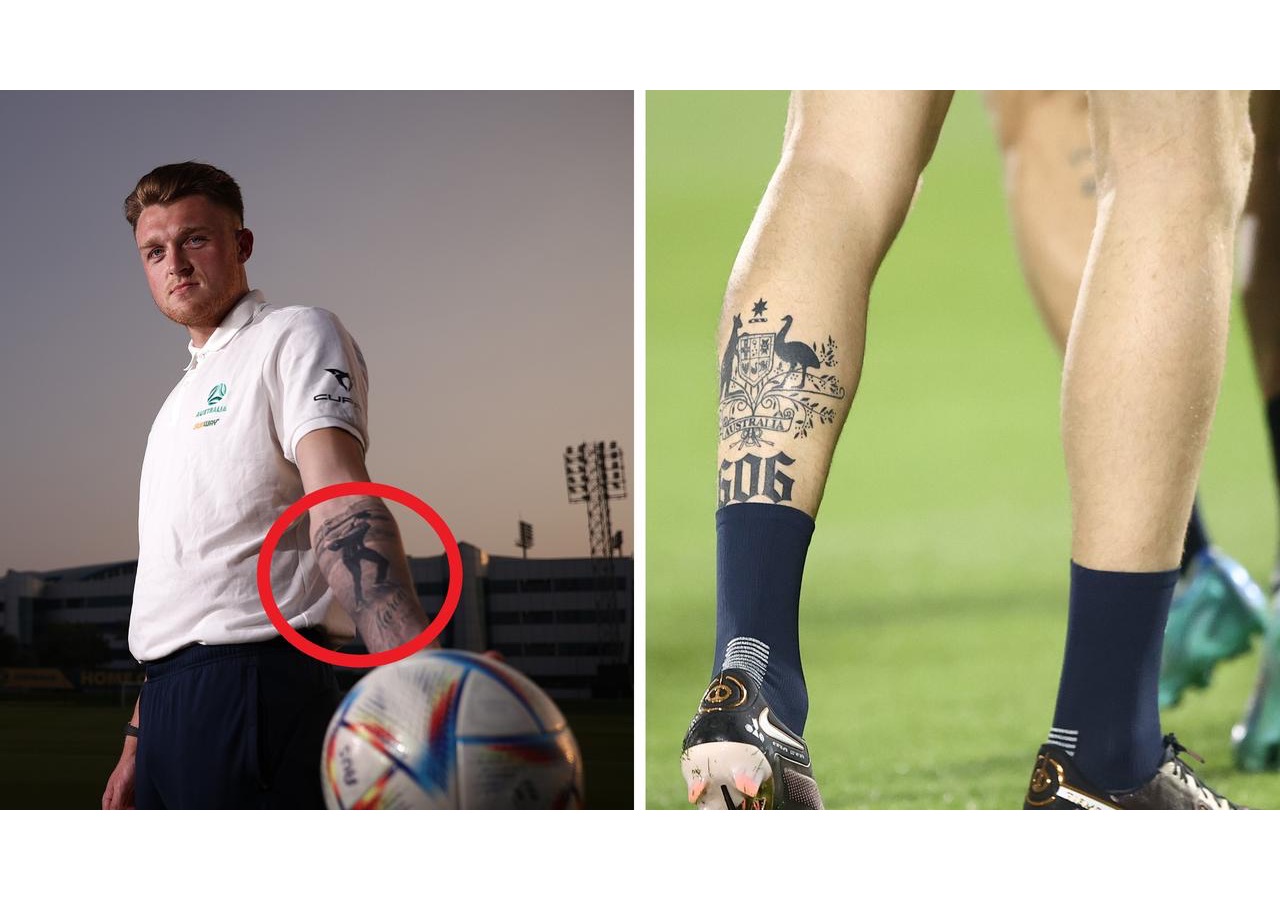
Before Australia’s tournament in Qatar, Souttar said he had the country’s coat of arms and his national-team cap number, 606, tattooed on his calf. The crest identifies the side he chose to represent; 606 records his place in the Socceroos’ cap history.
Fox Sports published a side-by-side image of the two locations: Aaron’s portrait on Souttar’s arm and the crest above 606 on his calf. The panels make clear that the designs sit apart rather than forming one piece.
How the two designs work together
The two tattoos mark different parts of Souttar’s life. The forearm portrait remembers Aaron; the calf design records Australia and Souttar’s place in its national team. Both were with him when he played at the 2022 World Cup.
A wider Fox Sports image shows more work around Aaron’s portrait. The sleeve contains other shapes and shading, but the reporting identifies the memorial, not every element around it.
The sleeve on a Leicester matchday
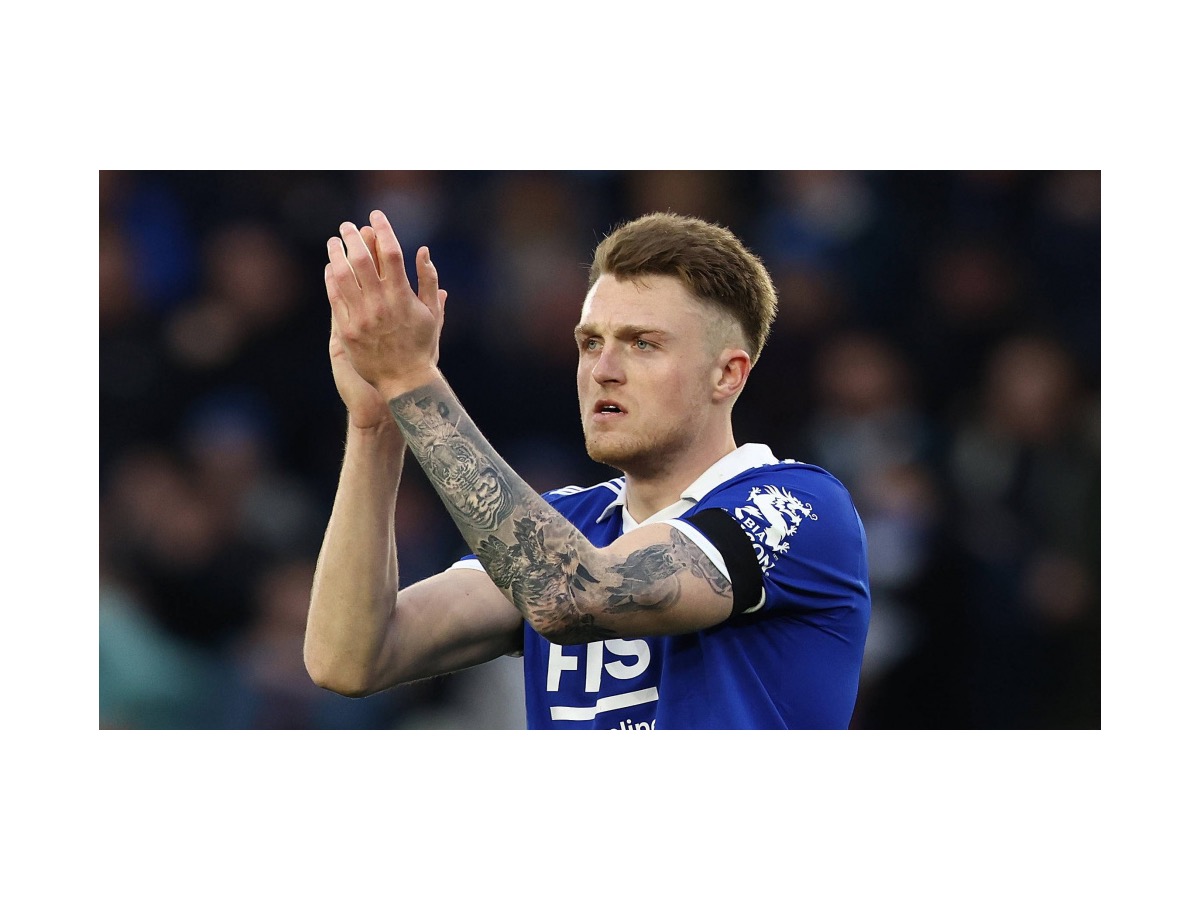
In a Leicester match photo, Souttar applauds supporters with both hands raised and his forearm turned toward the camera. The black-and-grey sleeve is visible in a normal football setting, rather than a posed close-up.
A defender shaped by two countries
Souttar was born in Aberdeen to a Scottish father and Australian mother. His older brother John chose Scotland; Harry chose Australia after the national team contacted him. That family split gives the Australian crest a clear biographical context.
During the World Cup, Harry played for Australia while John represented Scotland. Their parents followed both teams. That family history surrounds the tattoos, but the sources connect the Aaron portrait to his brother and 606 to the Socceroos record.
The Socceroos identity around the story
The official Socceroos portrait shows Souttar in Australia’s yellow shirt, arms crossed. It gives a clear view of his face and the extent of the sleeve, while the close photos and interviews identify the specific designs.
Why the World Cup made the story visible
The 2022 World Cup followed a difficult stretch: Souttar spent months recovering from an ACL injury, returned in time to help Australia reach the last 16, and played at a major tournament after Aaron’s death.
What the published record establishes
The Guardian documents the Aaron portrait; ABC News and Fox Sports cover the calf tattoo and the World Cup context, while Socceroos coverage places the designs in his international career. Taken together, the reporting and photos identify the main pieces without naming the entire sleeve.
What remains uncertain about the rest of the sleeve
The sleeve includes additional black-and-grey work, but available reports don’t catalogue each mark. Some figures and lettering are too small or angled in match photos to identify with confidence.
The sources don’t name the tattoo artist or give the appointment date. Those details, like any hidden family meaning for the other sleeve work, remain unknown.
A story carried into every match
“It’s nice to always have him with me.” The Guardian reported Souttar’s words about Aaron’s portrait. The quote explains the memorial directly; the crest and 606 record the Australian football path he chose.