
Famous Dex’s tattoos change the look of a portrait. His ink covers his chest, neck, arms, hands and face, so even a simple photo shows several different designs. There are dark shaded pieces, lettering, smaller marks and the pink ribbons that stand out against the rest.
Photos from different angles show how the tattoos sit together. The chest pieces meet the arms, the sleeves wrap around his elbows, and the neck ink stays visible when he turns his head. The placement is a big part of the overall effect.
The face tattoos draw the eye first, while the chest and arms give the collection more scale. Smaller marks around his cheeks, forehead and hands fill in details that can disappear in a wider shot.
One picture can’t show the whole collection. A close portrait makes the face and neck easier to see; a shirtless photo shows how the chest and arms connect. Looking at both helps explain how the larger areas and smaller designs fit together.
Famous Dex’s chest tattoos carry the biggest visual weight
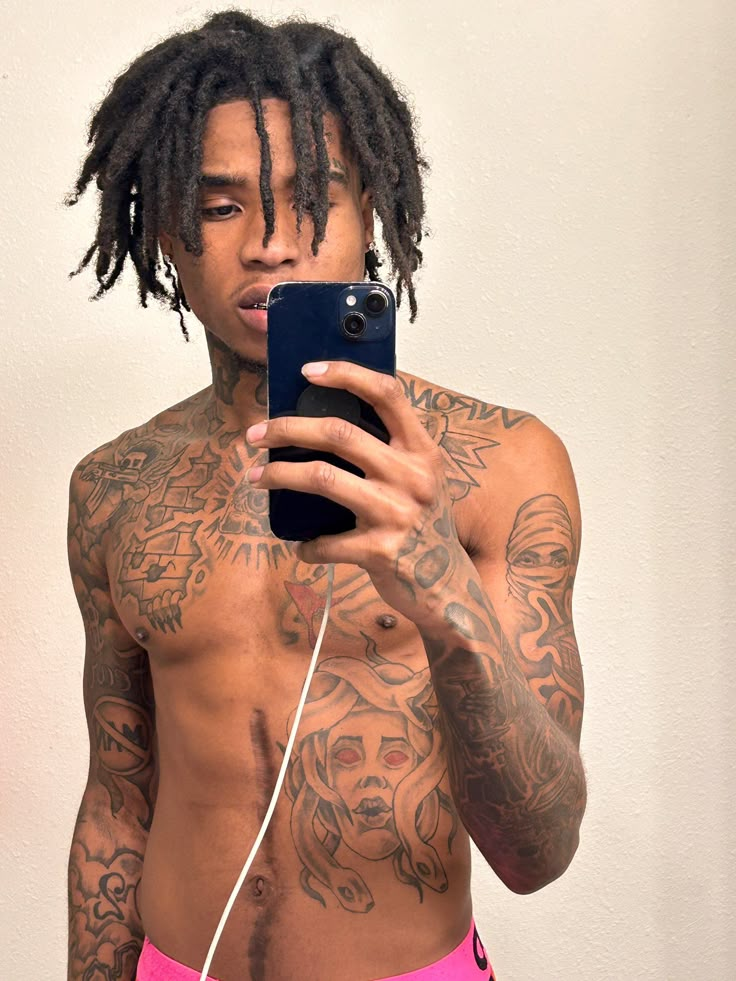
The chest is the broadest area shown in many Famous Dex tattoo photos, and it gives the collection a center. Layered shapes and lettering cover the upper torso, with darker ink beside lighter areas. Seen from the front, the designs read together instead of disappearing around a joint.
The chest also leads into the arms. The larger pieces give the torso a focal point, while the arm tattoos continue toward the shoulders and elbows. In photos, the chest doesn’t feel separate from the neck and sleeves, even when a shirt or pose hides part of the transition.
Lighting changes how the ink appears. Some photos make it look nearly black; brighter light brings out warmer tones and smaller details. The chest remains the main focus because the largest shapes take up the most space.
If you’re planning chest tattoos, decide what should be noticed first before filling the whole area. One main image or lettering can guide the rest. Smaller pieces can follow the ribs, shoulders or upper stomach without competing for the same attention.
His arm tattoos create a dense sleeve effect
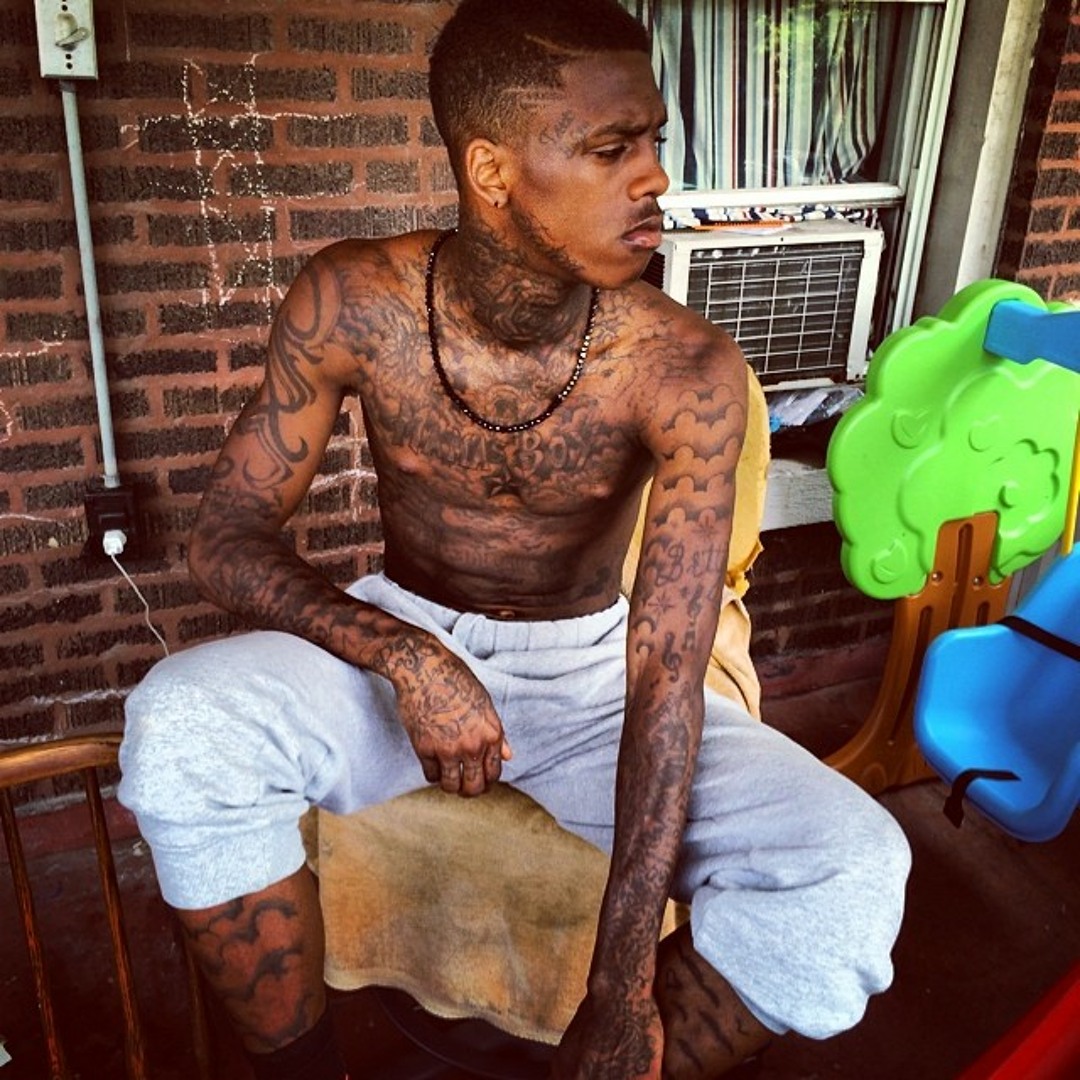
Famous Dex’s arms make the collection look full, whether he’s in a jacket or a shirtless portrait. Ink covers much of the visible forearms and upper arms, following the shape of the muscles. In a seated photo, the work gives his arms a strong outline; in a shirtless one, it connects the shoulders to the hands.
The designs don’t follow one obvious theme. Different shapes sit close together, but the darker shading helps them read as part of the same sleeve. For someone who prefers several pieces over one large image, the spacing and overall weight are useful details to notice.
The view changes as the arm moves. A standing photo may show the outer forearm, while a turned wrist brings the inner arm into view. Dex’s photos show how much fuller the sleeve can look from one angle than another.
Ask your artist to show the design from the front, side and with your arm relaxed. That makes it easier to see where the sleeve may look crowded or leave an unexpected gap. A design should follow the shape of the arm, not sit on it like a flat poster.
The Famous Dex face tattoos change the whole portrait
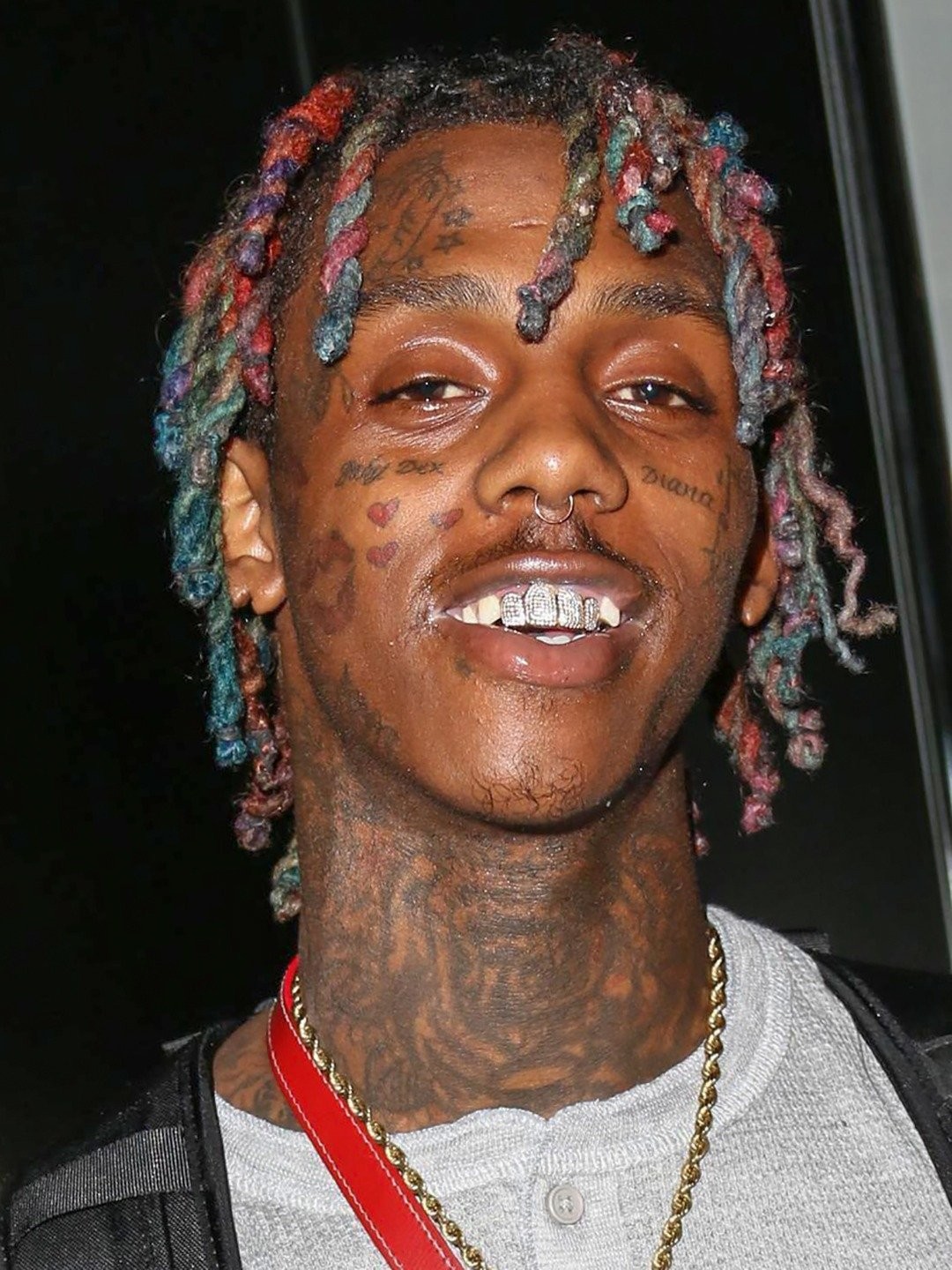
The face tattoos are the part of Famous Dex’s collection most often recognized. In close portraits, you can see small hearts and lettering around the cheeks, marks near the eyes, and designs between his brows and hairline. The pink ribbons are easy to pick out beside the darker ink.
Face tattoos change how the rest of a portrait reads. Hair, glasses, jewelry and a hat all sit in the same frame. Dex’s multicolored hair adds another patch of color, while the tattoos keep the center of the image busy even when his clothes are simple.
In a wider photo, the face reads as one bold shape. A close crop separates the smaller designs. Both views are useful references: one shows the overall balance, the other shows how the tattoos are spaced.
Face tattoo inspiration is best used for spacing and scale rather than exact copying. Small designs need room to stay clear, especially around the eyes and cheeks. If you want visible ink without covering the whole face, choosing one area leaves the surrounding skin open.
Neck and hand tattoos keep the details moving

The neck and hand tattoos show up in ordinary photos and gestures. Neck ink is visible above a collar and from the side. Marks on the hands and fingers appear when Dex holds jewelry, touches his hair or takes a mirror photo.
The neck also links the face and chest. In Dex’s portraits, the ink runs between those areas, so the face and torso read as part of a larger design.
Hands are a smaller canvas. The marks have to remain clear as the hand turns and moves. They don’t cover as much space as the chest tattoos, but a hand near the mouth or across the stomach can bring the ink into the center of a photo.
Think about your normal gestures before choosing hand or finger placement. If you work with your hands, play an instrument or use your phone often, the tattoo will be seen from many angles. Simpler designs tend to read more clearly in a small space.
How to borrow the Famous Dex tattoo structure
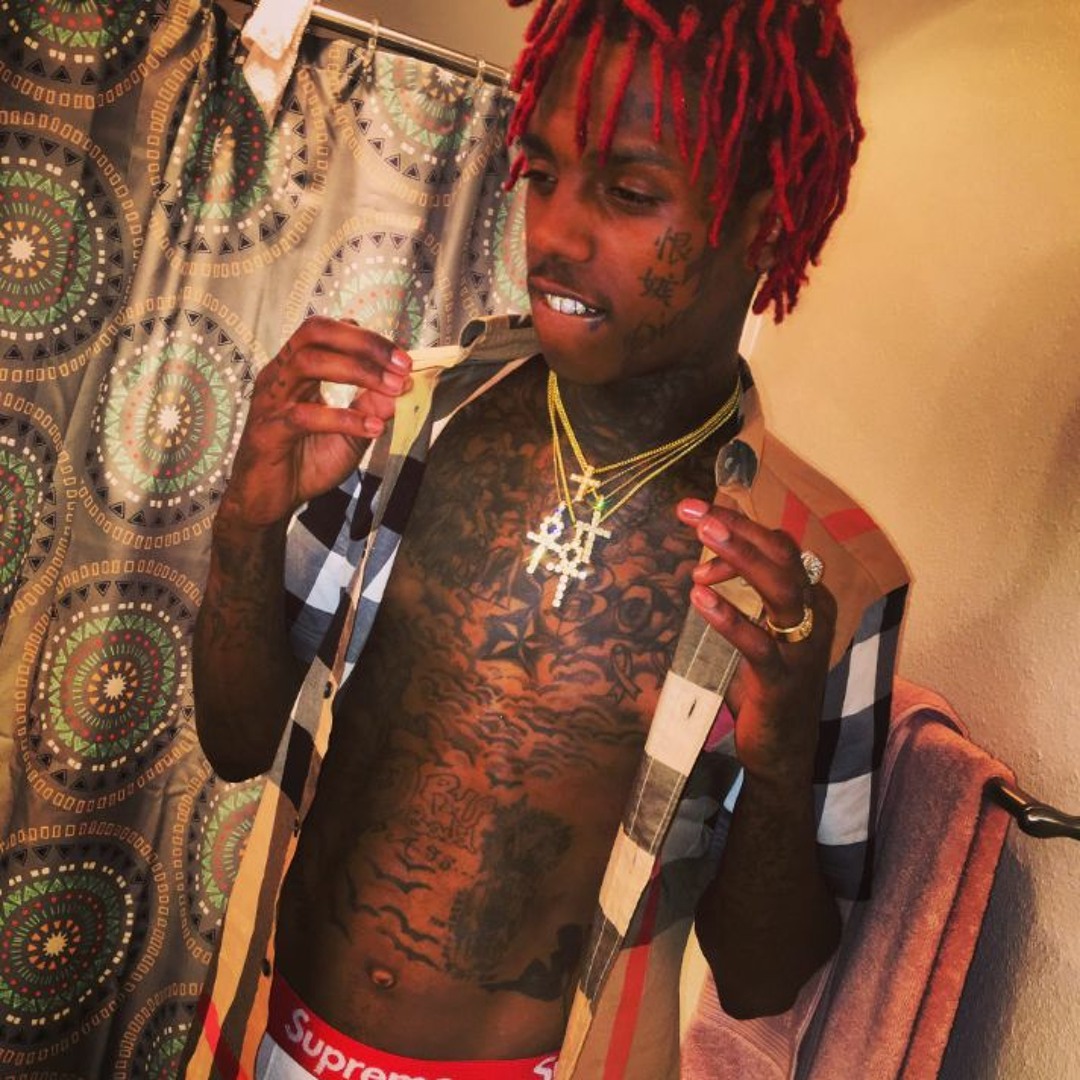
One useful idea in Famous Dex’s collection is the way a central area connects to smaller pieces around it. The chest and face draw the most attention, while the arms, neck and hands carry the ink outward. You can use a similar layout without copying any of his designs.
Choose the main area first: chest, arm, back or face. Then decide which nearby area should connect to it without taking over. A chest piece could extend into the shoulders; a sleeve could leave open skin near the neck; a small hand tattoo could echo a line or shape from the arm.
Some open skin can help the larger pieces stand out. Dense tattoos work when they are planned, but filling every gap at random can make the main designs harder to see. Dex’s collection is packed, yet the different sizes give the face, chest and sleeves their own weight in a photo.
Use the structure of Famous Dex tattoos as a planning guide, not a stencil. Choose designs that mean something to you, think about how visible you want them to be and let one or two areas lead. That will make the result yours instead of a copy of a celebrity’s tattoos.
Famous Dex’s tattoos stand out across his face, chest, arms, neck and hands. The face work changes the first impression, the chest anchors the collection, and the other placements keep the ink visible in casual photos. The pieces work together because they cover different areas at different scales.
If you’re using Famous Dex tattoos for ideas, look at how the designs sit in both close and wider photos. Check the arms from several angles and decide where you want the eye to land first. Placement can do more for a design than adding another tattoo.
Here’s a Famous Dex interview: