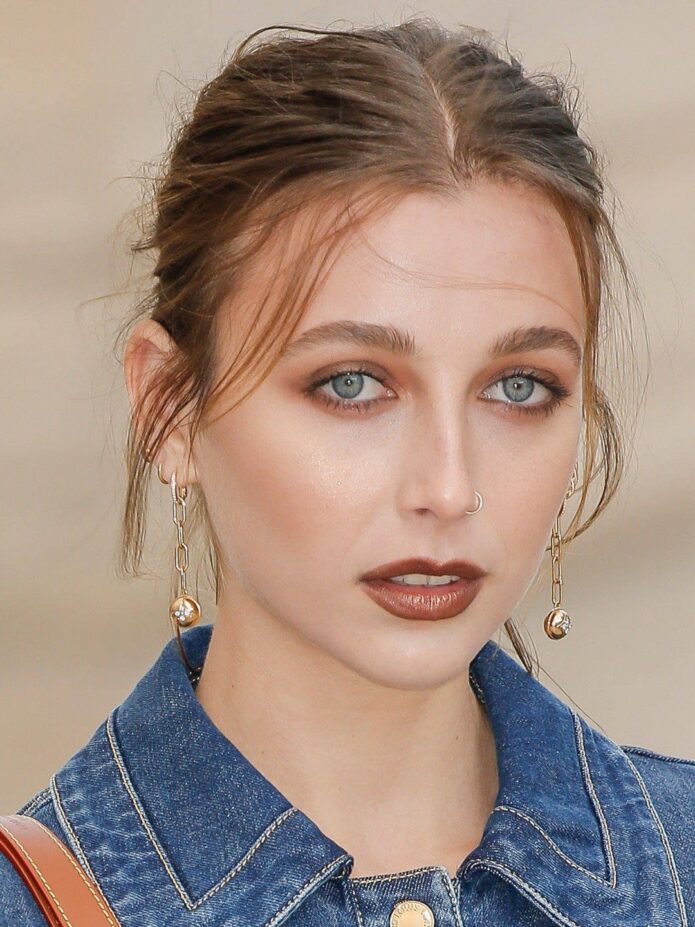
Emma Chamberlain’s tattoos are small and personal, and a little more thoughtful than her off-the-cuff public persona might make you expect. She’s talked about getting a lot of ink on her arms, and she’s also explained why the designs matter to her: the simpler and more personal they are, the less likely she is to regret them later.
That approach gives her collection a clear feel. The tattoos aren’t one giant statement piece. They’re tiny illustrations, numbers, objects, and family references spread across both arms. Some are easy to spot in a sleeveless red-carpet photo. Others only make sense when you see a close-up from the artist or hear Emma explain the person behind the design.
There’s also a useful line to draw around what’s actually confirmed. Vogue filmed Emma talking through several of her arm tattoos, while My Imperfect Life gathered the names and meanings that came from Emma, her tattoo artist, and a GQ couples video with Tucker Pillsbury. I’ll stick with those sources and the photos here. If a tiny mark isn’t clear enough to identify, it stays general instead of getting a made-up backstory.
Emma Chamberlain’s arm tattoo collection
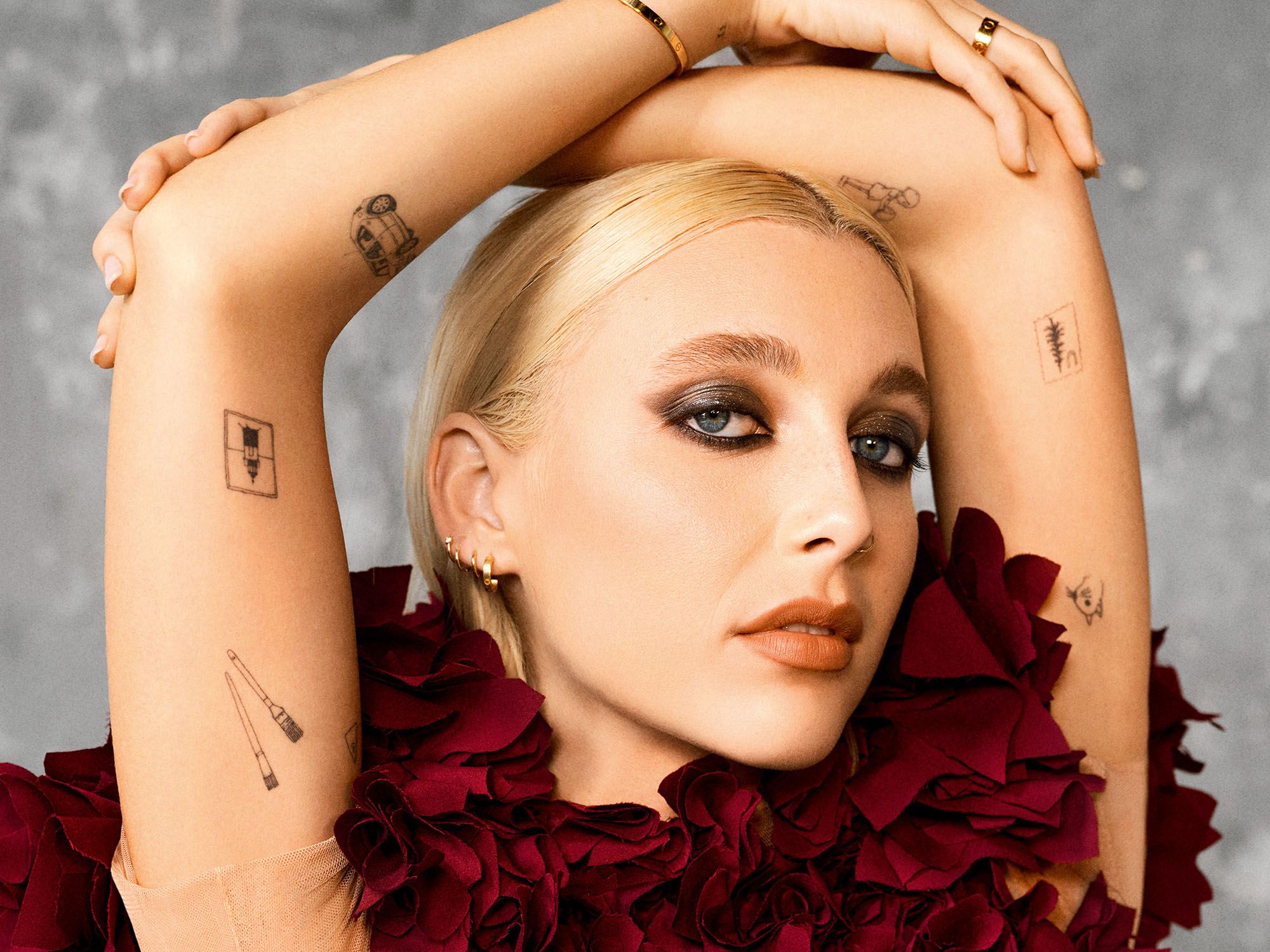
The first thing you notice about Emma’s tattoos is the scale. Even when several appear in the same photo, they don’t read like a traditional sleeve. There’s plenty of skin between them, and most designs are built from thin black lines rather than heavy shading. That makes the collection feel more like a page of small drawings than one connected mural.
That spacing is part of the look. A little car sits on one arm. A lighthouse appears inside a small frame. There are paintbrushes, a number 11, a squirrel, and other simple shapes. The tattoos don’t all have the same subject, but they share a similar visual language: compact outlines and lots of breathing room, with enough detail to reward a closer look without turning muddy at a distance.
Emma has said the tattoos are spread across both arms, with each side carrying its own family references. Her right arm is tied to her dad, including paintbrushes because he’s a painter, while the left arm is linked to her mom and includes symbols such as a button, a pine tree, a horseshoe, and a stamp-like design. That gives the patchwork a simple organizing idea even though the individual pieces don’t match in the usual flash-sheet sense.
For anyone thinking about a small tattoo collection, the useful detail isn’t just the subject matter. It’s the way the designs are allowed to stay small. A tiny object can carry a lot of meaning when it points to a real person or memory. The tattoo doesn’t need to fill the forearm to feel finished.
The stuffed bunny tattoo
One of Emma’s favorite tattoos is a little stuffed bunny. She showed it during Vogue’s “24 Hours With” video and explained that it connects to a stuffed bunny she had as a child. The artist’s post gives a much closer look at the fine-line drawing, along with a second small figure on the arm.
The bunny works because it feels specific without being overworked. It has a clear silhouette, a few small facial details, and a soft, almost storybook quality. It isn’t trying to look intimidating or hyper-realistic. It looks like a remembered object turned into a tiny piece of line art.
That kind of reference is easy to make personal. A childhood toy, an old book, a favorite mug, or a family pet can become a tattoo without needing to be translated into a grand symbol. The design can stay cute and straightforward. The meaning comes from the memory behind it, not from adding more detail.
Placement matters here too. The bunny sits comfortably among the other small arm tattoos, so it doesn’t have to carry the whole composition. It becomes one little stop along the arm rather than a centerpiece. That’s a good way to think about a first tattoo if you’re nervous about committing to a large design: choose something that can live on its own but also leave room for future pieces.
The artist’s photograph is also a useful reminder about scale. Fine-line tattoos look clean when they’re fresh and photographed up close, but they still need enough space for the lines to age well. A good tattooer can help simplify a reference before it goes on skin. Tiny doesn’t have to mean impossibly detailed.
The car, lighthouse, and paintbrush tattoos
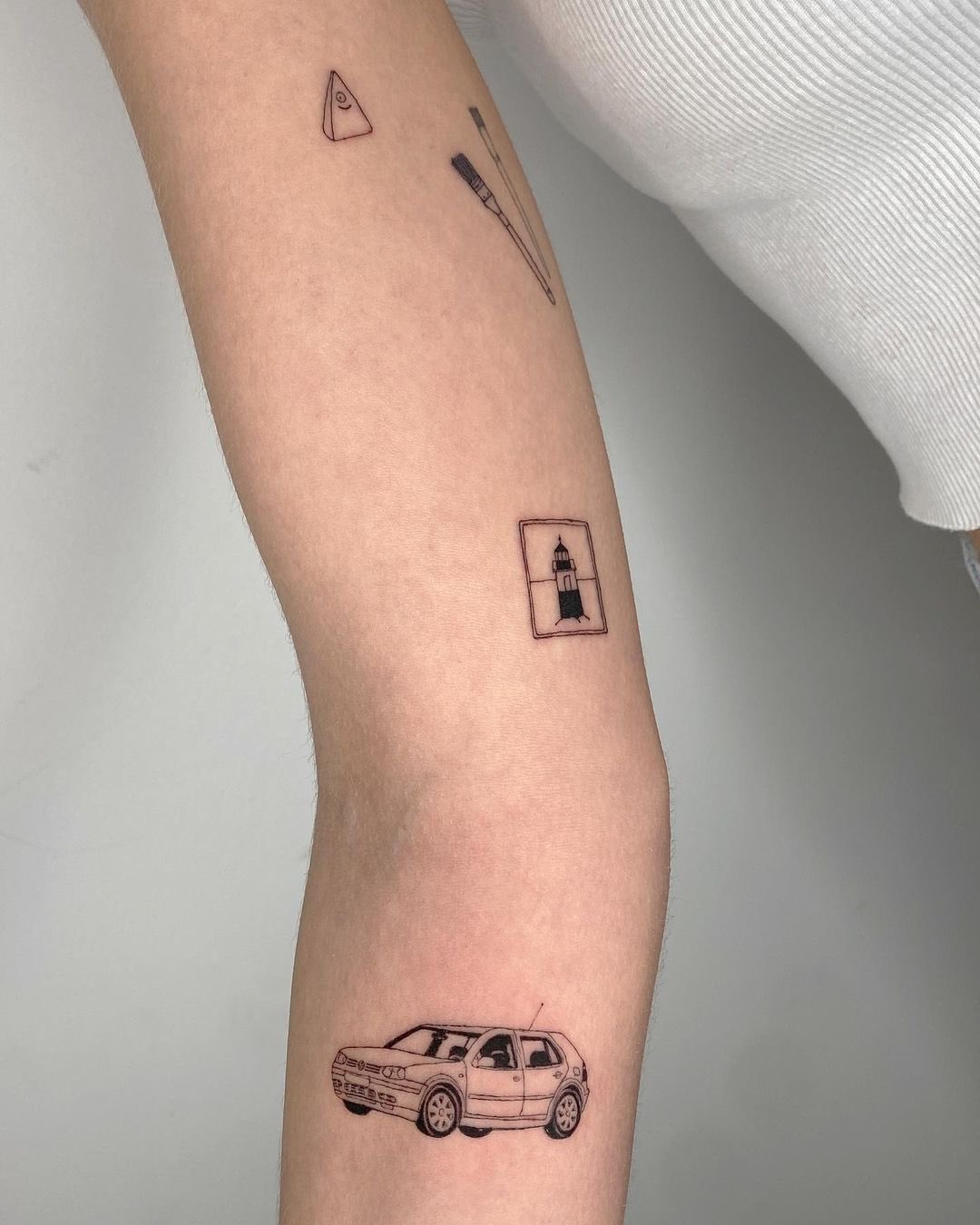
The clearest close-up of Emma’s arm collection brings several of the small designs together: a car, a lighthouse, a number, and other framed or object-based drawings. The car has a recognisable shape without becoming a block of black. The lighthouse is contained inside a small rectangle, which gives it the feel of a postage stamp or a miniature picture.
Those designs show how much personality a simple object can hold. The car is connected to her dad, and the paintbrushes are a nod to his work as a painter. The lighthouse has a different mood, but it still fits the same system: a small image, drawn clearly, with enough room around it that the arm doesn’t look overloaded.
Framing an object can be a smart move for a small tattoo. The border gives the eye an immediate shape to read, and it helps a little image feel deliberate rather than lost on the skin. A stamp, label, matchbook, or tiny picture frame can all do the same job. The border doesn’t need to be thick. It just needs to support the subject.
Emma’s collection also makes a case for choosing objects that are tied to real life instead of chasing whatever motif is popular that week. A lighthouse might look nice on a flash sheet, but it becomes much more interesting when it belongs to a particular memory. The design doesn’t need a public explanation, either. You can use the same idea with a place, a family habit, or an object that only makes sense to you.
There’s a practical tattoo lesson in the line weight as well. These are small illustrations, so the artist has to decide which details are essential and which ones can disappear. A car doesn’t need every window reflection. A lighthouse doesn’t need a whole landscape around it. The strongest small tattoos usually keep the main idea and let the skin do some of the work.
The number 11 and family symbols
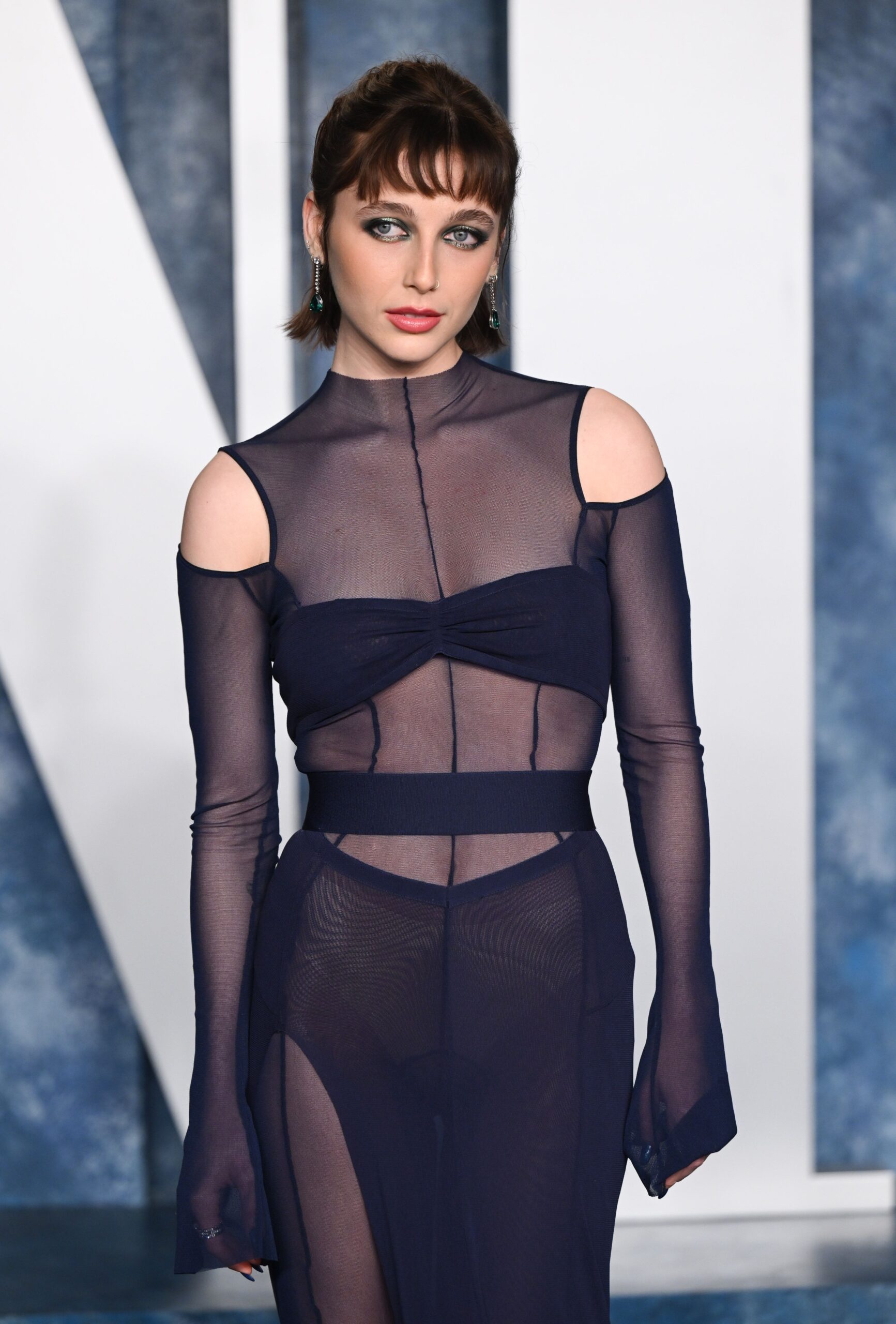
The number 11 appears among Emma’s arm tattoos and has also been discussed as a matching number connected to Tucker Pillsbury, who performs as Role Model. It’s a compact design that fits the rest of the collection because it doesn’t demand much space. Two simple digits can sit near the wrist or forearm without competing with the illustrations around them.
Numbers can be tricky tattoos because they often carry personal meaning that isn’t obvious in a photograph. In Emma’s case, the number has been publicly connected to a relationship, but the image itself stays simple. That separation is worth remembering. You can understand the design without assuming that every number has a universal code behind it.
The family symbols on Emma’s arms are more openly explained. Paintbrushes point to her dad’s work. Other small designs refer to nicknames, childhood objects, or details connected to her mom. Seen together, they make the collection feel like a visual family album. Not every tattoo needs to be a portrait or a name to function as a tribute.
This is where the patchwork arrangement starts to make real sense. A large matching sleeve would force all the memories into one visual style. Emma’s small pieces can stay different because the meaning is doing the connecting. A button can sit near a pine tree. A car can share space with a bunny. The designs don’t need to look like they came from the same flash book.
If you’re building a personal collection, that’s a much more relaxed way to approach it. Pick the memory first, then ask for the smallest clear version of it. You may end up with a tiny symbol, a simple object, or a short number. The tattoo can look light and playful while still holding something real.
A red-carpet view of the style
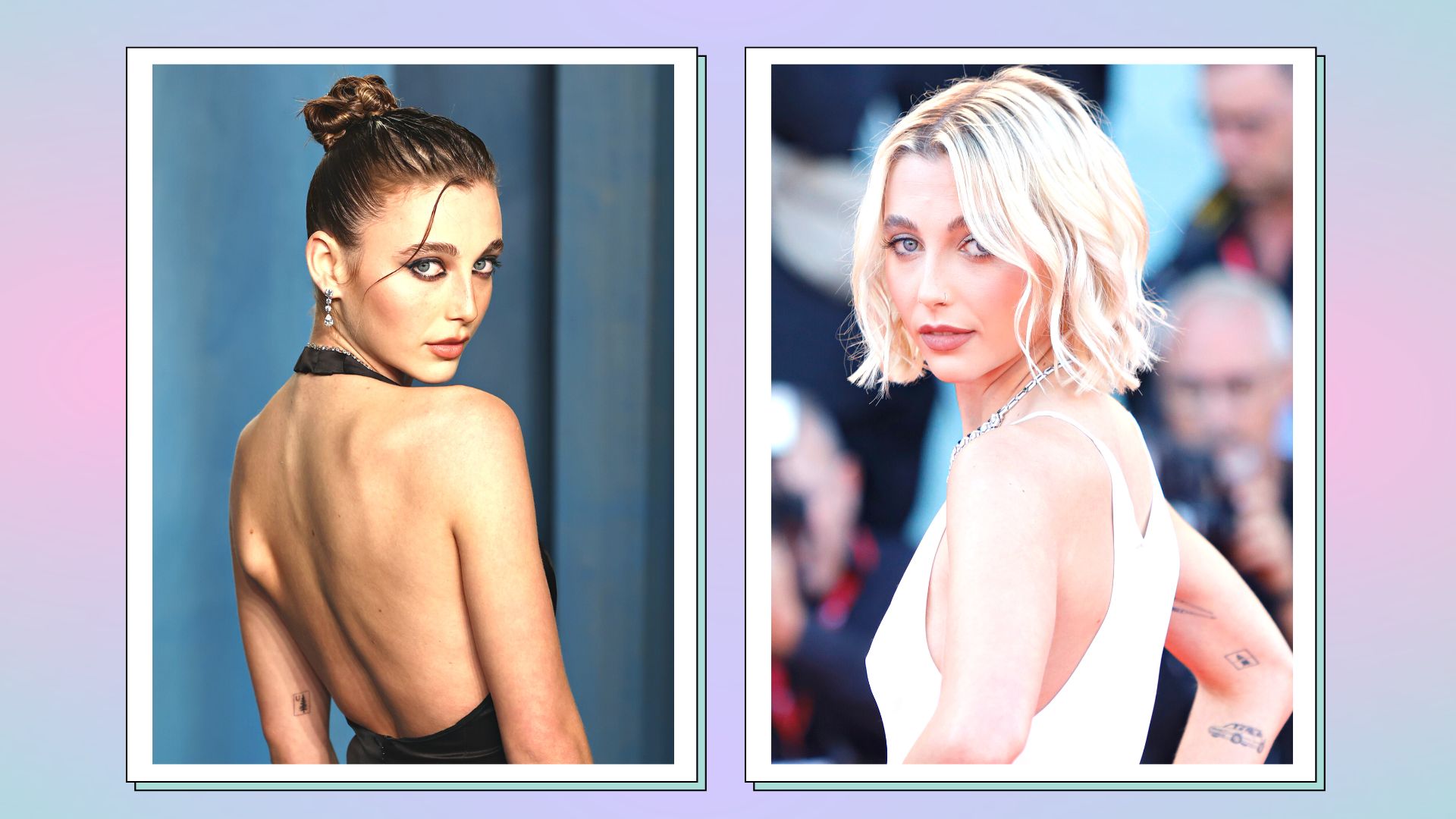
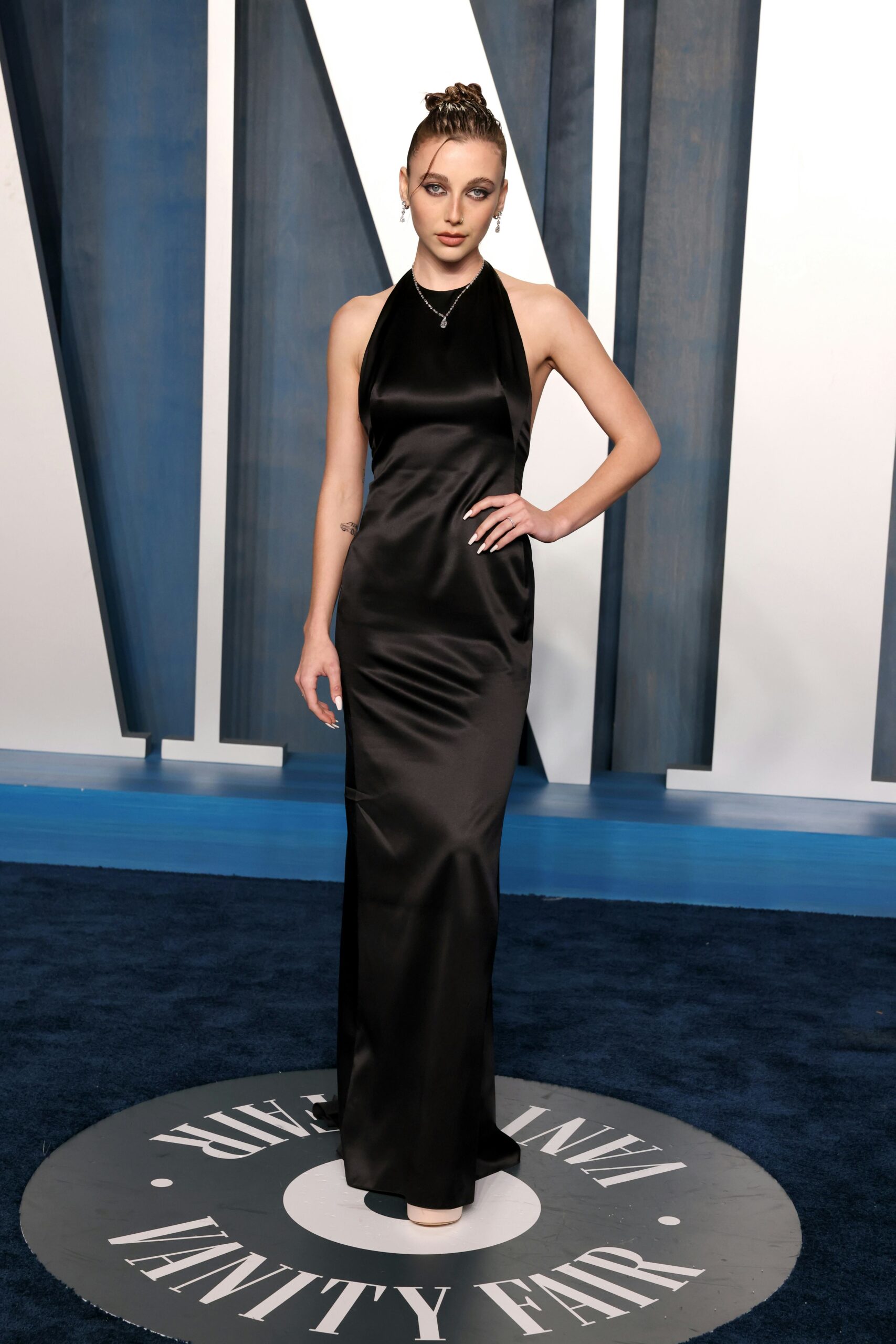
This Vanity Fair event photograph is included as a contextual portrait, not as tattoo evidence. It shows Emma in a formal look with her face clearly visible, but the outfit and crop don’t provide a reliable close-up of a specific design. That’s exactly why contextual images need to be labelled honestly. A photo can help set the scene without proving what is or isn’t inked on someone’s arm.
Emma’s red-carpet appearances are still useful when you’re thinking about the way small tattoos work with clothes. A black halter dress, a sleeveless top, or a backless gown can reveal just a few marks at a time. The collection doesn’t have to be on display in full to feel part of the look. A single small tattoo near the wrist or upper arm can change the balance of an outfit without taking it over.
That flexibility is one reason micro tattoos continue to appeal to people who want something personal but not loud. They can be shown when the styling leaves room for them and covered when it doesn’t. Emma’s arm layout gives her plenty of options: rolled sleeves reveal a few objects, while a formal gown may show nothing at all.
It’s also a reminder that a tattoo photo and a fashion photo have different jobs. A close-up from the artist can help you study a line or shape. A red-carpet image can show how the tattoo sits in a whole outfit. Mixing those two kinds of images in an article only works when the captions and descriptions make the difference clear.
Overall, Emma Chamberlain’s tattoos are a good example of a collection that feels personal without becoming visually heavy. The pieces are small, but they aren’t random. They point toward family, childhood memories, relationships, and little objects that mattered enough to keep. The arm placement gives her room to collect more while still letting each design breathe.
The easiest idea to borrow isn’t one exact bunny, car, or number. It’s the habit of choosing a reference that means something before trying to make it look impressive. A tiny symbol with a real connection will usually stay interesting longer than a trendy image chosen only because it photographs well.
That doesn’t mean every tattoo needs a serious explanation. Emma’s collection has a playful side, and some designs are simply charming. The point is that the tattoos belong to her life. They don’t need to form a perfect theme or explain themselves to everybody who sees them.
If you like this style, bring a few meaningful objects to your artist and ask what can be simplified without losing the identity of the reference. Look at the space on your arm, decide whether you want a single piece or a future patchwork, and leave enough breathing room for both options. That’s the part Emma’s tattoos get right: they’re small enough to feel easy, but personal enough not to feel disposable.