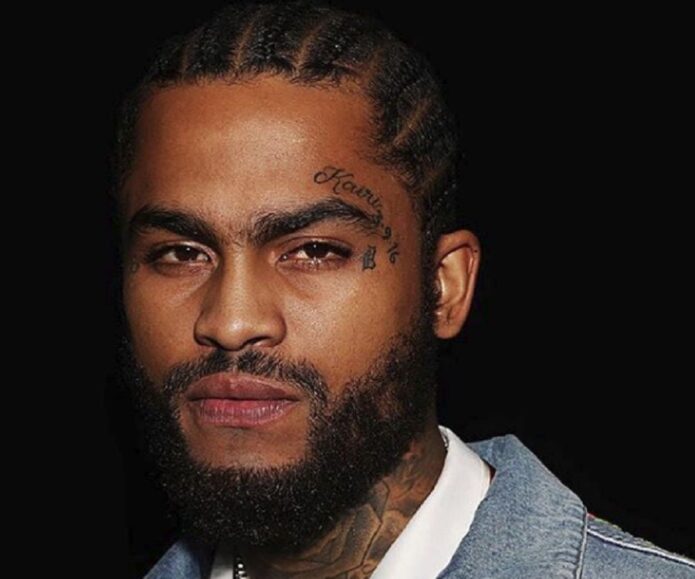
Dave East’s tattoos look like a collection built piece by piece. The ink covers his chest, stomach, arms, neck and face, mixing portraits, lettering, flowers, symbols and dark shading. Different designs sit together across his body, following its shape.
Photos show the collection from different angles. A rooftop portrait catches the chest and sleeves in bright light; a stage shot brings the arms and forearms forward; a close crop shows smaller marks on his face. Each view reveals something the others miss.
The chest holds the largest portraits, the arms carry broad areas of darker ink and the neck leads toward the face. Smaller script fills gaps without taking attention from the main images.
Looking at the tattoos by placement makes the layout easier to follow. Start with the chest, then look at the sleeves and the work on his face and neck. The photos also show how the ink has filled in over time: earlier images leave more skin open, while later ones show more connected coverage.
Different settings help with different details. A shirtless rooftop photo shows the portraits and stomach lettering together. A performance photo shows the designs as he lifts his arms, while a close-up brings out finer lines. Taken together, they give a better sense of how the tattoos sit on his body.
Dave East’s chest tattoos do most of the storytelling
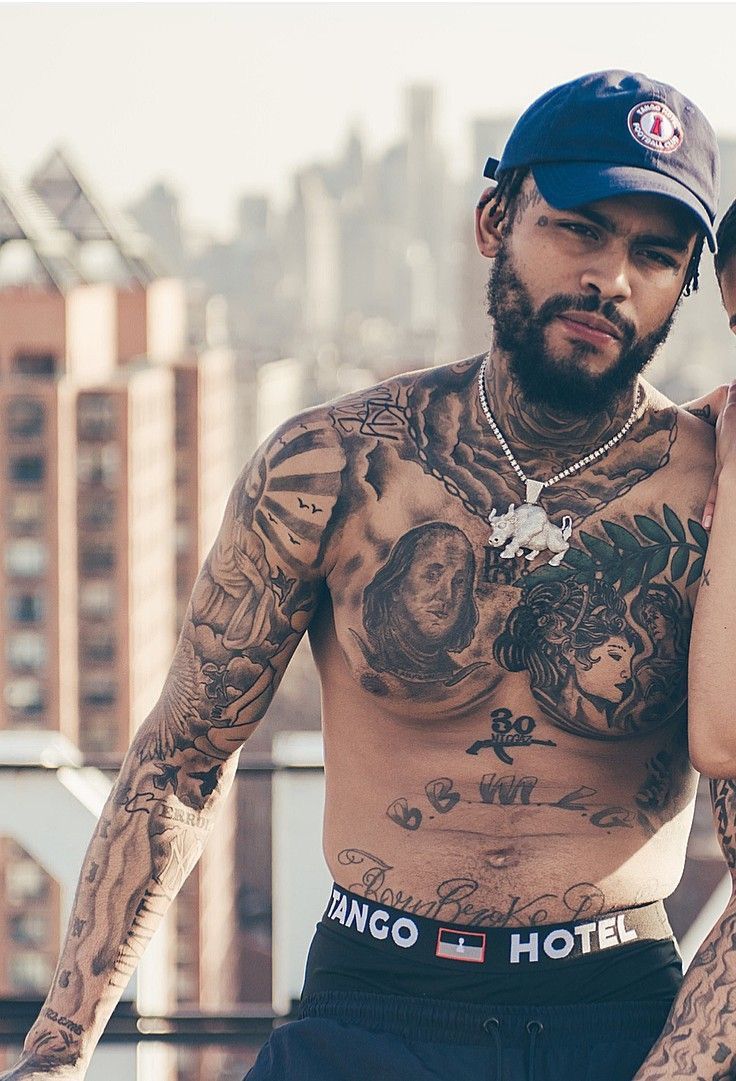
The chest is one of the first areas people notice. Several large portraits sit across the pectorals, with dark outlines and shading that keep the faces clear in wider photos. Their size gives the torso a center without letting smaller script take over.
The designs vary. A portrait sits near floral shapes, chain-like work or short lettering. That mix moves the eye between detailed faces, open skin and darker areas instead of reading as one solid patch.
Lower on the torso, smaller lettering, names, phrases and symbols follow the stomach and ribs. Those placements carry the design downward while leaving the larger portraits room to stand out.
If you want a chest layout with this kind of weight, choose the largest image first. Once the main portrait or symbol is placed, supporting pieces can follow the ribs and shoulders. Filling empty spots first can leave the central design squeezed for space.
His arm tattoos turn the sleeves into a continuous canvas
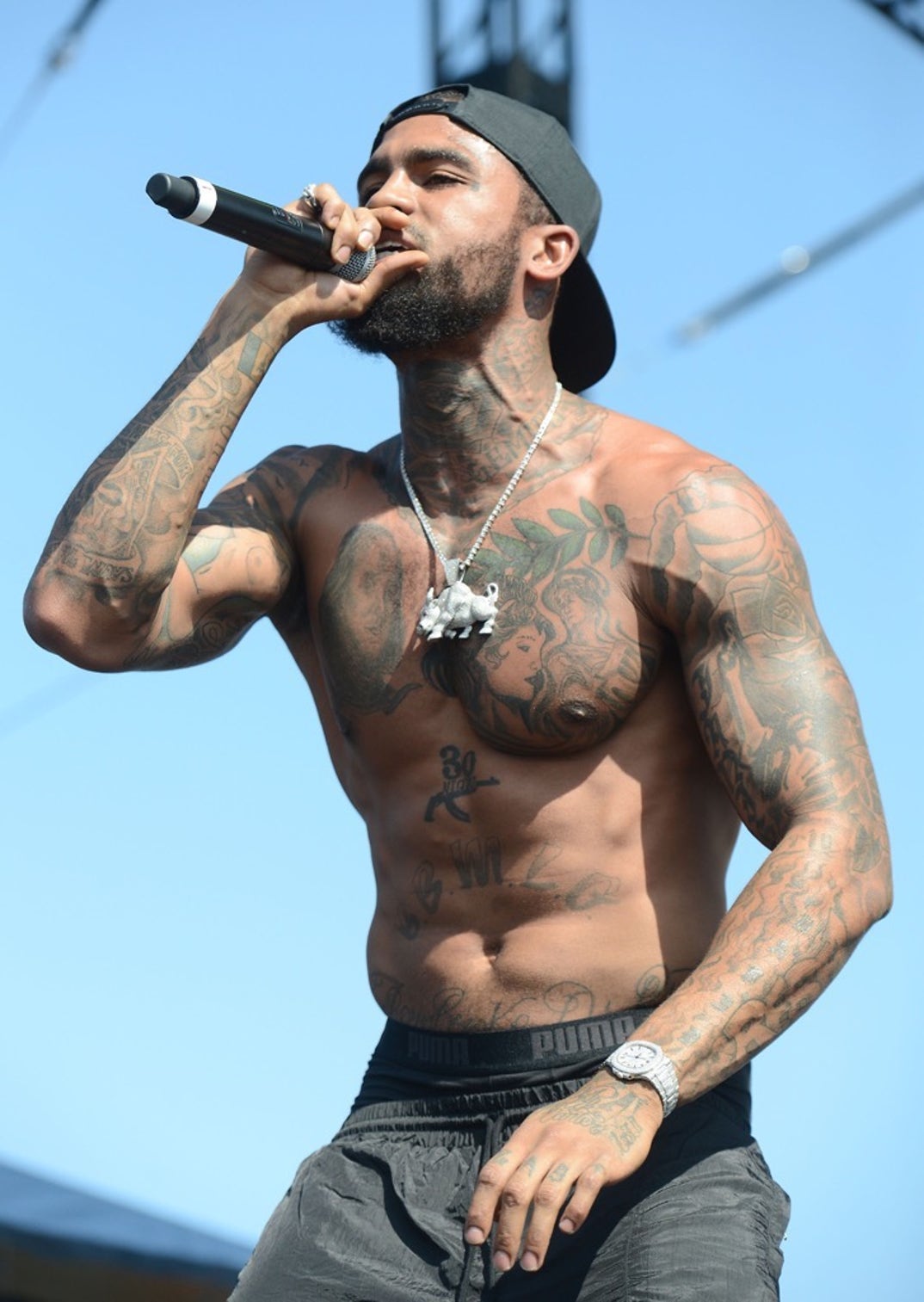
Dave East’s upper arms and forearms carry portraits, lettering, linework and shaded pieces. In performance photos, the arm raised toward the microphone shows how the designs follow his muscles as they move.
The sleeves vary in density. Some areas are dark and packed; others leave more skin visible around individual designs. That change keeps one section from blending into the next.
A relaxed arm shows the outside of the sleeve. Bend the elbow or turn the wrist, and the inner forearm and lettering near the wrist come into view. A sleeve has to make sense from each of those angles, with the hand down, raised or crossed over the chest.
Ask your artist to map the arm while it is relaxed and while it is bent. That can help keep a portrait clear of a crease or script visible when the elbow moves. The designs need to work with the arm in motion.
Neck and face tattoos keep the portraits sharp
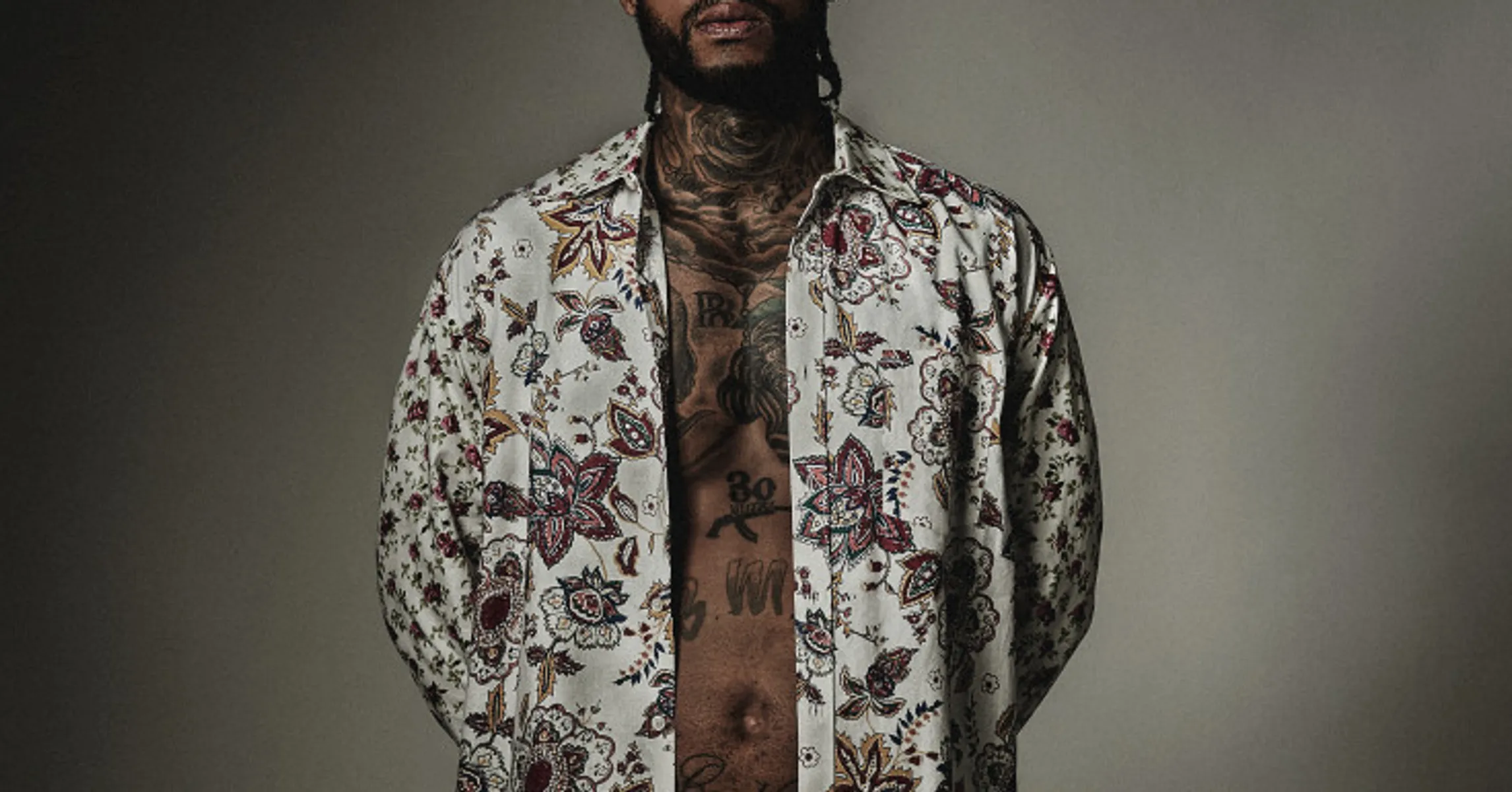
The neck tattoos frame Dave East’s face and chest. Close portraits show ink under the jaw and along the sides of the neck, even with his shirt buttoned. That placement also keeps the tattoos visible in photos that don’t show his torso.
The face tattoos are smaller than the chest portraits, but they change the look of a portrait. Script near the temple and marks around the eye follow the natural lines of his face. They draw attention because there’s little open space around them.
The neck links the face and upper chest, so the tattoos don’t read as two separate panels. Curved lines and darker shading are easier to see when he turns his head; a side view can reveal details a straight-on photo misses.
Use face and neck references to study scale before you choose a visible placement. Small lettering needs space and careful linework. If facial ink feels like too much, the side of the neck, collarbone or upper shoulder gives you more room.
The smaller lettering adds a personal layer
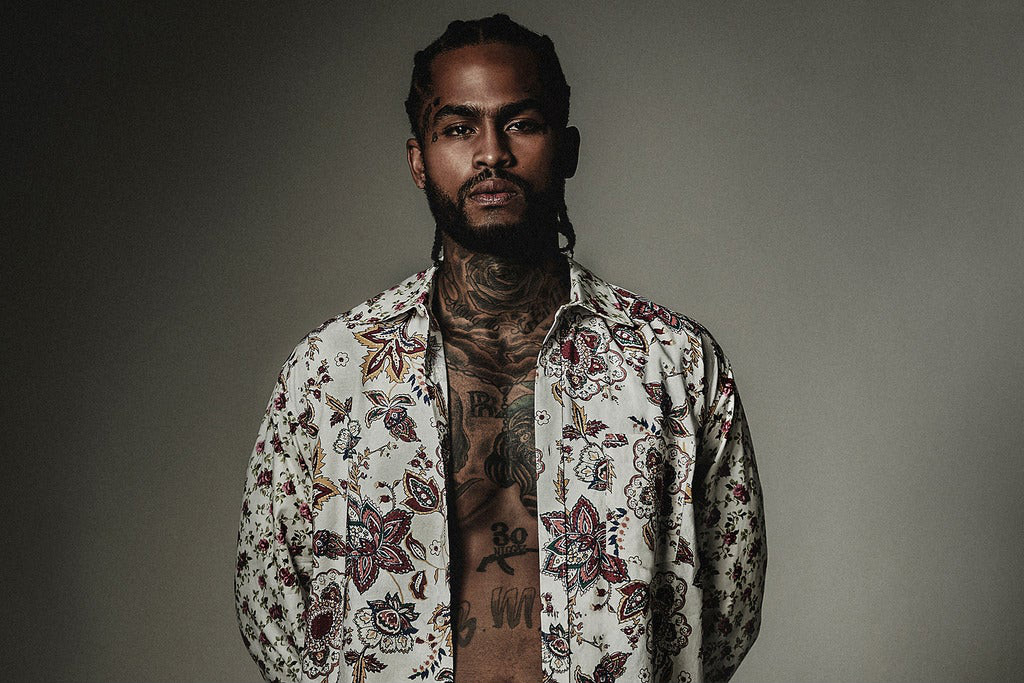
Short words and script sit between the larger chest portraits and arm tattoos. They fill narrower areas around the stomach, ribs and lower forearms where a full image might feel too heavy.
From a distance, the lettering can blend into the darker sections. Up close, the words become easier to make out. That shift gives the collection more than one level of detail.
The amount of text matters less than where it sits. A short phrase can follow the collarbone or sit below a portrait. A name can stay clear if it has space away from heavier shading. Dave East’s photos show different sizes of work sharing the same area.
Keep small script simple and leave room for the letters to age. Tiny detail can blur when it is packed tightly. A little open skin helps the words stay readable, especially around the stomach, ribs and hands.
How to borrow the Dave East tattoo layout
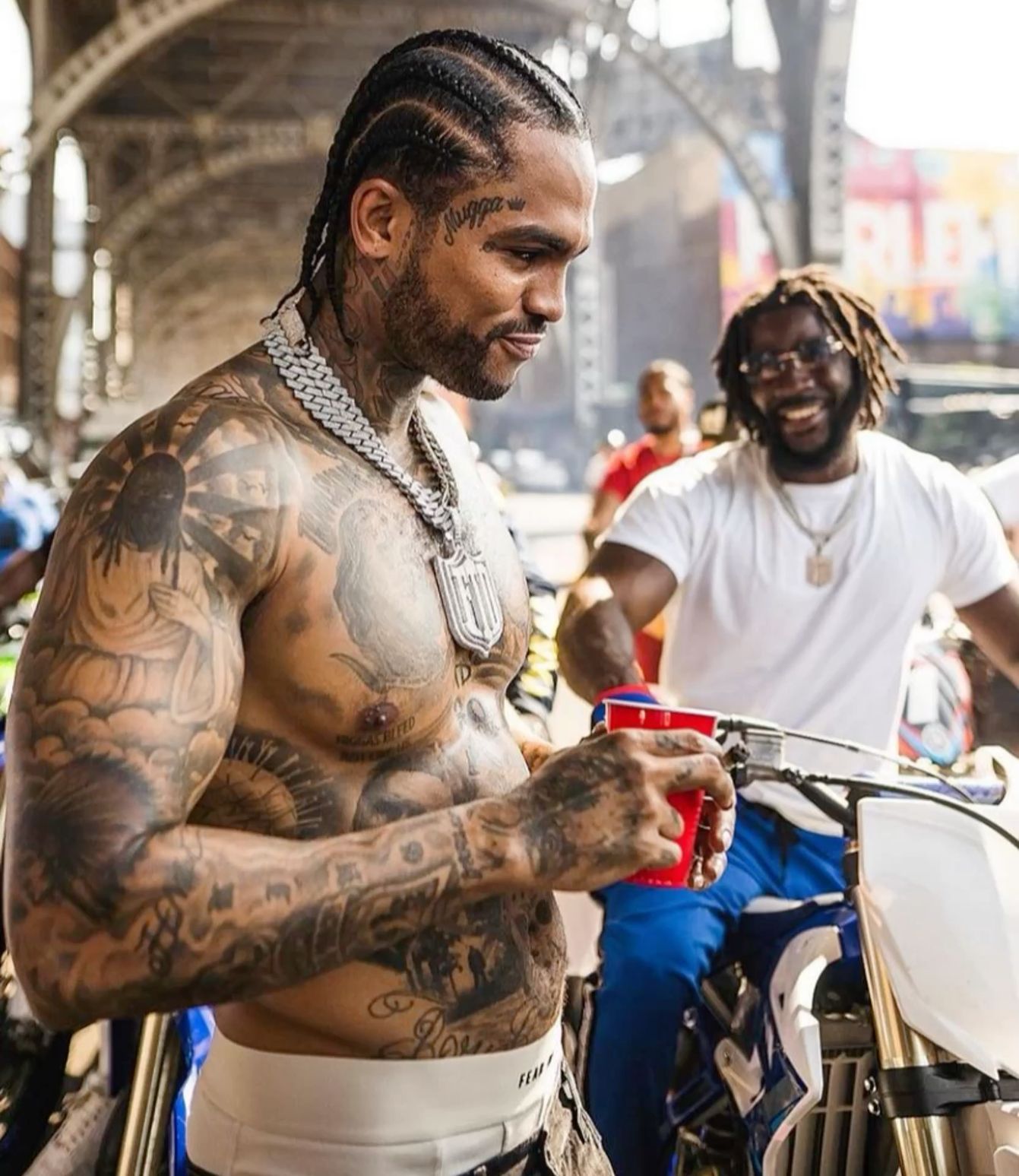
The tattoos move from one area to the next: the chest is the anchor, the arms add width, and the neck draws the eye back toward the face. You can use that layout with other artwork and still create a connected look.
Start with the area that matters most to you. The chest gives room for a portrait or large symbol. A sleeve can grow over time. A neck or shoulder piece can frame a smaller collection without covering as much skin.
Then decide how the large and small designs will sit together. One or two portraits can carry the detail, with script and symbols in the narrower spaces. Some lighter areas make it easier to see the main work and leave room to add more later.
Plan the collection around your real movements, clothes and comfort level. Dave East’s tattoos show in photos because they cover visible areas, but every piece doesn’t need to be exposed. Choose the parts you want to lead and let the rest support them.
Dave East’s collection combines large portraits on the chest with dark sleeve work and smaller tattoos around the face and neck. The chest sets the scale; the arms carry the coverage; close photos reveal the lettering and finer marks.
If you’re using Dave East tattoos for ideas, look at how each placement connects instead of copying one design. Notice how portraits sit beside script, how the sleeves follow the arms and how the neck links the face to the chest. That can help you plan a collection with its own shape.
Together, the large images and smaller reminders give the collection room for different kinds of work.
Here’s a Dave East video filmed around new ink: