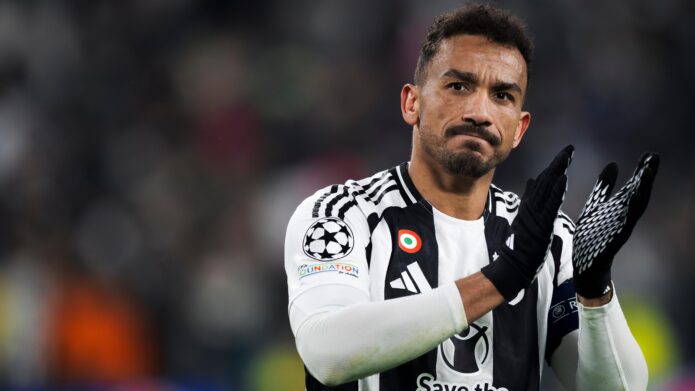
Danilo Luiz da Silva’s tattoos cover his hands, forearms, chest, shoulders and lower legs. He has said many carry personal meaning, though only some designs have a public explanation. The best documented stories involve a phrase below his left knee, a tiger on his left hand and a Champions League trophy tattoo.
Photos from Danilo’s time at Porto, Real Madrid and Juventus show the collection across different stages of his career. The phrase followed a knee injury at Porto; the tiger was reported in January 2016, during his Real Madrid years. Later portraits show more extensive chest and arm coverage.
Danilo’s realistic tiger hand tattoo
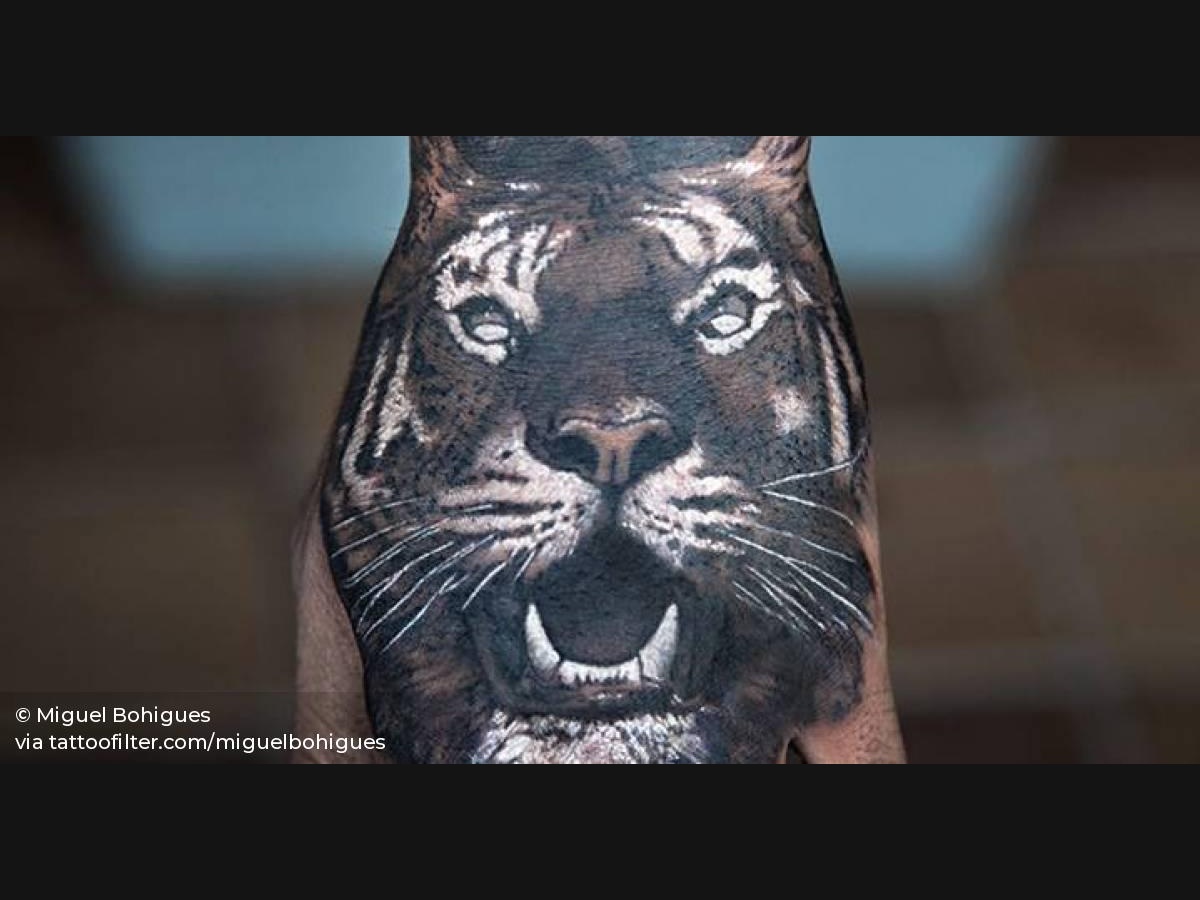
The black-and-grey tiger covers the back of Danilo’s left hand, above the knuckles, with darker shading reaching toward the wrist. The portrait fills most of the visible space. Dark bands define the fur and cheeks, while lighter marks pick out the eyes, muzzle and whiskers. Its face is angled across the hand, so the design changes slightly as his fingers and wrist move.
TyC Sports reported in January 2016 that Danilo went to Spanish tattoo artist Miguel Bohigues for the piece. Bohigues told GloboEsporte that Danilo wanted one of the most feared animals. AS described the tiger as a continuation of an earlier forearm tattoo. The hand image was added to work that already extended up his arm.
The back of the hand is exposed in many match and interview photographs. In close views, the dark fur gives the eyes and muzzle a strong outline, while lighter whisker marks remain visible over the gray shading. The portrait reaches toward the wrist, where it meets the earlier forearm work.
The faith lettering below his left knee
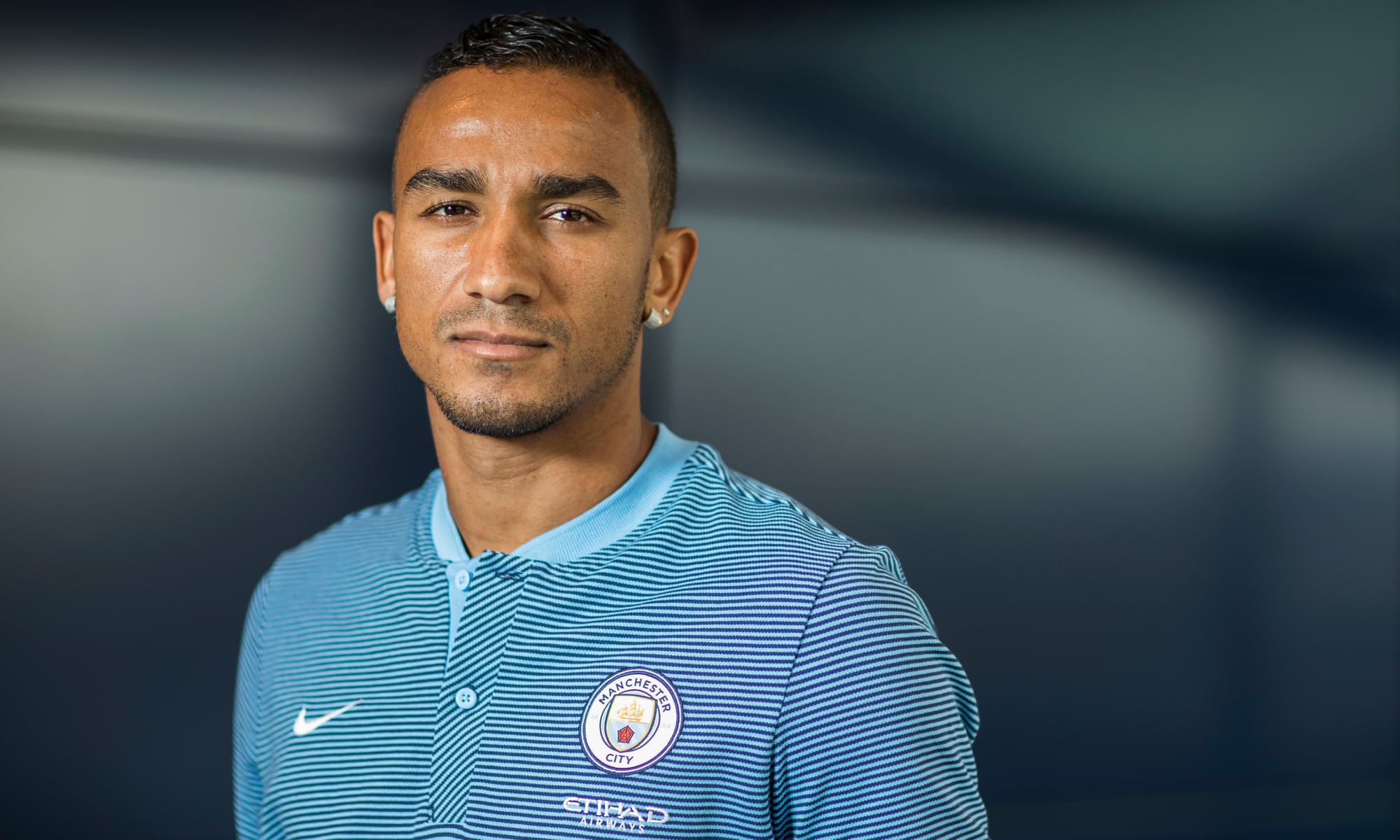
The phrase below Danilo’s left knee reads “Conquistando o impossível pela fé.” It translates as “conquering the impossible through faith.” The dark script sits in a short line on the lower leg, just below the knee. It is separate from the Champions League trophy tattoo, not part of a larger leg scene.
In a 2017 interview with The Guardian, Danilo said the words came from a Brazilian song about religion and God. He described himself as deeply religious and connected the tattoo to a knee injury he suffered against Manchester City in February 2012, while playing for Porto. He was out for three months. After recovering, he chose the line to remember the strength it took to get through that period. In the same interview, he estimated that about 90 percent of his tattoos had meaning.
Socks and shin guards usually cover the phrase during matches. In the Guardian interview photo, Danilo pulls up his trouser leg to show it. The tiger is an image; the knee tattoo is a sentence tied to the recovery he described.
Chest script, cupid imagery and shoulder ink
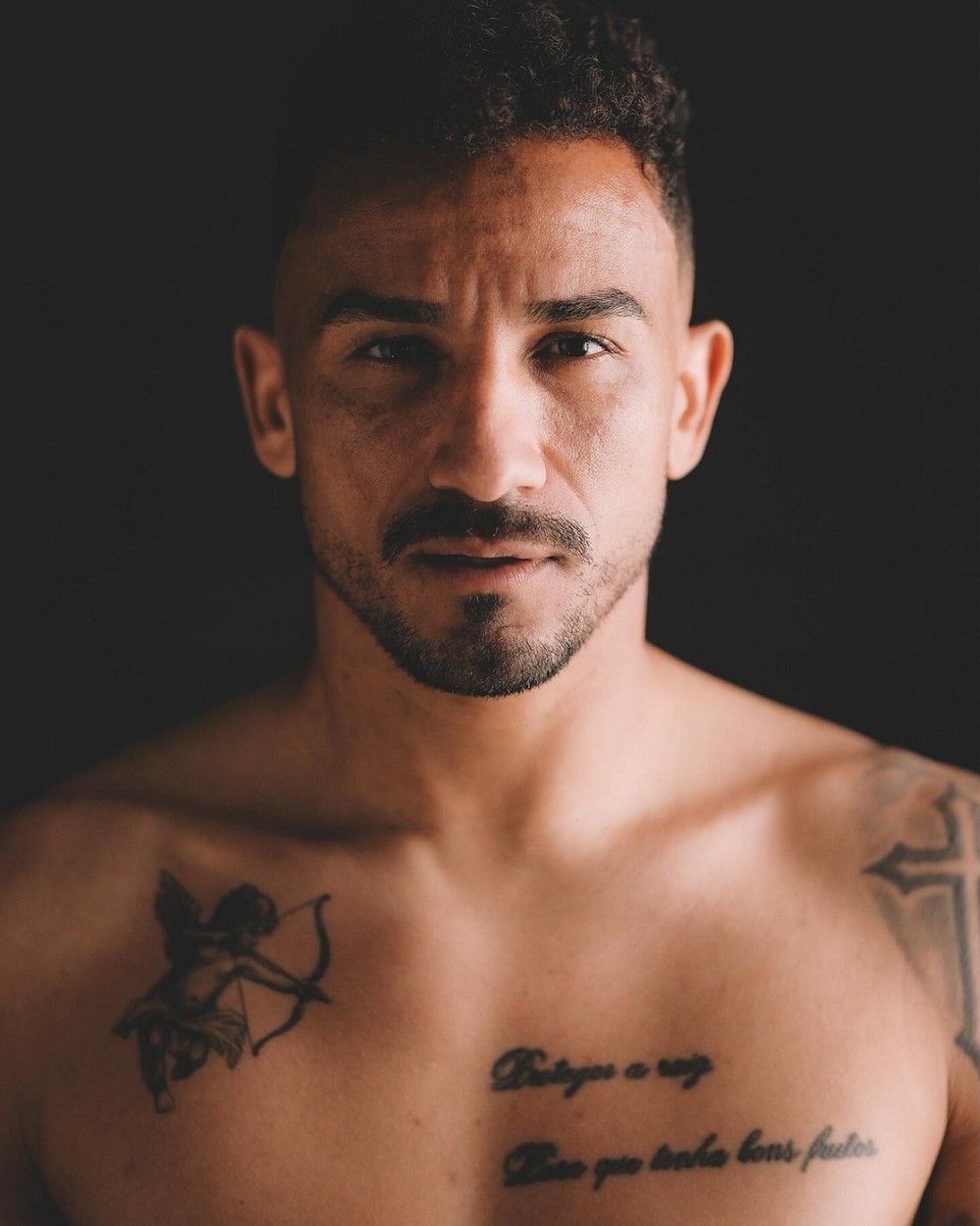
Shirtless photographs show two lines of script on the right side of Danilo’s chest, a small winged or cupid-like figure on the left, and a cross higher on the shoulder. The lettering follows the line of the pectoral. In close views, its rounded dark strokes remain separate from the figure across the chest.
The arrangement is asymmetrical. The script and winged figure occupy different sides, while the cross sits above them near the shoulder. The small figure is more pictorial than the lettering, with its darker outline and wings visible against the skin. The broader tattoo coverage continues down the upper arm, with bare skin separating the chest pieces.
The photographs show each design, but published accounts do not explain the chest script or winged figure. Danilo has not described a specific meaning for the cross either. The available reporting gives a personal account for the phrase below his knee, not for these chest and shoulder pieces.
Dense forearm lettering and layered arm coverage
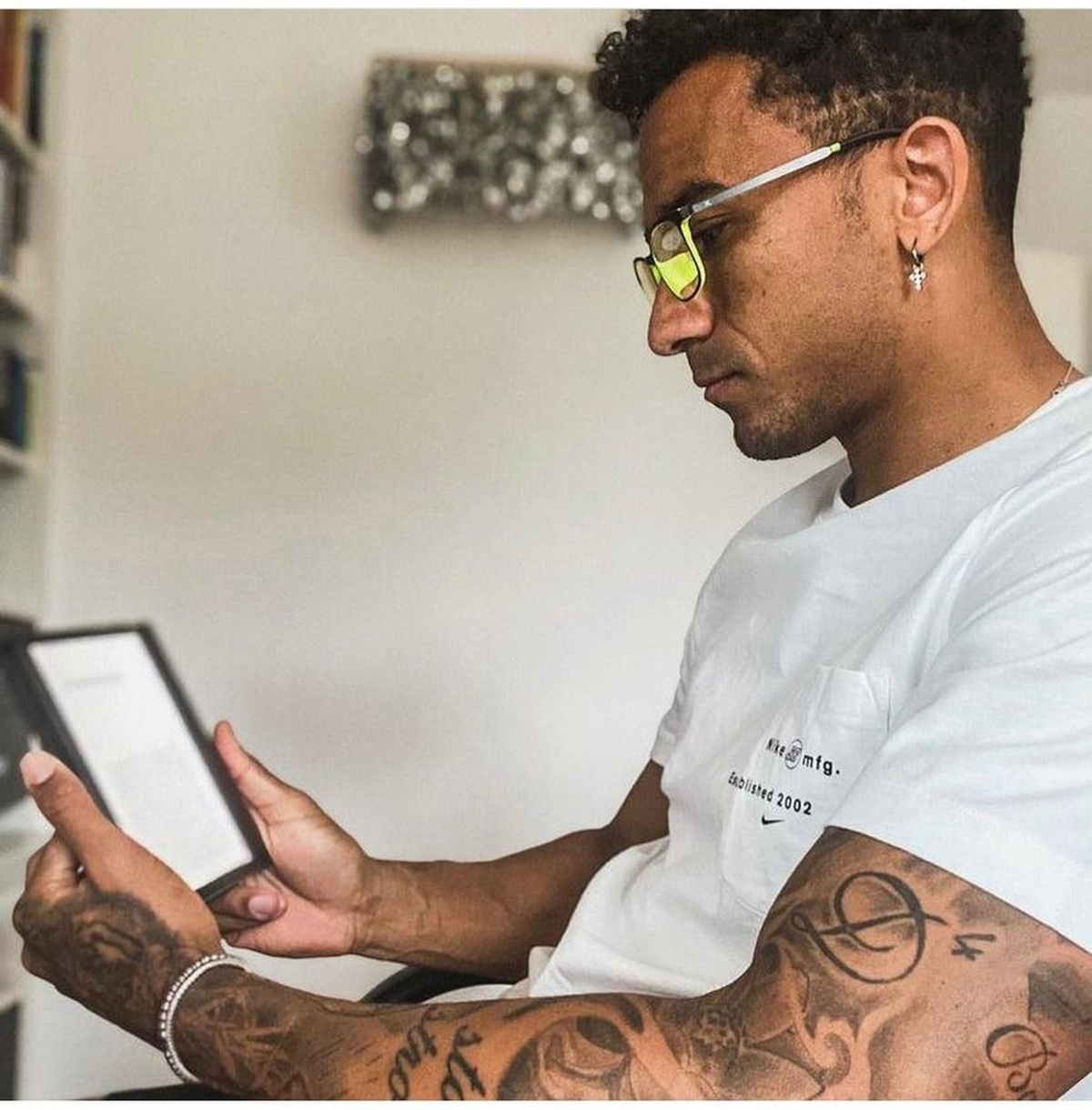
Photographs from Danilo’s Juventus years show dense work across both forearms, wrists and hands. There is large script, circular imagery, portrait-like shading and heavier black sections. The forearms are densely covered, though the different line weights and shapes still separate the individual pieces.
In one off-field photograph, lettering runs lengthwise from the wrist toward the elbow. A circular design sits nearer the elbow, with shaded imagery around it. Other photos show darker coverage on the left hand and wrist. Lighting and angle reveal different sections of the collection.
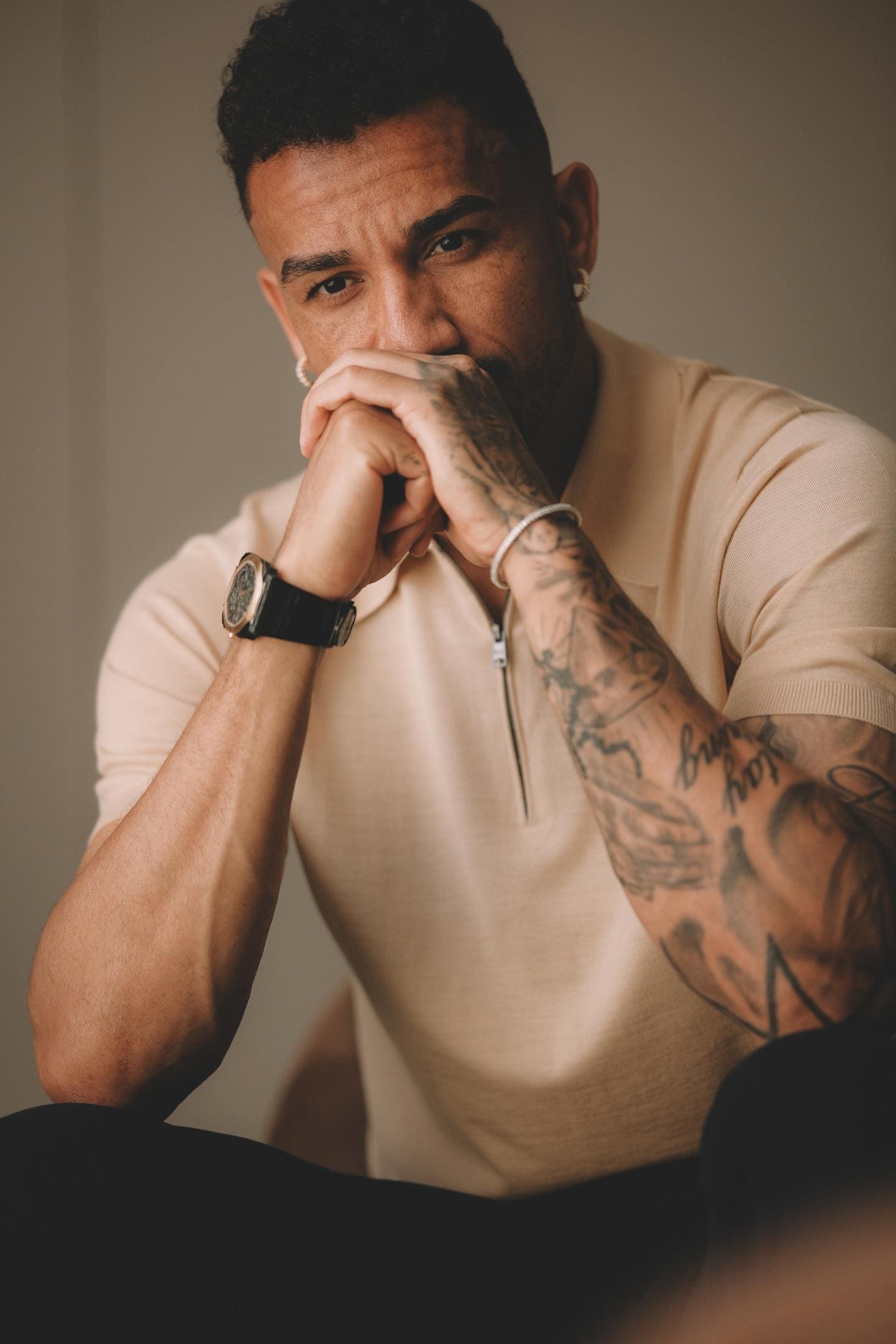
The earlier tiger sits beside the forearm work. A separate portrait shows the ink against Danilo’s face, but the view is too wide to identify every mark. The black-and-grey coverage varies from thin script to heavier shading around the wrist and hand.
Danilo’s football trophy tattoo on the lower leg
AS reported a tattoo of the UEFA Champions League trophy on Danilo’s lower leg, marked with the years 2016 and 2017. He won both titles with Real Madrid. Socks and shin guards usually cover it during matches, so photographs without full kit offer the clearest view. The report identifies the image and dates but gives no personal explanation from Danilo. He has explained the knee phrase himself, linking it to his injury and recovery.
How Danilo’s career record took shape
The reported timeline starts with the knee injury at Porto in 2012. The tiger was reported in January 2016, during Danilo’s Real Madrid period, and the lower-leg trophy carries the years of the club’s 2016 and 2017 Champions League wins. Later Juventus photographs show more of the arm and chest work.
Danilo has also played for Santos, Manchester City and Flamengo, and represented Brazil. Photos from each stage show different parts of the collection; match kit covers the lower legs, while sleeveless tops expose the arms. The dates in the tattoo reports set a few clear points in that timeline, but they do not show when every chest or arm design was added.
A documented record of faith, family and football
Published accounts are most specific about the knee phrase, the tiger and the Champions League trophy. The chest script and winged figure appear in photographs, but Danilo has not publicly explained them.
The coverage does not identify a particular family tattoo or give a family story for one of the photographed designs.