
Daniel Seavey’s tattoos include a portrait on his upper arm, a forearm butterfly, smaller arm marks and a design near the shoulder blade. Live, beach, editorial and studio photos show different parts of the collection. The images support placement and appearance; interviews do not provide a meaning for every tattoo.
Daniel Seavey’s tattooed arms under blue stage light
A SeatGeek performance photo shows Seavey at a microphone under blue stage light. A large portrait sits on the upper arm, a butterfly appears lower on the forearm, and smaller marks continue toward the wrist. The light flattens some colour, but the position of each visible piece remains clear.

The Paper editorial frame with chest lettering
A reclining Paper editorial photo brings the view indoors. A small tattoo peeks above Seavey’s shirt near the collarbone, while larger black lettering spans the shirt area. The frame shows the placement and styling, but doesn’t explain the lettering’s meaning.

The beach cover-up and upper-back butterfly
The Shazam cover image looks down across Seavey’s shoulder and upper back. A butterfly sits near the shoulder blade, with additional linework lower on the back. Sunlight and leaf shadows cross the skin; the close crop shows the placement but not a complete back inventory.

The wide Paper portrait and the upper-arm portrait tattoo
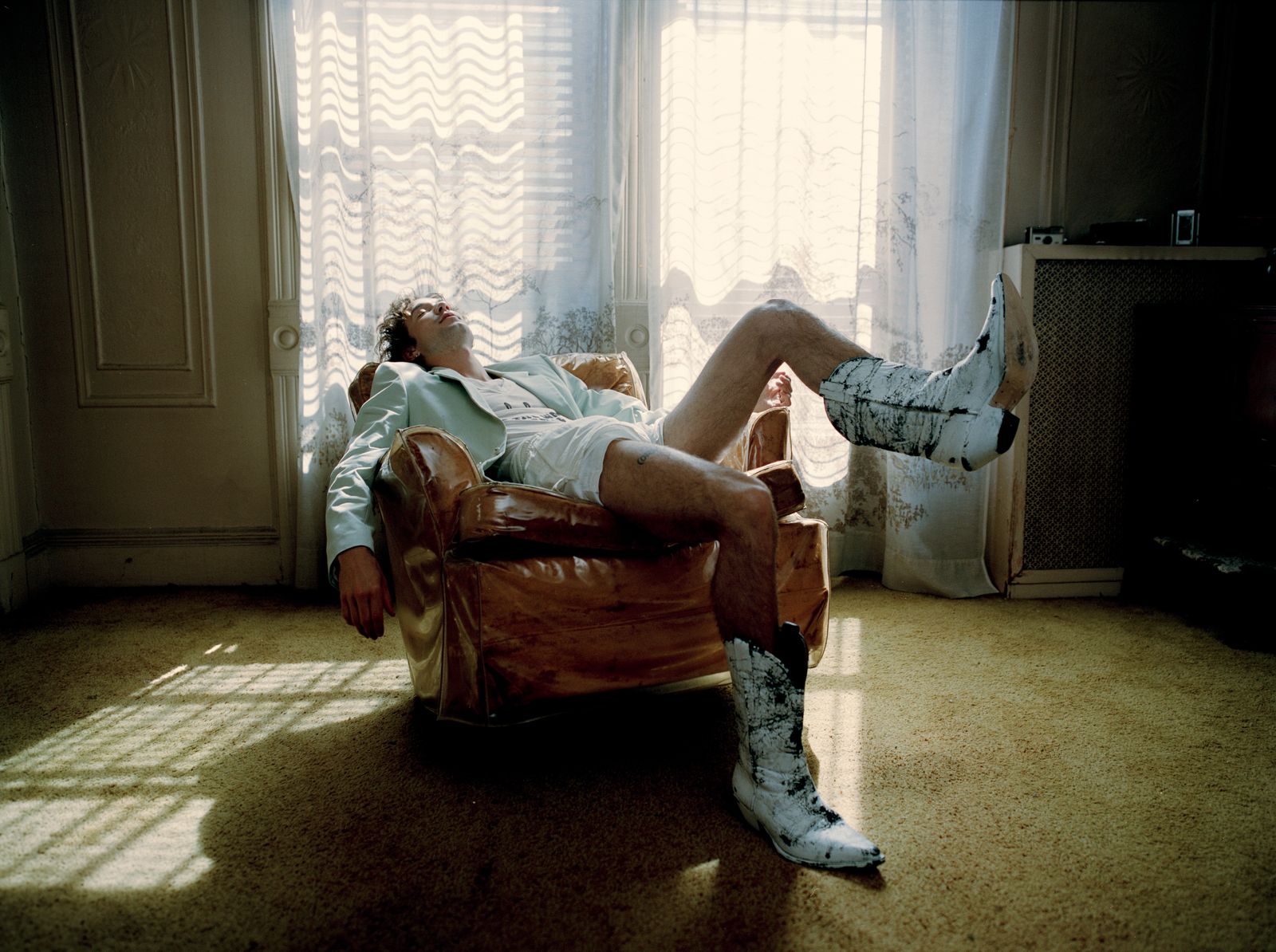
A second Paper photograph places Seavey on a chair in a sunlit room. His open blazer leaves the upper-arm portrait visible in a calmer setting than the stage photo. The wider frame confirms where that tattoo sits, while the smaller forearm pieces are less prominent.
The Note studio portrait and the arm collection at rest
A Note studio portrait shows Seavey on a teal couch in a white tank top. The same upper-arm portrait is fully exposed, and a smaller mark appears lower on the forearm. With no stage wash, the colour and linework are easier to distinguish.

What the interviews and official video establish
Seavey is an American singer, songwriter and multi-instrumentalist who moved from Why Don’t We into a solo career. Paper’s feature follows the Second Wind period; The Note, music outlets and Atlantic artist material provide additional career context. His official video for “The Older You Get” is included below, but does not serve as a tattoo inventory.
Those sources help identify the subject and setting. They do not establish a private story for each portrait, butterfly or smaller mark.
Reading photographs under different conditions
Pose, clothing and light change what each photo reveals. Blue stage colour flattens the arm; the Shazam cover turns the camera toward the shoulder and back; the Paper photos expose the chest and arm in editorial poses; The Note portrait shows the sleeve at rest. These are different views, not a verified timeline of when each tattoo was added.
A practical way to read the collection
The five tattoo photos move from the live arm view to the chest, shoulder blade, upper-arm portrait and studio sleeve. Several overlap around the arm, which helps compare the portrait’s placement across settings. The separate featured portrait identifies Seavey but is not counted as tattoo evidence.
The photos are useful for studying scale and placement; they are not a stencil or a substitute for an original design consultation.
The clearest conclusion from the image archive
Across the stage, beach and studio frames, the upper-arm portrait stays in view while the butterfly and smaller marks appear from different angles. Other chest and back details are visible only when the pose or clothing allows. The photos provide a clear map of what is documented, without filling in meanings or dates the sources do not establish.