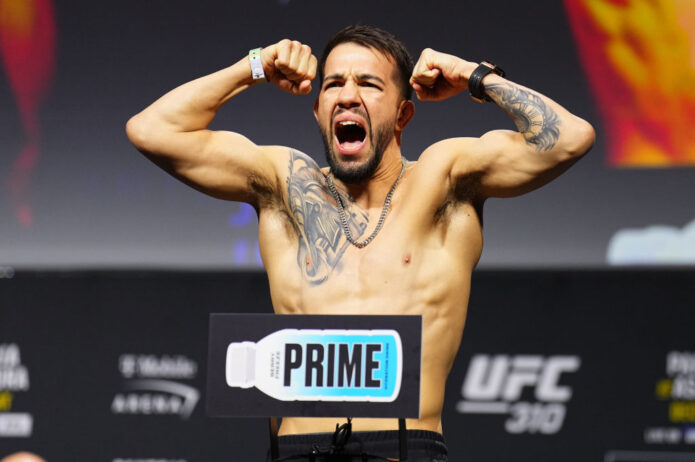
Cody Durden’s left forearm carries a lion and a clock set to 10:35—the time he got the call that brought him into the UFC. A Spartan helmet fills much of his right chest. The images are very different in scale, but both are tied to his life as a fighter: the clock marks a career milestone, while Durden has described the helmet through his idea of being a modern-day gladiator.
The Spartan helmet on his chest
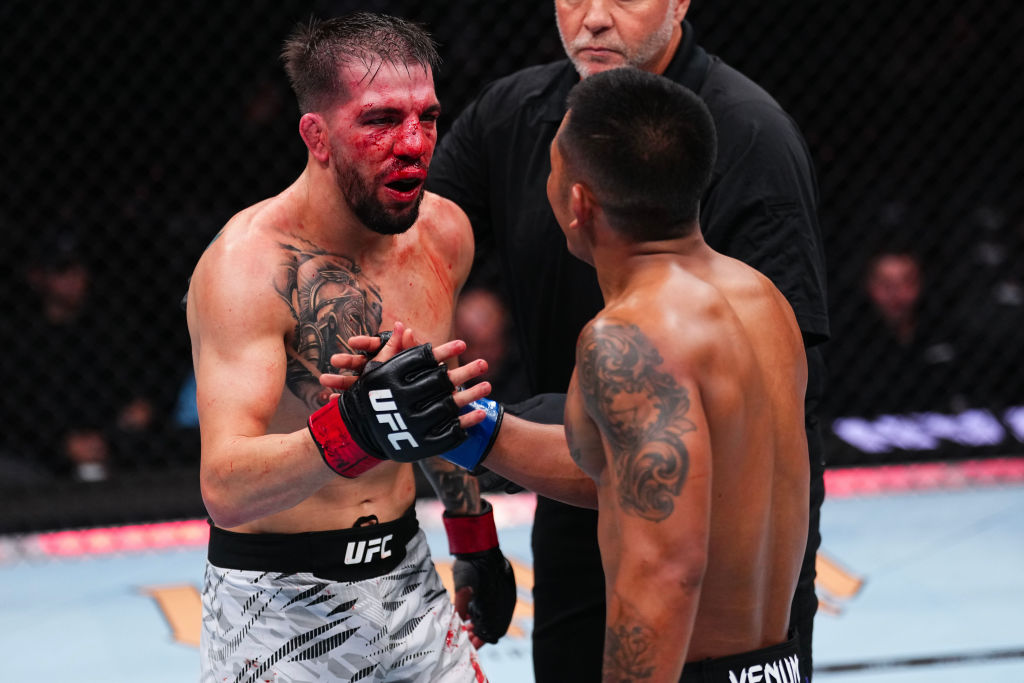
The helmet covers much of Durden’s right pectoral and reaches toward the shoulder. Its face opening, cheek guard and sweeping crest give it a distinct shape. Dark shading sits inside the openings, while lighter areas make the armor look raised. In a photo after UFC 310 against Joshua Van, Durden is on the left in white shorts and red gloves; a handshake crosses part of the lower chest, but the helmet remains visible. Van’s shoulder tattoo belongs to Van.
A June 2025 FOX 5 Atlanta profile connects the Spartan design with Durden’s idea of himself as a modern-day gladiator. The fighter context is specific enough; there’s no need to attach an imagined ancient battle or history to the image. For another MMA fighter with broader body coverage, see Alessio Sakara’s tattoos.
The lion and clock on his forearm
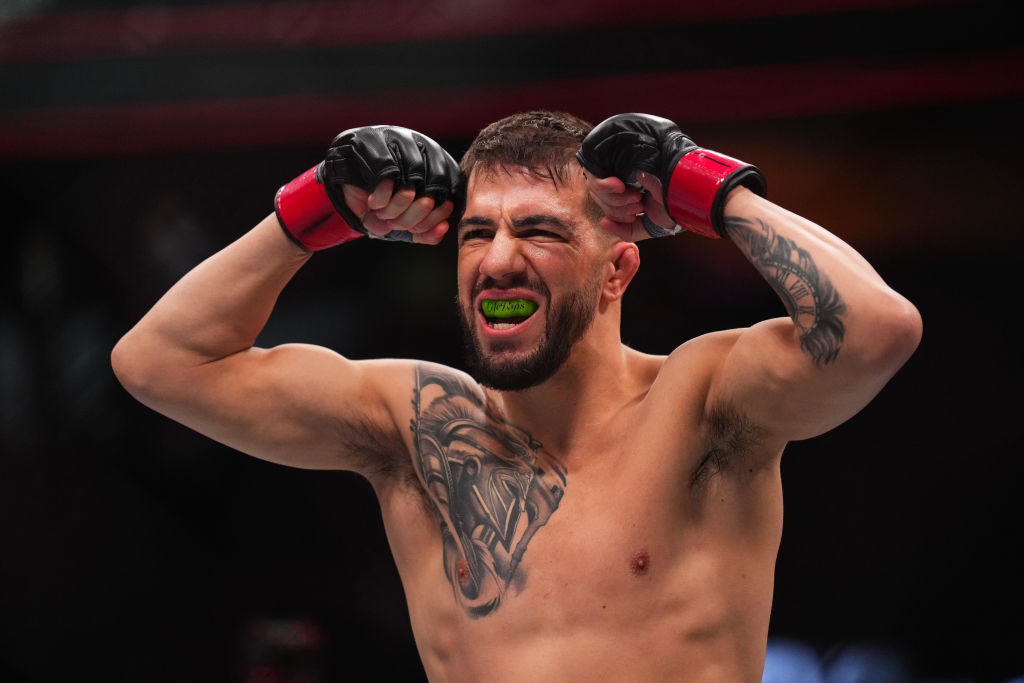
The lion and clock sit on Durden’s left forearm. A raised-glove photo shows the round dial and Roman numerals within darker flowing forms. In a June 2025 interview with The Post-Searchlight, Durden explained that the clock reads 10:35 because that was when he received the call confirming his UFC place.
The time comes from his explanation, not from trying to read small hands in a compressed fight photo. The surrounding lion has no equally specific public explanation, so familiar ideas about strength or courage shouldn’t be presented as Durden’s own words. The circle of the clock also gives the longer forearm design a clear center.
Before the bigger pieces appeared
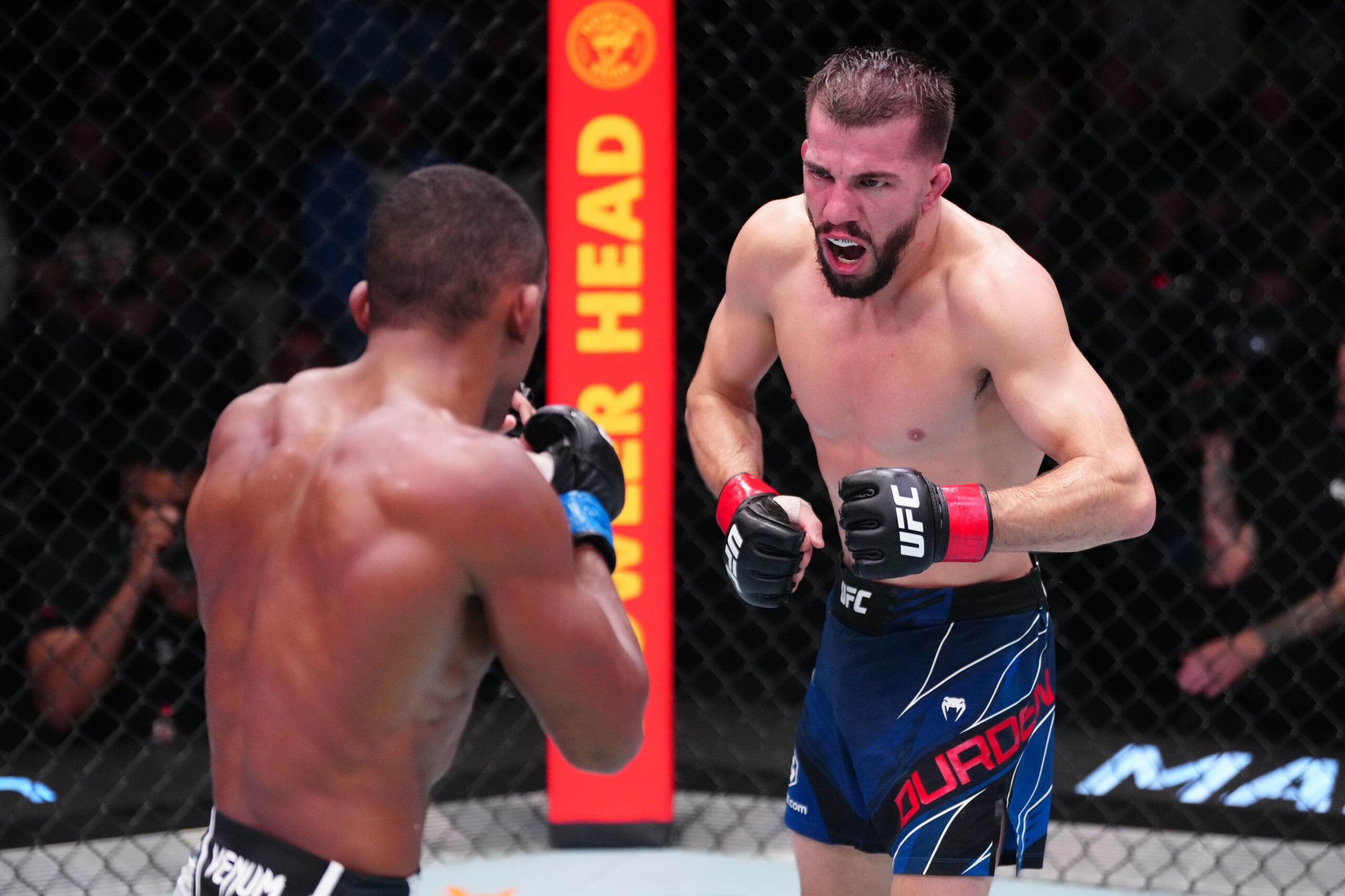
An older photo from Durden’s bout with Carlos Mota shows him in blue shorts and red gloves, facing the camera with his hands up. His chest and exposed forearm look different from the later photos with the helmet and clock. It gives a before-and-after comparison, but not an exact date for either tattoo.
Fight images can hide a design behind a glove, turn it away from the camera or leave it in shadow. A tattoo that isn’t visible in one frame may simply be out of view; the photos don’t say when Durden had the pieces done or how many sessions they took.
Competition photos need a little care
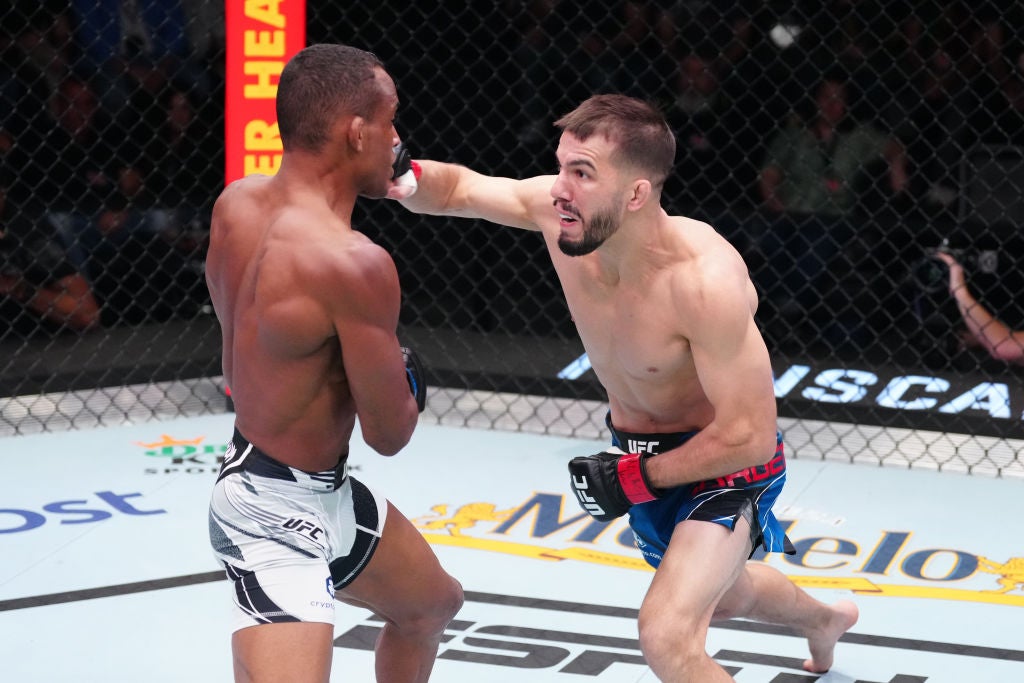
In this older action photo, Durden is on the right, extending a punch. It’s a useful view of the competition, but the moving exchange and the other fighter in frame make it a poor image for reading small details. Keep track of whose body the camera shows before attributing any visible ink.
Raised arms often give a clearer look at the chest and inner forearm, while a full-frame fight photo helps place Durden in the Octagon. Each image answers a different question.
The work behind the UFC call
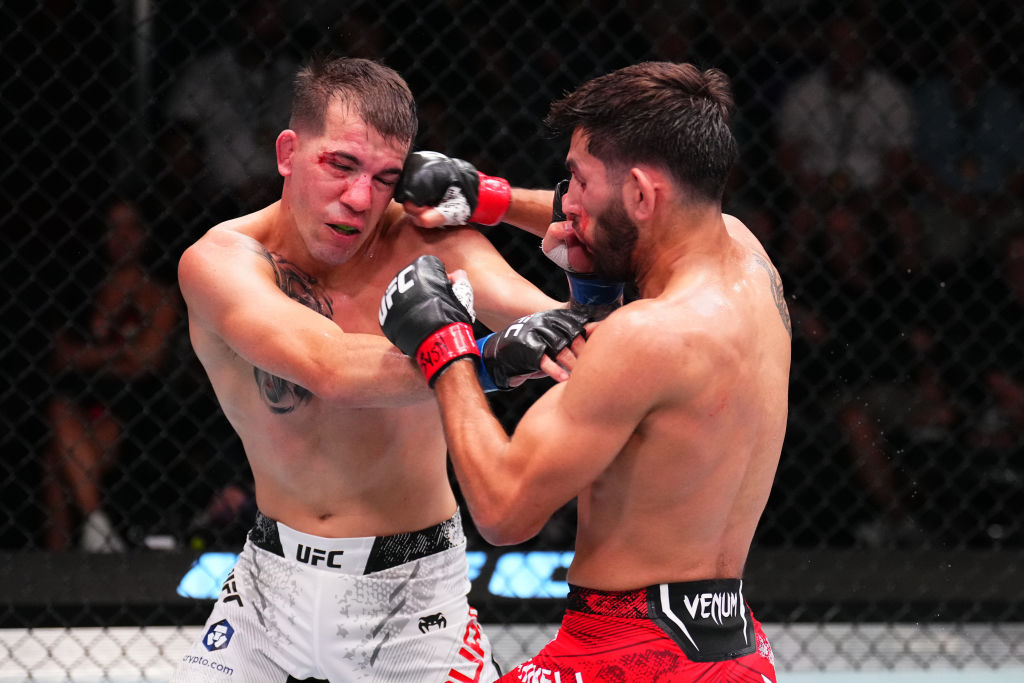
Durden’s 2025 hometown interview describes a routine of finishing construction work and going straight to training. He stopped for espresso to get through the next part of the day, returned home late and started early again the following morning. The 10:35 tattoo keeps the moment when that work led to a UFC call.
The photo here shows Durden exchanging punches with Matt Schnell. It adds the competition setting rather than a close view of his forearm. The clock’s meaning comes from Durden’s hometown interview, while the wider fight image shows him at work in the sport.
An Octagon interview
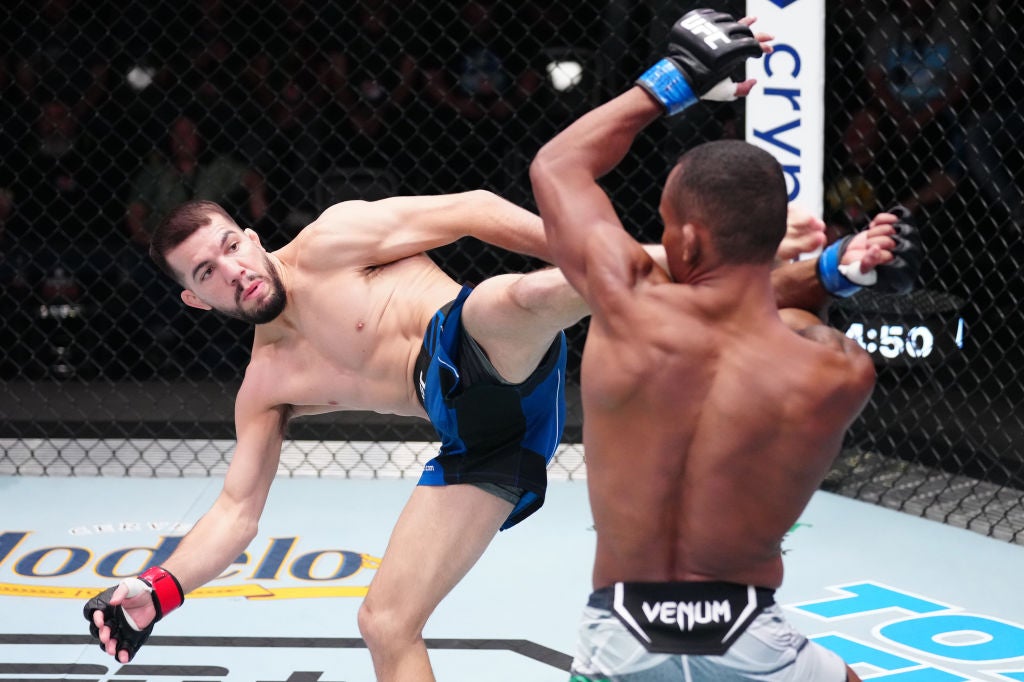
The official UFC Vegas 97 Octagon interview below follows Durden’s submission win over Schnell. It’s a post-fight conversation, not a tattoo explanation, and pairs naturally with the competition and close-up photographs above.