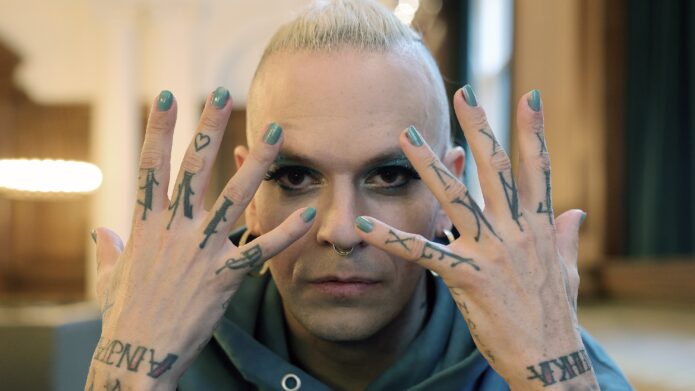
Chris Harms’ tattoos cover his hands, arms, chest, neck and face. The hand tattoos have some of the clearest explanations: names for his wife and son, Roman numerals for his first concert, words about balance and crosses tied to an early Lord Of The Lost logo. Photographs show the rest of the collection, including a tribal tattoo on his shoulder blade and a large LORD mark on his chest.
BILD’s interview gives the detail behind several of the hand designs. Other profiles and photos record the earlier shoulder piece, the neck and face work, and tattoos across his arms and legs. The ink includes names, dates, band symbols, stars, lettering and larger dark designs; Harms has explained some of those choices, while others are only visible in pictures.
The collection’s history comes into focus through interviews
Harms has talked about tattoos as part of his own history. In BILD, he explains the names, date and symbols on his hands, connecting them to family, music and an idea about giving and taking. Those comments make the hand designs easier to understand. The photographs show the collection beyond those marks, but the available coverage does not provide a story for every tattoo.
Separate interviews place the start of his tattoo collection in Hamburg, where he had a tribal design done on his shoulder blade at eighteen. That piece came before the more visible tattoos on his hands and face. The contrast between the first shoulder tattoo and the later work is clear in photos, which show how far the ink eventually spread.
The names Anja and Mika turn hand tattoos into family markers

BILD identifies ANJA as a reference to Harms’ wife and MIKA as one to his son. The names are tattooed on his hands, where they show up in close portraits and onstage. The bold lettering is easy to pick out beside the smaller symbols and lines.
The close photograph shows the names among rings, painted nails and other marks on the hands. Those details help give a sense of how the tattoos sit together, without turning each small line into a separate story. BILD provides the family context; the photo supplies the view of the lettering and its placement.
Roman numerals link the hand tattoos to his first concert
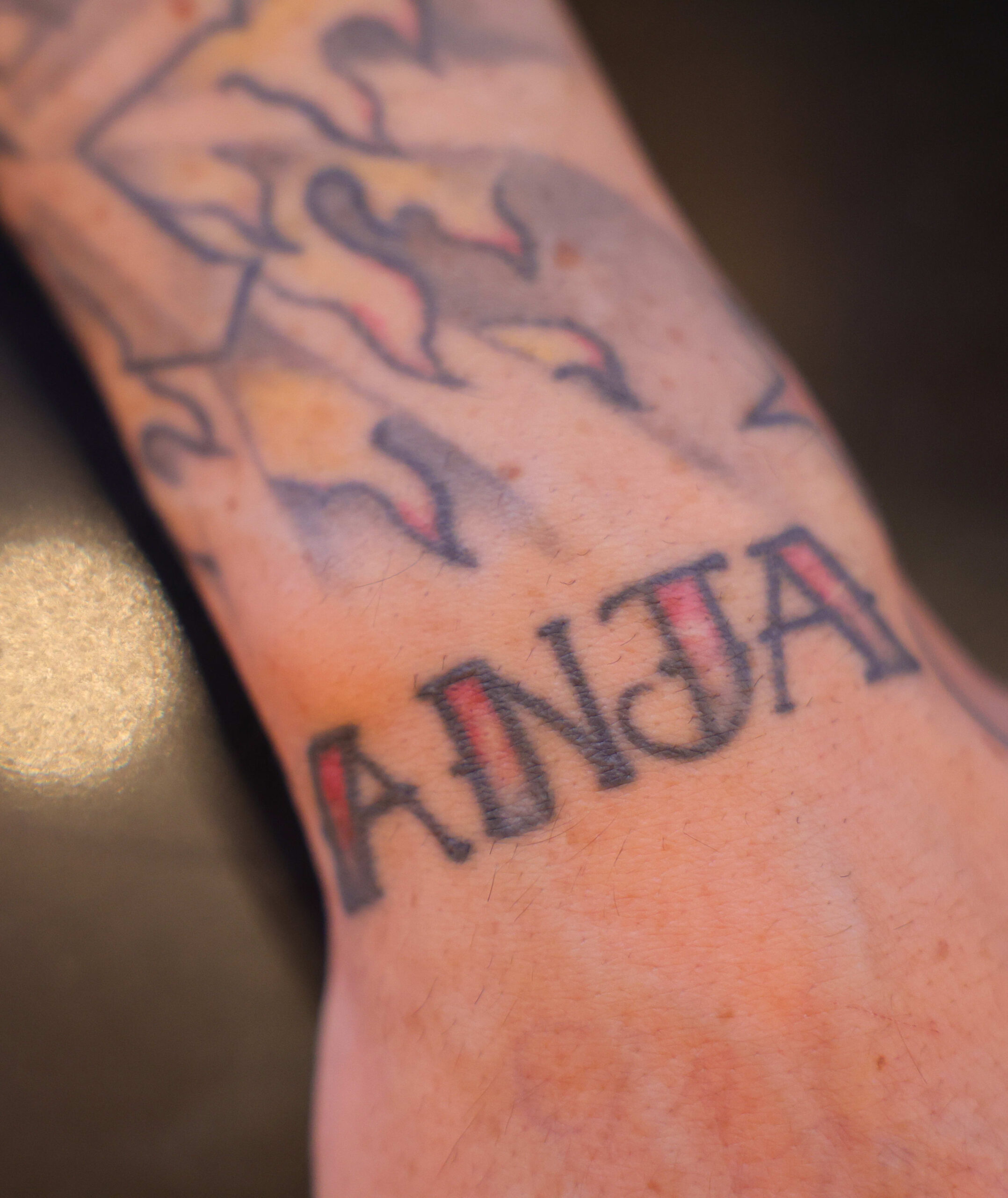
BILD identifies Roman numerals on Harms’ hands as the date of his first concert, a Roxette show on October 24, 1994. The numerals sit among the names and other lettering, though they take more context to read.
The concert happened before Harms became Lord Of The Lost’s frontman. In the close photo, the numerals sit beside names and symbols on his hands; BILD explains the date they record.
The close view shows the numerals’ narrow, angular strokes beside the block lettering on Harms’ fingers. The different shapes separate the date from the names, even though they share the same hand.
GIVE and TAKE plus crosses make the hands read like a ledger

GIVE and TAKE are written across Harms’ fingers. BILD says the words express a balance between giving and receiving. They are short enough to read quickly, and their placement lets the two sides be seen together or separately.
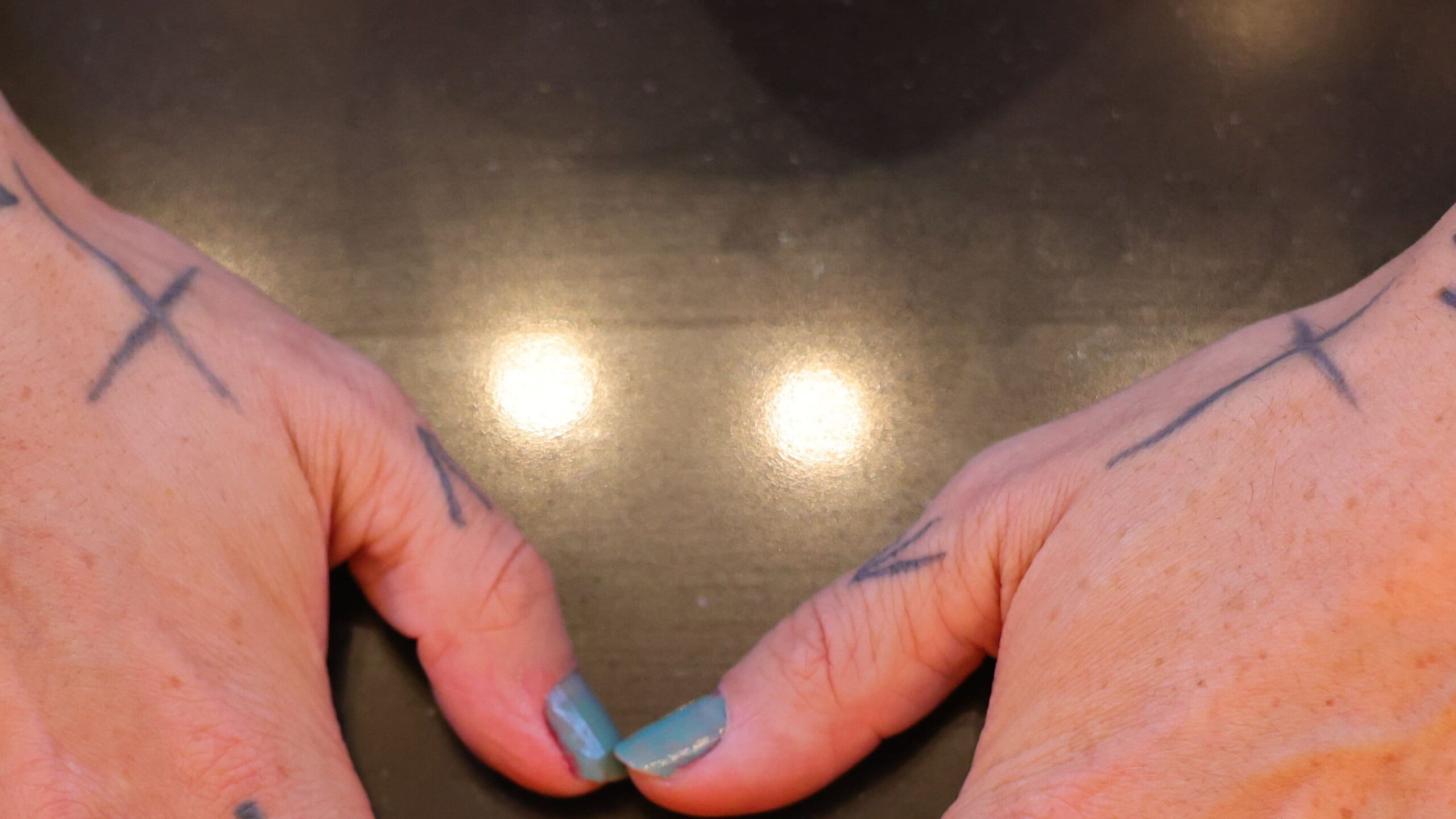
Crosses on his thumbs refer to an early Lord Of The Lost logo. BILD also describes the pair through the idea of yin and yang. That ties the hand tattoos to the band’s beginnings, while the finger words reflect Harms’ own idea about balance.
The heart tattoo adds humor to the finger lettering
A small heart on Harms’ middle finger brings humor to the surrounding lettering. BILD describes it as a playful response to the rude gesture, turning it into a sign of affection. The placement is part of the joke, and the report connects the heart with love.
The heart is small beside the lettering and easy to miss until you notice its spot on the middle finger. In a performance image it can disappear into the hand gesture, while the larger words remain easier to read.
Neck and lower-face tattoos deepen the Lord Of The Lost portrait

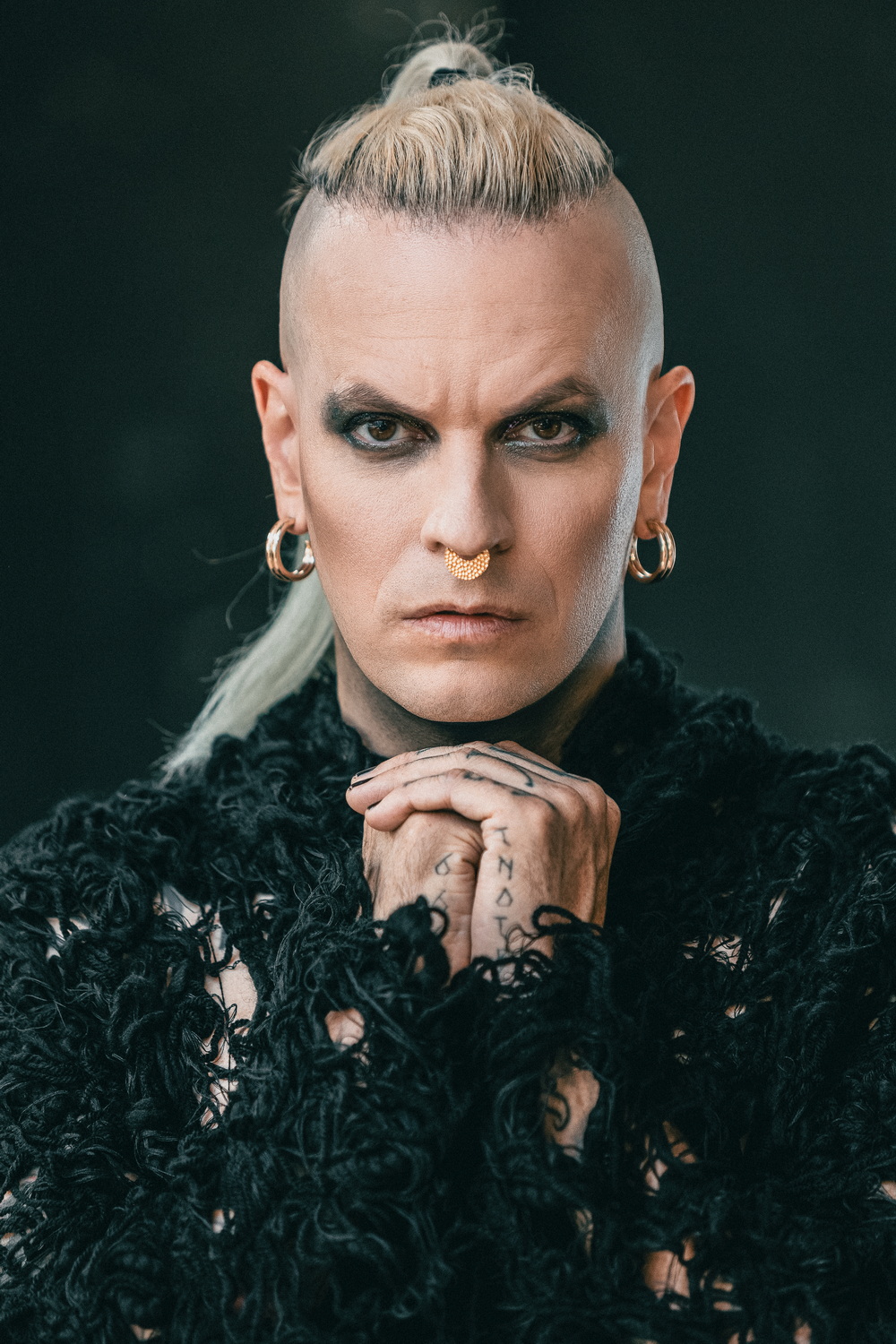
An official Lord Of The Lost portrait shows dark tattoos around Harms’ neck and lower face. Long hair, piercings and theatrical eye makeup frame the marks. Because the ink sits near his face, it stays visible even when a shirt or stage costume covers the rest of his body.
The photos show the tattoos in portraits and performance settings. They are part of Harms’ appearance across those images, while his makeup and clothes change from one shot to another. The coverage describes the placement, but it does not give an individual meaning for each neck or face design.
Black ink, pale makeup, dark clothes and metal jewellery create a strong contrast around the head and shoulders. The tattoos remain part of that look in different photographs, even when the lighting or styling changes. They help define the portrait, while the rest of the collection stretches across less visible areas.
The first shoulder tattoo anchors a history that now spans the body

Harms says his first tattoo was a tribal design on his shoulder blade, done in Hamburg when he was eighteen. It came before the more visible hand and face tattoos in later portraits. That first piece is a specific starting point for a collection that later reached across the chest, arms and legs.
The collection draws on different visual traditions. A tribal shoulder tattoo, family lettering, Roman numerals, crosses and short finger words each look different in photographs. They mark separate points in Harms’ history, with the earlier piece still part of the larger collection.
Photos show different slices of the tattoos. A close-up brings out the hand names and numerals; an official portrait focuses on the neck and face; a stage image catches the arms in motion. No single picture shows every placement, so the interviews help connect the details across those views.
Stage styling makes the arm tattoos part of the gothic silhouette
In Lord Of The Lost portraits, Harms’ arm tattoos appear with dark clothing, makeup, jewellery and stage lighting. A hand mark can show when he lifts the microphone or gestures; the larger arm work stays visible as he moves. The ink is part of the photograph, alongside the band’s styling.
Posture and camera angle change which tattoos stand out. A close shot may show lettering on the fingers, while a wider performance image gives more of the arms and costume. Light can soften small details, but larger dark areas remain easy to see.
Why the collection reads as a visual autobiography
The tattoos Harms has explained connect his family, music and ideas about balance. ANJA and MIKA refer to his wife and son; the numerals preserve a first concert; the crosses recall a Lord Of The Lost logo; the heart turns a rude gesture into a sign of affection. The shoulder-blade piece marks an earlier point in the collection.
Other photographs show the ink across his chest, arms, legs, neck and face. Some designs have a published explanation; others are visible without a story from Harms. The images record placement and appearance, and the interview adds the personal details he has chosen to share.
Seen from the first tribal tattoo in Hamburg to the hand lettering and face work in later portraits, the collection spans different periods of Harms’ life. It holds family names, a concert date, band symbols and larger dark pieces in one set of photographs, with each design retaining its own place in the story.