Baschi talks about his tattoos as chapters in a life, not just decoration. The Swiss singer has said that every piece should carry a story: a person he wants to remember, an earlier version of himself, or something his future self might need. That gives the collection a warm, slightly old-school feel.
Rather than one large image, the tattoos make a loose autobiography across his arms, forearm, feet, and other small spots. The best-documented pieces include tattoos drawn by his mother, a sailing ship, a family name, his first tattoo in memory of his father, and the messages “Endstation.” and “Glück.” on his feet.
His mother drew the tattoos on his upper arms
One of the most personal parts of Baschi’s collection is the work his mother designed. On SRF’s Inked, he explained that the tattoos on his upper arms were drawn by her. That changes how the designs feel: they aren’t simply studio flash or a trend picked from a wall, but family artwork he carries with him.
Baschi has said that his tattoos have meaning, and this may be the clearest example. A parent’s drawing can be rougher and more intimate than a polished studio design. It carries the maker’s presence, even when the original sketch is no longer around.
The upper arm is a fitting place for family art. A sleeve can cover the designs when he wants privacy, but they’re easy to show in a tattoo interview or onstage in a sleeveless shirt. His family ink isn’t hidden for good; he gets to decide when it shows.
The griffin was his first tattoo and a tribute to his father
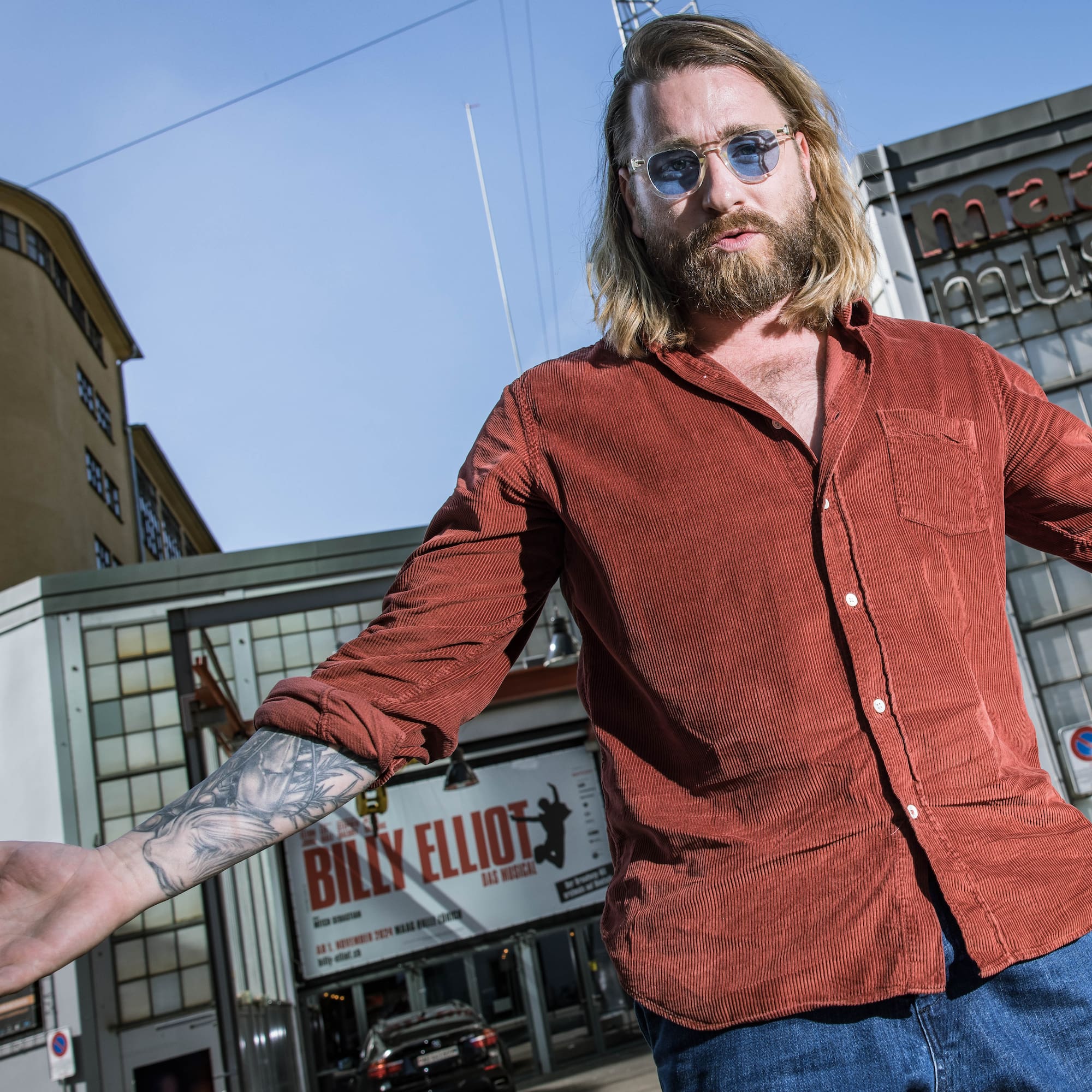
Baschi’s first tattoo was a griffin, a mythical creature that also connects to his name. He has said he got it at 18, when he wanted something bold and rebellious. It also became a tribute to his father, who had died a couple of years earlier, and includes his father’s initials.
That blend of teenage energy and grief makes the piece memorable. It wasn’t conceived as a traditional memorial; it started with the excitement of a first tattoo and took on a deeper family meaning.
The griffin can also read as a kind of self-portrait. It’s a fantastical creature that suggests strength and protection, while the initials anchor it to someone real. It’s a big image with a very personal reason behind it.
The microphone marks the moment music became serious
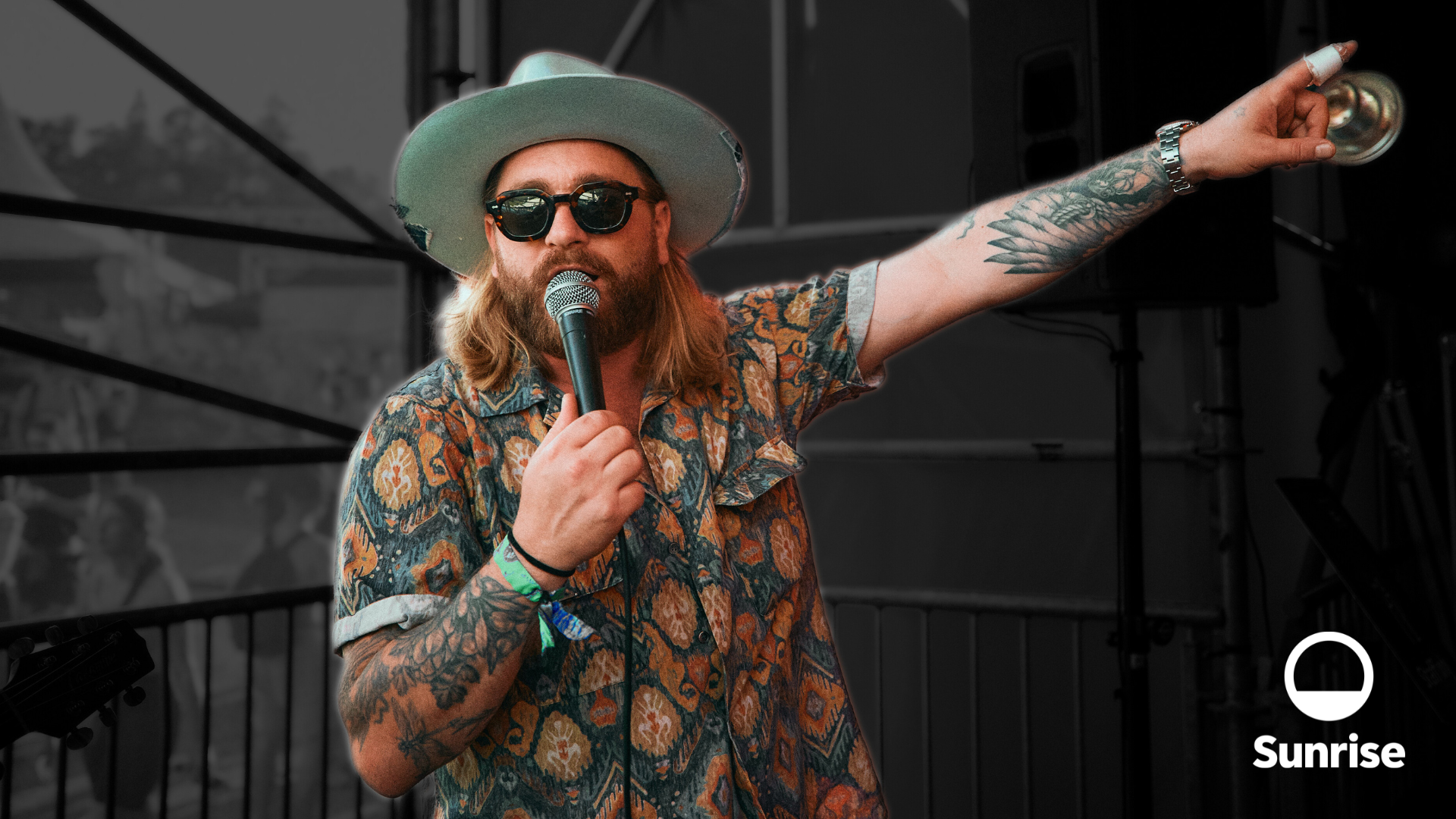
Another early tattoo is an old-school microphone. Baschi has said he was 18 or 19, had moved to Los Angeles, and was beginning to commit to singing when he spotted the design in an artist’s book. His girlfriend at the time suggested another tattoo, and he chose the microphone.
It’s a simple image, but the timing gives it more meaning. The microphone marks the point when music shifted from an interest to a direction. The griffin looks back toward family; the microphone looks ahead. It became a permanent reminder of his ambitions before his music career had fully taken off.
Microphones are easy-to-read symbols for musicians, but Baschi’s is tied to a specific moment: deciding whether he could build a life around singing. It captures that ambition before the records, stages, and years of touring arrived.
The Sly and the Family Stone lyrics stay close to his ribs
Baschi has a lyric tattoo on his ribs from Sly and the Family Stone’s “Everybody Is a Star.” It includes the words “I love you for who you are,” followed by the idea that you don’t have to become someone else to be loved. He has said the song’s honesty reached him while he was working at his aunt’s deli in Potrero Hill and listening closely to older records.
Rib tattoos can be difficult to sit through, and the placement gives this one a private feel. The lyric stays close to his body instead of being displayed for everyone to read. That suits it: it’s a thought he wanted to keep with him, not a slogan for a crowd.
He has admitted he might not choose the same tattoo today, while still calling the sentiment beautiful. That honesty makes it more interesting. A tattoo can preserve an earlier belief without freezing someone in time; this one records what Baschi needed to hear then.
“Only the Poets” connects the collection to his first album
Baschi has “Only the Poets” tattooed across his chest as a tribute to his first album and to James Baldwin. In a speech, Baldwin said, “Only the poets know the truth about us,” a line that stayed with Baschi long enough to become part of his body.
It’s one of his most visible music tattoos, but it means more than the album title. It brings together an early career milestone and a literary influence. The phrase can keep taking on meaning, whether it’s about songwriting, honesty, observation, or the challenge of making private feelings public.
Across his chest, it reads like a personal banner. It signals what kind of artist he wants to be without naming a genre. The words point less to fame than to his belief in what art can do. That idea can stay with him as his music and life move into new chapters.
The sailing ship is about an earlier life
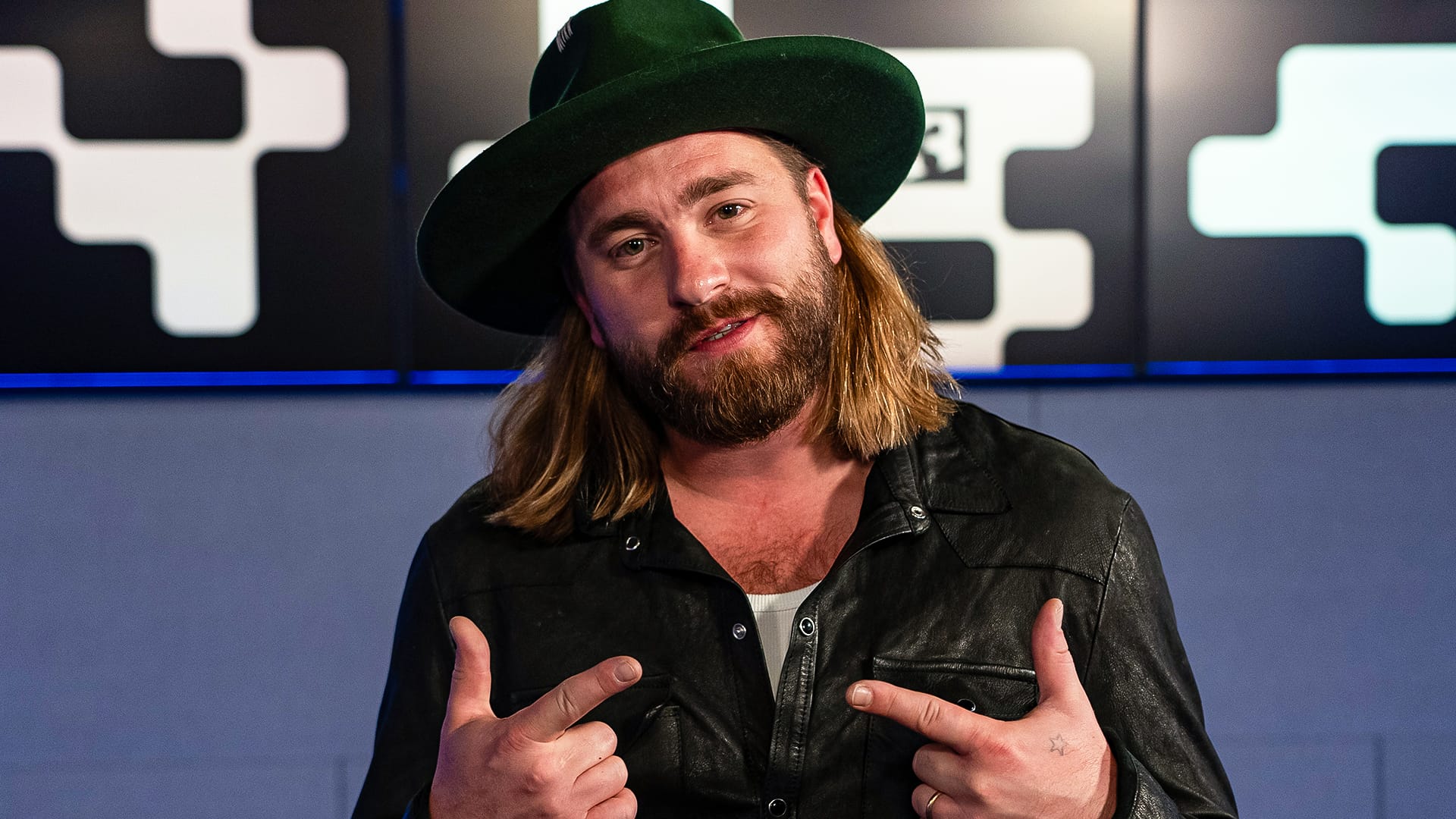
Baschi has a sailing ship on his forearm. Asked about it, he gave an unexpected answer: he said he had been a sailor in a previous life. Whether someone takes that literally, spiritually, or as part of his humour, the tattoo lets him talk about adventure and uncertainty.
A ship feels natural for a musician who moves between cities and stages. It suggests changing weather, a route you can’t fully control, and carrying on when the destination isn’t in sight. Baschi has linked it with adventure and life’s unpredictability, which is more useful than pretending the image has one fixed dictionary meaning.
The forearm placement means the ship can come up in everyday conversation. It shows when he rolls up a sleeve, reaches for a microphone, or gestures in an interview. Like the microphone, it belongs to a particular time but can gather new meaning as his life changes.
“Endstation” and “Glück” look toward the end of life

One of Baschi’s most striking ideas is the pair of words on his feet. “Endstation.” is on one foot and “Glück.” on the other. The first means “final stop” or “terminus”; the second means “luck” or “happiness.” Together, they make a message he wants to see at the end of his life.
He has said that, on his deathbed, he wants to look down and see that he reached the end and that things turned out well. It’s a rare tattoo that looks ahead to a final moment instead of marking something that has already happened.
Foot tattoos are easy to cover and easy to forget about until you need them. That feels intentional here. The words are for Baschi first, not for an audience, like a small signpost waiting at the bottom of his body.
His partner’s name is deliberately discreet

Baschi has a small “Alana” tattoo on his forearm for his wife, Alana Netzer. He has said he chose a discreet spot because it was meant for her, not as a large public declaration.
That contrasts with “Only the Poets.” One tattoo speaks across his chest; the other is easy to miss among the larger designs. Both are about relationships, but in different ways: the album phrase is a public statement about art, while the name is a private promise carried in plain sight.
Baschi has said the name tattoo matters because it’s permanent. That simple thought explains why a small piece can mean so much. It isn’t trying to compete with the larger work; it’s meant to stay close and personal.
Baschi’s collection is a timeline, not a matching set

Together, the tattoos form a loose timeline. The griffin brings him back to his father; the microphone marks his commitment to music. The Sly and the Family Stone lyric preserves a younger emotional truth. “Only the Poets” records his first album and connection to Baldwin. The ship speaks to adventure, while “Endstation” and “Glück” imagine the last thing he might see.
The pieces don’t have to match, and that’s part of their appeal. Some are large, some are discreet, and some came from family drawings rather than a professional portfolio. They look collected over time, not planned in one sitting.
That also helps explain why Baschi is thoughtful about meaning. He isn’t saying every tattoo has to be profound; he says each one should have a reason. Sometimes it’s grief, sometimes a song, a relationship, a joke about a past life, or a reminder of who he hoped to become.
His tattoos are personal without being precious. They can be sentimental and funny at once, bold onstage but intended for one person. That balance makes the collection worth following: every piece has a story, but they’re told in the way a real person might tell them.