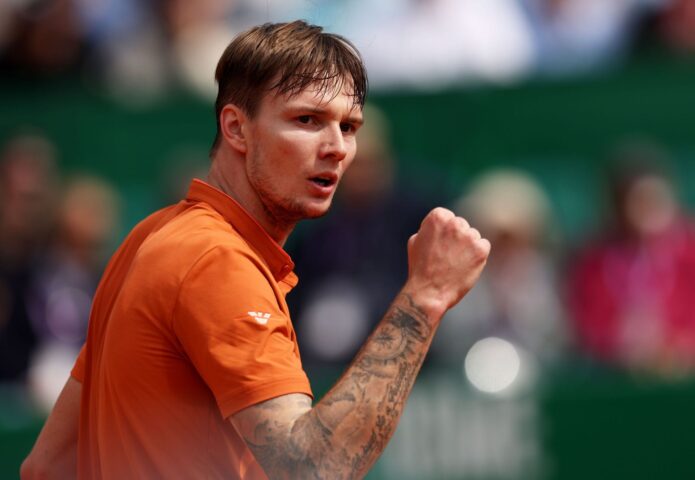
Alexander Bublik does not play tennis like someone determined to stay within the lines. The Kazakh star serves hard, tries shots other players might not attempt and seems comfortable when a match gets strange. His tattoos have a similar feel: bold, visible and tied to different moments rather than one polished theme.
Bublik has spoken openly about his ink. He says much of it was done between the ages of 16 and 20, and that he is probably finished adding to the collection. The tattoos are more than decoration; they remind him of who he was, what he felt and what he was working through at the time.
Here is a closer look at the designs that show up most clearly in match photos, from the long forearm quote to the Roman numerals and the skeleton he links to the demands of professional tennis.
The long forearm quote is one of Bublik’s clearest tattoos
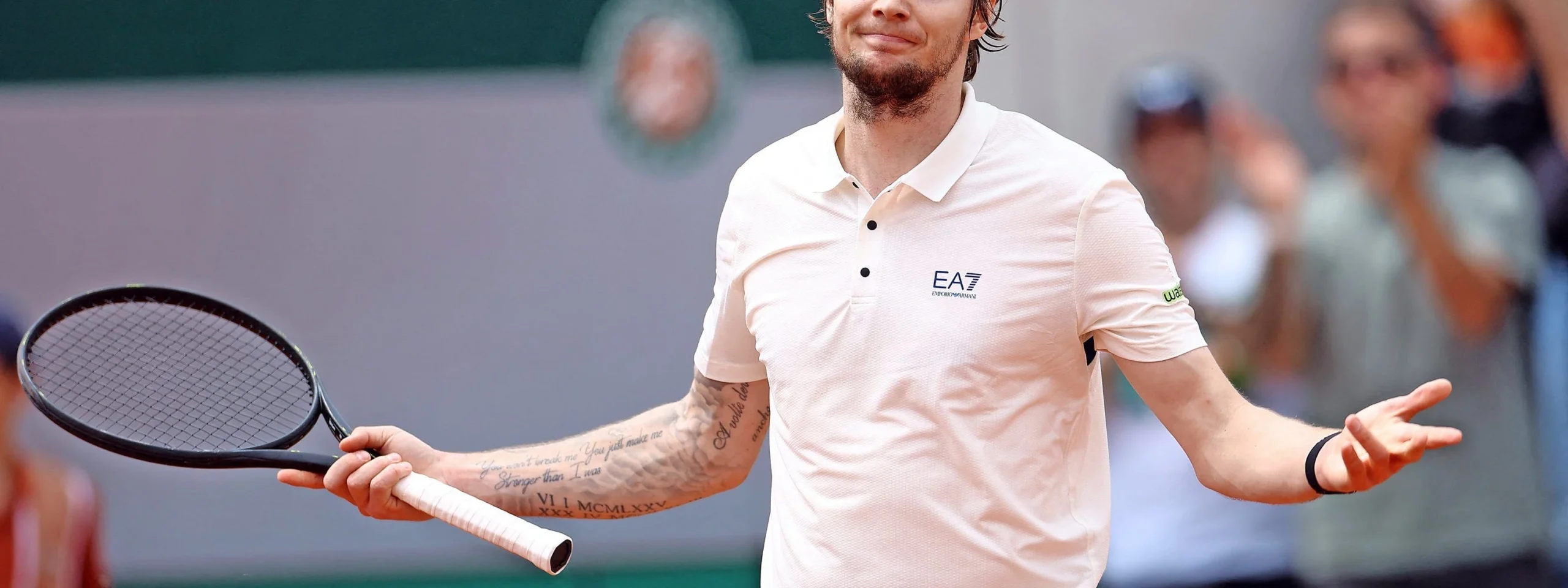
The tattoo that stands out in wide photos runs along Bublik’s right forearm. Several lines of writing include the phrase “You just make me stronger than I was,” visible in the clearest shots. It can be easier or harder to read depending on the light, angle and how far he extends his arm.
Bublik is rarely still on court. He is serving, raising his hands, celebrating or setting up one of his improvised shots. The lettering moves with him, so fans often catch part of the sentence rather than one flat block. The photo above shows the words clearly, while darker shading around them gives the forearm a fuller sleeve effect.
The quote fits the way Bublik talks about his career. He has had big wins, long losing runs, changes in ranking and plenty to say about how tiring the tour can be. The tattoo does not have to predict his results; it can be a private line that became public because he put it somewhere visible.
It also shows why the collection feels accumulated rather than planned as one project. The words are personal and readable, while the surrounding work is darker and more graphic.
Roman numerals cover the lower part of his forearm
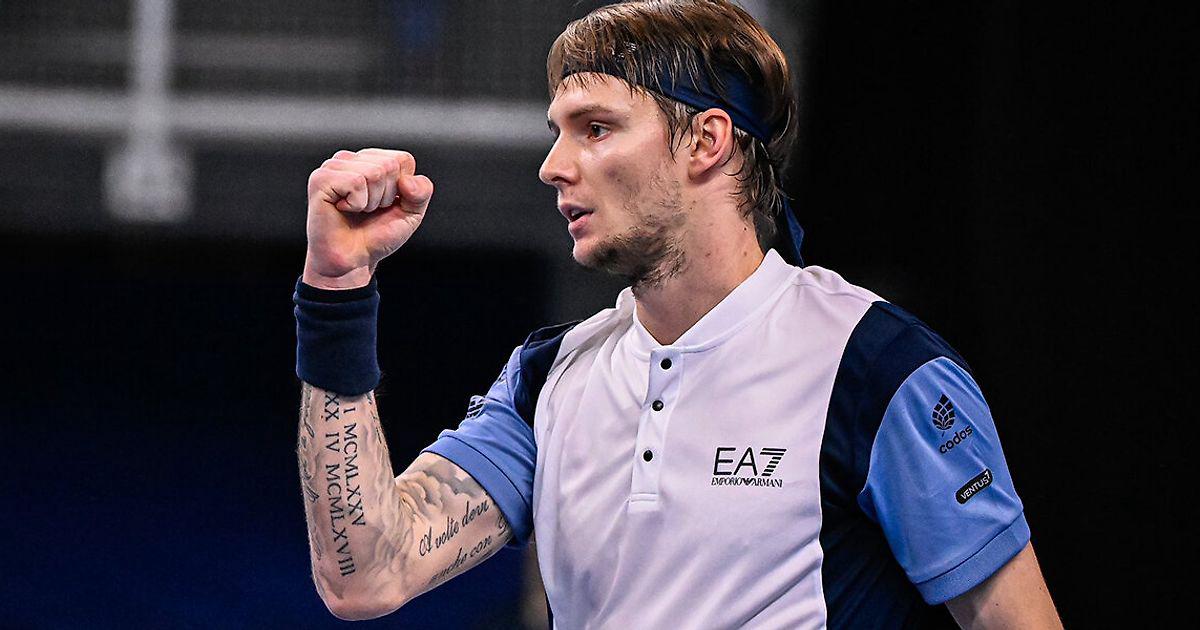
Rows of Roman numerals sit across the lower part of Bublik’s forearm near his wrist. They stand out when he raises his fist after a point. The lettering is clean and spaced out, giving this part of the sleeve a more structured feel than the softer script above it.
Several groupings are visible from different angles, including dates or date-like combinations. It is tempting to decode each line, but Bublik has not publicly explained them one by one. The safest description is that they belong to the personal side of the collection, rather than a sponsor or fashion choice.
The repeated marks give the forearm a strong visual rhythm. They contrast with the longer handwritten phrases beside them, so the sleeve remains readable despite all the different elements. The eye catches the numbers, then moves to the writing and shading around them.
Tennis keeps a player’s forearm in view during serves and fist pumps. Bublik’s numerals become part of those familiar gestures, almost like a signature that appears when he celebrates.
An Italian phrase runs through the sleeve
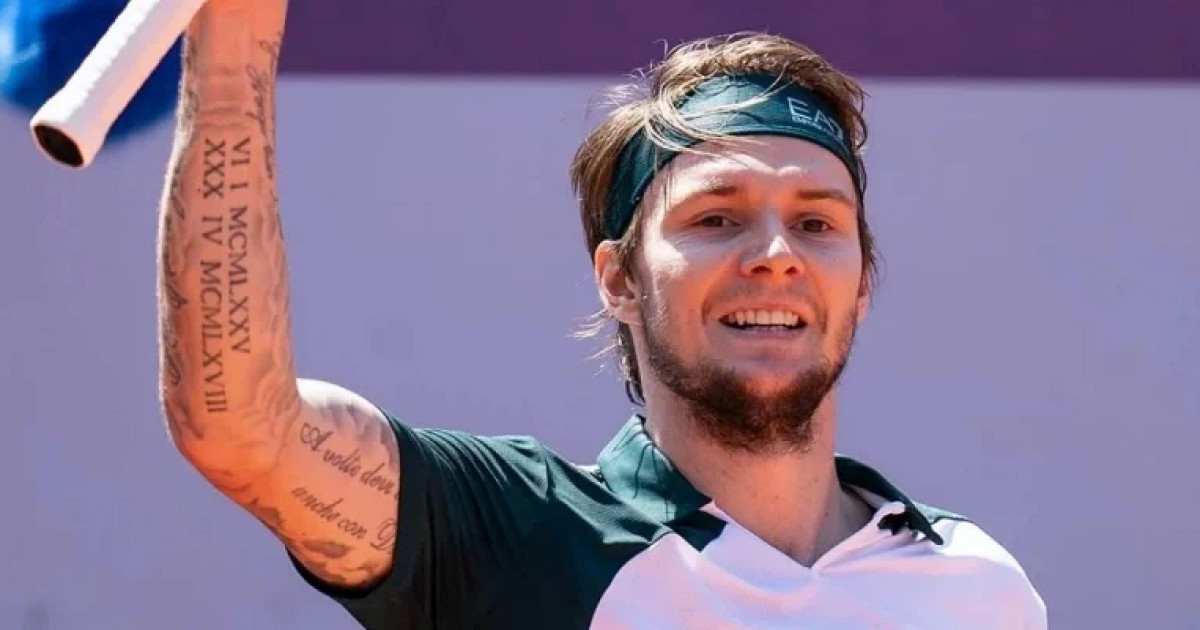
Closer court photos show another line of writing curving through the sleeve. The Italian phrase is usually read as “A volte dove andrà con Dio.” It sits beside the Roman numerals and has a different look from the longer quote: compact, curved and fitted around the other pieces.
Bublik has mentioned having Italian ink, and this line helps the sleeve feel personal rather than generic. It is not a sports slogan or equipment-themed design, but a phrase associated with a particular stretch of his life.
Tattoo collections often turn into visual timelines: one idea added beside another until the body holds a history that would be hard to plan as a single design. That seems to be the case here.
The script shifts along his arm when he serves or points toward the crowd. It is not hidden ink; the line is part of how the sleeve looks in motion.
The sleeve mixes lettering with darker shaded work
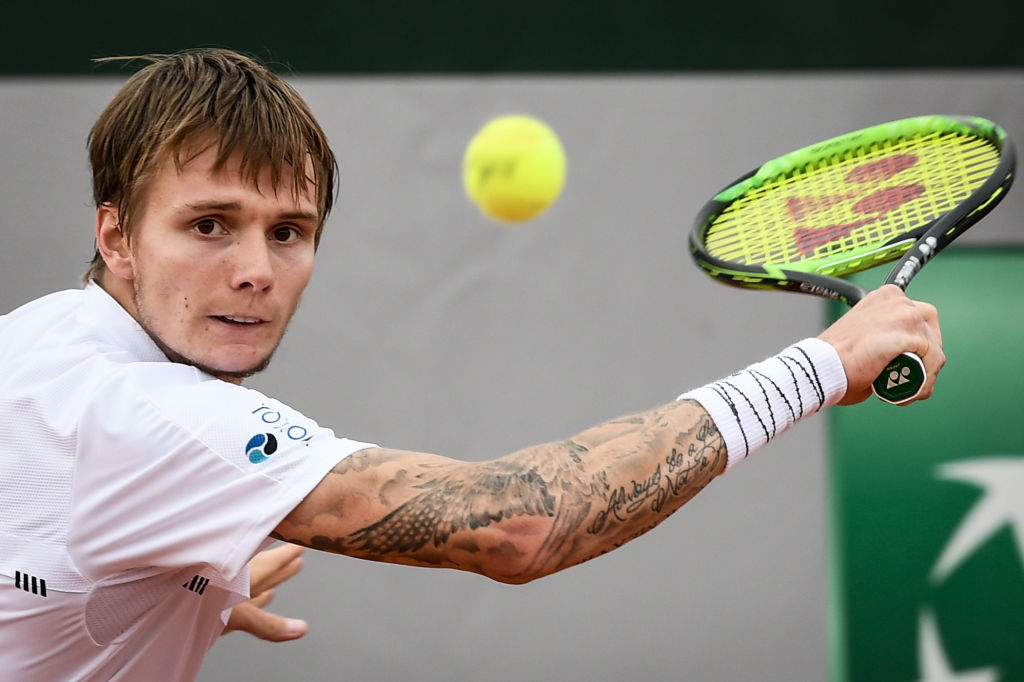
Bublik’s right arm is not all words and numbers. Dark shading, small figures and textured blackwork fill the spaces between the script. In action shots, some areas look like one dark panel; close-up photos reveal separate pieces sitting beside each other.
That patchwork quality suits a player known for changing direction at the last second. Solid black areas, fine lines and softer grey sections make the arm look different as the light changes.
The sleeve also shows how separate tattoos can build into a fuller look over time. Text, dates and images do not need to be added in one sitting, and the open spaces help keep the arm from becoming one solid wall of black.
Because Bublik plays in short sleeves, the work is visible without a special pose. It is part of his public image, even though each piece still feels like a private choice.
His forearm lettering feels more personal than decorative
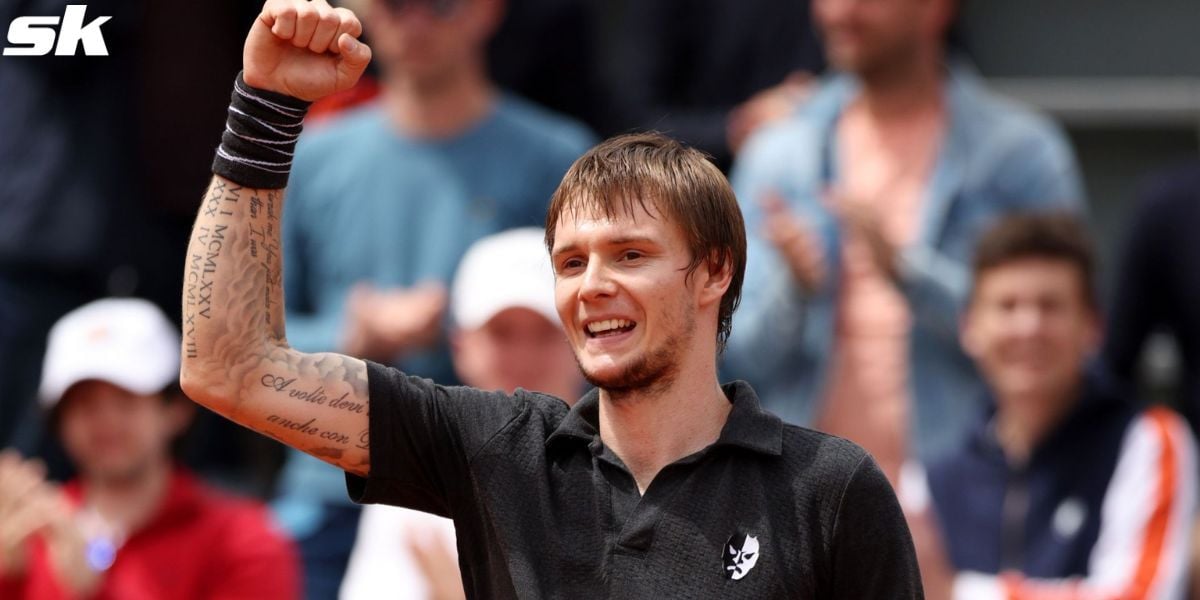
Some of the smaller words sit around the main quote. They are not always sharp enough to read in a broadcast photo, but the placement is clear: script runs along both the inner and outer forearm, with different lettering styles close together.
Bublik has said much of his ink came when he was a teenager or in his early twenties, while emotions ran high and life changed quickly. He described the tattoos as reminders of difficult and happy periods alike. He does not treat them as mistakes he needs to erase just because he might choose differently now.
That is a forgiving way to look at old tattoos. The pieces belong to the version of Bublik who chose them, and he respects that person even as he changes.
The small writing follows the same idea. It does not have to be famous or instantly legible; it can mark a feeling that mattered enough to keep.
The sleeve reflects a career built on ups and downs
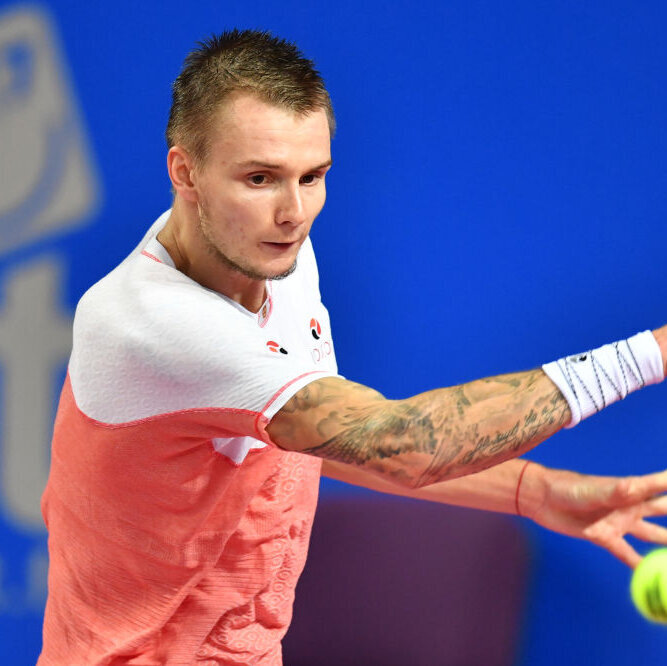
Bublik’s tennis career has not moved in a straight line. He has reached the top 20, slipped down the rankings, won major matches, lost early and kept showing up with the same unpredictable style. Tennis.com noted that many tattoos came from difficult or happy moments in his younger years, making the sleeve feel like a record of change.
The quote, dates and denser artwork all deal with time in different ways. The numerals mark something specific; the words hold on to a thought; the shading shows how the collection has grown around earlier decisions.
Bublik has said tennis does not determine his value as a person. Whether he is ranked high or low, he is still the same family member and friend. The tattoos belong to his life, but they are not a scoreboard. They hold memories without having to prove anything.
That is what makes the collection more interesting than a generic athlete tattoo gallery. The choices feel emotional, a little messy and completely his own.
The skeleton tattoo connects to what tennis demands
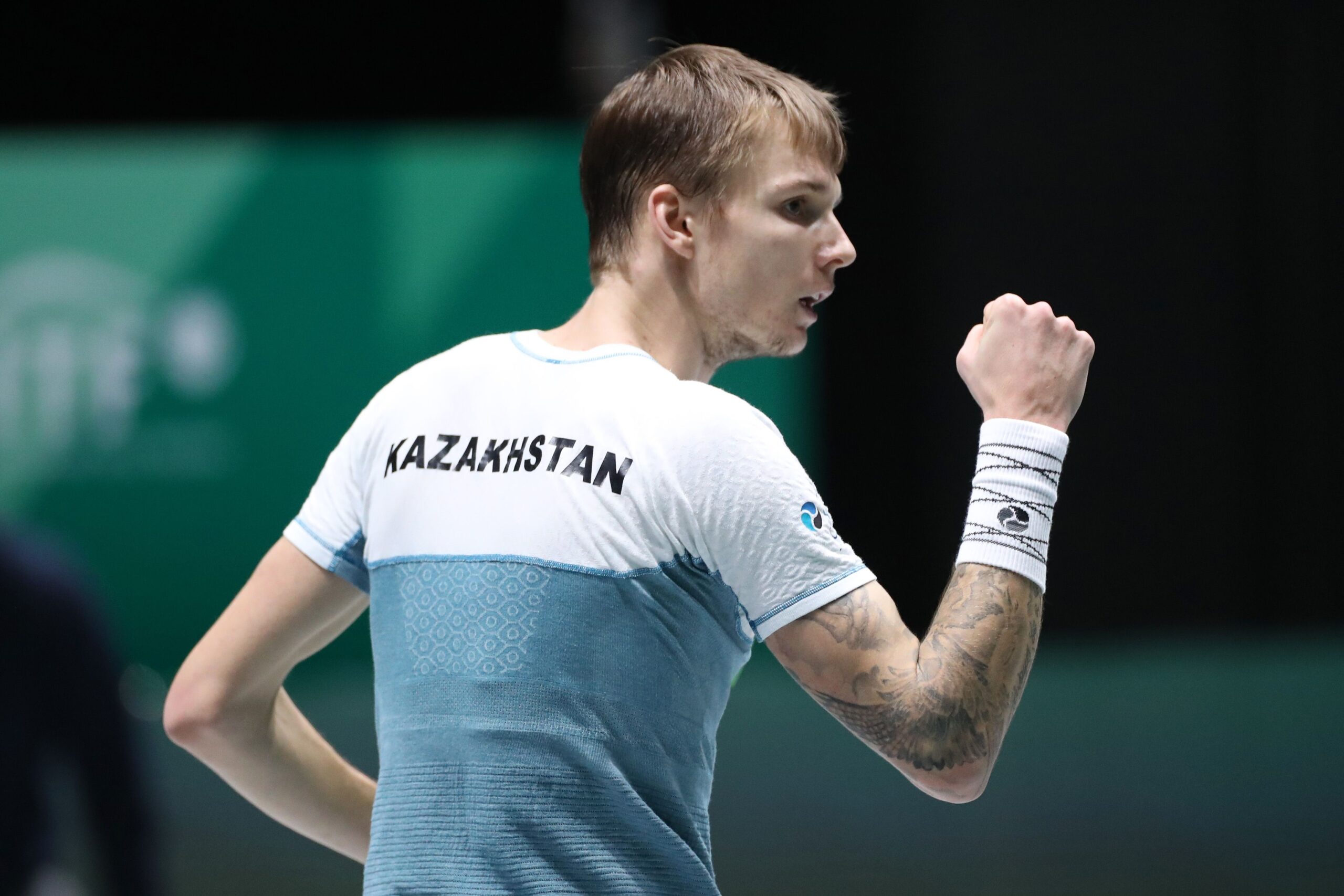
One of the clearest meanings Bublik has attached to his tattoos is the skeleton, which he said represents what he has to endure in tennis. It gives the collection a darker edge and shows why he sees the ink as more than decoration.
Professional tennis means constant travel, playing through fatigue, managing rankings and enduring long stretches of uncertainty. Bublik often talks about the grind with a mix of candour and sarcasm. The skeleton works as a reminder of the pressure and the parts of the sport that wear a player down.
It fits the rest of the sleeve, too. The arm is not only cheerful messages or neat dates; there is room for the difficult parts. Bublik’s public personality can be funny and relaxed, while his career still asks for discipline.
One of the clearest meanings attached to Bublik’s tattoos is the skeleton, one of the designs he has explained. Other images can matter without a public explanation, but this is a piece where he has given fans a clear way into the story.
Why Bublik says he is probably done getting tattoos
In a 2025 Tennis.com interview, Bublik said he thought a chapter of his life had ended and that he was probably done getting tattoos. He tied the collection to his 16-to-20-year-old self: someone who went through hard and happy periods while making permanent choices as life changed.
That does not mean he dislikes the tattoos. He said he has to respect the person he was when he got them. He might make different choices now, but those pieces still belong to his history.
It is a thoughtful way to stop adding new ink. Rather than chasing a bigger sleeve or the next trend, Bublik seems content to let the existing work stand and age with him.
For fans, that shifts the focus to the tattoos already there and the moments they hold, rather than guessing about his next addition. The collection belongs to an unusual athlete who wears it in full view whenever he steps onto court.
Watch Bublik talk about his tattoos and the ranking rollercoaster in this interview:
Alexander Bublik’s tattoos are a lot like his tennis: emotional, unpredictable, and completely his own.