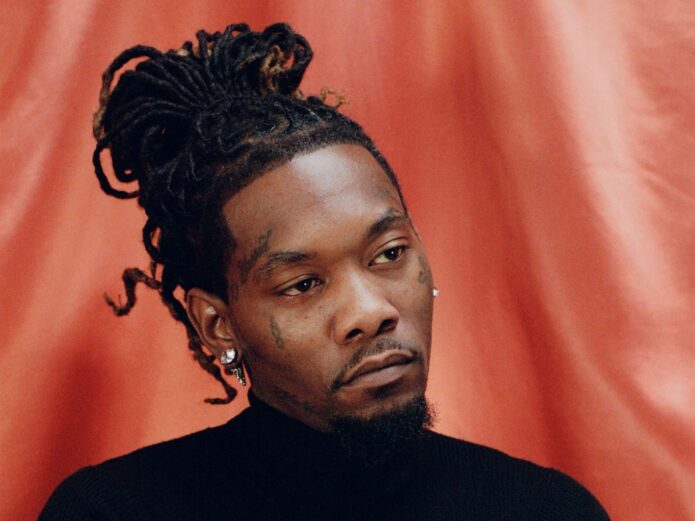
Offset’s tattoos are documented through a particularly revealing GQ Tattoo Tour in which he discusses getting face tattoos young, a large Takeoff portrait and portraits of his children. He says he began going heavily into tattoos at 15 and now has ten face tattoos, a choice his mother disliked because she thought his face was already beautiful. The collection extends across his back, legs, arms and hands, but the stories are clearest where Offset names a person or explains the timing.
The Takeoff portrait is the emotional centre of Offset’s collection
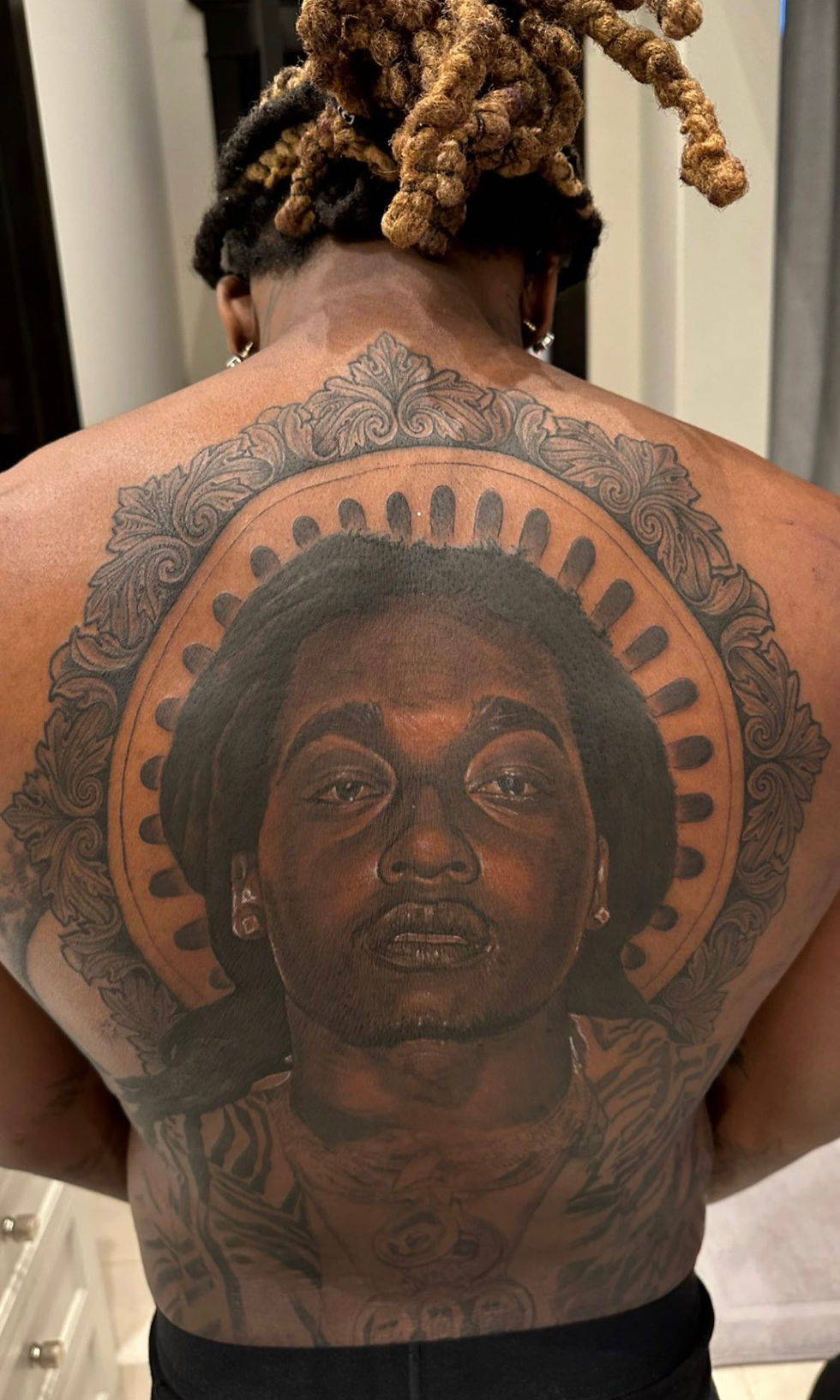
Offset says the Takeoff piece on his back took eight hours in one session. The portrait is a tribute to his late best friend and former collaborator, making it one of the strongest entries in the public tattoo record. The time spent on the piece also explains its scale: this is a large back portrait, not a small symbol that can be understood from a distant event photograph.
The source supports the subject and the production detail. It does not require the article to invent a private message beyond the tribute itself. A photograph should show the portrait clearly enough for readers to understand the placement, while Offset’s explanation supplies the relationship and grief behind it.
Why the back portrait needs dated images
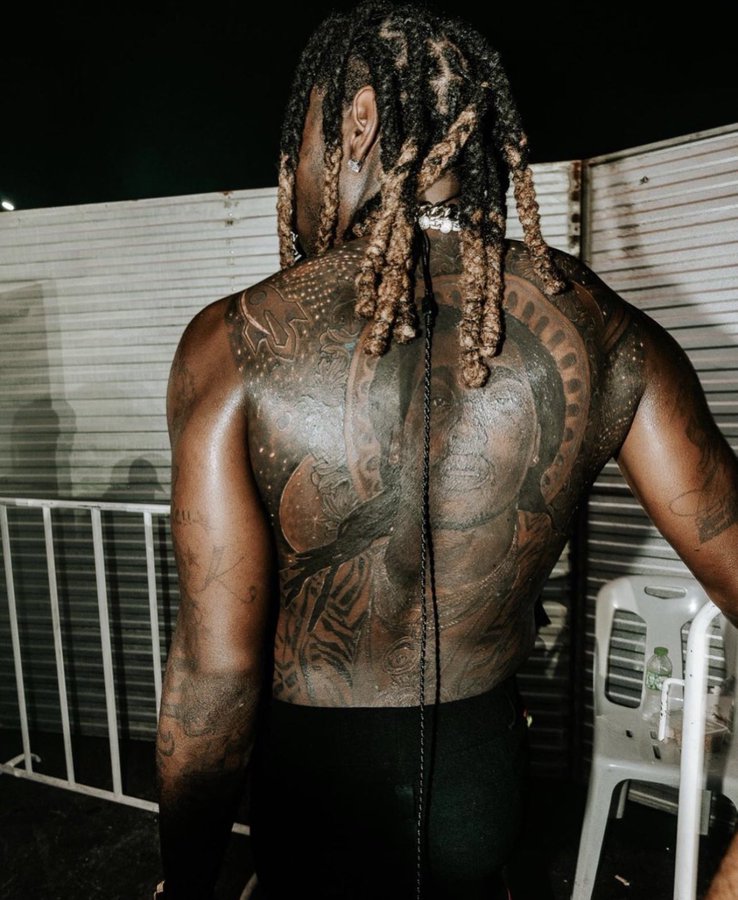
Back tattoos are difficult to document because they are hidden by clothing and rarely face the camera during ordinary interviews. A stage image may show only one shoulder, while a shirtless frame can reveal the full composition. The GQ episode is valuable because it intentionally gives the design attention.
Readers comparing older and newer photographs should also allow for lighting and camera distance. A dark portrait can lose detail in a compressed image, and a later photograph may show changes in the surrounding work. The central fact remains the portrait of Takeoff and the eight-hour session Offset describes.
Offset’s ten face tattoos developed young
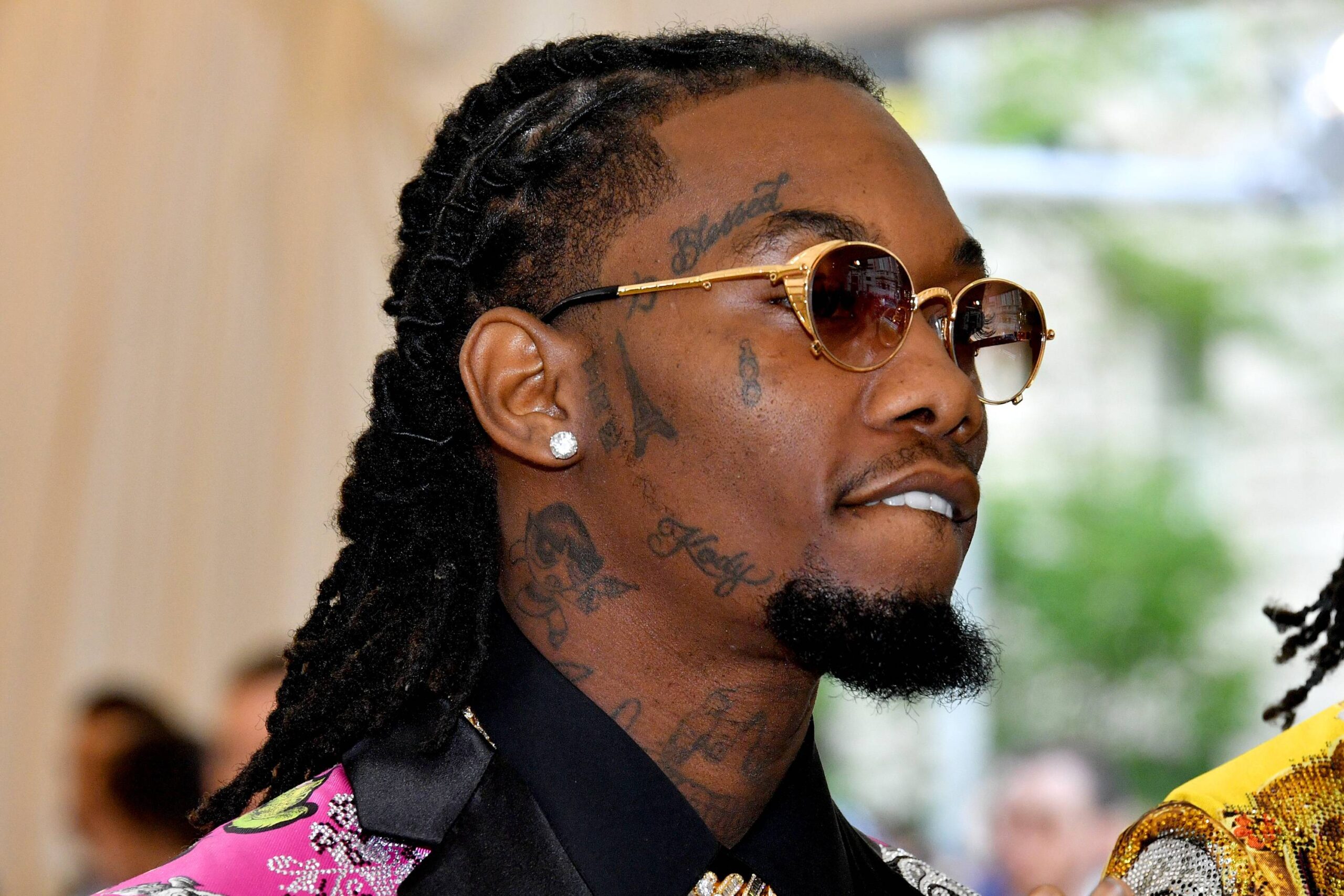
Offset says he began going heavily into tattoos at 15 and describes having ten face tattoos. The number gives the collection a useful scale, though it does not serve as a permanent official count for every later moment. Face tattoos can be added, covered or changed, so the article should attach the number to the interview period rather than claiming that it can never change.
His mother’s reaction is part of the story. Offset recalls that she slapped him when he got face tattoos and told him his face was too beautiful. That anecdote explains the family tension around the decision without requiring a judgement about face tattoos themselves. It also shows that the facial work was a deliberate step in his public appearance.
What the face tattoos can and cannot tell us
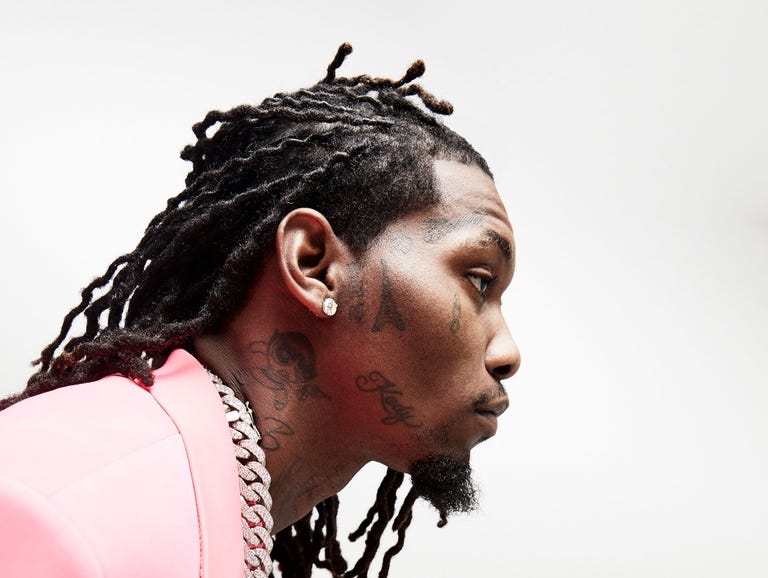
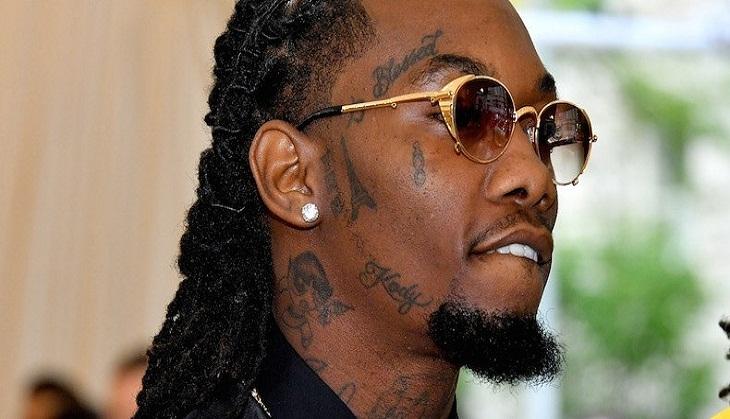
Close photographs can establish that the face carries several designs, but small marks near the eyes, cheeks and hairline are easy to misread. A tattoo list should use names Offset actually gives and describe other marks conservatively. The number ten is useful context; it is not permission to assign a meaning to every symbol visible in a soft image.
Face tattoos also change the way the collection is photographed. A head turn can reveal one cheek while hiding the other, and makeup, facial hair or stage lighting can obscure lines. A front-facing interview and a profile image answer different questions. The best account uses both where possible.
Portraits of his children
Offset also says he has his children’s faces on the backs of his legs. Those portraits belong in a family-tribute section separate from the Takeoff memorial. Both are portrait tattoos, but the relationships and placements are different. The children’s portraits are described by Offset as family records, while the Takeoff tattoo honours a friend and collaborator.
Leg portraits are easy to miss in ordinary photography because trousers cover them. A close source image is stronger than a red-carpet frame where only the upper body is visible. Where the children’s individual portraits cannot be seen clearly, the article should retain Offset’s statement and avoid claiming details that the image does not establish.
Arm and hand work fills the wider collection
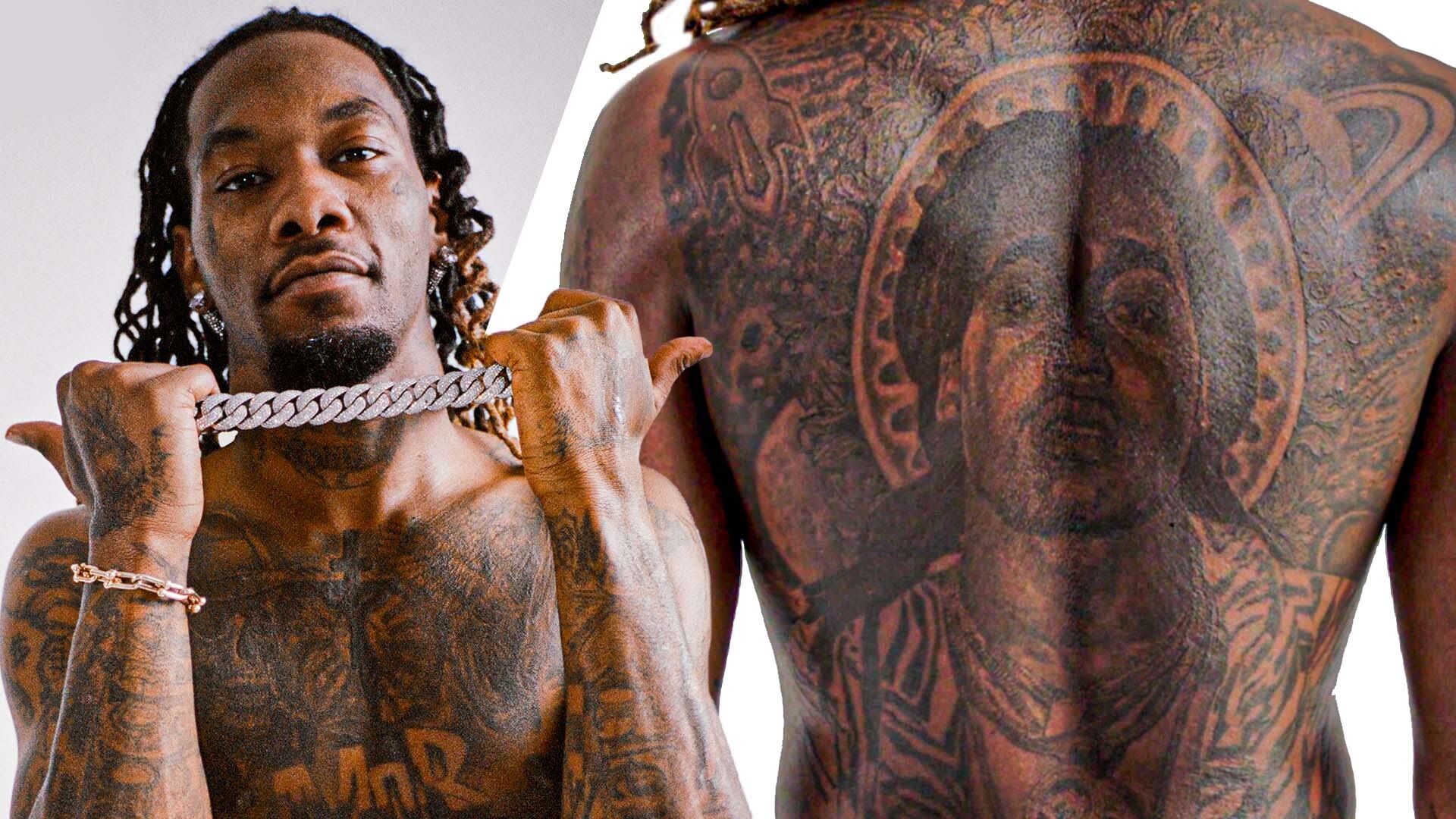
Offset’s arms and hands carry additional work that appears in the Tattoo Tour and public photographs. The smaller pieces vary in legibility. Some can be named from a direct explanation, while others are best recorded as visible ink until a clearer source supplies a design name or meaning.
This broader material matters because the collection is not limited to the face and back. At the same time, an article should avoid treating every dark shape as a separate tattoo. The useful inventory has four anchors: the Takeoff portrait, the face-tattoo period, the children’s portraits and the wider arm and hand work.
How the collection changed over time
Offset’s tattoo history is a timeline rather than one finished image. He started young, added facial work and later developed large portraits and family pieces. A photograph from one period may show open skin that is covered in a later frame. A missing design from one image may simply be hidden by clothing or angle.
Dates are especially important with face tattoos because the public record may preserve an earlier count. The safest wording identifies what Offset said in the GQ episode and treats later images as evidence of additions or changes only when they are clear. This keeps the article current without pretending to know every private modification.
What Offset’s Tattoo Tour confirms
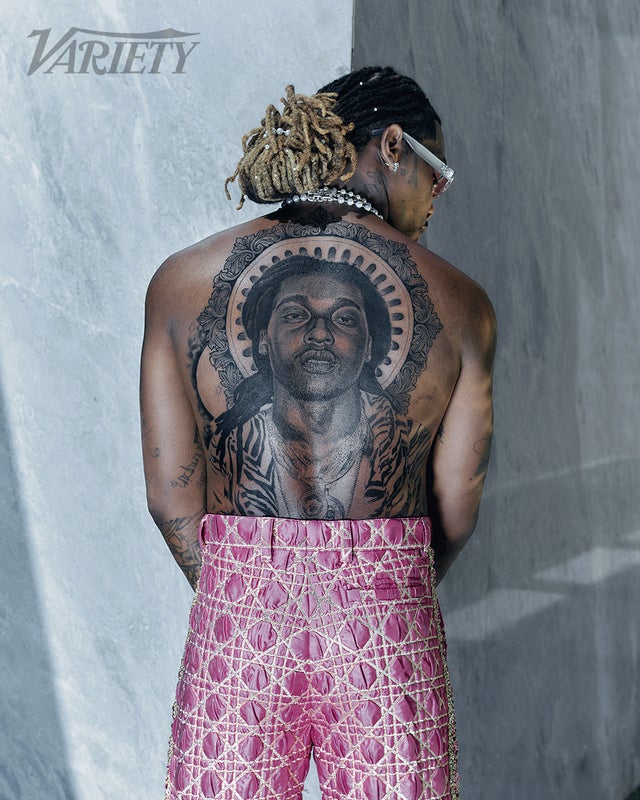
The strongest documented entries are the eight-hour Takeoff portrait on the back, the face-tattoo period that Offset says began at 15, portraits of his children on the backs of his legs and a wider group of arm and hand tattoos. These pieces connect friendship, family and public identity. Smaller designs require closer photographs or a direct explanation before they can be named confidently.
Readers comparing images should start with the Takeoff portrait, then examine face photographs from the relevant period and look for clear leg or arm images. Each area has a different photographic problem. The back needs a full view, the face needs multiple angles and the legs need clothing that does not hide the designs.
Offset’s tattoos therefore document a fast-growing collection built around loyalty, family and a willingness to make body art part of his public identity. The Takeoff portrait gives the collection its emotional centre. The face tattoos record an early decision that changed how he was seen. The children’s portraits and remaining arm work complete a record that is personal even where every design is not publicly explained.