Victoria De Angelis has never treated tattoos like a neat checklist. The Måneskin bassist’s ink appears in small flashes on her arms, ankle, spine and behind the ear, and the designs feel connected to the same mix of playfulness and attitude she brings to the stage. There are matching pieces shared with bandmates, a cross running down the spine, and newer tattoos that fans have followed through close-up photographs.
There is not a reliable public explanation for every mark, so it is worth keeping the confirmed details separate from fan guesses. What can be documented is still enough to show a clear pattern: Victoria’s tattoos are often compact, personal and easy to miss until she turns or the camera catches the right angle.
Here is a careful look at the pieces that have been identified in public tattoo coverage and fan documentation.
The MÅ tattoo is a matching Måneskin mark
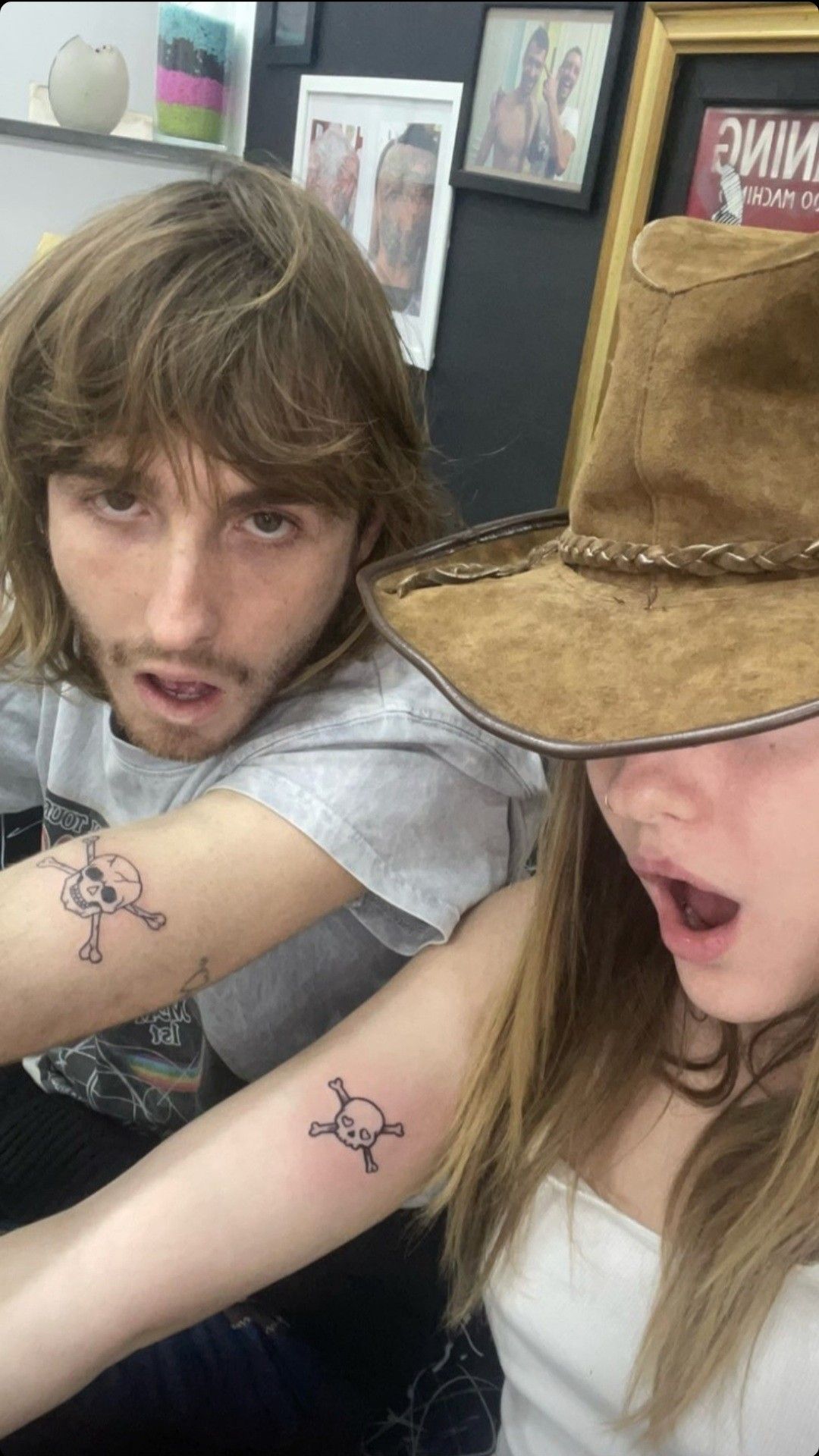
One of Victoria’s best-documented tattoos is a small “MÅ” matching tattoo connected with Måneskin. Public fan documentation places it on her right ankle and notes that it was made as a matching design with members of the band. The mark is simple, but the connection gives it more weight than a random pair of letters.
The spelling matters because the symbol is not just a generic monogram. It points back to the group and the shared identity the members built before the band became an international touring act. A tiny ankle tattoo also makes sense for a matching piece: it can stay fairly discreet, but it is still there whenever she looks down.
Matching tattoos are often treated as proof of friendship, but that can be too broad a reading. In Victoria’s case, the strongest confirmed point is the connection to her bandmates. Anything more specific about the moment or the private meaning should be treated as unconfirmed. The small scale is part of the charm. The tattoo does not need to dominate her body to mark a relationship that has shaped her life.
An arrow through a heart links her to the band
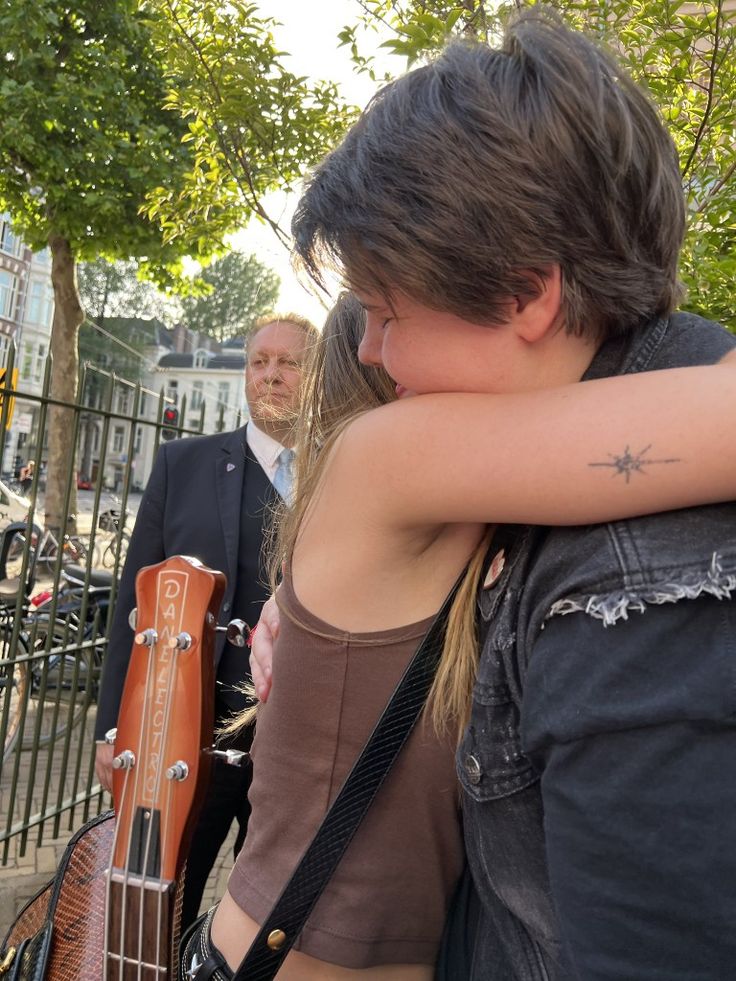
A second matching tattoo is described as an arrow heart on Victoria’s right arm. The design is exactly the kind of compact symbol that can work as both a personal mark and a recognisable image in photographs. It is a heart interrupted by an arrow, a familiar shape that gains a different feel when shared between bandmates.
Some public posts place the tattoo near the arm or wrist area, while fan accounts have focused on how the members’ versions relate to one another. Because the available images are not always taken from the same angle, it is safer to describe the design and matching connection than to pretend every close detail is certain.
Visually, the arrow-heart piece balances the MÅ tattoo. One is lettering tied directly to the band name; the other is an image that suggests affection, loyalty or a shared joke without spelling out the story. Together they make the matching idea feel personal rather than promotional.
There is also something very Victoria-like about choosing an uncomplicated symbol and wearing it with a lot of confidence. Small ink can still carry a whole era of someone’s life.
The cross down her spine is one of the clearest large designs

Another widely shared design is an elegant cross tattoo along the spine. Compared with the matching ankle and arm pieces, this one has a stronger vertical presence. The spine gives the tattoo a natural line to follow, so even a relatively simple shape can look striking when it is photographed from behind.
The word “cross” describes the visible design, but the meaning has not been clearly explained in a source that can be treated as definitive. It would be easy to assign a religious or spiritual interpretation, yet that would go beyond what has been documented. The responsible description is simply that it is a cross placed down the back, with a clean, elongated look.
Placement does tell us something about the visual choice. A spine tattoo is not constantly on display in ordinary clothes. It appears when Victoria wears an open-back outfit, turns away from the camera or shares a more deliberate photograph. That makes it feel different from the small hand or arm marks that can be seen during a performance.
The design also adds a quieter note to a collection otherwise associated with rock styling, stage energy and bold clothing. It is elegant without looking overly formal. That contrast is one reason fans return to the image whenever new photographs show the back piece more clearly.
The behind-ear tattoo stays easy to miss
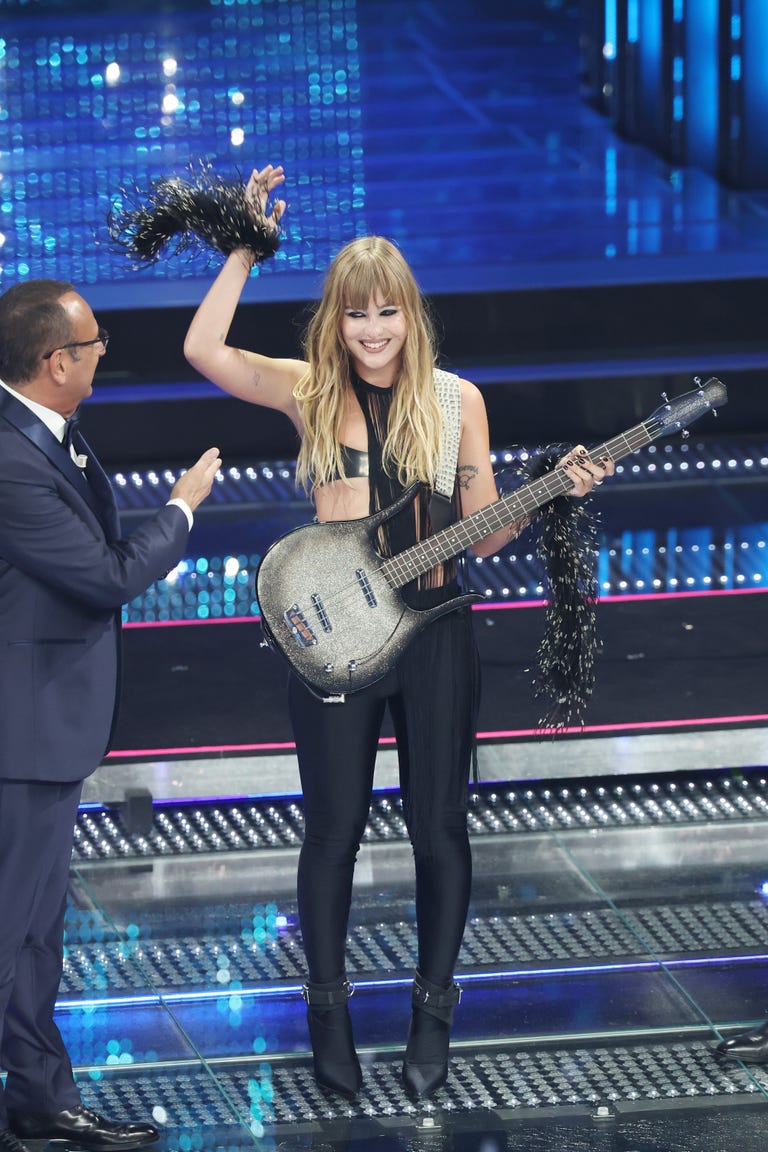
Victoria has also been photographed with a small tattoo near or behind the ear. It is a placement that naturally disappears when the hair falls forward, which explains why it has produced more close-up discussion than clear public explanation. The tattoo is visible in selected portraits and fan-circulated images, but the exact design and origin are not consistently described.
Behind-ear tattoos have a different rhythm from a back or spine piece. They are close to the face, but they do not announce themselves immediately. The wearer can reveal them by moving the hair or turning the head, then hide them again without changing an outfit. That seems to fit Victoria’s wider approach to ink: the tattoos can be expressive without needing to become a full costume.
It is important not to treat every Pinterest caption as a confirmed meaning. The safest inventory is that she has a small behind-ear mark documented in photographs, while the story attached to it remains unclear. That is not a weakness in the article. It is simply a better account of what the public record can support.
A newer tattoo appears in full-body and fashion photographs

More recent photographs have shown another tattoo in a lower or intimate placement. The available coverage is visual rather than explanatory: the design can be seen in a full-body image, but there is no dependable public statement from Victoria spelling out what it means or when it was made.
That kind of tattoo can easily be misunderstood because the image depends on lighting, angle and the quality of the original photograph. A mark that looks like one shape in a compressed social-media image may be harder to identify when the photograph is enlarged. For that reason, the useful fact is the existence of the visible tattoo, not a made-up description of every line.
It also shows how Victoria’s collection continues to change. The MÅ and arrow-heart pieces are tied to the early shared history of Måneskin, while the newer work belongs to a period when she has a much larger public life outside the band as well. The tattoos do not need a single theme to sit together.
Some tattoos are stories. Some are just private decisions that happen to be photographed.
What the collection says without overexplaining it

Victoria De Angelis’s documented tattoos are a good reminder that a collection does not have to cover every inch of skin to feel distinctive. The pieces that can be identified publicly are spread across different kinds of placement: a matching ankle mark, a small arm symbol, a spine design, a behind-ear tattoo and a newer lower-body tattoo seen in later photography.
The matching designs are the clearest link to Måneskin. The MÅ lettering and arrow-heart symbol are connected with the band members, but they do not turn her body into a piece of merchandise. They work because they are small and personal. The cross on the spine creates a more dramatic line, while the harder-to-see tattoos keep the collection from becoming predictable.
It is tempting to invent a complete biography around every tattoo. That usually makes tattoo writing less accurate, not more interesting. The better story is already there: Victoria has chosen a mixture of shared symbols, elegant placement and newer designs that the public is still trying to identify.
Her tattoos feel casual, close to the body and deliberately hard to summarise. That suits a musician whose public image has always mixed sharp styling with a sense of freedom. Some marks connect her to the people she started with. Others simply belong to Victoria.
For a broader look at Victoria and her bandmates, watch this Måneskin interview:
There is a useful difference between visibility and importance in this collection. The spine cross is easier to recognise in a styled photograph, while the MÅ letters may look almost meaningless to someone who does not know the band. The behind-ear tattoo can disappear entirely depending on her hair. That does not make one piece more serious than another; it only shows how tattoos can occupy different parts of a person’s life.
For now, the strongest inventory stays modest and evidence-based. Victoria’s public tattoo record includes matching Måneskin marks, the spine cross and newer photographed pieces, while the meanings of several designs remain hers to explain if she ever chooses to. Not every mystery needs an answer added from the outside.