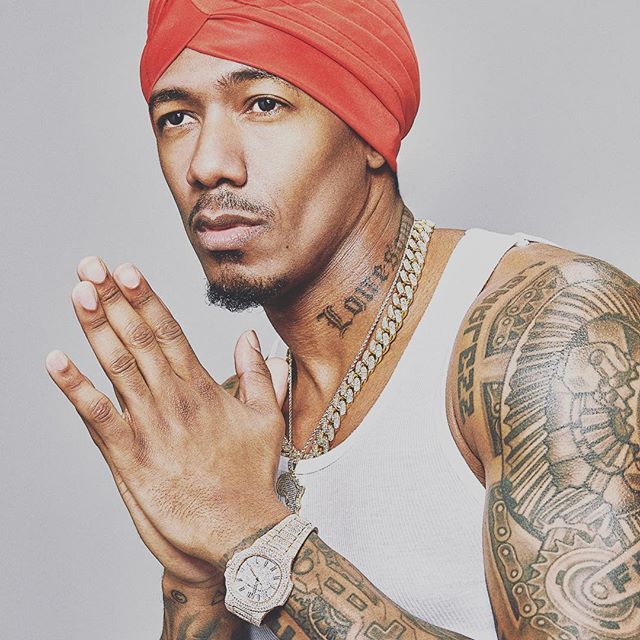
Nick Cannon’s tattoos have changed as his life has changed. What started with a famous name across his back later became a large cover-up, while newer work on his chest and neck turned into something closer to an autobiography. He has described his body as covered from the neck down, and the collection backs that up: there is visible ink on his chest, shoulders, back, arms, hands and neck.
That makes Cannon’s collection interesting for a simple reason. It isn’t frozen in one era. The tattoos show relationships, family, faith, ambition and the passage of time. Some of the older pieces are bold and easy to spot. Others are tucked into a bigger composition, especially the work he had done at Inked NYC over two days with artists Maria Garza and Sherri Austria-Portela.
Here’s what can be identified from Cannon’s tattoo interviews and the clearest available photographs, with the focus kept on documented designs rather than guesses about every small mark.
The compass sits at the centre of his chest
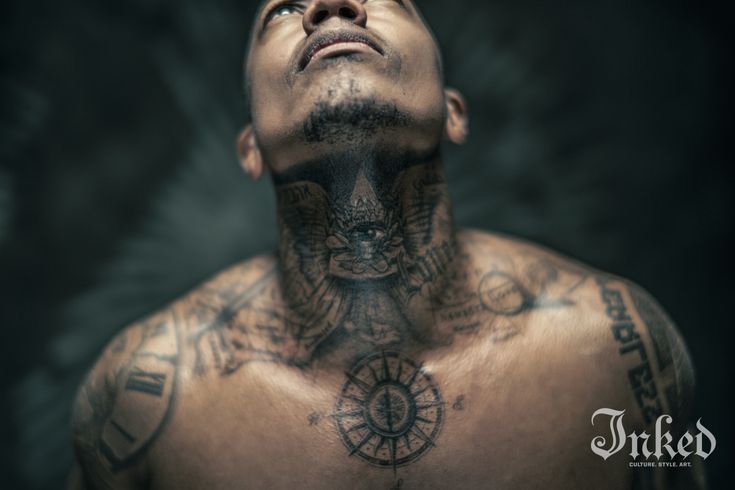
The easiest piece to pick out is the compass tattoo on Cannon’s chest. It sits high on the torso and acts as the centre point for a much larger arrangement of ink. The design has a round face with directional points, making it look like an old navigation instrument rather than a tiny minimalist compass.
Cannon has explained that the compass connects to his personal sense of direction. The idea isn’t hard to understand in the context of his career. He has moved between music, television, comedy, film, radio and business, so the image works as a reminder to keep moving with purpose even when the route changes.
The placement matters too. A compass over the chest is more intimate than one on the forearm. It sits close to the heart and becomes the visual anchor for the tattoos around it. In the close-up photographs, the compass is surrounded by heavy black-and-grey work on the upper body, so it reads as part of a map rather than a stand-alone travel symbol.
It is the kind of tattoo that makes more sense as a centrepiece than as decoration.
The neck and chest piece became an autobiography

The compass was part of a larger session at Inked NYC, where Cannon spent two days getting his neck and chest worked on. The artists, Maria Garza and Sherri Austria-Portela, built a piece that was described as spanning several chapters of his life. It is not just one symbol placed in isolation. It is a composition that joins the throat, neck, upper chest and surrounding shoulders.
Cannon has described the new tattoo as autobiographical. That explains why the design feels dense in photographs. There are layered shapes, lettering and symbolic details around the central compass, with the neck acting as an important transition between his face and torso. The work gives the upper body a more finished look than the earlier scattered pieces.
Large chest tattoos can be difficult to read from a single image because chains, clothing and posture get in the way. The close Inked portrait helps because it shows how the compass sits beneath the neck work and how the side pieces stretch toward the shoulders. The full meaning belongs to Cannon, but the public explanation is clear enough: this was meant to tell a story about his life.
The old Mariah tattoo became a major cover-up
One of the biggest changes in Cannon’s collection happened on his back. His first major relationship tattoo was Mariah Carey’s name, written across the upper back during their marriage. After the relationship ended, he covered that lettering with a much larger religious design rather than leaving the old name visible.
The replacement is generally described as a crucifix with wings. Photographs show the design spreading across the shoulders and upper back, giving the cover-up a much heavier presence than the original lettering. A piece that once pointed directly to one person became a statement about faith and a different stage of Cannon’s life.
Cover-ups are technically demanding because the new design has to work with the old lines underneath it. The dark areas and strong shapes in the crucifix design make sense for that job. It is also why the back piece looks so large in photographs: it has to cover a wide name tattoo and still read as a complete image from a distance.
The change is more than a celebrity breakup detail. It shows how tattoo meaning can move over time. The skin stays permanent, but the story attached to it can change completely.
His arms are packed with layered sleeve work
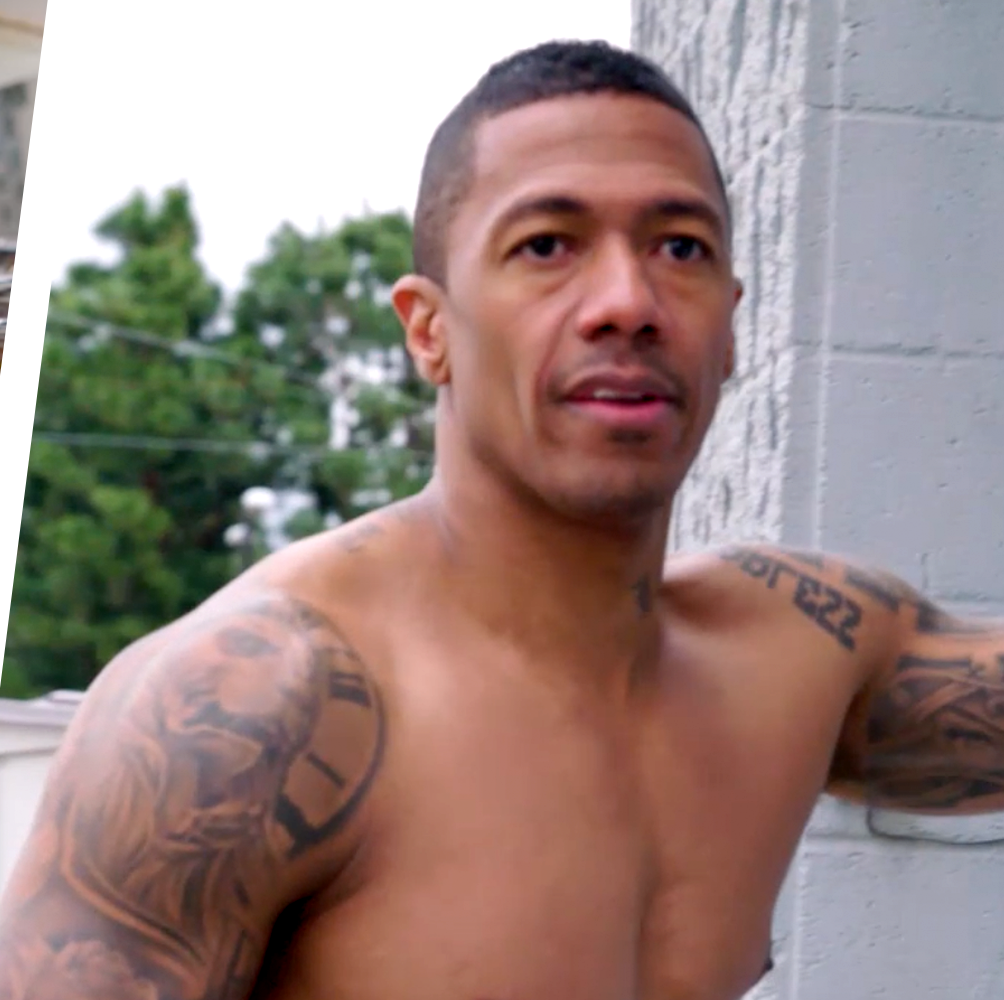
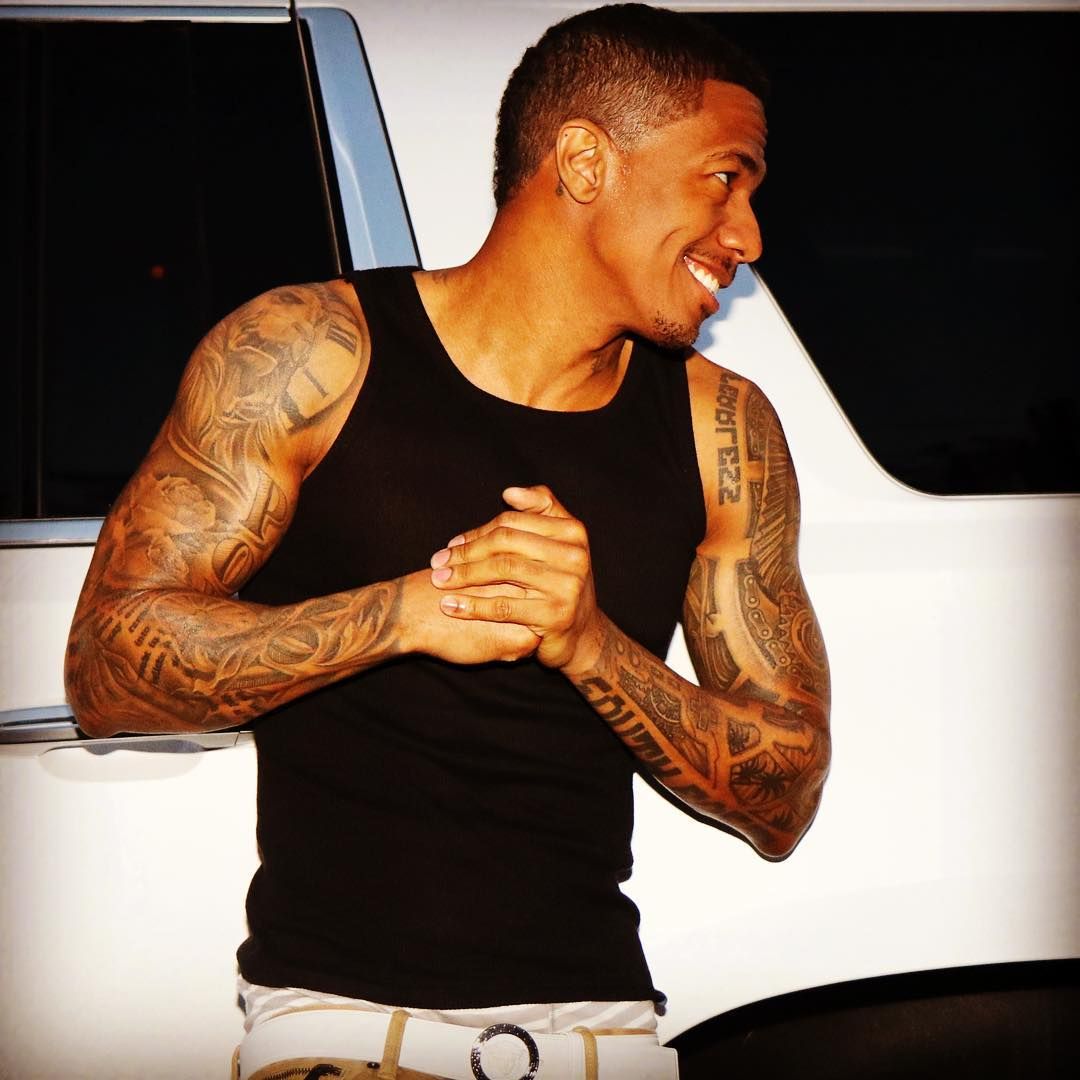
Cannon’s arms carry some of the most visible work in the collection. The sleeves mix large shaded images with lettering, geometric shapes and smaller symbols. One photograph clearly shows a clock and lion design across the shoulder and upper arm, while other images show the tattooing continuing down toward the forearms and hands.
The arm work does not look like a single session. Different sections have different densities and textures, which is common with a collection built over many years. Some areas are packed with darker shading, while other pieces leave skin showing between the lines. That spacing helps individual images remain readable even though there is a lot of ink overall.
There are also script and block-letter elements on the upper arms. Because the photographs are from different periods, the exact wording is not always legible, so it would be a mistake to turn every blurred letter into a confident claim. The reliable point is that Cannon combines text with illustrative pieces and uses the arms as a long running canvas.
The sleeve work also gives context to the later chest tattoo. The new compass piece is darker and more unified, but it still sits naturally beside the older arm designs. The result is a body covered in chapters rather than one perfectly matching visual style.
The neck lettering makes the face-to-body transition obvious

Neck ink is one of the first things people notice in a portrait, and Cannon has several designs running across that area. The newer upper-body work includes ornamental shapes around the throat, while another visible mark reads “LOST” along the side of his neck. The lettering is clear in close portraits, especially when he wears a tank top or leaves the collar open.
The word can be read in more than one way, but Cannon has not given a single definitive public explanation that covers every small detail. The safest description is the visual one: it is a bold block-letter neck tattoo that sits beside the larger chest and shoulder work. The placement makes it hard to ignore, and it connects the more private chest composition to his public image.
His neck also shows why tattoo photography needs more than one pose. A straight-on portrait can hide the sides of the throat, while a turned head reveals how the lettering and ornamental designs wrap around the neck. The best views of Cannon’s collection come from a mix of chest close-ups, side portraits and wider images that show where the neck work meets the shoulders.
The collection is tied together by faith, family and direction
Nick Cannon’s tattoos are not a neat catalogue of matching designs. They are a record of different moments: a relationship, a cover-up, a compass, a religious image, years of arm work and a new chest piece built around personal history. The collection is large enough that no single photograph can show everything clearly.
There are documented facts that stand out. Cannon’s tattoos also show the difference between a design chosen for a relationship and a design chosen to carry that relationship into a new chapter. The old lettering was direct and personal, while the cover-up is broader and more symbolic. The compass then adds another layer, pointing toward the person he is still becoming rather than only the person he was.
The compass is the chest centrepiece. The Mariah Carey name was replaced with a winged crucifix. The arms carry layered sleeve work including clock and lion imagery. “LOST” is visible on the neck, and the newer chest-and-neck composition was made by Maria Garza and Sherri Austria-Portela at Inked NYC.
Just as important, some small marks are not explained publicly. It is better to leave those pieces unidentified than to invent meanings from a blurry photograph. Cannon’s tattoos already have a strong story without forcing every line into a caption.
His ink looks like a life that kept adding chapters instead of starting over from a blank page.
The overall shape is what makes Cannon’s collection worth studying. The back, chest, neck and arms do different jobs, but they are not disconnected. The same heavy line work and religious imagery keep reappearing, while the compass gives the upper body a clear centre. In a way, the collection reflects his career: several different lanes, all running at once, with a few symbols helping him keep his bearings.
One thought on “Nick Cannon’s tattoos have lived through a lot of chapters”