Baschi’s tattoos are unusually easy to understand because he talks about them like chapters, not decorations. The Swiss singer has said that every piece should carry a story, whether it remembers a person, connects to an earlier version of himself, or gives his future self something to look at. That makes his collection feel warm and a little old-school in the best way.
He does not present his ink as one giant image. Instead, the designs build a loose autobiography across his arms, forearm, feet, and smaller placements. The documented highlights include tattoos drawn by his mother, a sailing ship, a family name, a first piece connected to his father, and the blunt messages “Endstation.” and “Glück.” on his feet.
His mother drew the tattoos on his upper arms
The most personal part of Baschi’s collection may be the work designed by his mother. During SRF’s Inked series, he explained that the tattoos on his upper arms were drawn by her. That detail changes the way the designs read. They are not simply professional flash or a trend chosen from a wall; they are family artwork carried on his skin.
He has described the tattoos as pieces with meaning, and this is probably the clearest example. A parent’s drawing can be rougher, more intimate, and more recognizable than a perfectly polished studio design. It carries the feeling of the person who made it, even when the original paper sketch is no longer in front of you.
The upper-arm placement also makes sense for a family piece. The designs can disappear beneath a sleeve when he wants them private, but they are easy to show during a tattoo interview or onstage in a sleeveless shirt. Baschi’s family ink is not hidden forever; it is simply allowed to appear on his own terms.
The griffin was his first tattoo and a tribute to his father
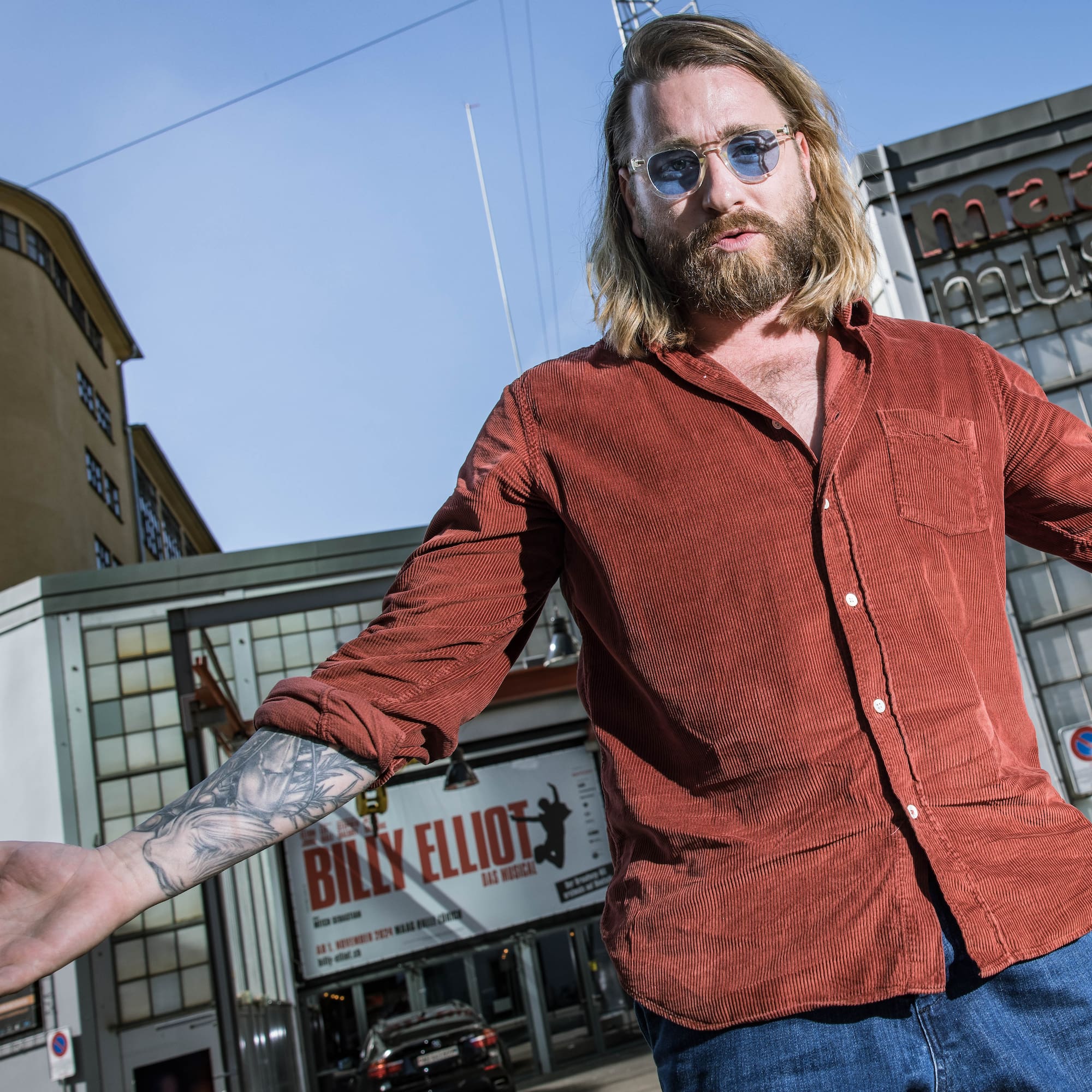
Baschi’s first tattoo is a griffin, a mythical creature that also connects to his name. He has explained that he got it at 18, when he was young enough to want something bold and rebellious, but he also turned it into a tribute to his father, who had died a couple of years earlier. The piece includes his father’s initials.
That combination of teenage energy and grief is what makes the tattoo memorable. It was not designed as a solemn memorial in the usual sense. It began with the excitement of getting a first tattoo and became something much more personal once he connected the image to his family.
The griffin also works as a kind of self-portrait. It is a magical beast, but it is not delicate or anonymous. The creature suggests strength, protection, and a little bit of fantasy, while the initials keep the design anchored to a real person. It is a big image with a very specific private reason underneath.
The microphone marks the moment music became serious
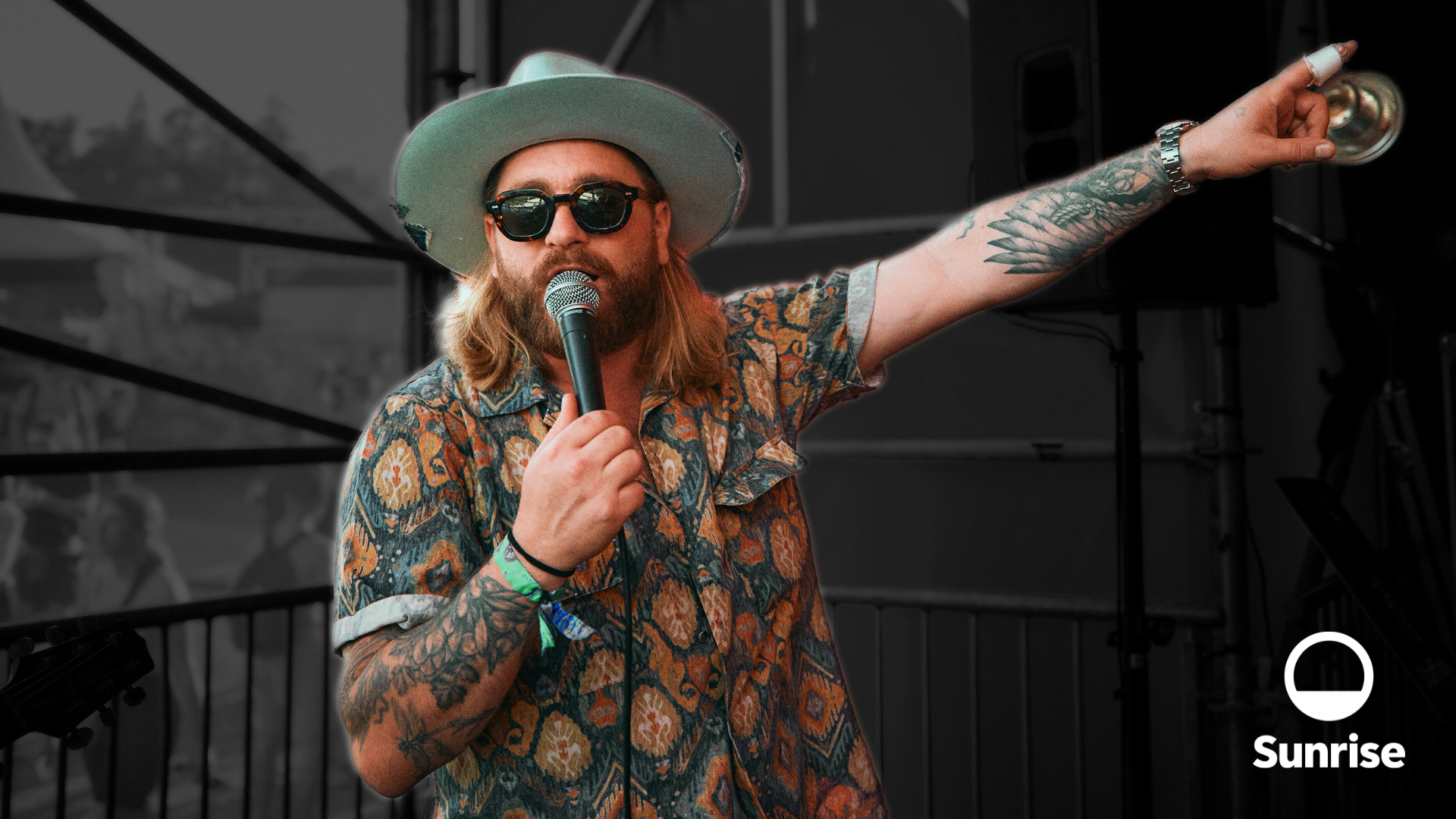
Another early piece is an old-school microphone. Baschi said he was around 18 or 19, had moved to Los Angeles, and had started to commit to becoming a singer when he saw the design in an artist’s book. His girlfriend at the time suggested another tattoo, and he went for the microphone.
It is a straightforward design, but the timing gives it more weight. The microphone marks a point when music stopped being just an interest and started becoming a direction. Unlike the griffin, which looks backward toward family, the microphone looks forward. It is a small piece of career history that became permanent before the career had fully arrived.
Musicians often end up with microphone tattoos because the object is instantly readable. Baschi’s is more personal than a generic music symbol, though, because it belongs to the moment when he was deciding whether he could really build a life around singing. The image is a snapshot of ambition before the records, stages, and years of touring.
The Sly and the Family Stone lyrics stay close to his ribs
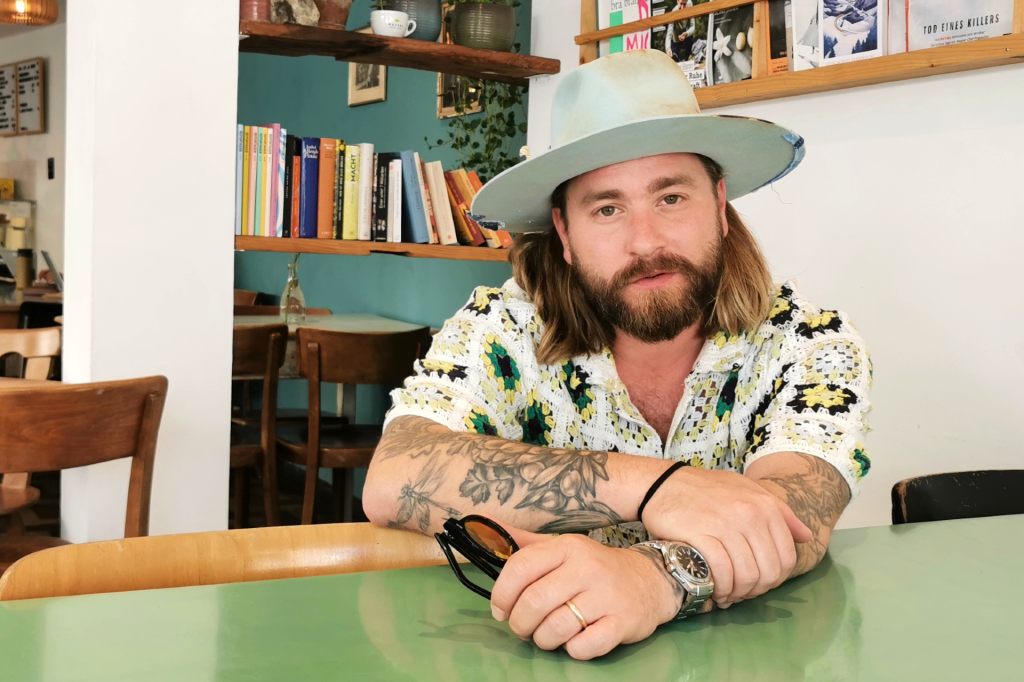
Baschi has a lyric tattoo on his ribs from Sly and the Family Stone’s “Everybody Is a Star.” The words include the line “I love you for who you are, not the one you feel you need to be.” He has explained that he was working at his aunt’s deli in Potrero Hill, digging into older records, when the song’s honesty really hit him.
Rib tattoos are not the easiest pieces to get, and the location gives this one a naturally private quality. The lyric is close to the body rather than placed where everyone can read it. That suits the message. It is not a slogan aimed at a crowd; it is a sentence he wanted to keep with him.
He has also admitted that he might not choose the same tattoo at this point in his life, even while still calling the sentiment beautiful. That honesty makes the piece more interesting. Tattoos can preserve an earlier belief without freezing the person forever. The lyric records who Baschi was when he needed to hear it.
“Only the Poets” connects the collection to his first album

The words “Only the Poets” are tattooed across Baschi’s chest as a tribute to his first album and to James Baldwin. Baldwin gave a speech in which he said, “Only the poets know the truth about us,” and that sentence stayed with Baschi long enough to become part of his body.
This is one of his most visible music tattoos, but it is not just a title stamped across the chest. It brings together an early career milestone and a literary influence. The phrase is also broad enough to keep changing meaning. It can refer to songwriting, honesty, observation, or the strange job of trying to make private feelings public.
Placed across the chest, the tattoo reads like a personal banner. It announces the kind of artist Baschi wants to be without spelling out a single genre. The phrase is less about celebrity than about a belief in the usefulness of art. That is why it still fits even as his music and life move into different chapters.
The sailing ship is about an earlier life
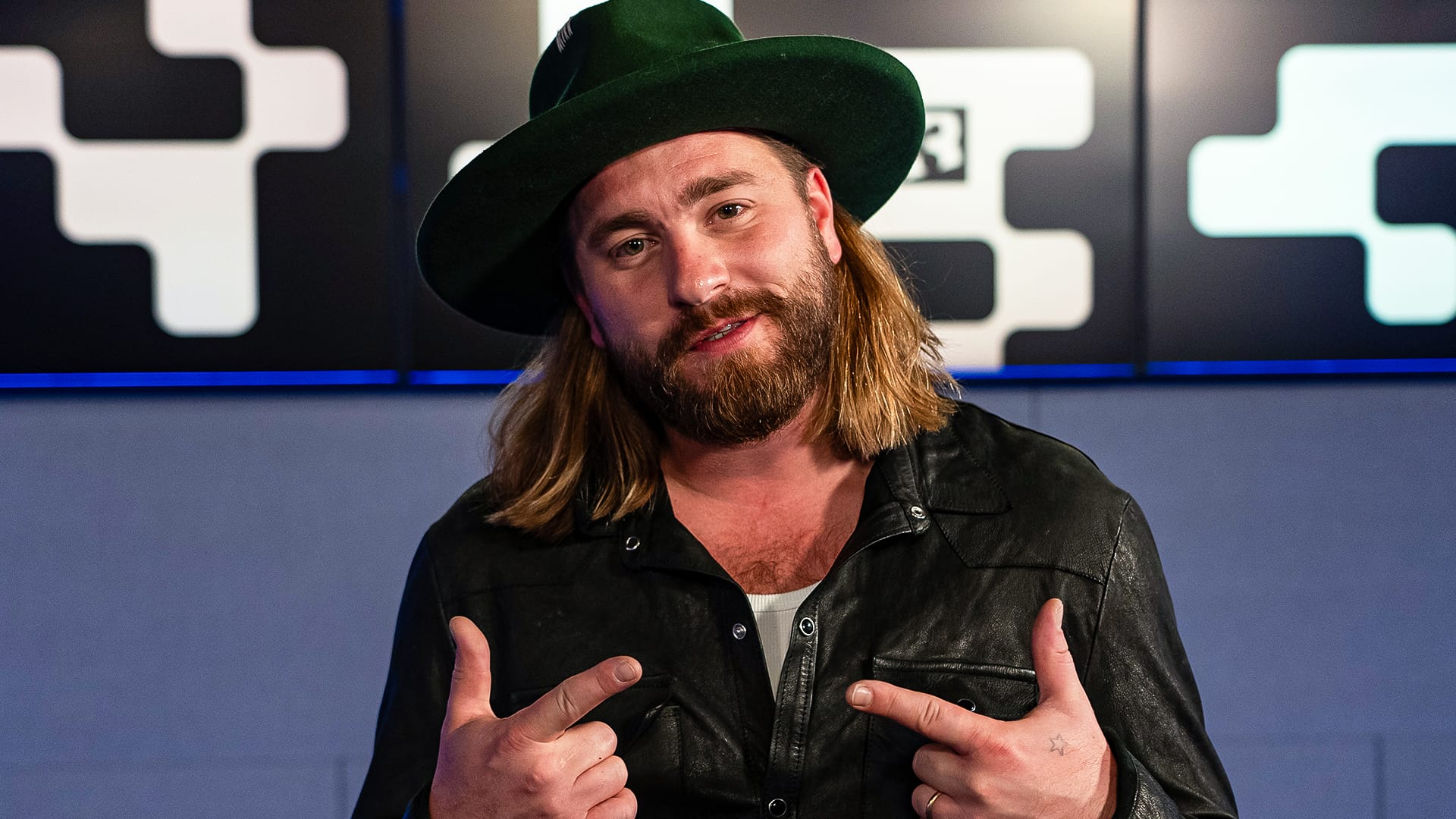
On his forearm, Baschi has a sailing ship. When asked about it, he gave an unexpected explanation: he said he had been a sailor in a previous life. Whether a reader takes that literally, spiritually, or simply as part of his sense of humor, the tattoo gives him a way to talk about adventure and uncertainty.
A ship is a natural image for a musician who spends time moving between cities and stages. It suggests a route that cannot be fully controlled, changing weather, and the need to keep going even when the destination is not visible. Baschi has connected it with adventure and the unpredictability of life, which is a more useful explanation than pretending every tattoo has one fixed dictionary meaning.
The forearm placement makes the ship one of the pieces that can enter everyday conversation. It is visible when he rolls up a sleeve, reaches for a microphone, or gestures during an interview. Like the microphone, it belongs to a particular era, but it can keep picking up new meanings as his life changes.
“Endstation” and “Glück” look toward the end of life

Baschi’s most striking idea may be the pair of words tattooed on his feet. “Endstation.” appears on one foot and “Glück.” on the other. In English, the first means “final stop” or “terminus,” while the second means “luck” or “happiness.” Together, they create a sentence he wants to see at the end of his life.
He has explained that when he is on his deathbed, he wants to look down and see a message telling him that he reached the end, but that everything was good. That is an unusually clear future-facing tattoo. It does not commemorate a past event; it imagines a final moment and tries to give that moment a reassuring frame.
Foot tattoos are easy to hide and easy to forget about until you need them. That makes the placement feel intentional. The words are for Baschi first, not for an audience. They are almost like a small signpost waiting at the bottom of the body.
His partner’s name is deliberately discreet

Baschi also has a small “Alana” tattoo on his forearm, referring to his wife Alana Netzer. He has said that he chose a discreet placement because the tattoo was meant for her and did not need to become a large public declaration.
That piece sits in an interesting contrast with “Only the Poets.” One tattoo speaks across the chest, while the other stays small enough to pass unnoticed among his larger work. Both are relationship tattoos, but they communicate differently. The album phrase is a public statement about art. The name is a private promise carried in plain sight.
Baschi has said that he understood the meaning of the name tattoo because it is permanent. That is a simple thought, but it explains why the smaller piece matters. The tattoo is not trying to compete with the bigger designs. It is meant to remain close and personal.
Baschi’s collection is a timeline, not a matching set

Put together, Baschi’s tattoos form a loose timeline. The griffin takes him back to his father. The microphone marks the moment he committed to music. The Sly and the Family Stone lyric preserves a younger emotional truth. “Only the Poets” records his first album and his connection to Baldwin. The ship imagines adventure, while “Endstation” and “Glück” think about the final view from his own feet.
The designs do not all share one style, and that is part of their charm. Some are large, some are tucked away, and some were drawn by family rather than selected from a professional portfolio. They feel collected over time instead of planned in one sitting.
That also explains why Baschi is careful about meaning. He is not claiming that every tattoo needs to be profound. He is saying that each one should have a reason to exist. Sometimes the reason is grief. Sometimes it is a song, a relationship, a joke about a past life, or a reminder of the person he hoped to become.
His tattoos are personal without being precious. They can be sentimental and funny in the same breath. They can look bold from the stage and still be meant for one person. That balance is what makes Baschi’s ink worth following: every piece has a story, but the stories still sound like something a real person would tell.