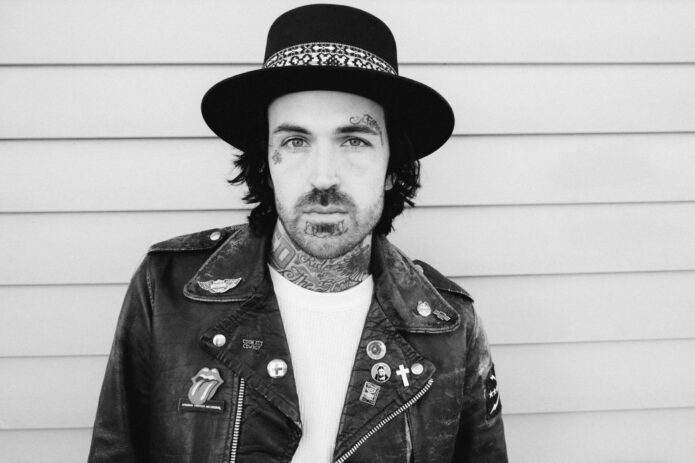
Yelawolf has never used his skin as quiet background. The Alabama rapper’s look brings together loud guitars, Southern details, skate culture and the sense that every chapter leaves a mark. His tattoos fit that world, but they feel more personal than they might at first glance. Interviews with Complex, Billboard and Fuse describe the ink as a record of defining moments, family, love and the people who keep him grounded.
That’s a useful way to understand Yelawolf’s collection. It isn’t just blackwork, lettering and portraits on a checklist. Some designs point to his children, some honor his fiancée and others belong to the wider Slumerican visual language. He talks about the tattoos in a relaxed, conversational way, so the collection feels less like a packaged celebrity reveal and more like a notebook he wears.
Family portraits sit at the heart of Yelawolf’s back

Family is the clearest documented theme. An iHeart tattoo feature describes portraits of Yelawolf’s children on his back. Portrait tattoos make a strong commitment: a person’s face becomes a permanent focal point. The back also gives an artist room for a larger image, more shading and a fuller composition than a small wrist design.
The portraits are best understood as a personal anchor, not a fashion statement. Public descriptions don’t confirm each child’s name, the artist or the date of every session, so those details shouldn’t be guessed. What is clear is the purpose: keeping his family close as he travels and performs through a career built around constant movement. The portraits are the clearest emotional center in the documented collection.
A fiancée tribute adds another layer of commitment
The same iHeart feature mentions a tattoo dedicated to Yelawolf’s fiancée. The public record confirms the dedication, but the material available here doesn’t provide a verified map of the design, its lettering, placement or date. We can leave those specifics open without losing the story.
A relationship tattoo carries a different kind of weight from a stage logo or a design chosen mainly for its look. It marks someone who matters beyond the current tour cycle. Alongside his children’s portraits, this piece points back toward home even when Yelawolf’s public image is built for the road. The important part isn’t the flash; it’s the person he wants to keep close.
The under-lip tattoo is small but impossible to ignore

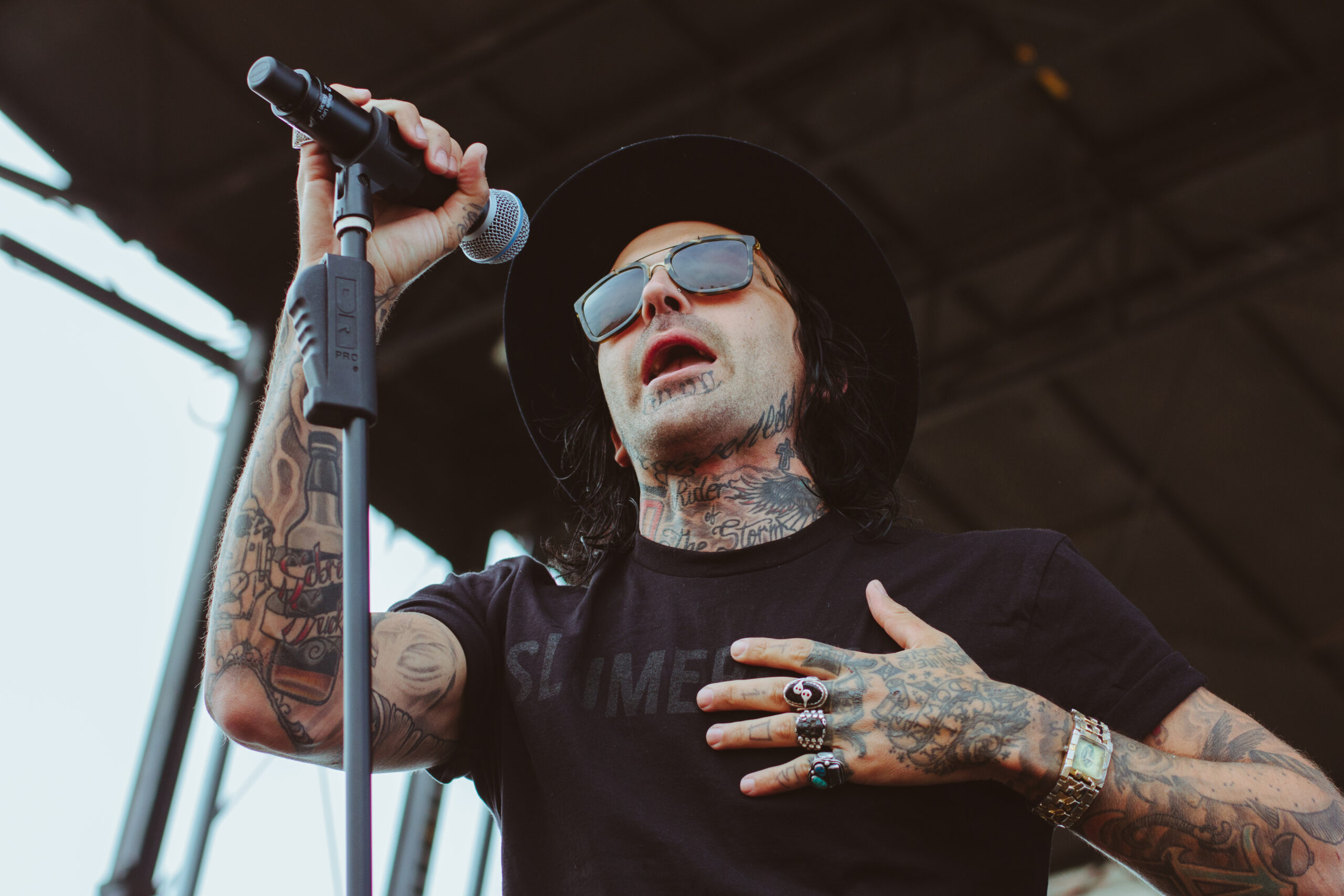
Search coverage and tattoo interviews also point out an under-lip tattoo. The placement changes a face immediately. Unlike a back portrait that can stay under a shirt, this ink is part of Yelawolf’s public image in close photos, interviews and performances. That visibility has made it one of the easiest designs for fans to recognize.
The small face tattoo shows the different scales in his collection. Larger pieces can hold portraits and dense detail; a mark under the lip acts more like punctuation. The available coverage doesn’t support assigning it one meaning or using an exact design name without a source. What we can say is that the placement is direct, visible and hard to miss.
His collection documents defining moments

Complex’s Soundboard coverage describes Yelawolf discussing tattoos that mark defining moments in his life. That helps explain why a complete inventory is hard to assemble. A tattoo can mean a great deal to its wearer without becoming a magazine headline. Some designs come up in a video; others appear in a photo without a caption; some stay private. The evidence supports a timeline of important moments, even if it doesn’t identify every line of ink.
This isn’t one unified style exercise. The collection includes personal references, relationship tributes and designs that connect with the identity he has built through music. A careful account separates what a source confirms from what a photo merely shows: describe the design, placement or interview context, then stop before speculation takes over. His tattoos read like milestones first and decoration second.
Slumerican energy runs through the overall look

Yelawolf’s tattoos sit within the broader Slumerican world: Southern identity, music, motorcycles, hand-drawn graphics, outsider art and an intentionally unpolished attitude. A design doesn’t need to spell out a brand name to feel connected to that visual culture. His heavily tattooed appearance belongs to the way the music is presented, alongside clothes, hair, jewelry and stage lighting.
That doesn’t mean every mark should be called official Slumerican artwork. The public sources support an association and an atmosphere, not a complete branding catalogue. It’s more accurate to say the tattoos reinforce his image than to claim each one was commissioned as a logo. That distinction keeps the story grounded while still explaining why the collection feels cohesive across performances and interviews.
Fans often want the artist, year, exact wording and story behind each tattoo. Those details need care. Yelawolf’s interviews are useful because they let him explain the work himself, but short clips and reposts can flatten a longer conversation. Where a source confirms a portrait of his child or a tribute to his fiancée, we can say so. When a photo only shows an arm or neck, it’s safer to describe the visible ink without adding a backstory.
That’s the difference between a documented tattoo and a fan theory. A grainy concert photo can make every shape look like something, especially when part of the design is hidden. A good guide can say, the placement is visible, but the exact meaning hasn’t been confirmed publicly. Readers still get a useful picture, and the subject doesn’t become a fictional source.
Put the confirmed designs together and a pattern emerges. The portraits connect him to his children; the fiancée tribute marks an adult relationship; the under-lip tattoo puts ink on his face; and the wider collection records moments important enough to keep. None needs an elaborate explanation. The choices already show the value he places on family, loyalty and lived experience.
There’s a useful contrast in that collection. Yelawolf’s music and public image can be noisy and abrasive, but the best-documented tattoo stories are intimate. That tension helps the designs stay with you: tough-looking marks carrying personal meaning. Behind the volume, the stories keep pointing back to people and memories.
Some uncertainty has to remain. Public sources don’t give a complete, authoritative map of every tattoo on Yelawolf’s body, every artist or session date, every line of text or every symbol’s meaning. Photos may show more than an article names, while a fast-moving interview may not allow a precise inventory.
The most reliable summary is this: published coverage confirms portraits of his children on his back, ink dedicated to his fiancée and a repeatedly noted under-lip tattoo. Interviews describe the wider collection as a record of defining moments. Other designs appear in photos, but they should stay in the “visible” category until a source identifies them. That’s not a weakness; it’s the difference between research and confident guesswork.
Yelawolf’s tattoos keep changing the way the story reads

The tattoos make Yelawolf’s public image feel lived in. They connect to family, love, memory and the rough-edged culture around his music, but they don’t collapse into one slogan. Each visible mark adds another piece of history. Some are obvious in a close-up; others make sense only when he explains why they’re there.
The clearest starting points are the family portraits, the tribute to his fiancée and the under-lip tattoo. The rest is best read as a broader record of moments rather than a puzzle with invented answers. The collection looks loud from a distance, but personal up close. That’s why it continues to draw attention long after the first photo.
Watch Yelawolf talk through his tattoos

One thought on “Yelawolf’s tattoos keep the family stories close to the noise”