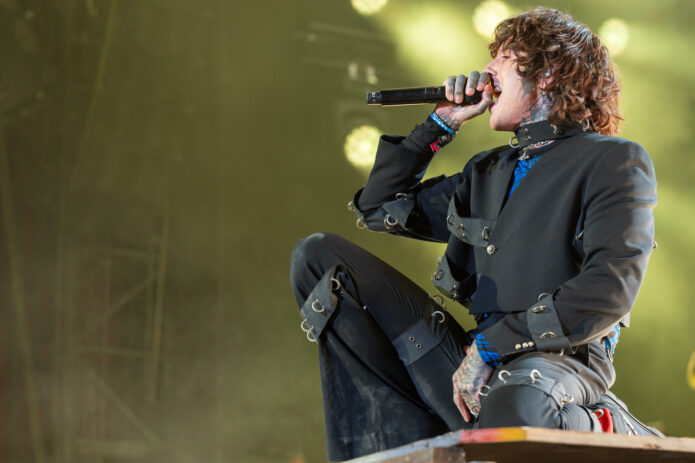
Oliver Sykes has spent years making his body a kind of archive for Bring Me The Horizon. The tattoos are bold, uneven, symbolic and sometimes hard to decipher, which suits the band’s music. In interviews, he has talked about starting young, tattooing himself and choosing designs that would hold on to a memory even as a song changed over time. His collection feels less like a finished sleeve than a map of the years that shaped him.
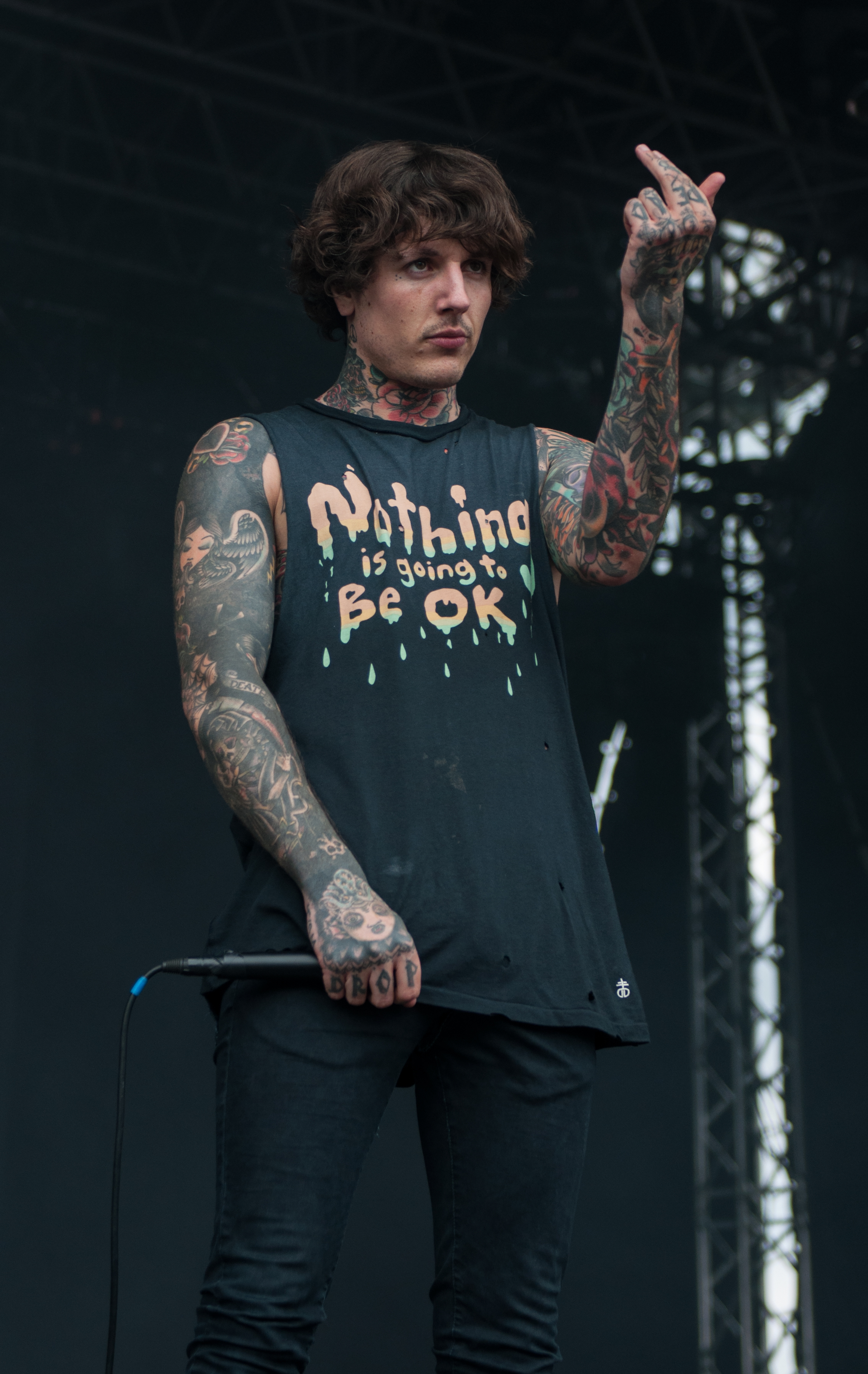
The surviving Behind the INK interview is a useful starting point. Sykes discusses the meanings behind his tattoos, his face ink, the painful pieces and the unusual situations that can come with travelling for appointments. He does not name every symbol in a neat catalogue, but he does explain the attitude behind the collection. For him, each piece needs a reason to be there; it does not need to fit a perfect plan.

His neck tattoos are commonly described through life-and-death imagery, with a rose between the two ideas. That gives the collection a visual centre. For a touring musician who has watched friendships, bands and versions of himself change, life and death are not just abstract themes. The rose softens the contrast without making it sentimental; it suggests that beauty and damage can sit side by side.

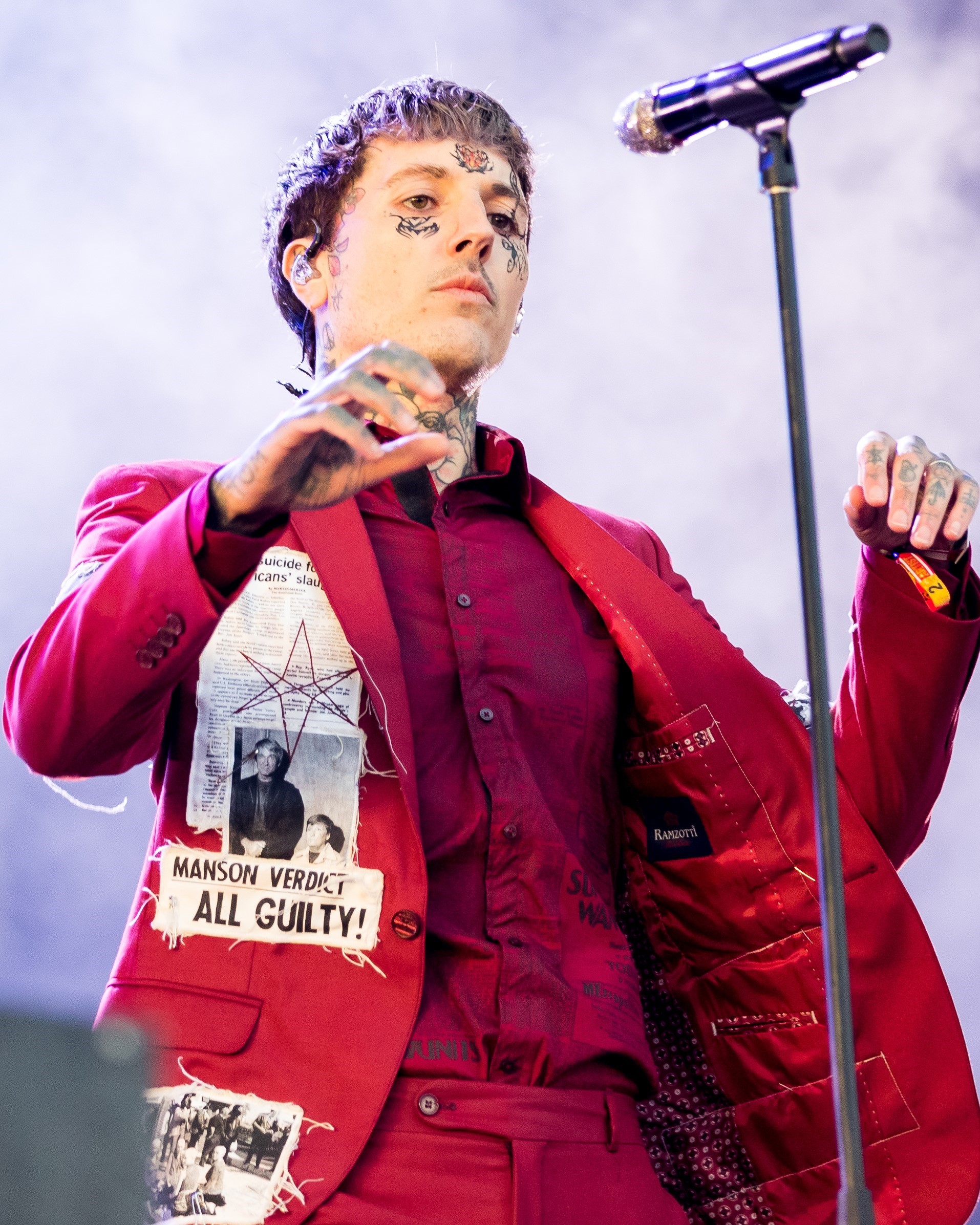
The face tattoo draws the most attention because it changes a person’s first impression. Sykes has never seemed interested in blending into a conventional image. The ink makes his alternative identity visible before the audience hears a note. In the older interview, he speaks plainly about how the tattoos came about, including work from a period when he was learning by doing.
That history of tattooing himself gives the early pieces a different feel from a polished celebrity commission. Self-applied ink carries its own risk, and the unevenness becomes part of the memory. For Sykes, the mark left by the process can matter as much as the symbol. A list of motifs alone cannot explain why the collection feels so personal.
One of the phrases most closely associated with him is “Your Pain Is a Gift,” across his knuckles. The words fit Bring Me The Horizon’s emotional world: pain is acknowledged, but it can also be turned into something useful. On his hands, the phrase is hard to miss during a performance. Each gesture brings another part of the band’s visual language into view.
Other tattoos have been connected to songs, friends and earlier versions of the band. Some fans identify symbols from music videos as tattoos; others mistake temporary artwork, stage styling or a recent appointment for permanent ink. Comparing photos from different years helps, as does separating what Sykes has confirmed from what fans have inferred. When the evidence stops, a tattoo guide should leave some things unexplained.
Photos also make the changing collection easier to see. In a 2014 festival shot, the marks belong to the lean, restless look of that period. A 2016 performance photo shows different lines and shapes beneath hard stage lighting; later images capture a more established performer whose tattoos have become part of his silhouette. No single image proves every placement, but together they show how the collection has developed.

That timeline matters because Sykes’ tattoos have not stayed tied to the scene that first made him famous. New references, appointments and ideas about the band continue to find their way into the collection. His interviews make it sound like an open process, with another appointment, unexpected experience or design still to come.
The way Sykes talks about pain does not come across as simple toughness. In the tattoo interview, he describes painful work and the odd situations that can arise when an artist is tattooing a musician on the road. The humour keeps the stories from feeling too solemn. Tattoos can carry real meaning without being treated as sacred objects. They are reminders, but they also record curiosity and impulse.
Bring Me The Horizon’s black-and-white imagery can make the tattoos look harsher than they might in everyday light. Stage lighting flattens colour and turns lines into shadow, while a close-up can reveal details that disappear in a crowd shot. Neither view tells the whole story. A useful inventory compares different sessions and respects what each photo can actually show.
Meaning and biography are not quite the same thing. A design may remind Sykes of an event without explaining everything about it. A rose can remain a rose; the life-and-death imagery can stay open to interpretation. “Your Pain Is a Gift” may also speak to listeners in a way its wearer never intended. Good tattoo writing leaves room for both the owner’s meaning and the reader’s response.
The collection also reflects Bring Me The Horizon’s changing look. The band moved from a rawer metalcore image toward a broader, more flexible sound, and Sykes’ tattoos have evolved alongside it. They do not need to match a single era: older work stays beneath the newer designs, making those shifts visible.
Fans often notice the tattoos in motion rather than in a studio portrait. A hand closes around a microphone, his neck turns under a spotlight, or a sleeve rides up during a backstage conversation. The ink becomes part of the performance without having to call attention to itself. Each new photograph adds another partial page to the archive.
There are limits to what can be said with confidence. Online lists often repeat placement claims without dates, and fan-made diagrams may combine work from different years. The careful approach is to name the phrases Sykes has discussed, describe visible designs without overreaching and label the rest as undocumented. That respects both the artist and the reader.
The face and hand tattoos shape how the audience reads his expressions. Face ink is visible before he speaks; knuckle lettering appears when he reaches for a microphone or gestures toward the crowd. These designs move through the show rather than sitting still in a portrait, which helps explain why the collection has become so closely tied to his public image.
It is easy to treat every tattoo as a clue to some hidden biography, but a simpler reading can be more revealing. The pieces suggest someone who wanted his outward image to carry some of his inner intensity. Some mark people or memories, others confront pain, and some record a choice made at a particular age. Together they show a willingness to commit before knowing exactly what comes next.
The interview brings out that candid side. Sykes is willing to say when a tattoo hurt, when an experience was strange or when an idea came from an impulse. That makes the work feel lived in. The collection keeps its mistakes and rough edges rather than hiding them. Those details help it feel like his, not a generic celebrity sleeve.
As the band keeps changing, the tattoos will gather new context. A design from an early club show or tour can look different after years of arenas and shifting lineups. Its meaning does not have to remain fixed: the ink keeps the memory, while the person wearing it moves on.
That sense of being unfinished is part of the appeal.
A documented inventory of Oliver Sykes’ tattoos
The strongest public record includes the life-and-death imagery with a rose on his neck, the face tattoo he discusses in Behind the INK, the “Your Pain Is a Gift” knuckle lettering and a wider range of blackwork and illustrative pieces visible at Bring Me The Horizon shows. Sykes has also discussed tattoos without giving a full key to every symbol. Those can be recorded as visible or reported, but should not be assigned meanings without evidence.
Why the collection still feels personal
Sykes’ tattoos are compelling because they show a process. They belong to a musician who has changed his sound, stage presence and relationship with the past. Some look like declarations, some like private jokes and others like reminders of a time he no longer needs to explain. The collection forms a biography in fragments, not a single logo.
Watch Oliver talk about the ink
The Behind the INK interview pairs well with the photos: Sykes talks about the meaning behind the designs, face tattoos, pain and the practical realities of travelling for appointments.