
Carmen Electra’s tattoo collection has a new centerpiece. In early 2026, she showed off a large back tattoo built around a rosary, praying hands and a group of swords, explaining that the imagery came from feeling “stabbed in the back” by people with bad intentions. It is a direct, dramatic design, but it is not the first ink associated with Electra.
Older tattoo references identify a Roman-numeral design and writing on her wrist, along with an initial behind her ear. Those smaller pieces sit at the other end of the scale from the new back work. Together, they show a collection that has grown from discreet lettering and numerals into a very visible statement about protection, betrayal and moving forward.
The new back piece turns betrayal into a picture
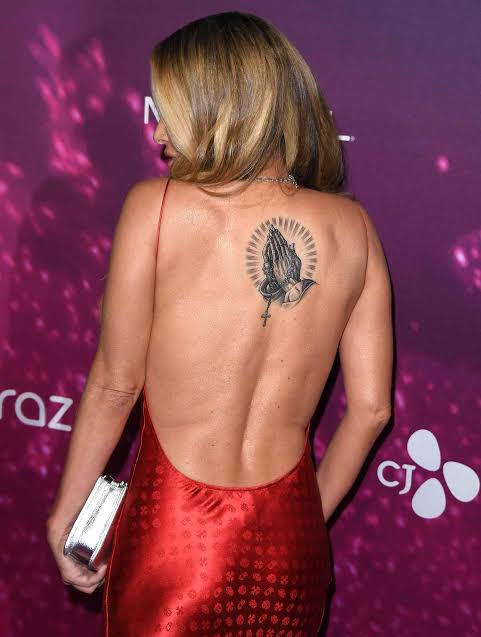
The tattoo that brought Electra’s ink back into the spotlight is the large design across her back. Public descriptions identify a giant rosary with praying hands and several swords. Electra told PEOPLE that the idea was inspired by people who had “stabbed me in the back,” and the imagery follows that language closely: faith, defense and a blunt visual reminder of betrayal all occupy the same composition.
The praying hands and rosary give the design a devotional center. The swords add tension. Instead of presenting the back as a soft or purely ornamental canvas, the tattoo makes it feel guarded. The exact lines and decorative details can look different between photographs, but those three elements are the consistent anchors: rosary, praying hands and swords.
Electra’s explanation is what makes the tattoo more than an elaborate flash-style image. She connected it to people with bad intentions and to the experience of being betrayed. The back piece is a message about protection as much as it is a record of hurt. That is why the placement works: the back is a large, private surface, and the design turns it into a statement that only becomes fully visible when she chooses to show it.
The tattoo also has a slightly theatrical quality, which fits Electra’s long relationship with glamour and performance. A rosary and praying hands are familiar symbols, but the cluster of swords makes the image harder and more defensive. It does not read as a quiet devotional mark. It reads as faith with boundaries.
There is a difference between forgiving people and giving them access again. Electra’s design seems to live in that gap. The tattoo remembers the betrayal, but the composition is not only about staying angry. It is about having protection around the parts of life she wants to keep.
Why the swords matter as much as the rosary
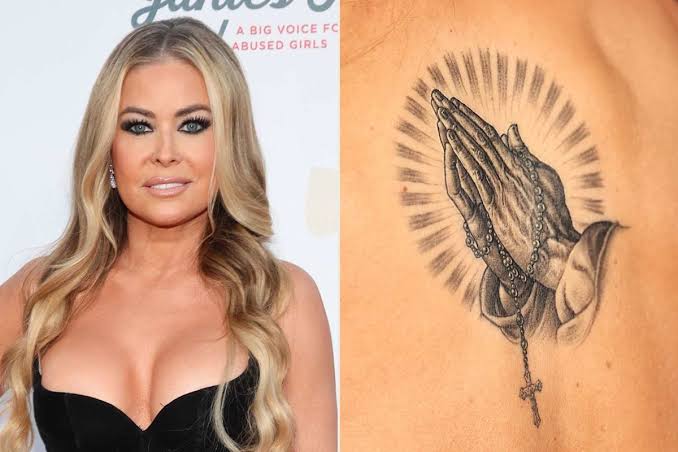
The easiest way to describe the new work would be to call it a rosary tattoo, but that leaves out the part that gives it its bite. The swords are what connect the design to Electra’s “stabbed in the back” explanation. They turn the tattoo from a familiar religious image into a visual response to people she believes acted against her.
Multiple swords also create movement across the back. They point, cross and divide the surrounding imagery, giving the piece a sense of direction. In photos, the tattoo can look almost like a protective frame around the upper back rather than one isolated icon. The arrangement is why different crops sometimes emphasize different parts of the design.
It is worth keeping the language measured. Public coverage supports the idea that the tattoo responds to betrayal and bad intentions. It does not give a complete biography of every person Electra had in mind, and it does not require one. The tattoo’s meaning is broad enough to stand without turning private conflict into a list of names.
The swords also sit comfortably beside the older, smaller pieces in Electra’s collection. A Roman numeral or initial can carry a private reference, while a sword is immediately legible to anyone looking at the back tattoo. The result is a collection with two modes: small marks that whisper and one large design that speaks from across a room.
That contrast is part of what makes the new tattoo interesting. Electra could have chosen a simple phrase about betrayal, but she chose a composition. The message is not delivered in one line of text. It is built through objects that viewers already understand: prayer for grounding, swords for defense and a back placement that makes the whole story feel personal.
The praying hands keep the message from being only revenge

The praying hands bring balance to the harder imagery. Without them, the swords could make the tattoo look like a straightforward revenge statement. With them, the design has a more complicated emotional register. Electra is not only describing the people who hurt her; she is also placing the response next to an image associated with faith, reflection and hope.
That balance is especially useful because “stabbed in the back” is a phrase with a lot of heat. A tattoo can freeze that feeling in place, but the religious elements suggest that the design is also about getting through it. The prayer imagery gives the tattoo a route beyond anger. It allows the back piece to be read as a protective memorial to a difficult chapter rather than an invitation to keep a feud alive.
Again, the public record does not establish every private belief behind the design. The strongest evidence comes from Electra’s own explanation and from the visible arrangement. The rosary and praying hands are there, and the swords are there. What the tattoo means in every private moment belongs to her.
Large back tattoos can be difficult to photograph because the design changes with posture. A straight-on portrait may flatten the composition, while a turned shoulder can make one sword look separate from the rest. The photos available online should therefore be treated as different views of one piece, not as proof that Electra has several unrelated sword tattoos.
The design’s scale also changes the way Electra’s older ink is perceived. Small wrist writing and an ear initial are intimate details. The new back tattoo is a public announcement. It says that a personal experience has reached the surface and that she is comfortable letting the image carry some of the explanation.
The older Roman numeral and wrist writing are quieter pieces
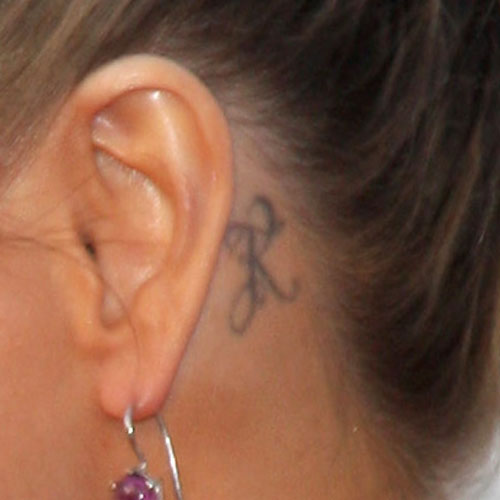
Before the recent back tattoo, the most commonly documented details in Electra’s collection were smaller. Tattoo references list a Roman-numeral tattoo, writing on her wrist and an initial behind her ear. These pieces are mentioned less often than the new back work, partly because they are harder to see in red-carpet photographs and partly because the large tattoo has become the current story.
The Roman numeral is a classic private-mark format. It can record a date, a family connection or a personal milestone without spelling the information out for everyone. In Electra’s case, the available summaries identify the tattoo but do not provide a fully verified explanation of which date or number it represents. The responsible description is therefore the visual one: a Roman-numeral design whose exact reference is not publicly settled in the material reviewed.
The writing on the wrist is similarly restrained. It belongs to the part of Electra’s tattoo history that can be read up close but disappears at normal distance. Wrist lettering also moves with the hand, so photographs can reverse, crop or partially cover it. It should not be expanded into a quotation unless the words are clearly legible and documented.
The initial behind her ear is the smallest of the commonly cited pieces. Initial tattoos often look simple, but their privacy is the point. An initial can stand for a person, a place or a name that the wearer does not want to publish in full. Electra’s public tattoo record confirms the mark without giving a complete explanation of its personal reference.
These older tattoos make the new back piece feel like an evolution rather than a sudden change. Electra has long used ink for small, personal signals. The 2026 design simply gives one of those signals a much larger canvas and a more direct public message.
Her tattoo timeline now has two very different moods
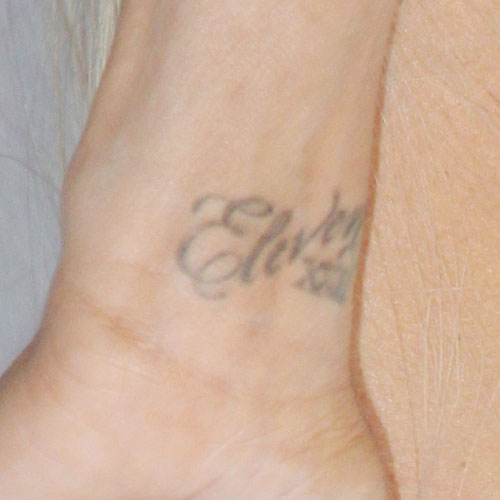
Looking at Electra’s tattoos in order reveals a shift in scale and tone. The Roman numeral, wrist writing and ear initial are compact pieces that can sit close to the body. The newer rosary, praying hands and swords dominate the back. One group is designed for privacy; the other is designed to be understood when the back is visible.
That does not mean the older tattoos have become unimportant. Small tattoos can carry more private meaning than large ones, and the public descriptions simply do not give enough information to rank their emotional weight. The new tattoo is easier to discuss because Electra has explained the inspiration in public.
The strongest through-line is not a specific symbol but control over the story. Electra’s older ink keeps some details close. The new back piece lets her explain the broad lesson without naming every person involved. She can show the tattoo and say what it represents while keeping the most personal details private.
This is also why the “karma” language appearing around coverage of the tattoo should be handled carefully. It reflects the way the design has been discussed publicly, but the clearest first-person explanation is about being stabbed in the back and protecting herself from bad intentions. The rosary, praying hands and swords support that reading without needing extra claims.
As with any recent celebrity tattoo, the design may continue to change or be extended. New photographs can reveal lettering or smaller details that early images do not show. Until those details are clearly documented, the useful inventory remains the large back composition and the older small pieces already identified.
The new tattoo is a boundary, not just a warning

Electra’s back tattoo works because it combines vulnerability and defense. The back is where the betrayal happened in the phrase she used, but it is also where the tattoo creates a shield. Prayer sits beside weapons. The design acknowledges that people have caused harm while insisting that the next chapter will have boundaries.
That is a more interesting message than simply “I am angry.” A tattoo can preserve anger, but it can also mark the moment someone decides not to repeat the same mistake. The image remembers the wound while making room for protection.
The contrast with the small Roman numeral, wrist writing and ear initial makes the collection feel lived-in. Not every mark needs to be seen from across a red carpet. Some are for the wearer. The back piece is different because it turns a personal lesson into a full visual composition.
There is no need to pretend that every tattoo has one fixed meaning forever. Electra may eventually see the swords, rosary and praying hands differently from the way she described them in 2026. For now, the documented story is clear enough: the design was inspired by people who had bad intentions and by the feeling of being stabbed in the back.
Watch Carmen Electra explain the new tattoo
This tattoo-specific interview focuses on why Carmen Electra got the new back design at 53 and adds first-person context to the photographs.