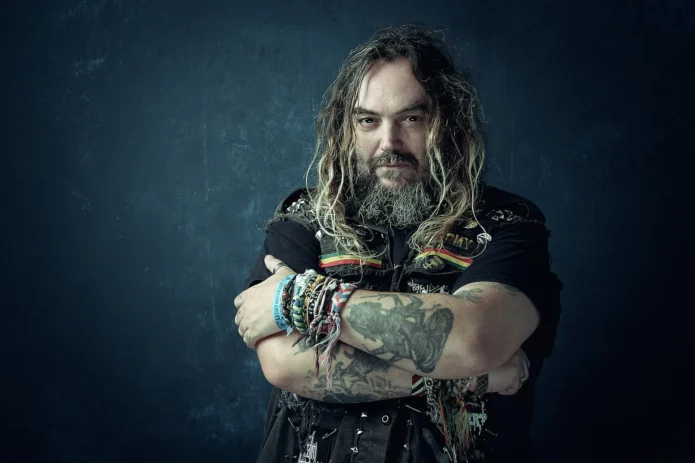
Max Cavalera’s tattoos are hard to miss in photos of the Sepultura and Soulfly frontman. His collection brings together tribal neck work, horror imagery, family symbols and Paul Booth’s black-and-grey surrealism.
The pieces that stand out first are the neck design made from four upside-down crucifixes, eyes at the elbows, and a large chest image described in interviews as a gargoyle or protective figure. Older arm work and smaller marks fill out the collection. Photos from different years show how it has grown; it isn’t one planned sleeve.
Max has credited much of this work to Paul Booth, the New York artist known for dark, surreal black-and-grey tattoos. A 2006 Metal Hammer guide and later Loudwire coverage link key designs to Booth; his Last Rites feature also revisits the Cavalera brothers’ tattoos. Those accounts connect several pieces to a particular artist and period.
The upside-down crucifixes that form his neck tattoo
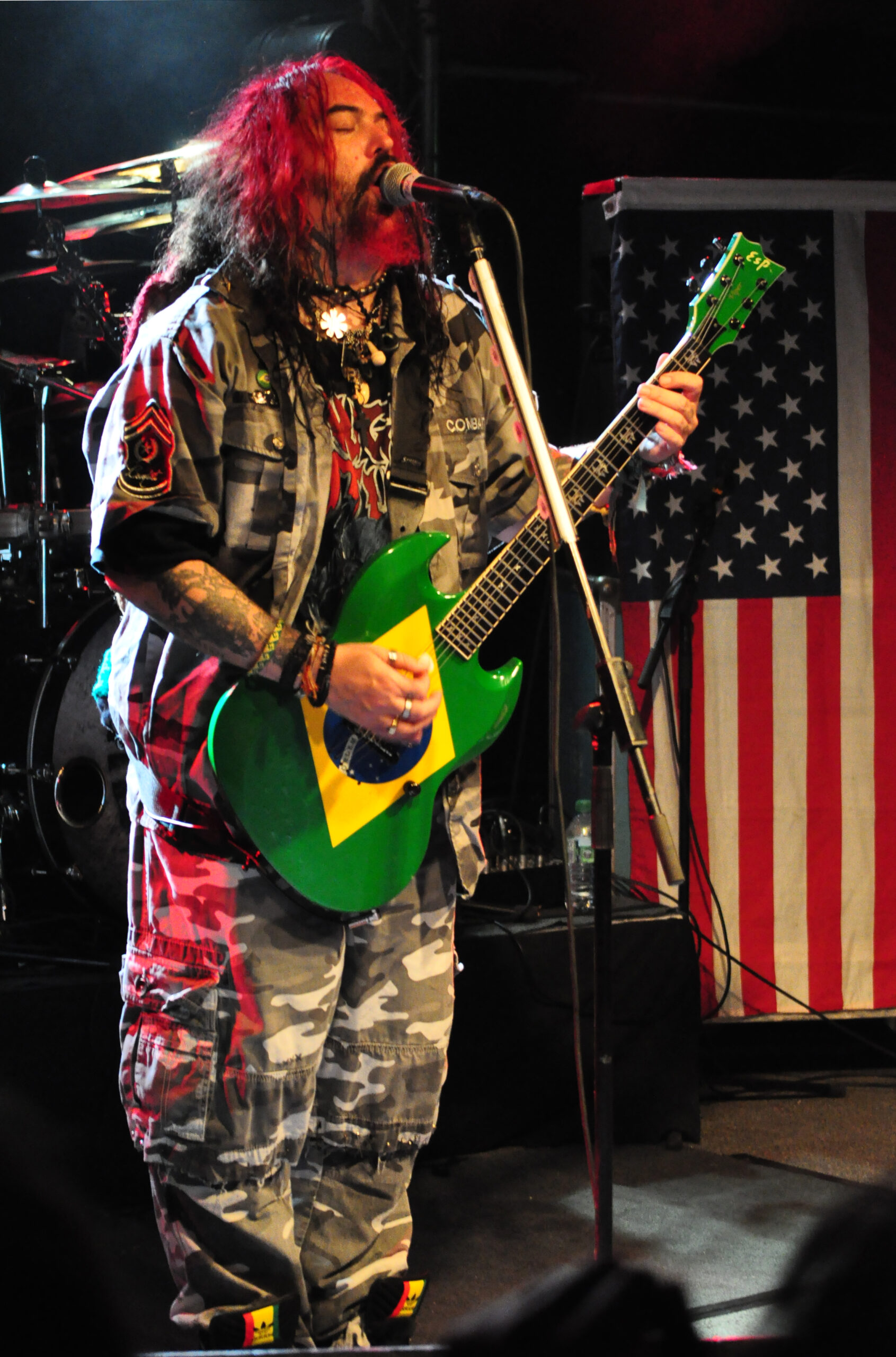
The neck piece is usually described as four upside-down crucifixes arranged into an M-shaped tribal design. It sits high, close to his face, and remains visible in older concert photos. It’s not a design that disappears under a collar.
The design has been linked to Sepultura’s Roots period and Max’s interest in Indigenous Brazilian imagery. It isn’t a band logo: the crucifix shapes are worked into a rough pattern that can look almost architectural from a distance. That treatment fits Booth’s darker style.
The lighting changes how the neck tattoo reads. Onstage, the black shapes can blur together; closer portraits show the separate forms wrapping around the sides of his neck. Even grainy live photos make the overall silhouette easy to recognize.
The eyes in his elbows are straight out of a horror film
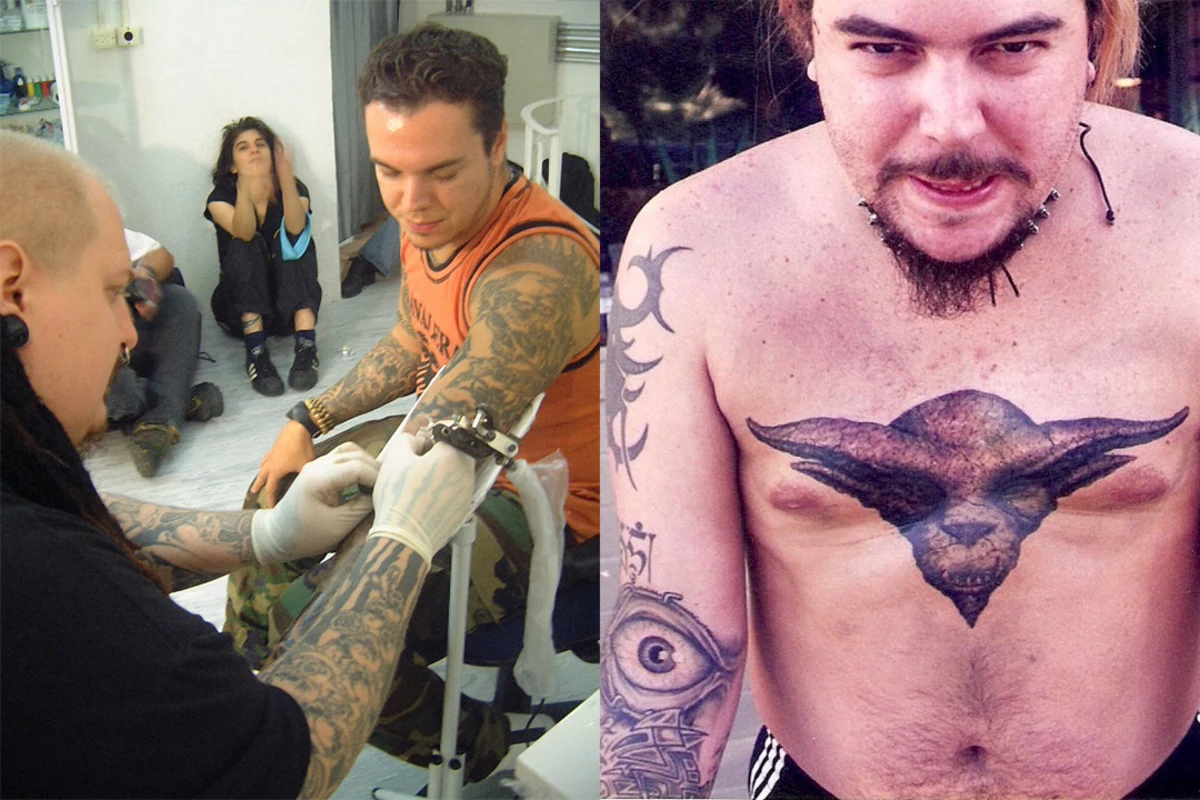
The elbow pieces are often described as eyes placed in the elbow ditches, with a concept linked to the unsettling imagery of A Clockwork Orange. They aren’t ordinary portrait eyes. Their position makes the design change as Max bends his arms.
Elbows crease and move, so a design there can distort as the arm bends. Max’s eyes change with that movement: they may be hidden while he plays, then show again when he reaches for the guitar neck or raises an arm.
Photos show dense black-and-grey work on the forearms and upper arms, with older linework beside darker shaded pieces. Not every mark has a public explanation. The recurring look is dark contrast, faces or eyes, rough edges and macabre imagery, rather than clean decorative realism.
Guitars, sleeves, and stage lights often hide parts of the tattoos in performance photos. Some images show the details; others catch only a piece of an arm or neck. That’s the context in which fans usually see this work.
The forearms carry the older, rougher layers
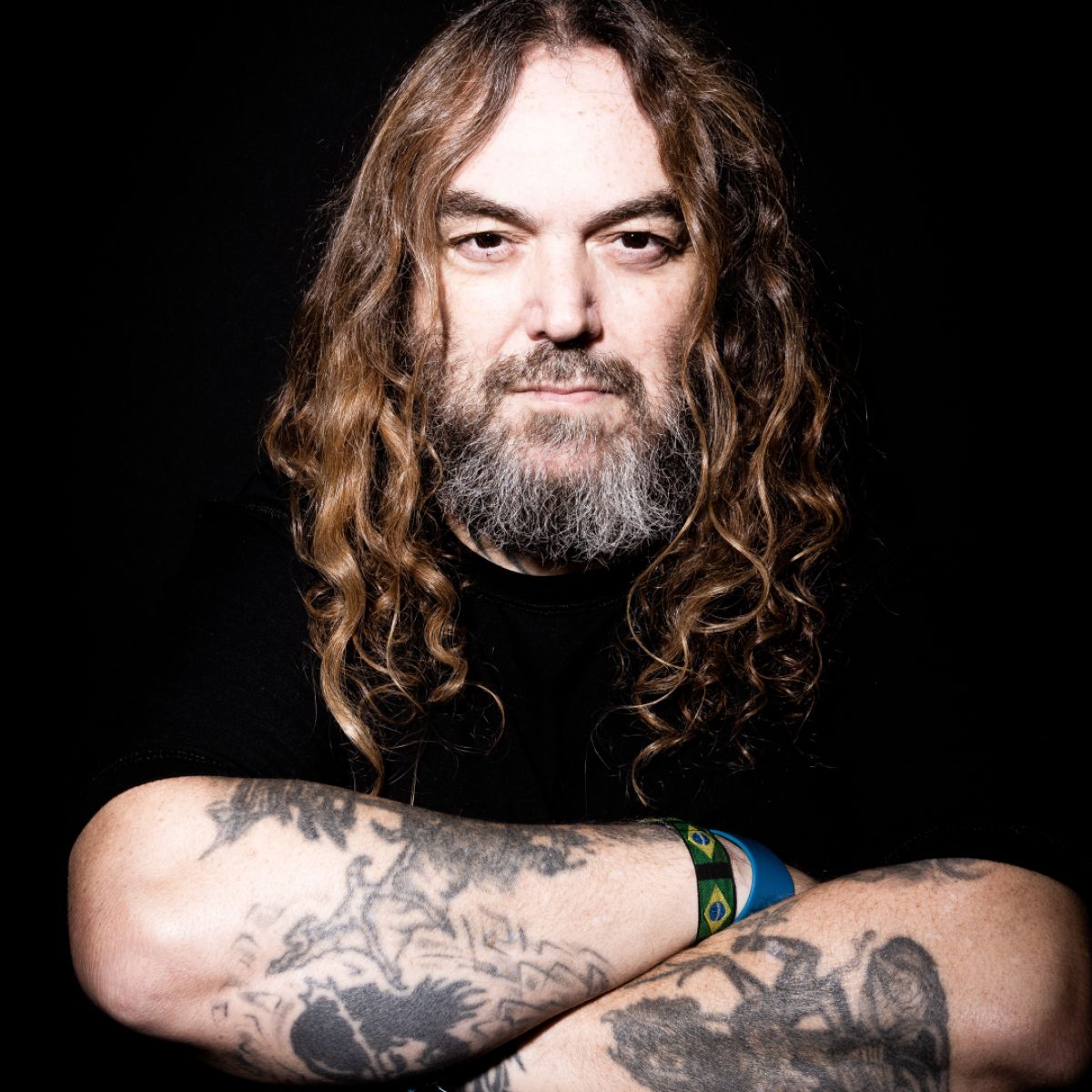
The forearms show how the collection has changed. Across photos from Soulfly and Cavalera Conspiracy periods, you can see broad dark shapes, smaller symbols, and shading that reaches toward the wrists. The pieces don’t all have the same look.
Some later photos also show tattoos on his hands and fingers. The details aren’t always clear enough to identify, so additional hand and forearm ink is the most accurate description. A blurry concert photo doesn’t support a more exact inventory.
Photos from the Sepultura years, Soulfly, and later Cavalera projects show the same arms carrying tattoos through each period. The designs overlap rather than falling into neat, separate chapters.
Camouflage, black denim, sleeveless shirts, and military-inspired clothes often appear alongside the tattoos in photos. The clothes frame the ink, but they don’t tell us why Max chose each piece.
Paul Booth’s shadow hangs over the whole collection
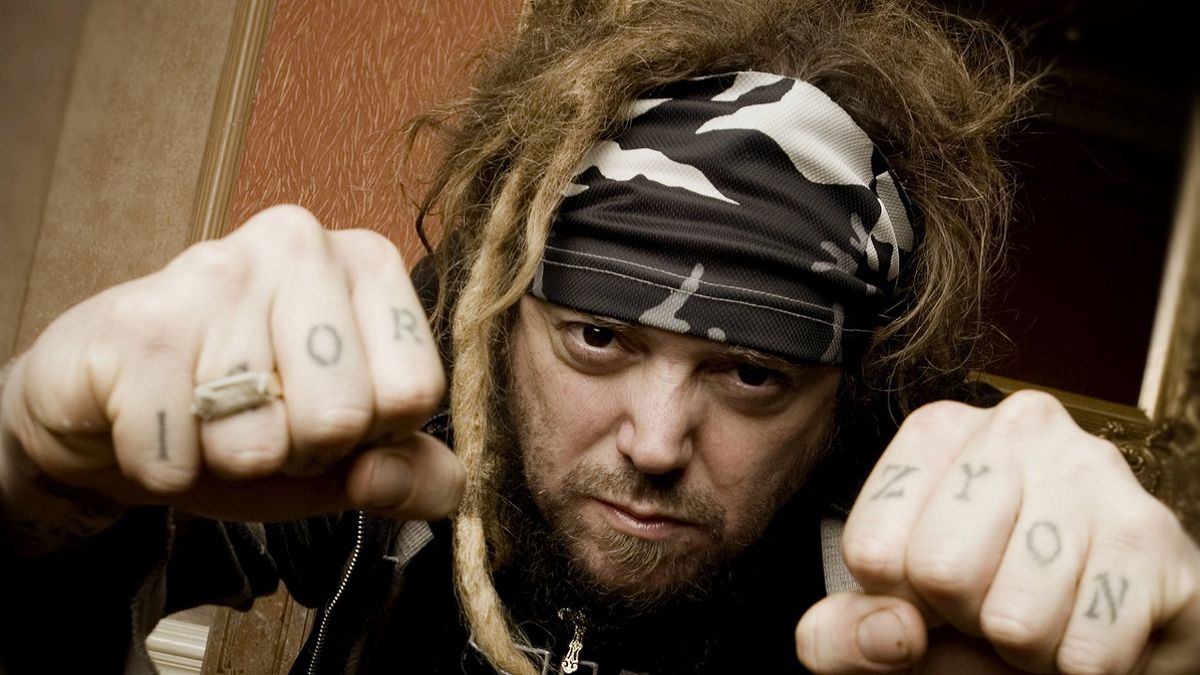
Paul Booth connects several of the best-known pieces: the neck tattoo, elbow eyes, and darker body imagery. Max has said Booth’s work matters to him. The artist’s black-and-grey, horror-leaning and dark-surreal style gives the scattered tattoos a recognizable thread.
Booth also tattooed Max’s brother Igor, so the history connects the artist with both brothers. Their tattoos came out of the same heavy-music and tattoo circles as their bands.
The site’s Corey Taylor tattoos article offers a related example: another heavy-music figure whose tattoos are closely tied to his band’s look and era. Their designs are different, but both collections sit alongside the music.
The collection feels rougher than a carefully arranged gallery. Its dark designs carry more weight than a set of polished, social-media-ready images would. The roughness is part of the look.
What the tattoos say about Max Cavalera’s timeline
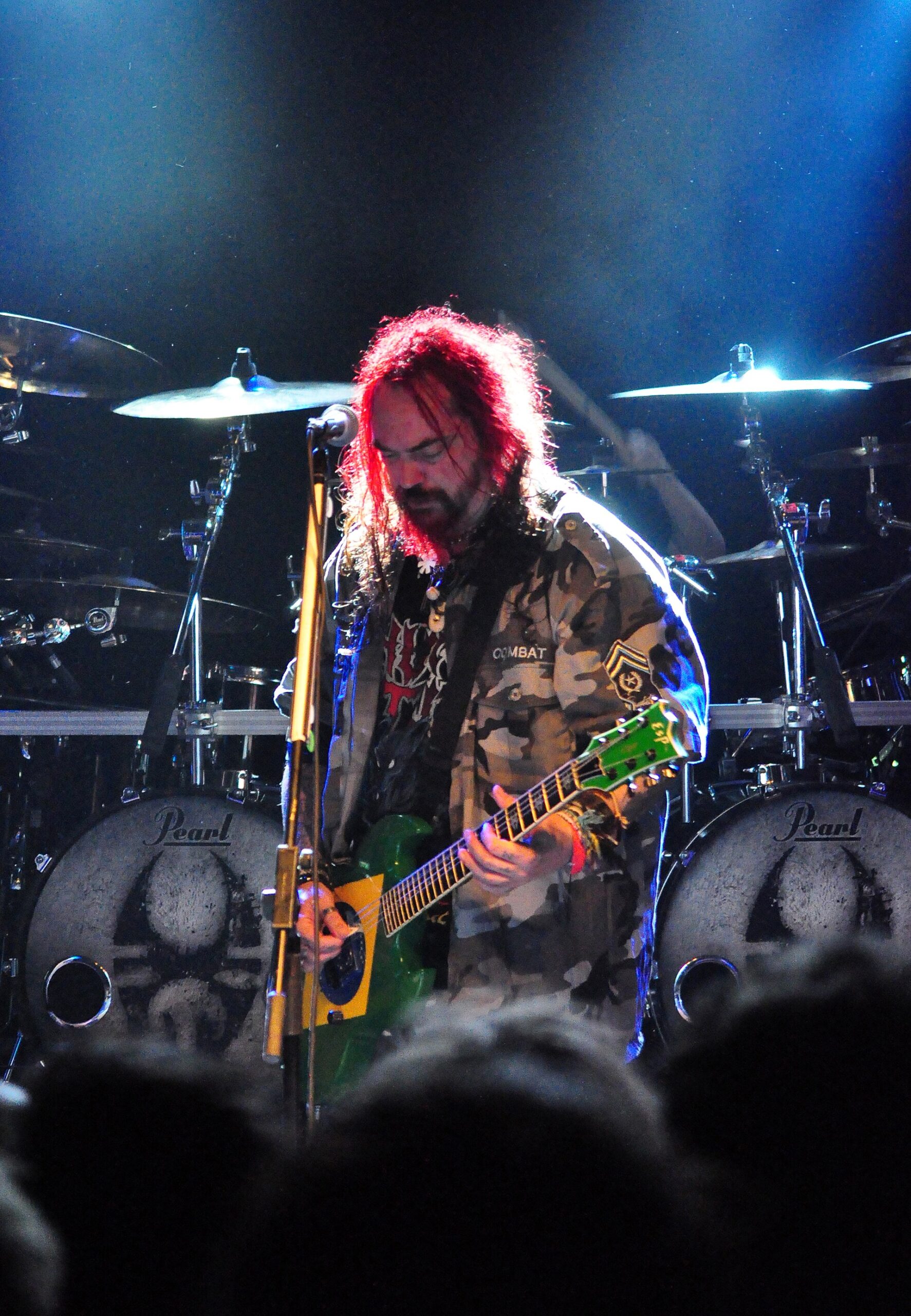
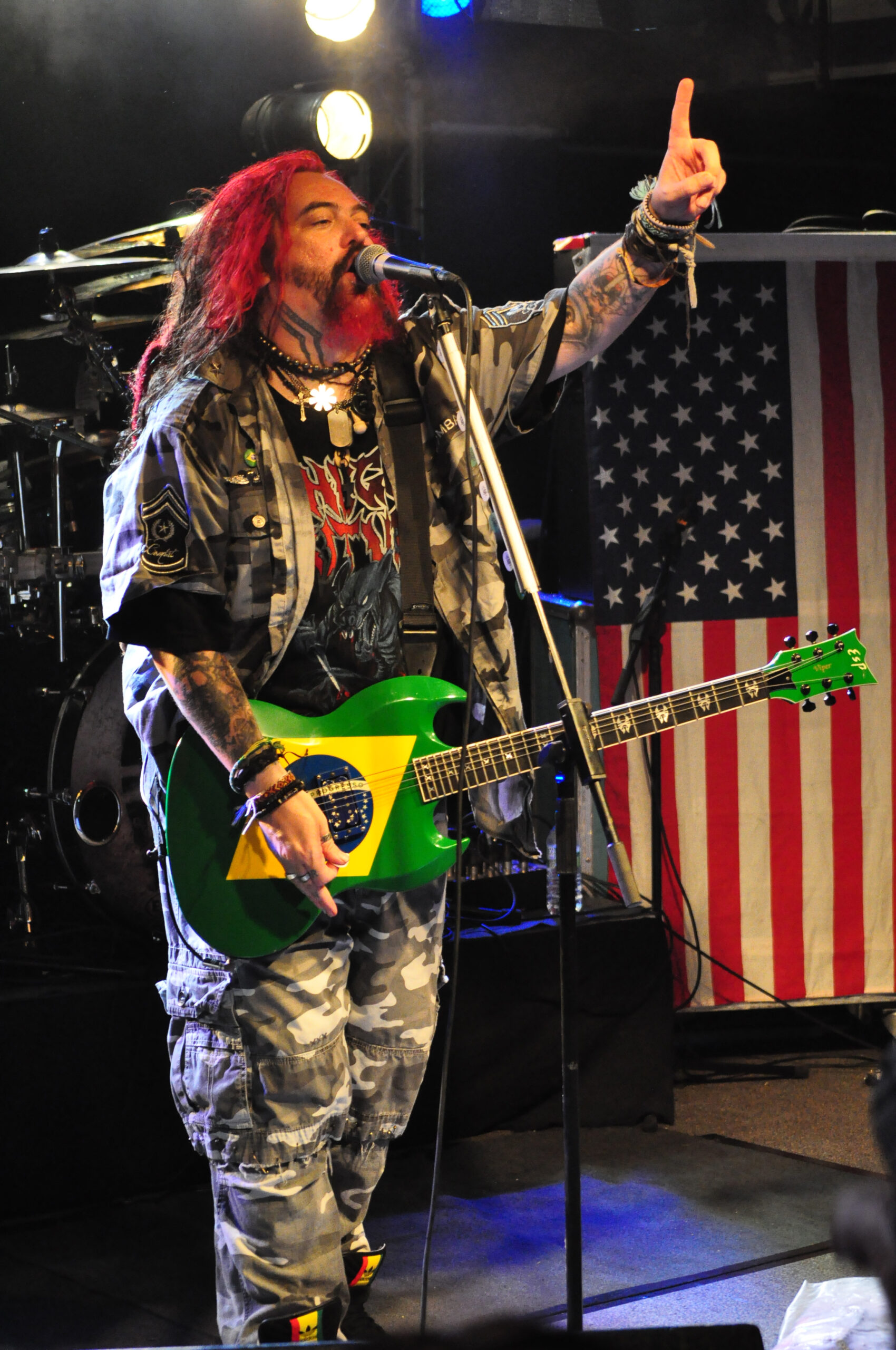
It’s easier to follow Max’s tattoos across photos and eras than to treat them as a checklist. The neck design has been linked to the Sepultura years and Roots; the elbow eyes draw on film imagery and Booth’s surreal style. Later photos show the heavier arm coverage.
Not every small mark has a documented meaning. The clearest points are the four-crucifix neck piece, the elbow eyes, the dark chest tattoo, the arm and forearm work, and Max’s connection to Paul Booth.
The photos show which tattoos are visible at a given moment, how clothes or hair sit around the neck design, and how the arm pieces look in different years. The collection remains recognizable as it changes.
Max’s tattoos and music share a dark, heavy visual language. Several key pieces trace back to Paul Booth, while older and newer photos show how the collection has changed over the years.
Performance photos show the tattoos where fans usually see them: on Max’s neck, arms, and hands as he plays. The ink changes with the light and his movement. It stays connected to the person and the music rather than reading like a separate list of designs.