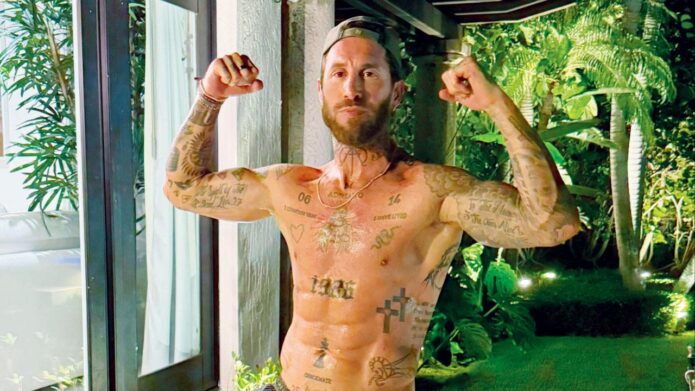
Sergio Ramos has never treated tattoos like a quick bit of decoration. His ink is basically a running scrapbook: family names, football numbers, religious images, old match memories, portraits and a lot of words spread across his chest, back, arms, hands and legs.
There are dozens of designs, and different sources count them slightly differently as new pieces are added. That’s why it’s better to focus on the tattoos that have been clearly photographed or explained by Ramos, rather than pretend every small mark has a confirmed story.
The overall style is big, busy and personal. Some tattoos are packed into sleeves, while others sit on their own, like “DAD” across the shoulder or the large 1986 across his stomach. Here’s a relaxed look at the main pieces and the memories behind them.
There is a nice contrast between the size of the designs and the way they are worn. A full back scene needs space, but a birth date or a small initial can sit on a finger and still matter just as much. Ramos seems happy with both ends of that scale. He can add a massive portrait one year and then come back with a few tiny numbers that only make sense when someone asks about them.
It also helps to remember that football photos are rarely taken for tattoo coverage. Shirts, tape, armbands and sweat can hide parts of the work, while a change in light can make old colour look much softer. The clearest views usually come from shirtless portraits, hand close-ups and the odd post-match photo.
The family lettering is impossible to miss
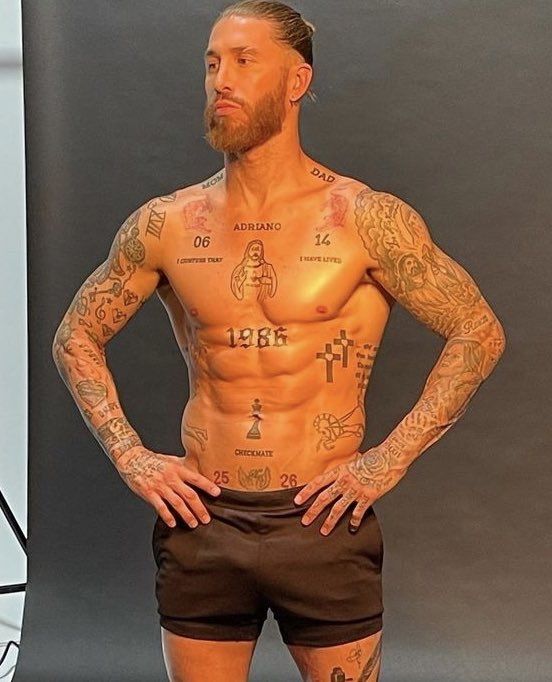
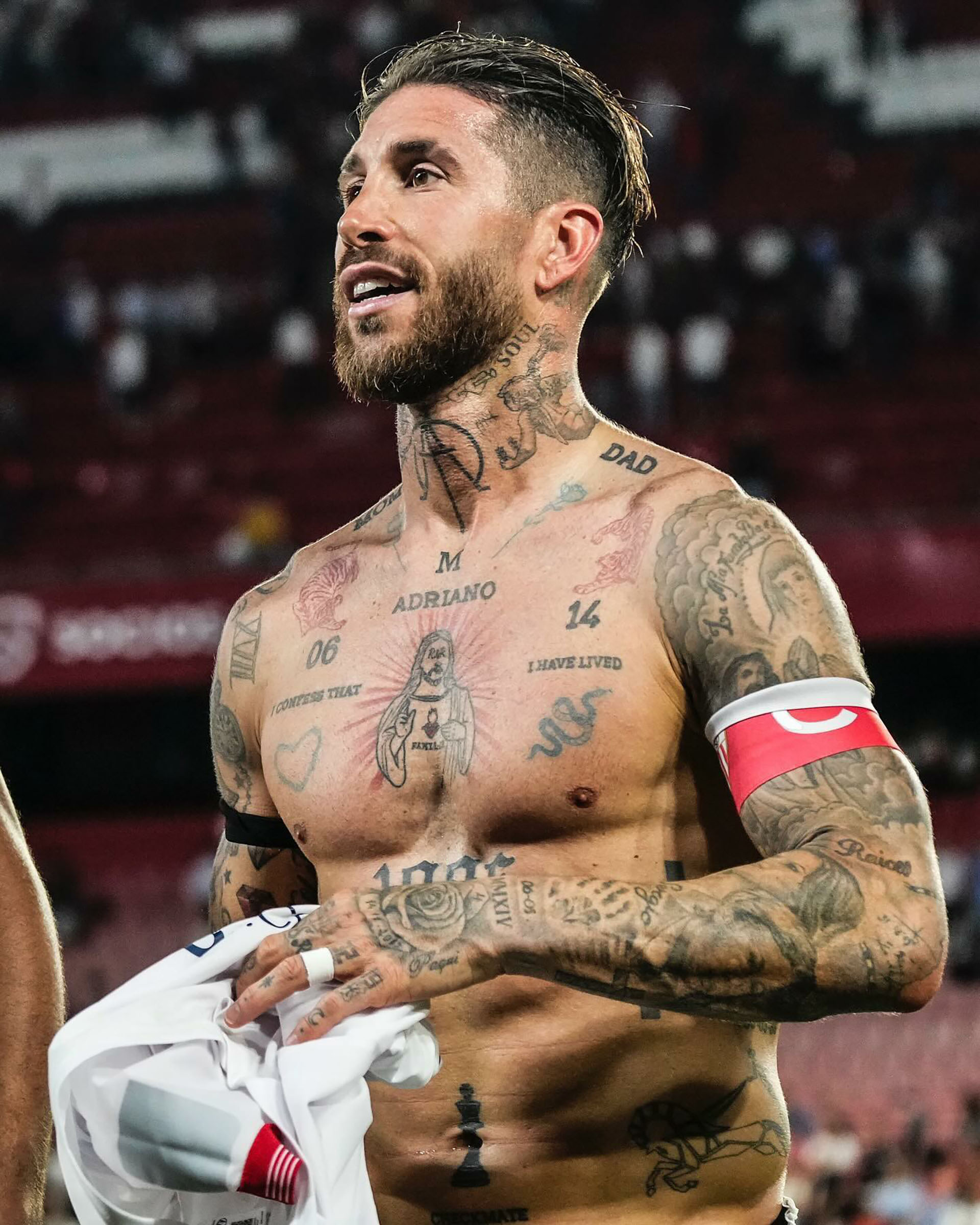
Ramos’s chest has some of the clearest personal lettering in the whole collection. “MOM” sits over one side of his chest and “DAD” appears over the other shoulder. The names and words are simple, bold and easy to read, which gives the heavily tattooed body a strong centre.
The name ADRIANO is also across the chest, a tribute to his son Máximo Adriano. Around it are numbers including 06 and 14, although the exact meaning of every number has not always been explained in the same way. The safest reading is that Ramos uses dates and numbers as private markers, while the family names are much more direct.
There’s also the phrase “I CONFESS THAT I HAVE LIVED”, taken from Pablo Neruda’s memoir. It sits beneath the central chest imagery and gives the area a more reflective feel. Ramos’s chest is not just names and dates; it mixes family, literature and faith in one crowded layout.
His chest piece mixes Jesus, numbers and “1986”
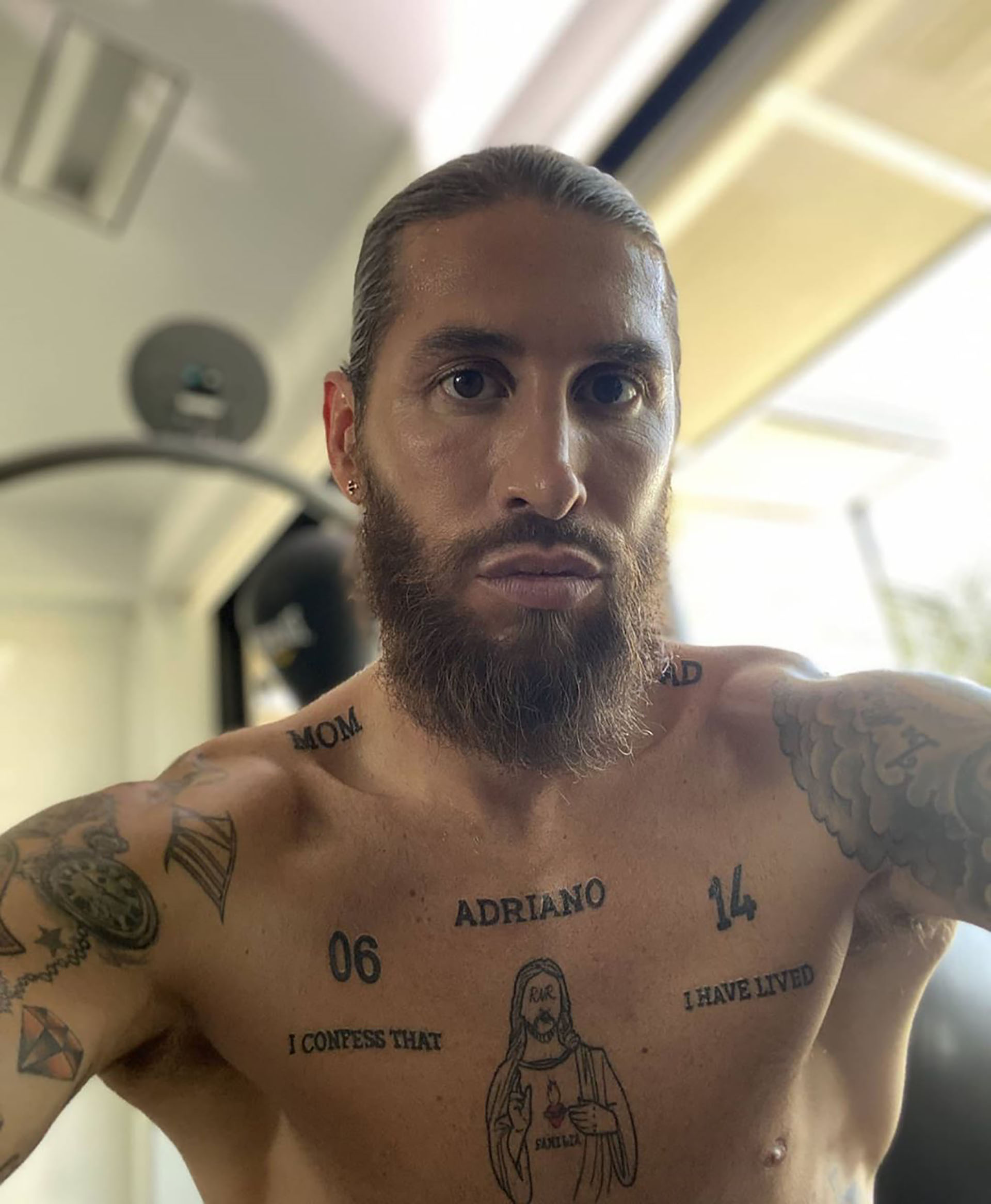
The central chest artwork is a figure of Jesus, with the letters R and R used around the design as a nod to Ramos and Pilar Rubio. It is much larger than the little names and symbols around it, so it acts as the visual anchor for the front of his torso.
Just below the chest piece is the large 1986 tattoo. That is Ramos’s birth year, and the blocky numbers are one of the easiest details to spot in shirtless photographs. Beneath and around the number are smaller images, including a chess piece marked “CHECKMATE”.
The chess reference fits the way Ramos talks about football: competitive, tactical and a little theatrical. It doesn’t need a complicated private explanation to work. A pawn, a word and a birth year turn the stomach area into a small collection of obvious personal markers.
The back is a full scene of lions, religious imagery and script
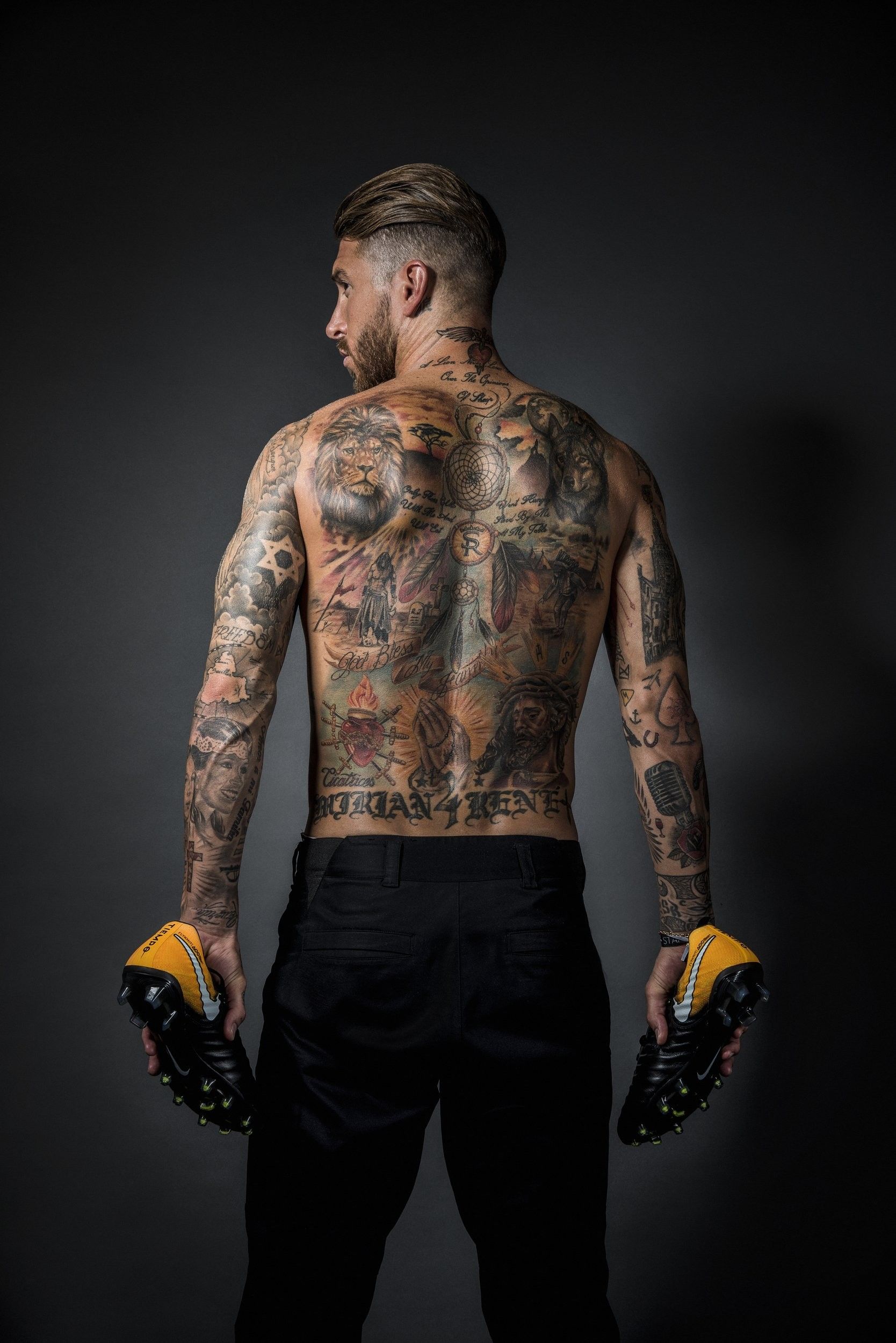
Ramos’s back is where the scale really jumps. A large lion sits on one side, with a dreamcatcher, religious imagery, figures and long pieces of script filling the space around it. The work is dense enough that it reads as one big composition from a distance, but there are plenty of separate designs inside it.
One photograph shows the words “GOD BLESS MY FAMILY” across the lower back. That message fits with the family lettering on the front, but the back piece has a darker, more dramatic look because of the lion, clouds and shaded figures.
There is also a dreamcatcher and a mix of religious figures, including imagery connected with Jesus. The photographs show what is there, but Ramos has not publicly given a full explanation for every part of the back. It’s better to describe the art clearly than make up a grand meaning for every cloud and line.
Ramos uses numbers to record his football career
Football memories appear all over Ramos’s body. The most famous example is the collection of numbers on his hand: 35, 90+, 32 and 19. They connect to different points in his career, including his early shirt numbers, his Spain debut and the stoppage-time goal that made him a Champions League legend.
His trophy tattoos follow the same idea. The World Cup, Champions League wins and other major moments have appeared on his calves and legs, turning his body into a record of the matches he considers important. He doesn’t just get a generic football ball or a club crest; he tends to mark an exact number, date or competition.
That’s why his ink feels so tied to his career. Ramos has had a long enough run at the top for the tattoo collection to grow alongside it. When the shirt comes off after a match, the designs show a player keeping track of the moments that shaped him.
The hand tattoos carry dates, children’s details and career numbers
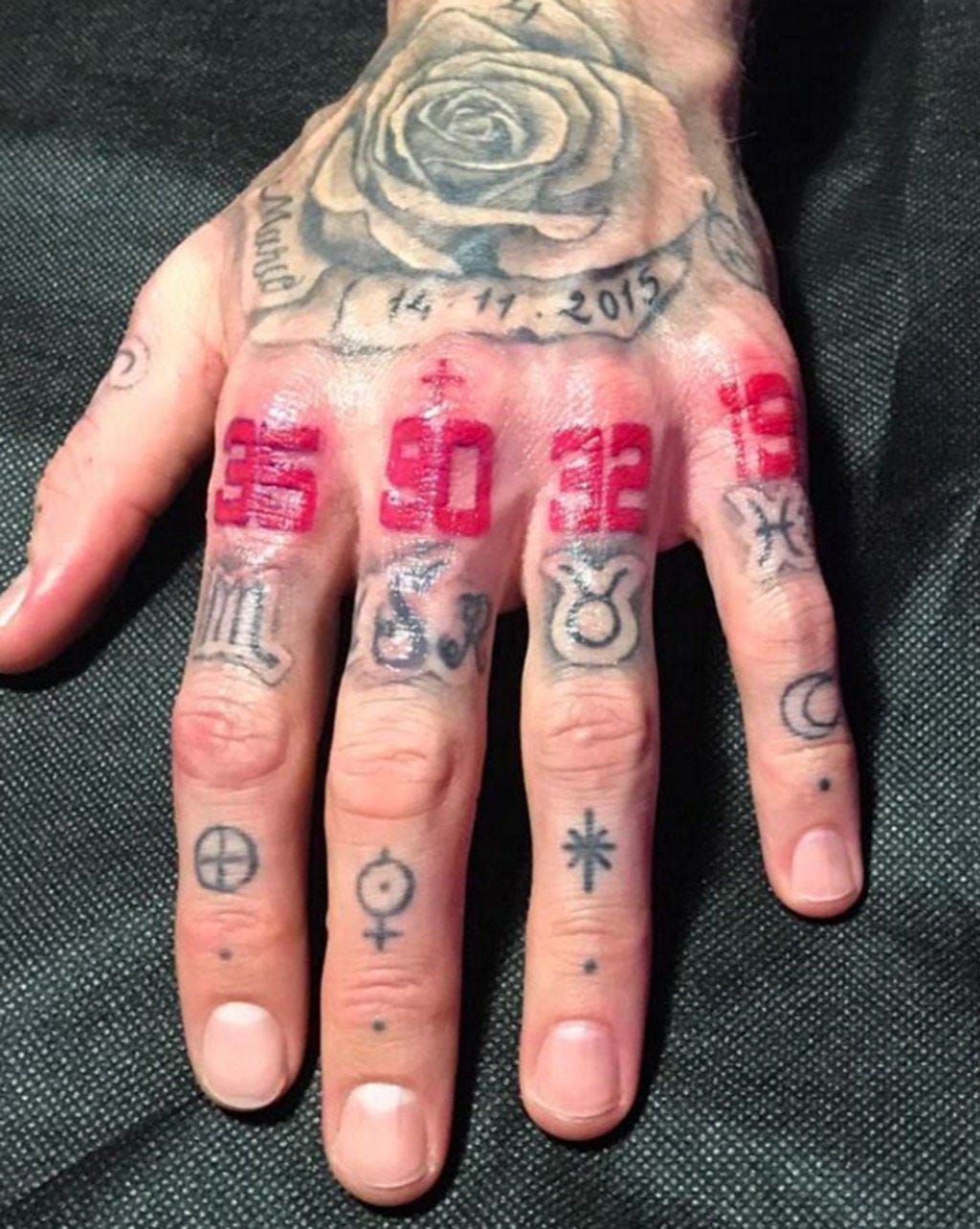
The hand work is smaller, but it is just as loaded. The red numbers across the knuckles are the most obvious part, sitting beside older black symbols, Roman numerals and a rose. The date 14-11-2015 appears around the rose and has been connected with an important family moment.
Ramos has also used his hands for names, birth information and small symbols connected with his children. One explanation described the numbers as a way to record details such as birth times and weights. It is a very Ramos-style idea: turn a personal fact into something that can sit permanently on the skin.
The rose gives the hand a softer focal point, while the bright red numbers make the piece look almost like a sports scoreboard. That contrast is what makes it stand out. It is sentimental, but it still has a sharp, competitive look.
The sleeves are packed with portraits, symbols and old-school pieces
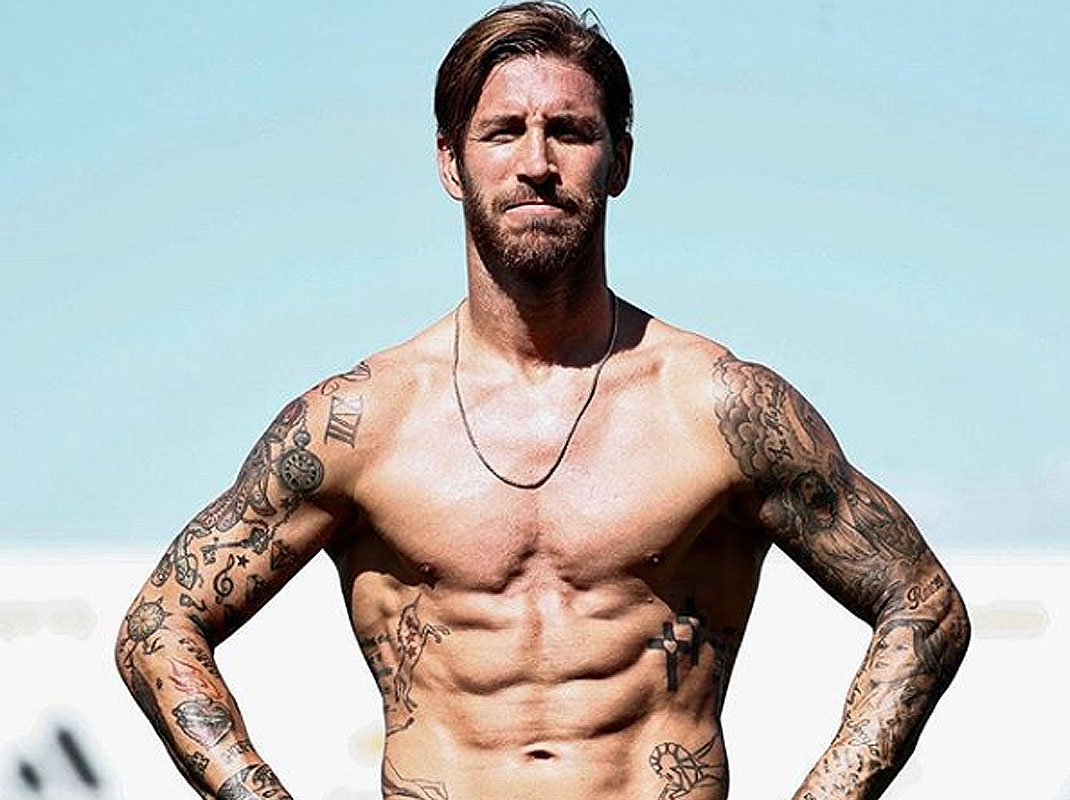
Both arms are covered with a mix of portraits, lettering, religious designs, animals and smaller symbols. From one angle the sleeves look fairly traditional, with shaded faces and bold outlines. From another, the newer pieces and small gaps make it obvious that the work has been added over many years.
Ramos has tattoos connected to friends, family and football figures, including a tribute to Antonio Puerta. Other designs reference art and music, such as Michael Jackson and a Salvador Dalí-inspired elephant. There are also Banksy-related images, which add a more playful, street-art edge to the sleeves.
The important thing is that the sleeves are not one single style. They move from realistic portraits to text, symbols and colourful images. That makes them feel like a personal collection rather than a matching set designed in one session.
Ramos also has visible work on his neck, legs and lower torso. The neck pieces are easy to spot when he is photographed shirtless, while the leg tattoos include trophy references and other career memories. Some of the smaller work only appears when he is wearing shorts or turns away from the camera.
One of the better-known lower-body pieces is linked with the 2014 Champions League final in Lisbon. Another tattoo honours Spain’s 2010 World Cup win. These designs give the legs the same job as the numbers on his hand: they keep important football memories close, even when the match is long over.
There are also more personal and slightly stranger pieces lower down, including a Banksy-inspired figure and a toy linked with one of his children. Those details stop the collection from becoming nothing but trophies. Ramos’s ink can be serious, religious, funny or sentimental depending on where you look.
Seen as a whole, Sergio Ramos’s tattoos are loud, detailed and full of references. Family names sit beside religious figures. Career numbers sit beside portraits, flowers and old-school symbols. Some meanings are confirmed, some are widely reported and some are simply impossible to know from a photograph.
That uncertainty is part of the fun. Ramos clearly likes tattoos that remember something, whether it is a son’s birth details, a World Cup, a late goal or a person he wants to keep close. He has never needed one neat theme to tie everything together.
The strongest photographs show why one image is never enough for a heavily tattooed footballer. A front view catches the family lettering and 1986, a back view shows the lion and dreamcatcher, and close-ups explain the red numbers on his hand. Put those views together and the collection starts to make sense.
Ramos’s body art is busy, but it is not random. It is a lifetime of football, family and personal references written in different styles. The designs do not all have the same mood, and that is exactly what makes the collection feel like his.