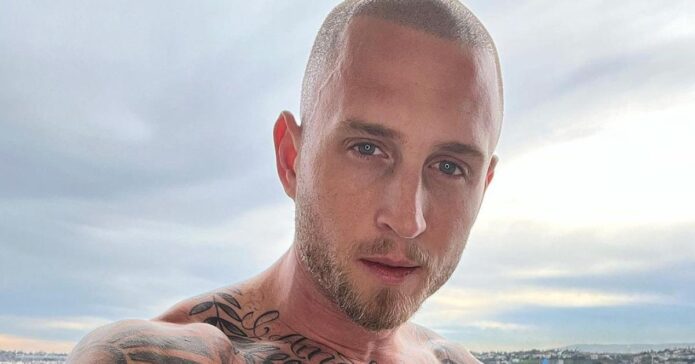
Chet Hanks has never really gone for the low-key approach. The same goes for his tattoos. When he takes his shirt off, the first thing you notice is a lot of black-and-grey work spread across his chest, shoulders, back and arms. It is not a neat little set of matching symbols either. There are religious images, family lettering, old-school shapes and pieces that look like they were added at very different points in his life.
That mix is what makes his ink interesting. Some designs have a clear story behind them, while others are simply there because he liked the look. Hanks has also changed the feel of his collection over time. A huge cross appeared on his chest during a period when he talked openly about faith and trying to live more honestly. Older tattoos still sit around it, including the eye inside a triangle, the heart for his daughter and the large work across his back.
He has said that people sometimes read too much into his tattoos. The eye in a triangle, for example, led to endless online conspiracy theories. Hanks pushed back on that and explained that he is “extremely spiritual”. That is a useful bit of context. A design can look dramatic without having the wild meaning strangers attach to it.
The eye inside the triangle is about faith, not a secret society
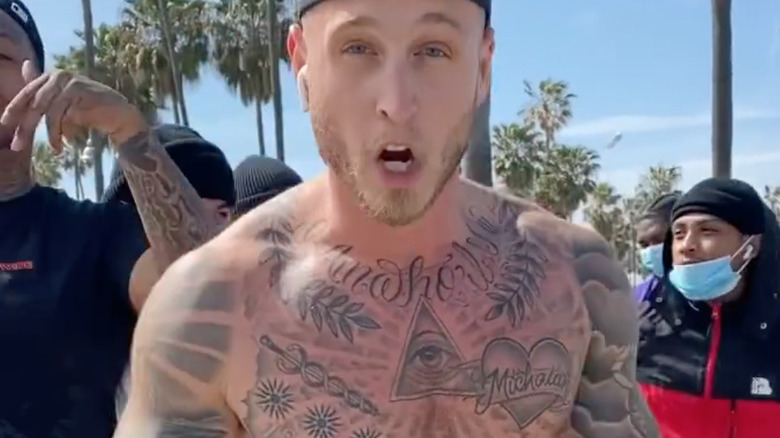
The most recognisable tattoo on Chet Hanks’ chest is the eye inside a triangle. It sits in the centre of an ornate piece with laurel leaves and decorative shading around it. In photographs, the design can look like a classic all-seeing-eye symbol, which is why people online quickly connected it to the Illuminati. Hanks has directly rejected that idea.
His explanation is much simpler. He has described the tattoo as spiritual and tied it to his belief that God watches over people and has a plan for their lives. That does not mean every detail around the eye has a separate confirmed meaning. The safest read is the one he gave himself: this is a faith-based piece, not proof of membership in some hidden organisation.
The placement also makes sense visually. A chest tattoo like this becomes the centre of the whole upper body. The triangle gives the eye a strong outline, while the leaves and darker shading spread it out toward the shoulders. In a shirtless photo, it acts almost like an emblem, which is probably why it gets noticed before the smaller lettering and side pieces.
It is also a good example of how Hanks’ tattoos can be personal without being subtle. The design is bold and easy to spot, but the reason behind it is fairly direct. He wanted a reminder of his beliefs, and he chose a symbol that already carries a long history in religious art.
The heart over his chest is for his daughter, Micaiah
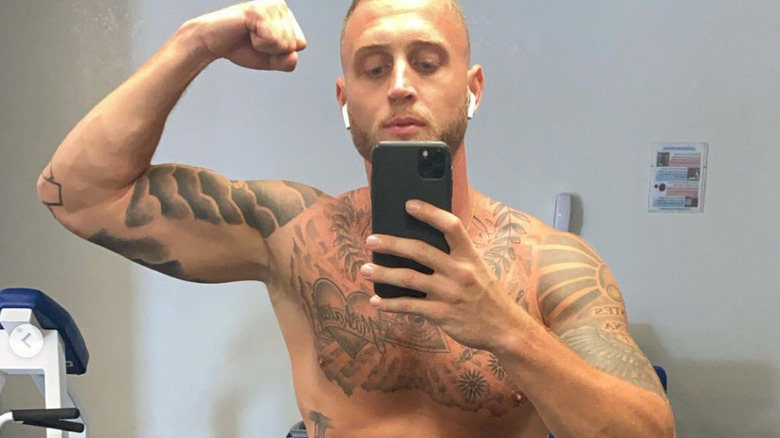
Just below the central chest work is one of the most personal tattoos in the collection: a heart containing the name “MICAIAH.” Micaiah is Hanks’ daughter, and the tattoo is a permanent family tribute rather than a vague decorative design. It is positioned over the heart, so the placement does a lot of the emotional work before anyone explains it.
Hanks has connected becoming a father with getting clean and changing direction. He has spoken about the reality of knowing a baby was on the way and how that gave him a reason to shut one chapter and start another. The tattoo does not tell that whole story by itself, but it sits right in the middle of it.
In close photographs, the lettering is easy to read, while the heart outline gives the name a clear frame. That makes it different from the more complicated religious imagery around it. There is no need to guess what the word means or attach a dramatic theory to it. It is his daughter’s name, placed in a spot that makes the tribute impossible to miss.
The piece also shows why looking at the collection as one giant wall of ink misses the point. The eye tattoo is about belief. The Micaiah piece is about family and a personal turning point. They sit close together, but they are not saying the same thing.
The Byzantine cross became a huge chest statement
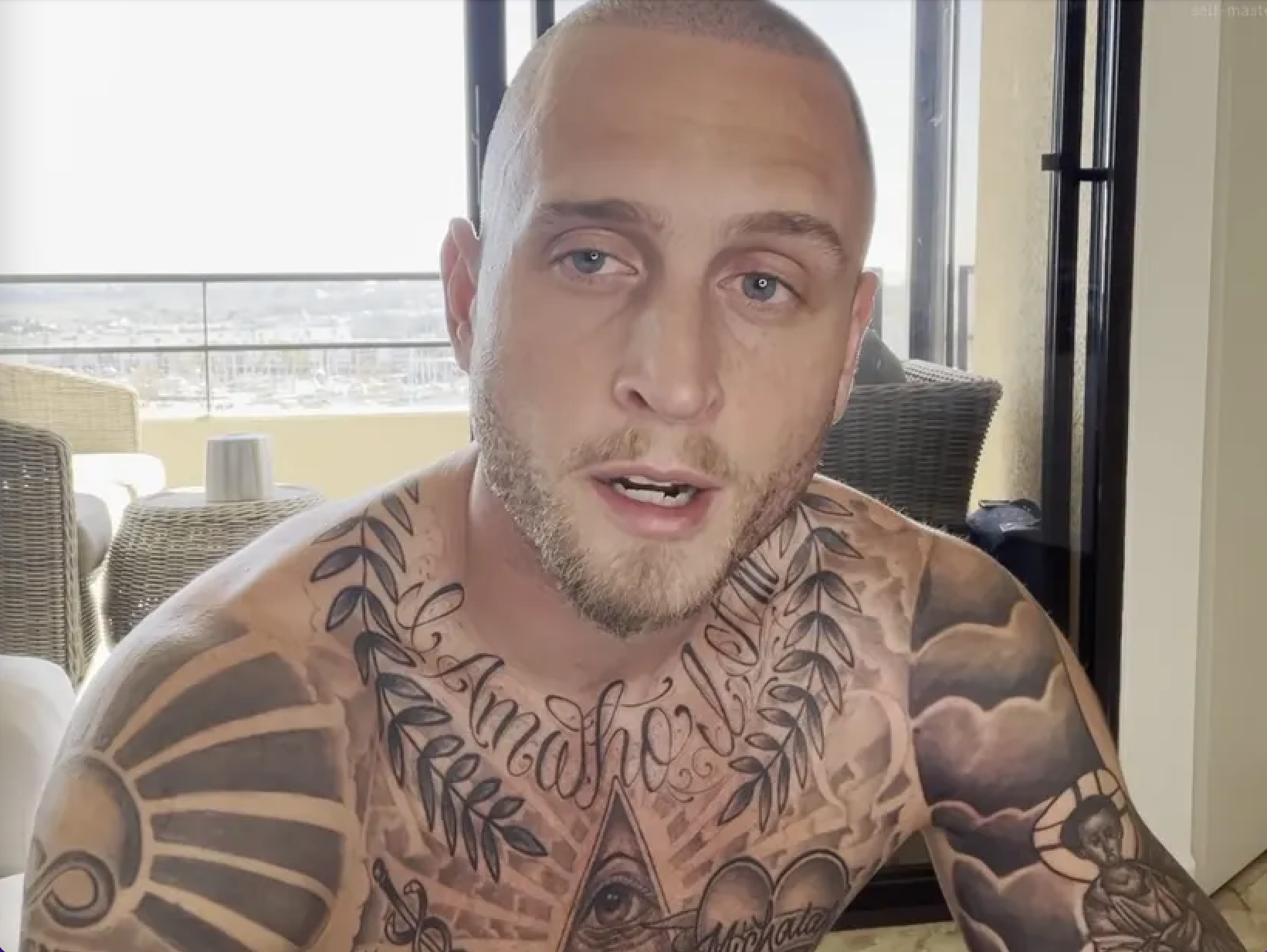
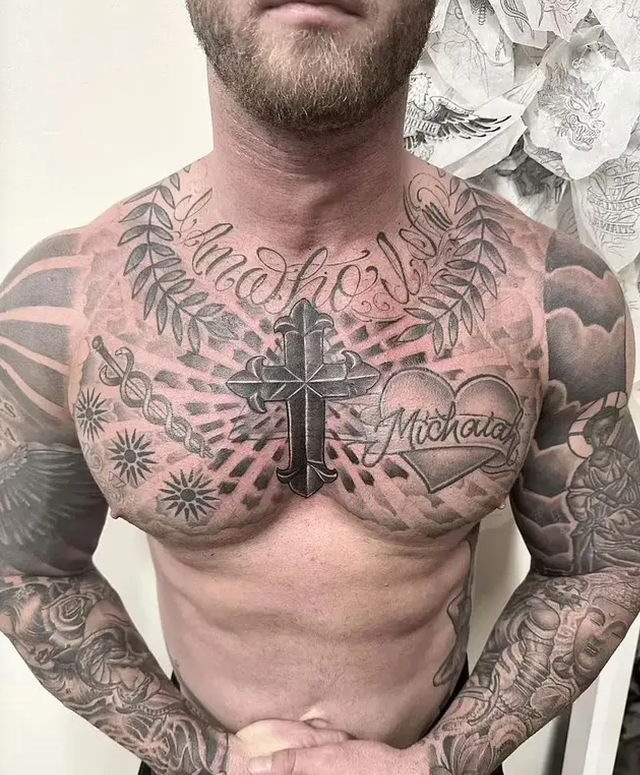
In 2023, Hanks revealed a much larger cross tattoo across his chest. It is heavier and more dramatic than the smaller symbols elsewhere on his body, with thick black lines, rays and ornate details spreading across the upper torso. The cross became the headline piece because it changed the balance of the whole collection.
He described it as part of a new direction and linked it to serving God. The idea was not presented as a fashion change or a random addition. Hanks talked about dropping a public persona that had become a kind of character and trying to live in a way that felt more real to him.
The design is big enough to read from across a room, but the close-up details matter. The central cross is only part of it. There is lettering above the chest, a heart shape to one side and ornamental work that runs into the existing tattoos. That makes the piece feel layered instead of looking like a single flash design placed on empty skin.
It also sits in an interesting place in his tattoo timeline. Older images show the eye, family name and other chest work before the cross arrived. Newer photos show the cross taking over the centre. That does not erase the rest of the collection, but it changes which tattoo the eye lands on first.
His arms and shoulders are packed with religious and symbolic work
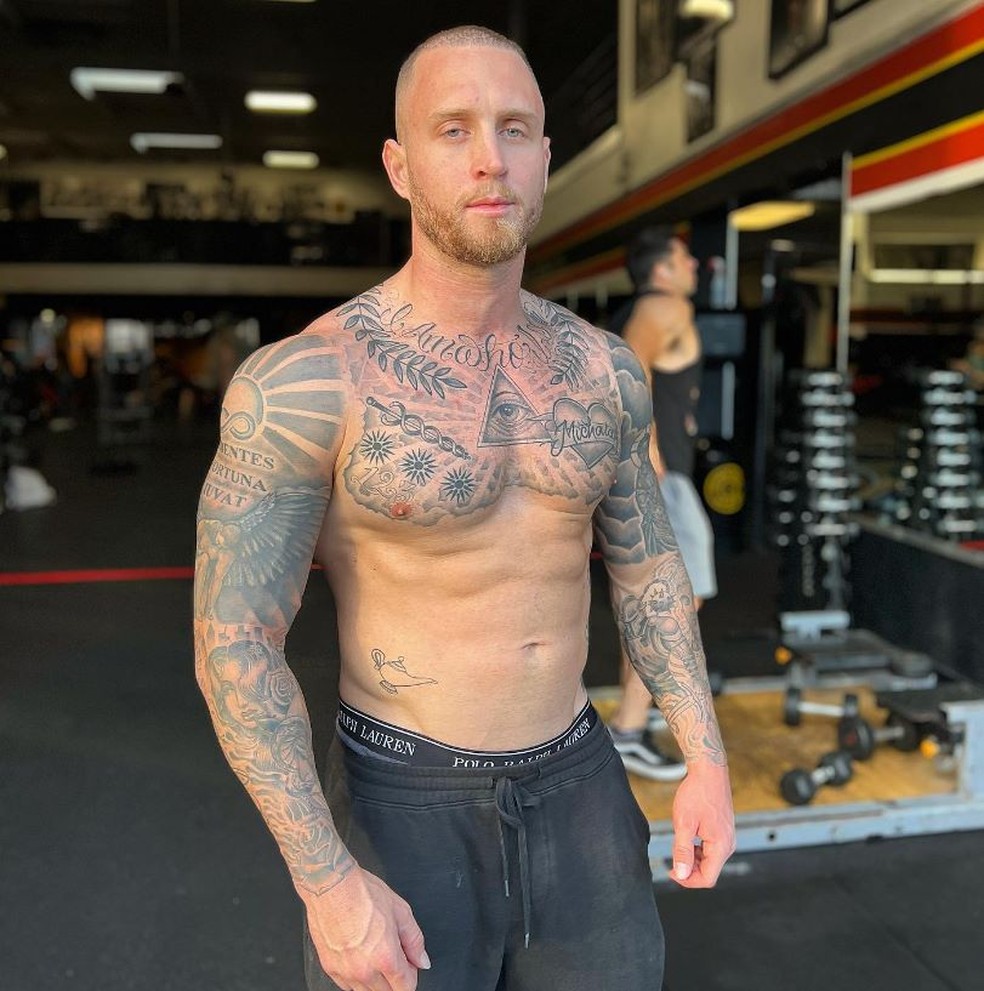
The chest is only the start. Hanks has large sleeves and shoulder pieces that bring in saints, clouds, floral details, symbols and heavy black shading. One phrase reported on his right side is “Audentes Fortuna Juvat,” usually translated as “fortune favours the bold.” It fits the loud, fearless attitude he often puts forward, although the tattoo itself is still best described by what can actually be seen rather than by guessing at every personal reason behind it.
Photos from different years show how difficult it is to make a perfect inventory of his arms. Sleeves overlap, clothing covers sections and the lighting changes the way the shading looks. A gym mirror shot might show the bicep and chest while hiding the forearm. A beach photo might reveal the side of his body but lose the details around the shoulder.
The religious imagery is more consistent. A Virgin Mary and baby Jesus piece has been described on his left shoulder, while other photos show saintly figures and cloud-like backgrounds. These designs sit comfortably beside the eye and cross because they share the same general visual language: dark outlines, strong contrast and a lot of detail packed into a small area.
That does not mean every tattoo has one big spiritual message. Hanks’ body art includes plenty of smaller marks and older pieces that may have been chosen for style or impulse. The collection works because it looks lived-in. It has the feel of someone adding new work whenever a particular moment, idea or image grabs them.
The back piece adds another layer to the collection
Hanks has also shown a large cross and religious back tattoo, which is easy to miss when he is photographed from the front. Recent coverage of his family has drawn attention to the matching cross connection with Rita Wilson, but the back work deserves its own look rather than being treated as a footnote to the chest tattoo.
A back piece changes the way a tattoo collection reads. Front-facing photos tend to make the chest and sleeves look like the whole story. Turn around, though, and there is another large area of ink that carries its own weight. The cross runs across a broad section of the back, giving him a strong silhouette from behind.
The matching-family angle adds a softer side to what can otherwise look like a very intense set of tattoos. It is not just about religious symbols or the shock of a shirtless photo. Matching or related work can be a way of keeping family close, even when the designs themselves are large and dramatic.
There are limits to what can be confirmed from public photographs. Some smaller marks around the ribs and sides are visible in certain shots but disappear in others. It is better to name the pieces that can be clearly identified — the eye, the Micaiah heart, the cross, the religious shoulder work and the lettering — than to turn every shadow into a new tattoo.
What Chet Hanks’ tattoos say as a group
Looked at together, the tattoos move through a few clear themes: faith, family, recovery and self-invention. The eye and cross designs are the most openly spiritual. The Micaiah heart is the most direct family tribute. The lettering and sleeves add the louder, more public side of his personality.
There is also a timeline running through the collection. Earlier photos show an energetic mix of chest symbols and arm work. The later cross adds a much heavier centrepiece and changes the shape of the upper body. That kind of change is normal for someone who has been getting tattooed for years. Ink does not stay frozen; old designs get surrounded, covered, or made to feel different by the pieces added beside them.
Hanks’ tattoos are not all meant to be decoded like a puzzle. Some have a clear explanation because he has talked about them. Others are simply visible designs with no reliable interview attached. That distinction matters, especially with symbols that attract online theories. The picture is more interesting when the facts are kept separate from the guesses.
What stands out most is the contrast between the bold look and the fairly ordinary reasons behind several pieces. A giant eye can come from personal faith. A heart can simply carry a daughter’s name. A cross can mark a new chapter. The tattoos look intense, but the stories behind them are often about family, belief and trying to move forward.
That is what makes Chet Hanks’ ink worth looking at closely. It is busy, sometimes theatrical and spread across a lot of skin, but it is not one single style. There are old pieces, newer work, family lettering, religious scenes and tattoos that are still only partly visible in public photos. The best way to read the collection is to take each design on its own terms, keep the confirmed details clear, and leave the rest open rather than inventing a story the photograph cannot prove.