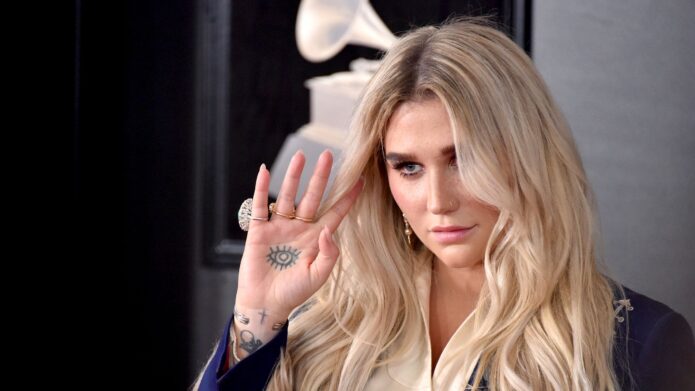
Kesha’s tattoos are as restless as her music. They move from tiny hand marks to bright traditional pieces, from a dollar sign tied to an old stage name to odd little pictures that look as if they were chosen because they made her laugh. Some designs are easy to see in a close-up. Others only show up when she turns her hands toward the camera or lifts an arm onstage. That makes a sensible guide more useful than a grand total. The exact count changes with new work, faded ink and tattoos that are covered by hair, clothing or makeup.
What can be said with confidence is that Kesha has built a collection with a very particular mood. There are eyes, planets, animals, lettering, old-school flash shapes and small personal references. She has talked openly about some of them, while other designs are best treated as visual observations rather than stories with a confirmed meaning. The sections below separate those two things. A photograph can show the shape and location. An interview can explain why it matters. One does not automatically prove the other.
Kesha’s palm eye is one of her clearest visible tattoos
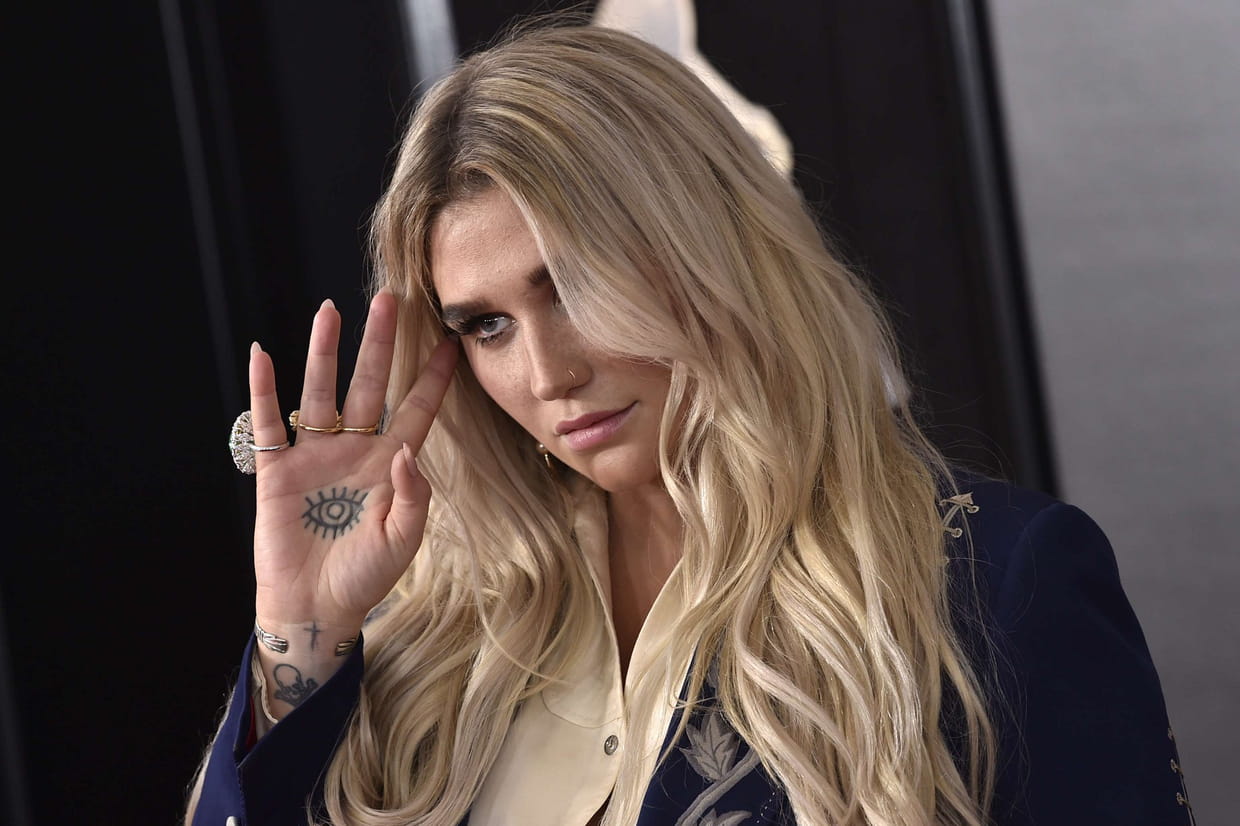
The eye on Kesha’s palm is one of the tattoos people notice first because it appears whenever she opens her hand toward a camera. A close photograph shows a dark, graphic eye set into the palm, with small marks and older lines around it. The placement is unusual for a reason that is mostly practical: palm tattoos are difficult to keep looking fresh. The skin is constantly moving, washing and rubbing against other surfaces, so fine details can soften faster than they would on an upper arm or shoulder.
That softening is part of why different photographs can make the design look slightly different. In one image the eye reads as a strong black symbol. In another, the surrounding lines and the angle of the hand change its proportions. The tattoo is still recognisable, but it is not a fixed logo photographed under identical conditions. Anyone trying to copy it would need to think about the hand’s shape, how the palm folds and how much detail will survive in that location.
The same close-ups show that the palm is not an isolated blank space. Small marks run across the hands and wrists, and a few are difficult to separate from shadows or old, faded ink. It is safer to call the central design an eye and describe the nearby marks only when they are sharp enough to identify. There is no reliable reason to assign one sweeping mystical meaning to every line. The image gives us a clear design and a clear placement; that is already enough to make it interesting.
Kesha has also used the hand as part of her visual identity onstage. A palm turned toward the audience can look like a tiny flash card, while a hand resting at her side can hide almost everything. That changing visibility explains why the tattoo appears prominently in some portraits and barely registers in others. It is a small piece with a surprisingly strong photographic effect.
The Saturn palm tattoo and the hidden hand designs
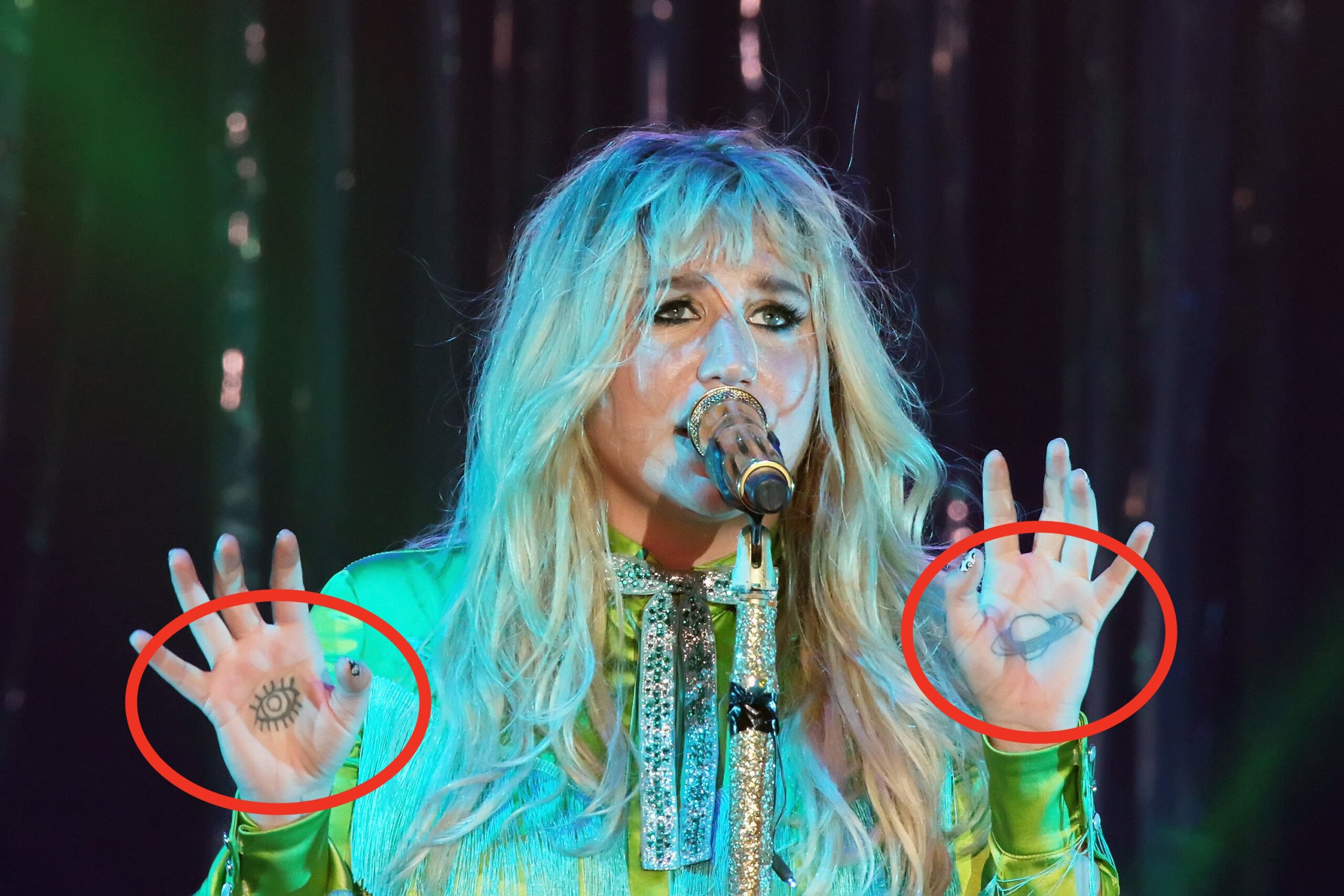
A second palm image shows a planet-like Saturn design, with a ring cutting across the shape. It sits on the other hand from the eye tattoo, giving the pair a loose visual conversation without making them a matching set. The planet is the kind of design that can be read quickly even when the photograph is not perfectly sharp. A round body, a sweeping ring and a dark outline are enough to establish the subject.
The Saturn design has often been discussed alongside other small hand tattoos, including tiny symbols on the fingers and marks near the wrists. Those pieces change the rhythm of the collection. Instead of one giant sleeve, Kesha’s hands work more like a patchwork of compact images. There is empty skin between them, which lets each symbol stay legible instead of disappearing into a solid block of ink.
Her relationship with small symbols also connects with the old dollar-sign identity attached to the name Ke$ha. The dollar sign was part of the spelling associated with her early career, and interviews have linked the mark to that period of her life. That does not mean every circular or star-like shape on her hands is another reference to money. It simply gives one documented symbol a place in the timeline. The useful distinction is between a design she has explained and a mark that only resembles something from her branding.
The hands are hard to catalogue because photographs catch them at different distances. A wide stage shot may show the planet and eye clearly while losing the tiny finger work. A beauty portrait can show the fingers but blur the palm. Kesha’s collection should therefore be read as a set of dated snapshots rather than a permanent inventory. The Saturn palm remains one of the strongest pieces in that group because its outline survives even when the rest of the hand is busy.
There are also visual hints of nautical and old-school imagery in the wider collection. Anchors and other small flash-style motifs have been reported in tattoo catalogues, but not every catalogue agrees on the exact count or placement. Where the photograph is soft, the honest description is simply a small mark near the hand or wrist. That may sound cautious, but it stops a blurry shape from turning into a made-up backstory.
Skull, rainbow and whale ink make the forearm playful
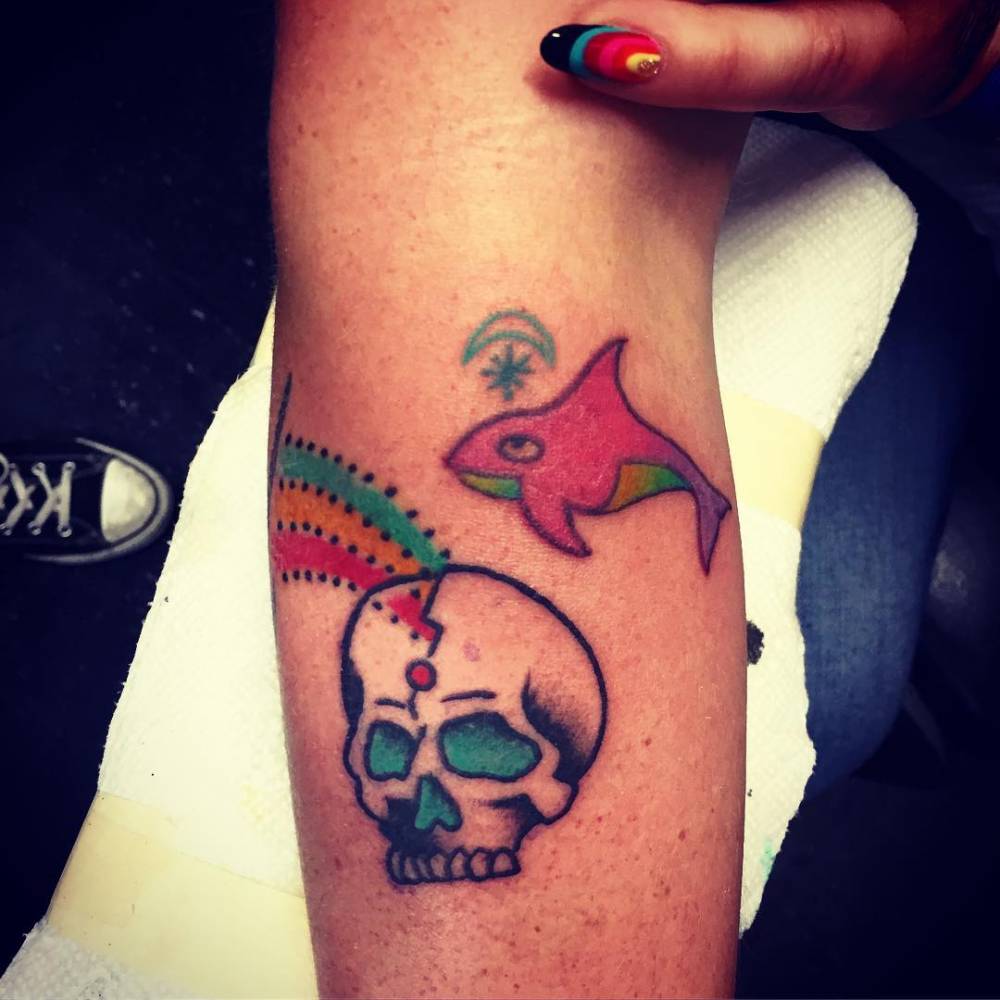
Kesha’s forearm work has a brighter, stranger energy than the hand pieces. One close-up shows a colourful group that includes a skull, rainbow-like colour and a small whale or sea creature. The designs use clear outlines and compact shapes rather than realistic shading. They look closer to collected flash tattoos than to one continuous scene, which lets the arm carry several unrelated ideas at once.
The skull is not presented as a grim, heavily shaded portrait. Its shape is compact and graphic, with colour around it that changes the mood. The rainbow detail keeps the group playful, while the nearby blue animal gives the arm a little movement. These are useful details for anyone studying the tattoo style: the designs rely on instantly readable silhouettes, bright accents and enough open skin for the pictures to stay separate.
TattooFilter’s catalogue connects some of this work with artist Walter McDonald. That information helps with attribution, but it does not automatically reveal what each image means to Kesha. A skull can be a favourite flash image, a joke, a reminder or simply a design she liked that day. The photograph confirms the skull and the surrounding colour. It does not confirm a private explanation.
The whale is especially easy to overinterpret because sea imagery can suggest travel, freedom or a connection with water. None of those ideas should be presented as fact without a direct comment from Kesha. It is enough to say that the small sea creature adds a softer note to a group otherwise built from bold symbols. The contrast is what makes the forearm memorable.
When the arm is photographed from farther away, these pieces can merge into a single colourful patch. A closer frame shows the separation between them and makes the outlines easier to follow. That difference matters for tattoo references. A reader looking for a skull tattoo needs the close crop, not a generic red-carpet portrait where the colours are only tiny specks.
The tiger hand and crescent finger tattoo
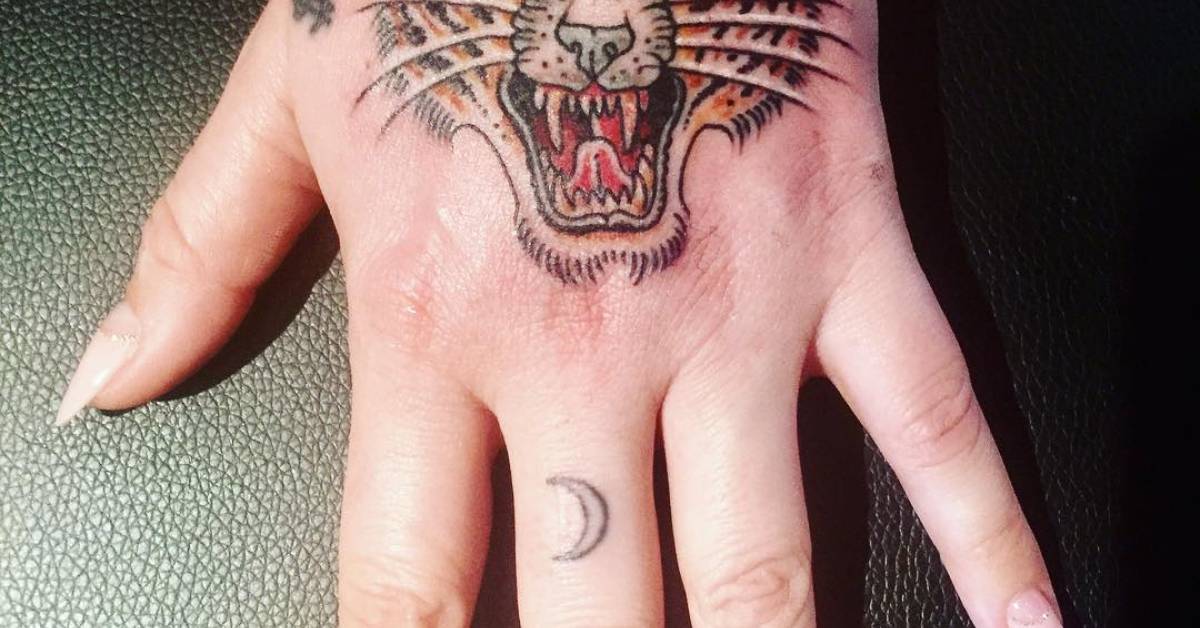
The tiger on Kesha’s hand is one of the most recognisable animal tattoos in the collection. The close-up shows the face in a traditional, black-lined style, with the eyes and muzzle doing most of the work. It is not a hidden micro tattoo. The tiger takes up enough of the hand to read immediately, but its placement still lets the fingers move naturally around it.
A small crescent appears on a finger in the same group of photographs. The curved shape is much quieter than the tiger, and that contrast is part of the appeal. One design is an obvious face; the other is a tiny mark that can disappear when the hand turns. The pair shows how Kesha mixes loud and understated pieces without trying to make every tattoo compete for attention.
TattooFilter associates the tiger work with artist Derrick Snodgrass. That gives the image a useful production detail. It also helps explain why the linework feels deliberate rather than like an accidental collection of doodles. The artist credit is supported by the catalogue, while the personal meaning of the tiger is not clearly established. Readers can appreciate the drawing without being told it represents a specific personality trait.
The tiger also demonstrates why body placement changes the way a tattoo ages visually. The back of the hand is exposed to sunlight, washing and constant motion. Strong outlines help the animal remain readable, but small interior details can soften. The photographed version should therefore be treated as a record of how it looked at that time, not a promise that every line will stay identical.
Other animal references have been reported in Kesha’s collection, including a panther and another tiger in wider catalogues. Those listings should stay separate from the hand tiger unless a photograph or interview ties them together. A celebrity tattoo guide becomes much more useful when it distinguishes a confirmed close-up from a design that appears only in a secondary list.
Live Free lettering turns the knuckles into a message
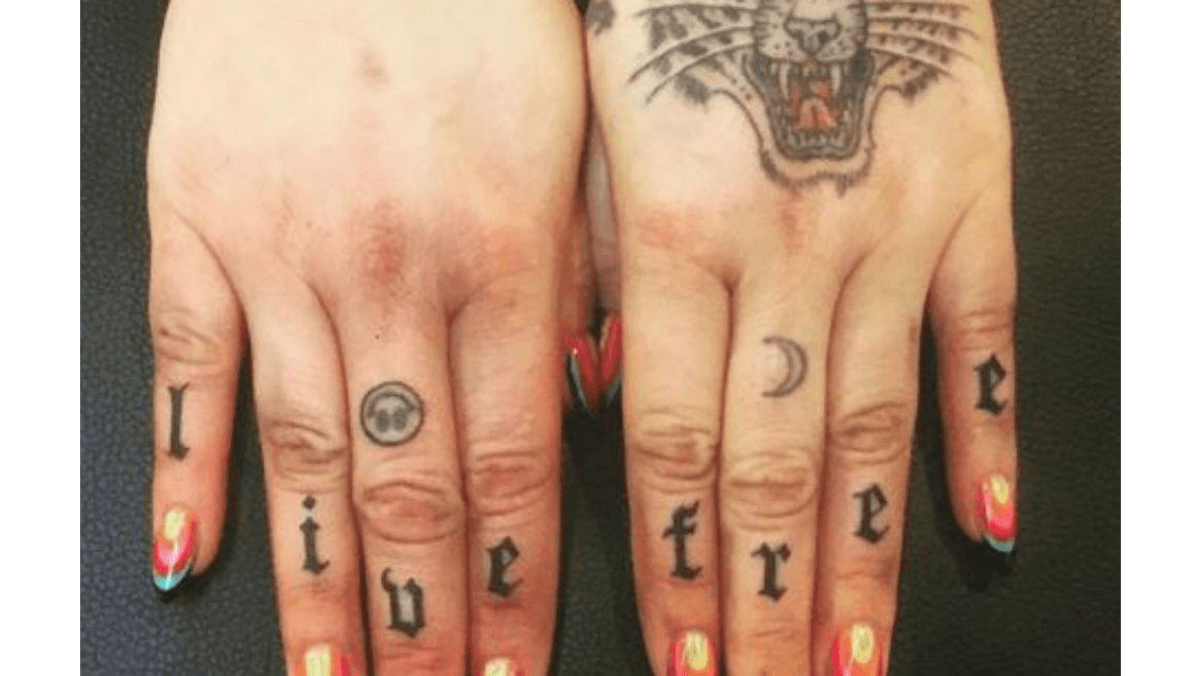
The words “LIVE FREE” across Kesha’s knuckles are among the most direct tattoos in her collection. Each letter occupies its own small space, so the phrase only becomes complete when both hands are shown together. A close-up makes the arrangement clear and also shows how the lettering sits beside the tiger, crescent and other small symbols.
Coverage of the tattoo places the work in the period when Kesha was publicly rebuilding her confidence and direction. The phrase fits that moment, but the wording itself is the part that can be stated with certainty. It is not necessary to invent a speech about freedom or claim that the inscription explains every other tattoo. The message is visible, the placement is visible and the timing is reported. That is a solid enough story.
Knuckle lettering has a practical limitation: the letters are exposed, small and spread across moving joints. They can fade or blur, especially if the original design uses thin lines. Kesha’s version stays readable because the words are short and the letters are placed with enough space between them. The phrase also photographs well in a hand shot, which is why it appears more clearly than many of her smaller wrist marks.
The live-free wording connects loosely with the collection’s other flashes of humour and independence, but it should not be treated as a master key for every symbol. Her tattoos include animals, planets, lettering and colourful pieces that do not all point in one direction. The charm is in that mix. The designs feel collected over time rather than planned as one brand exercise.
There are other unusual pieces in reports about Kesha, including a dead-fish tattoo matching one worn by Big Freedia after they spent time together around the song “Chasing Rainbows.” That matching design has a clear documented connection because the two artists discussed it. A spaceship, shark, panther and additional tiger imagery have also appeared in interviews and tattoo catalogues. Each belongs in the wider timeline, but the exact placement and current condition should be checked against a sharp photograph before being treated as settled.
Kesha’s tattoos are interesting because they refuse one neat explanation. The eye and Saturn make the hands feel cosmic. The tiger and skull bring in traditional flash. The rainbow and whale keep the forearm playful, while “LIVE FREE” gives the knuckles a plain spoken message. Some pieces have a story attached to them. Others are simply good designs that she chose to keep. The best way to read the collection is to name what the camera can actually show, add the context Kesha has provided, and leave the gaps alone.
That approach also leaves room for change. New tattoos may appear, old ones may fade and a design that was visible during one tour may be covered in the next. Kesha’s collection works best as a living map rather than a final count. If the image is clear, describe the design and location. If an interview supplies the meaning, include it. If neither is available, the tattoo can still be appreciated without a polished guess attached to it.