
Carol Biazin’s tattoos appear across her arms, shoulders and side. Five distinct photos show the ink in casual selfies, magazine styling and relaxed portraits; a Capricho interview provides the clearest account of what some designs mean.
The photographs show more of her ink than the published explanations cover, so visible forms and reported meanings are kept separate.
The red-haired mirror portrait and arm flash
In the mirror selfie, Biazin’s raised right arm shows several separate black-ink designs: a larger figure near the wrist, a darker cluster closer to the elbow and additional linework at the shoulder. Her bent arm and phone obscure parts of the view, but the image still shows how the pieces sit together.

The wrist and elbow designs are visible, but Capricho doesn’t identify them individually.
The ELLE Brasil cover composition
On the ELLE Brasil cover, Biazin crosses her arms in front of her torso. The pose brings the forearms together and reveals a separate design on her side. A gray background, white top and silver bangles make the black linework easy to see, while the crop hides parts of her arms.
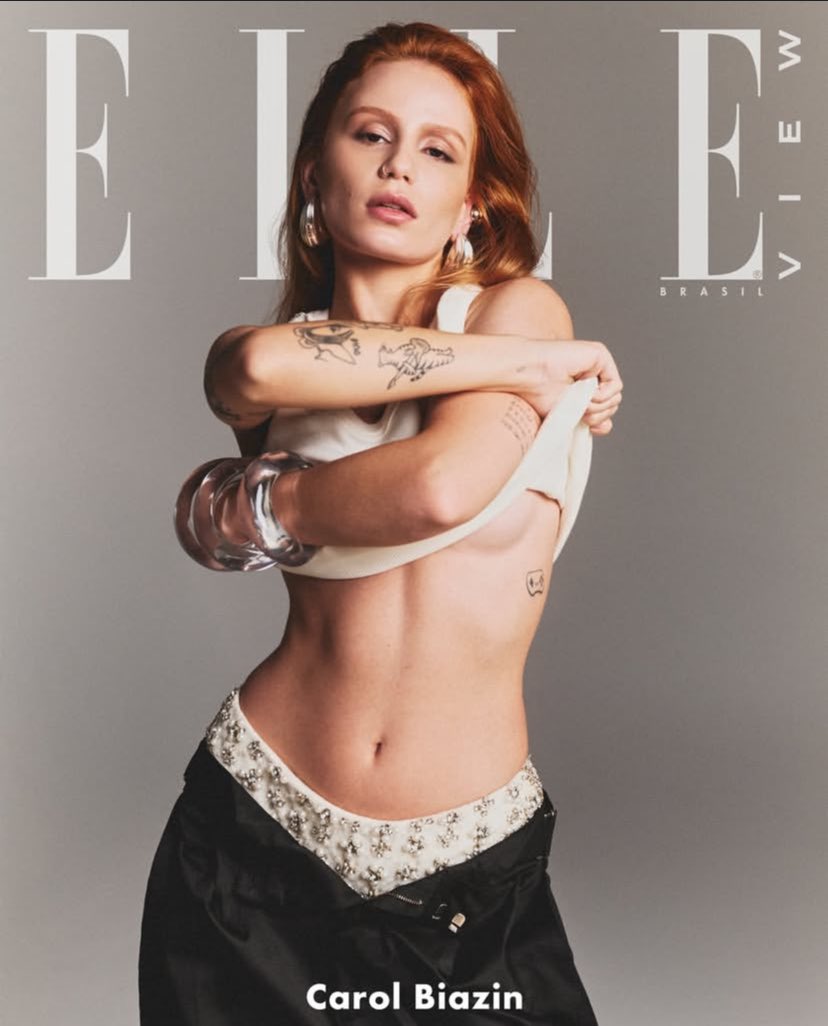
It’s a controlled editorial image, different from the mirror selfie. The cover shows placement under a bent-arm pose, but not a complete list of the tattoos.
The close selfie with lettering and symbols
A close selfie in a green shirt brings lettering, angular shapes and smaller motifs on Biazin’s upper arm and forearm near the lens. The crop makes some marks look denser than in the wider photos, but it doesn’t provide a reliable translation or meaning for them.

The sunglasses and indoor setting make this a casual portrait rather than a studio record. The close view helps with placement and linework; the source doesn’t provide a translation for the lettering.
The warm Steal the Look arm portrait
Steal the Look’s warm interior photo shows Biazin angled toward the camera, with a tattooed arm crossing the lower part of the frame. The light and distance soften small details, while the darker marks remain visible against the room and clothing.
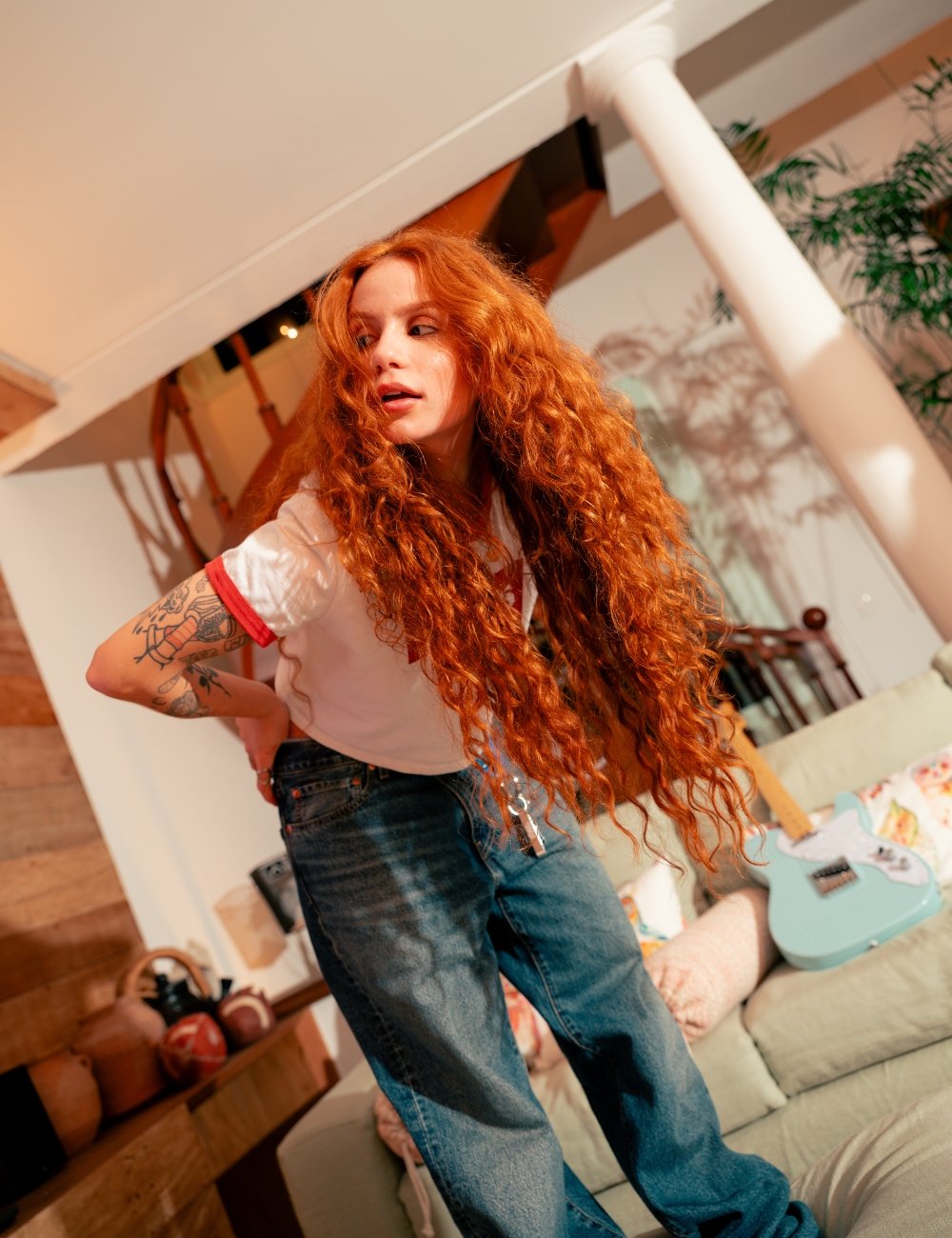
The accompanying interview describes her preference for practical, personal clothing during the No Escuro era. The photo shows the tattoos within that styling, but doesn’t match a specific visible mark to a story.
The hammock portrait and shoulder linework
In the second Steal the Look image, Biazin sits in a hammock wearing a cap and scarf. Her upper arm turns toward the camera, showing linework along the shoulder and arm; the bent pose and darker light hide some smaller details.
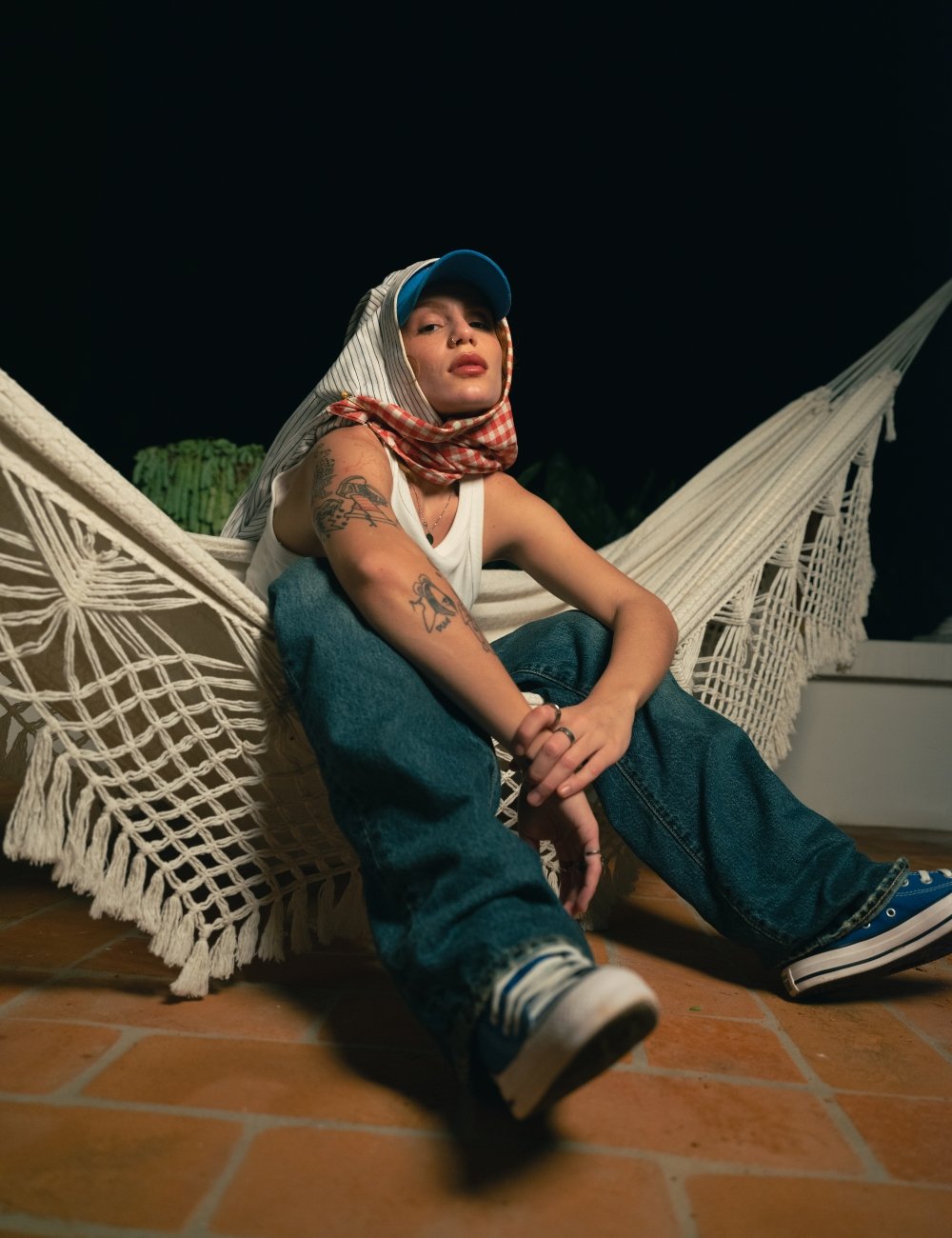
It adds a shoulder view that the mirror, cover and close selfie don’t provide.
What the documented interview adds
Capricho reports three specific stories: one tattoo is connected to No Escuro, Quem É Você?; a red middle-finger design was made spontaneously at a party; and a video-game-controller tattoo reflects Biazin’s playful side.
The interview doesn’t identify every mark in the photos. It gives context for those designs only, leaving other visible lettering and symbols without a published explanation.
How the five photographs differ
The five inline photos show different body areas and settings: the mirror selfie, ELLE Brasil cover, close selfie, warm Steal the Look portrait and hammock image. A separate featured portrait identifies Biazin; it isn’t used as evidence of a tattoo.
What remains uncertain
Some small designs are partly hidden by clothing, hair, a phone or the crop. The photographs also come from different settings and dates, so they don’t form one complete map of her tattoos. The neck, side and arm details should be described only as far as the images and reporting allow.
Final thoughts on style
Across the photos, linework, lettering and darker filled shapes sit as separate pieces on the arms and shoulder, not as one uninterrupted sleeve.