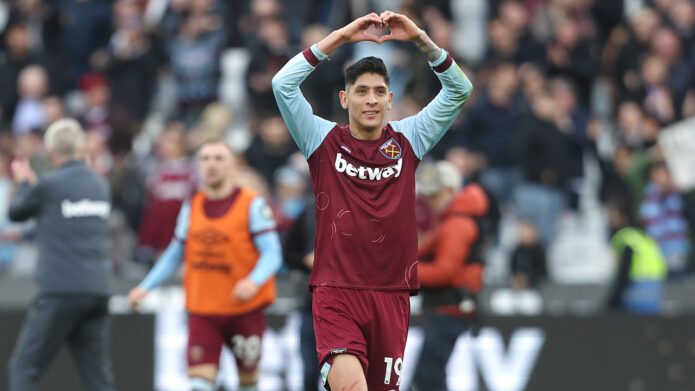
Edson Álvarez’s tattoos are documented through two kinds of evidence: his own explanation of meaningful arm and rib designs, and photographs that show what later additions look like on skin. The newest image is especially striking because it reveals a large Gohan tattoo on his back, while an earlier football photograph shows part of the tattooed arm he has discussed publicly.
This guide keeps those sources separate. The three original tattoo photographs are mapped into the sections where they belong, and two additional face-visible portraits are marked as supplemental context. A portrait can identify Álvarez, but it cannot establish the shape of a hidden tattoo. That distinction matters when the goal is reliable tattoo documentation rather than a loose celebrity image gallery.
The new Gohan back tattoo
The clearest recent tattoo image is not a match photograph. It is a close view of Edson Álvarez’s bare back, published alongside a Spanish report about a new design. The image shows a large anime figure with spiked hair and a fierce expression, placed high on the back. The report identifies the character as Gohan in his Super Saiyan 2 transformation from Dragon Ball Z.
That description matters because the picture itself establishes the visual subject, while the accompanying report supplies the identification. The tattoo is still visibly fresh in the photograph, with red skin around the dark outlines and shaded figure. The redness is part of the image context, not a reason to diagnose the healing process. It simply helps date the photograph and explains why the lines look especially sharp against the surrounding skin.
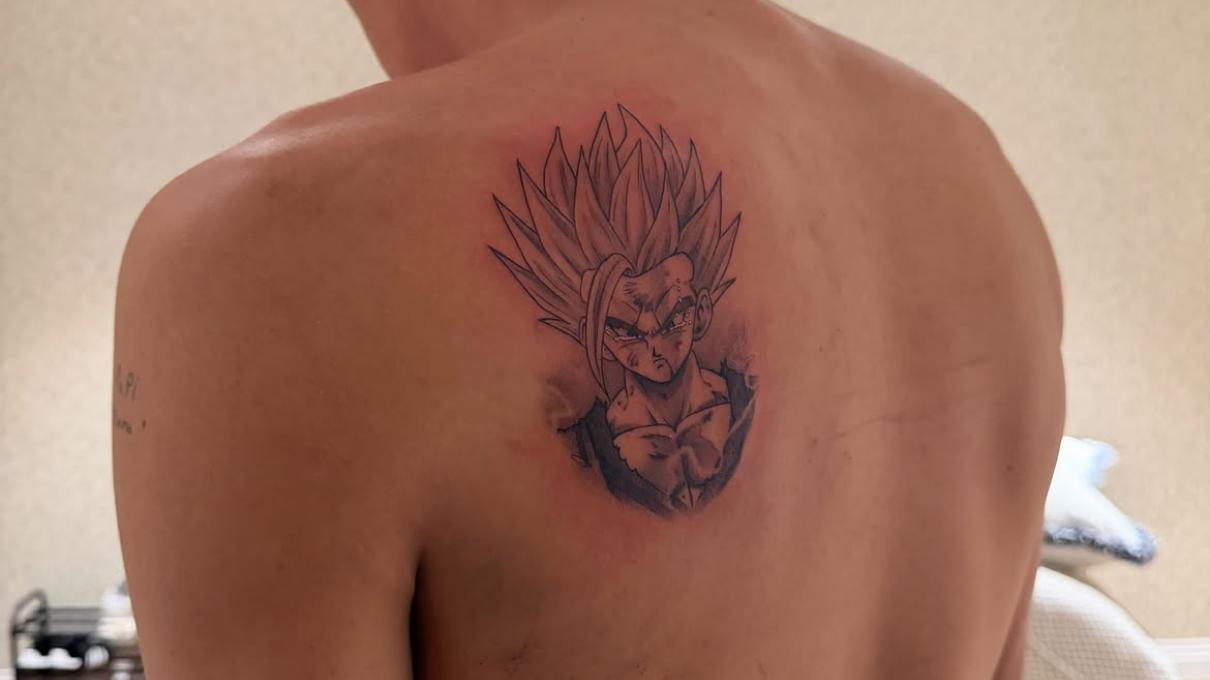
The composition also makes this the strongest tattoo-bearing file in the set. The camera is close enough to show the character’s face, hair and upper torso, but wide enough to establish that the design is centered on Álvarez’s back. This is a distinct original photograph, not a crop taken from one of the football portraits. It therefore earns the first inline position after the section has introduced the design.
The report says Álvarez shared fourteen images after an absence from the Mexico squad and that the tattoo was one of the post’s notable details. It describes the tattoo as apparently new rather than claiming a confirmed date from the artist or the player. That distinction is preserved here. The image documents what was visible in October 2026, while the exact appointment date and artist remain unconfirmed.
The left-arm tattoo and the designs he named
The second tattoo-bearing photograph comes from a different period and serves a different purpose. It shows Álvarez in a West Ham shirt, with the exposed arm and wrist area visible. The image is not a close-up, so it cannot support a detailed catalogue of every line. It does, however, show why the player’s own description of his arm work is useful when read alongside photographs.
In the official West Ham programme interview, Álvarez said that half of his left arm was tattooed and that he also had a tattoo on his ribs. He described the arm as several individual designs grouped into a larger tattooed area. He specifically named his two daughters, a lion and a warrior among the meaningful subjects. The interview is the strongest source for the personal inventory because it comes directly from the player.
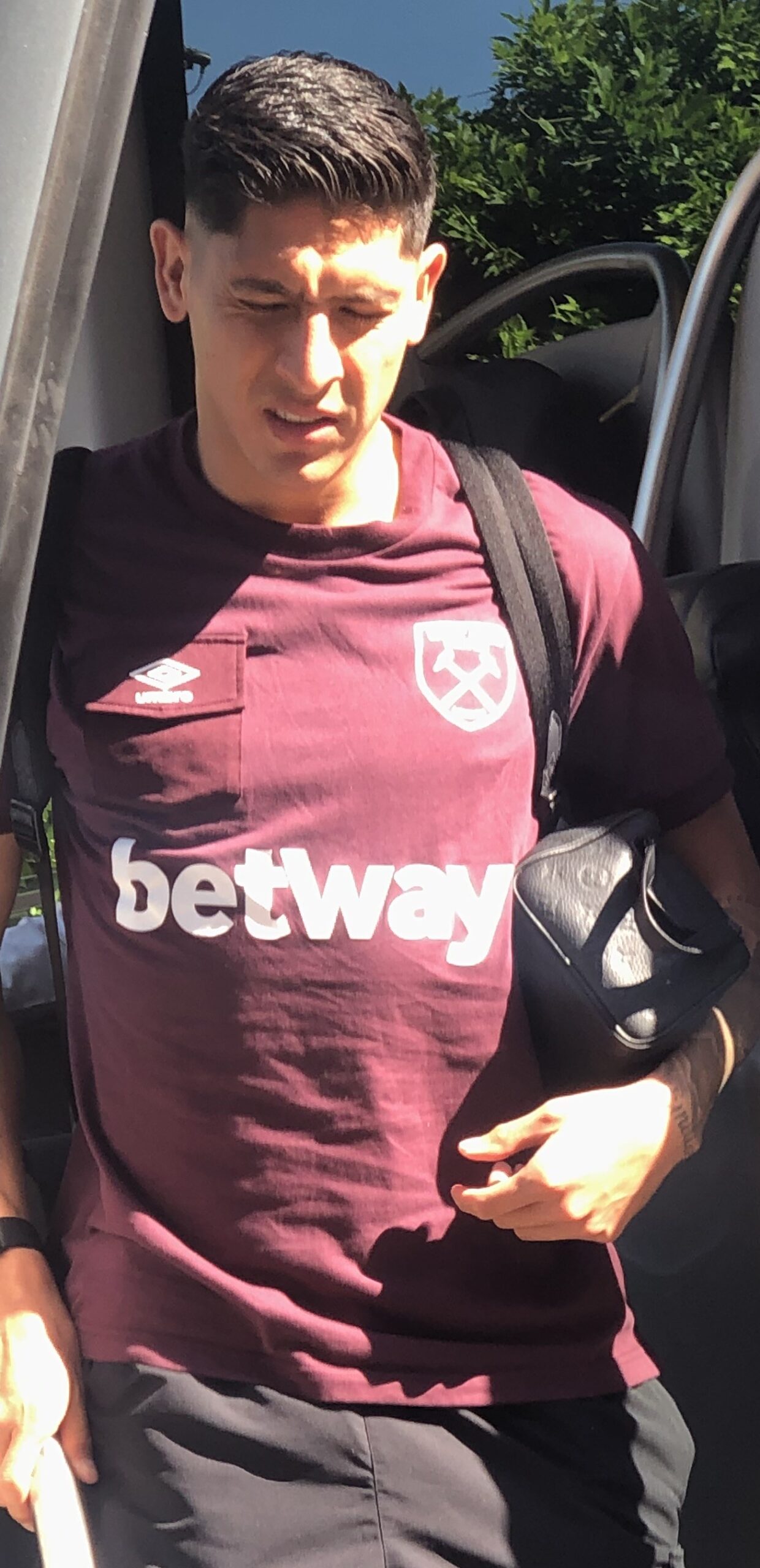
The photograph should still be read carefully. A sleeve-like collection can contain names, figures and smaller elements that are hidden by fabric, angle or distance. The visible forearm marks cannot be labelled as the lion, warrior or daughters’ names without a closer source that identifies each design. The section therefore connects the image to the interview without pretending that every visible dark shape has been decoded.
The rib tattoo also deserves separate treatment. Álvarez said that it hurt the most, but the selected photograph does not expose the ribs, so no image-based claim is made about its shape. That is an important boundary for a visual guide. The interview confirms that the rib tattoo exists, while the photograph confirms that arm ink was visible in another setting. The two kinds of evidence complement each other rather than replacing one another.
The official profile that shows the arm work
The official West Ham profile makes the arm record easier to inspect because the face and the tattooed limb appear in the same original photograph. The sleeve-like coverage is visible below the short sleeve, while the face confirms that the subject is Álvarez. It is still not a complete catalogue: the ribs remain covered and some arm designs are partly obscured by angle and hand position.
This file also strengthens the distinction between direct visual evidence and first-person explanation. The photograph confirms substantial left-arm coverage, while the interview supplies the names and family significance that the pixels alone cannot provide. The two sources point in the same direction without requiring a guess about which individual line represents the lion, warrior or daughters’ names.
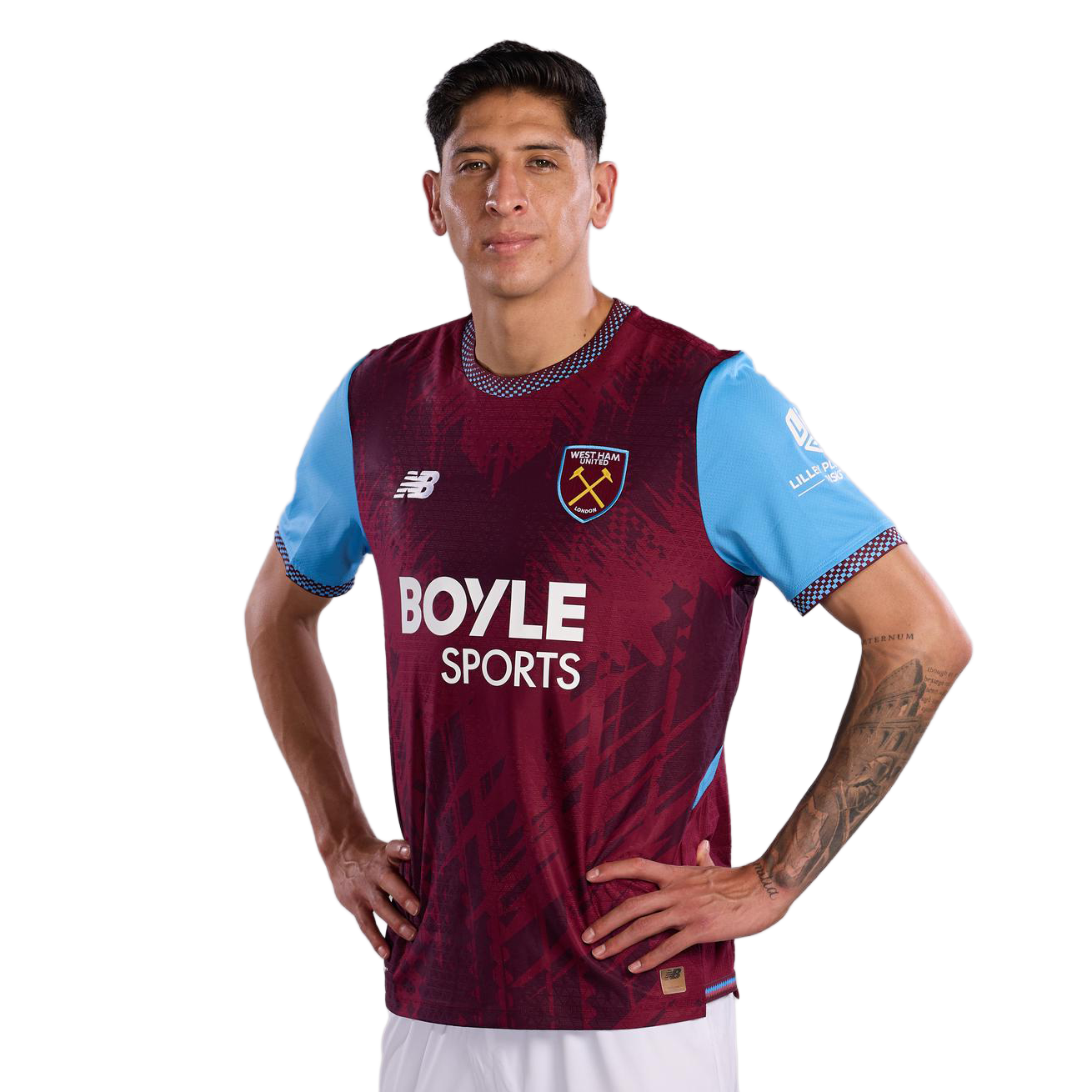
The profile is therefore used as a third tattoo-bearing original, not as a generic portrait. Its face visibility is useful for identity, but its editorial job is to show the arm ink more clearly than the older match frame. The featured image remains a separate portrait so no body photograph is duplicated across roles.
The football timeline around the photographs
The football timeline explains why the available tattoo photographs look so different. Álvarez moved from Club América to Ajax and then to West Ham, while also becoming a regular for Mexico. Training, match and social images show different clothing and different levels of access to his skin. A back photograph from a personal post can reveal a new design that a fully covered match shirt cannot.
The Ajax-era portrait in this section is not a tattoo photograph. It is included because it represents the club context in which Álvarez became widely recognizable. The frame also demonstrates the limit of match coverage: a clear face and shirt do not tell us what lies beneath the kit. That limit is why the article relies on the dedicated back photograph for the Gohan design.
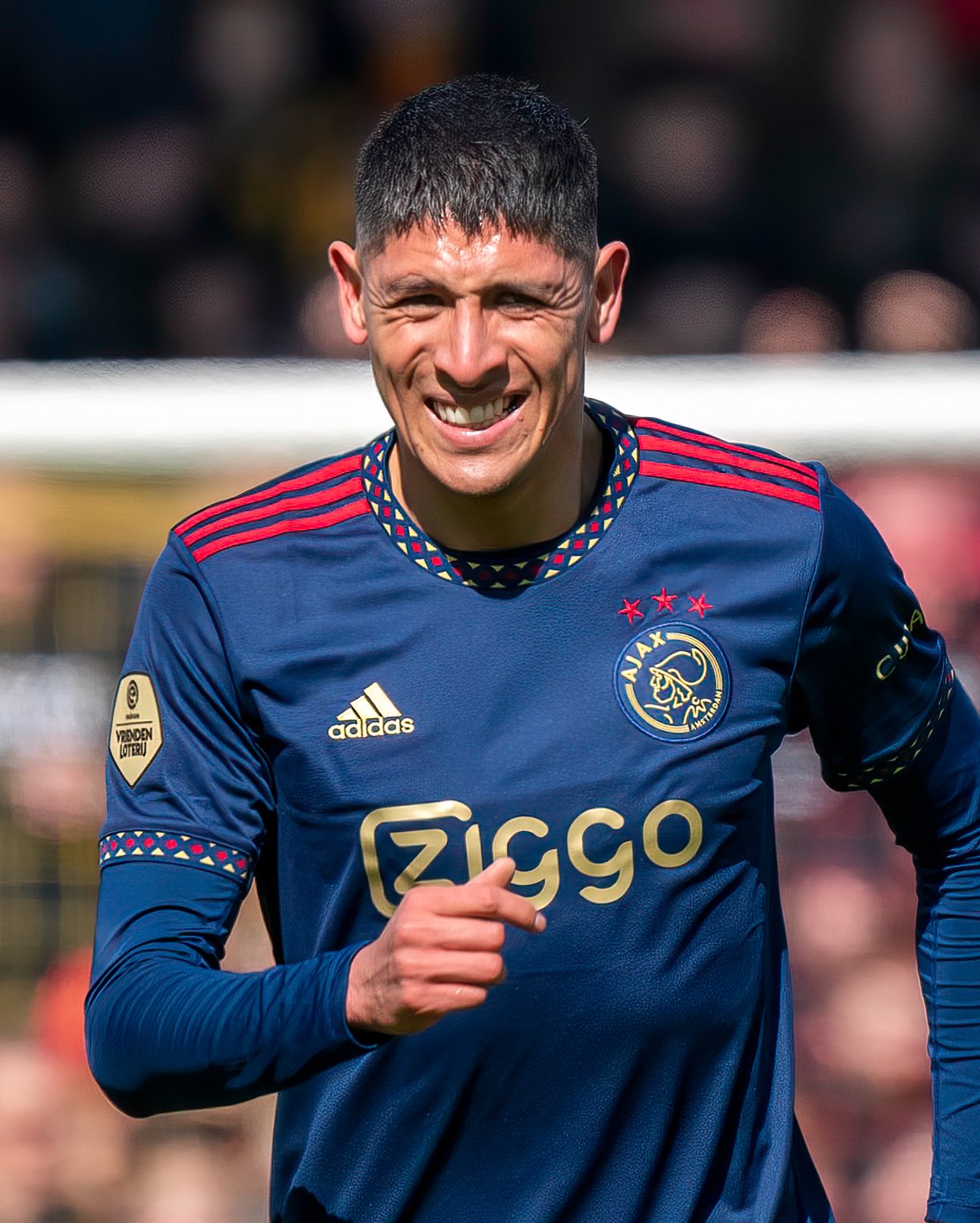
The official West Ham interview adds a second timeline marker. In January 2024, Álvarez discussed tattoos as part of a programme question and described designs connected to family and symbolic figures. The later Excelsior report in October 2026 describes the Gohan back tattoo as an apparently new addition. Together, those sources suggest that his tattoo record changed over time, but they do not establish a complete chronological list.
A responsible guide can still be useful without filling every gap. It can record the back design that is clearly pictured, the arm coverage that Álvarez himself described, the rib tattoo that he mentioned, and the limits of the available photographs. That approach gives the archive a stable visual reference while leaving unverified details open for future interviews or clearer photographs.
How to read the images without overclaiming
The Ajax-era action photograph is another supplemental identity image rather than a tattoo view. It shows Álvarez in a match setting with his face visible and his role as a midfielder easy to recognize. The clothing covers the relevant body areas, so the image is not used to prove the presence, shape or meaning of any design.
Using a generic portrait after tattoo images have been exhausted can be appropriate when its role is explicit. It can establish a career period, provide visual rhythm between tattoo sections and prevent the same close-up from being repeated. It cannot be relabelled as a tattoo photograph simply because the subject is known to have tattoos. That rule is followed here: the image has a portrait alt text and a contextual heading.
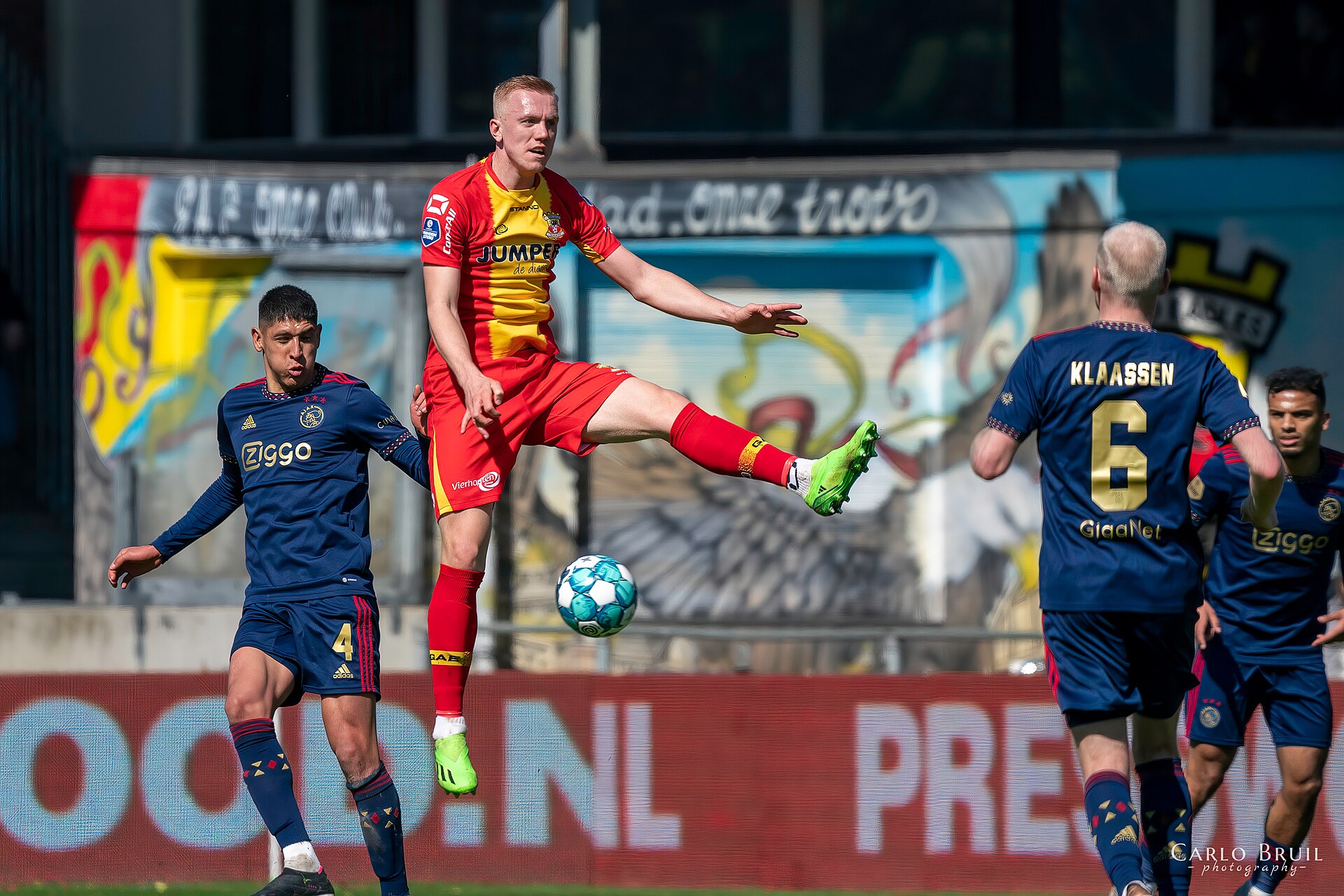
The broader search covered the official West Ham interview, the player’s club profile, the Excelsior report and its embedded image variants, the Wikimedia Commons candidate category, candidate-specific image searches, and editorial portrait routes. The search located three distinct tattoo-bearing originals that could be inspected with confidence: the Gohan back close-up, the older arm view and the official profile showing the tattooed arm. The additional files were inspected as identity or career photographs, not promoted into tattoo evidence.
The result is a deliberately limited visual record. Three tattoo photographs are stronger than five images that quietly repeat a single back view or turn generic match coverage into proof. The article keeps the Gohan image first, places the two arm photographs in their own sections, and uses two separate portraits only after the tattoo search produced no further reliable tattoo views. Each inline slot has a different original file and a different editorial job.
What the sources establish
Álvarez has offered unusually useful first-person detail about his older tattoo work. He said that half of his left arm was tattooed, that he also had a rib tattoo, and that the larger arm area contained several individual designs. He named his daughters, a lion and a warrior as subjects with personal significance. Those details give the arm section a clear direction, but they do not allow every mark in a distant image to be assigned a meaning.
The later back tattoo is documented differently. Excelsior described a new Gohan and Super Saiyan 2 design after Álvarez shared a fourteen-image Instagram post. The photograph shows the character clearly and the surrounding skin looks red, which the report interpreted as evidence that the work was recent. This guide repeats the visible description without claiming a confirmed appointment date, tattoo artist or private explanation.
The images also show why a tattoo inventory should remain open to revision. Clothing changes what can be seen, social posts may reveal a new design before an interview names it, and a wider football photograph may show only a small part of a larger arm project. The strongest record therefore combines direct quotes, source-specific captions and visual inspection of the actual file.
As a design reference, the Gohan piece shows a large character tattoo with a strong silhouette and recognizable movement. The arm record suggests a different approach built from several personal symbols rather than one isolated image. Neither approach is presented as a recommendation to copy a living person’s tattoo. They are reference points for scale, body placement, family symbolism and the difference between a single figure and a developing collection.
Why the image order matters
The page opens with the back design because it is the clearest tattoo photograph. The arm image follows in a separate section because it documents a different body area and a different period. Portraits come only after those tattoo-bearing files, and each portrait is labelled for identity or football context. No generic image is assigned tattoo-specific alt text, and no image is reused under more than one heading.
This sequence also makes the article easier to read on a phone. Prose introduces the body area, the relevant image appears, and later paragraphs explain what the frame can and cannot establish. The page never confuses a face-visible portrait with proof of ink. The featured image has the same boundary: it identifies Edson Álvarez, while the body images carry the tattoo discussion.
The final record is intentionally careful. It confirms a large Gohan back tattoo through a recent close-up, documents the arm and rib tattoos through Álvarez’s own words, and preserves a separate older arm view without assigning unsupported names to individual marks. That leaves a grounded visual reference and room for the next verified photograph or interview to add detail.
Edson Álvarez’s tattoo story is therefore best read as an evolving collection rather than a finished catalogue. The back design is now publicly visible, the arm carries several meaningful elements, and the rib tattoo is known through his description. When a future source reveals another angle, the useful question will be whether it adds a genuinely different view or simply repeats an existing frame. That standard keeps the archive focused on evidence, clarity and original photographs.
For additional subject-specific background, the official West Ham interview is embedded below as career context. Its title, Edson Álvarez’s first West Ham interview, identifies the subject, and the video is included for the discussion of Álvarez’s own tattoo comments rather than as a substitute for the inspected photographs.