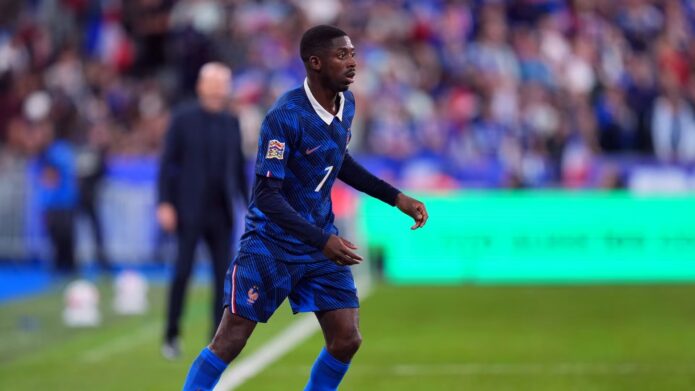
Désiré Doué’s tattoo record begins with a real reveal
A photo shared by TouchlineX after a tattoo session gives the clearest view of Désiré Doué’s new shoulder and upper-arm piece. He faces the camera with the area exposed, so the image confirms both the design and who it belongs to.
The work is a large black-and-grey illustration, with a winged figure, a halo-like shape and flowing lines. The photograph shows what is on his skin; it does not explain the private meaning of each part.
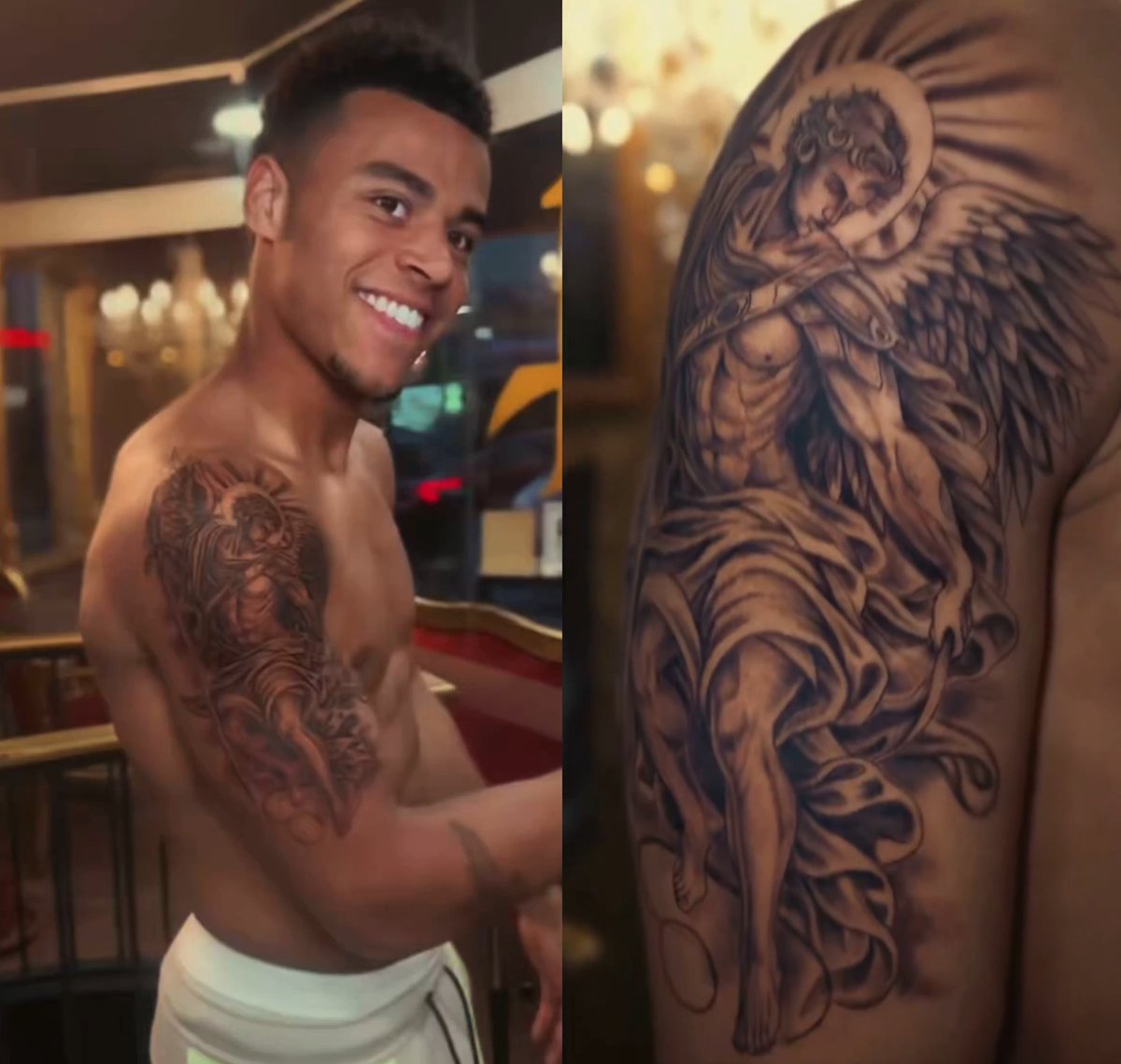
It is a close view of a detailed piece rather than a glimpse caught at the edge of a match photo. The image supports the description of a winged figure, but the sources reviewed do not identify the artist or give Doué’s own explanation of the design.
The close view adds detail to the visual record
The figure sits across the shoulder and upper arm, with shaded wings and darker areas that give it shape. Lines continue down the arm toward the chest. It reads as one larger composition, though a single photo cannot establish every element or its significance.
No verified statement in the published coverage assigns it a religious, family or football meaning. The close image helps describe the work; it cannot fill in that missing context.
The word Family connects the tattoo story to public celebration
A separate photo from PSG’s Champions League final celebrations shows the word “Family” across Doué’s abdomen when he lifts his shirt. The lettering is clear and distinct from the larger upper-arm tattoo.
PSG beat Inter Milan 5–0 on 31 May 2025. The club records that Doué scored twice, assisted another goal and was named Player of the Match; UEFA reported on the same final. That sets the photograph in a specific match, but the reports do not explain exactly what the word means to him.
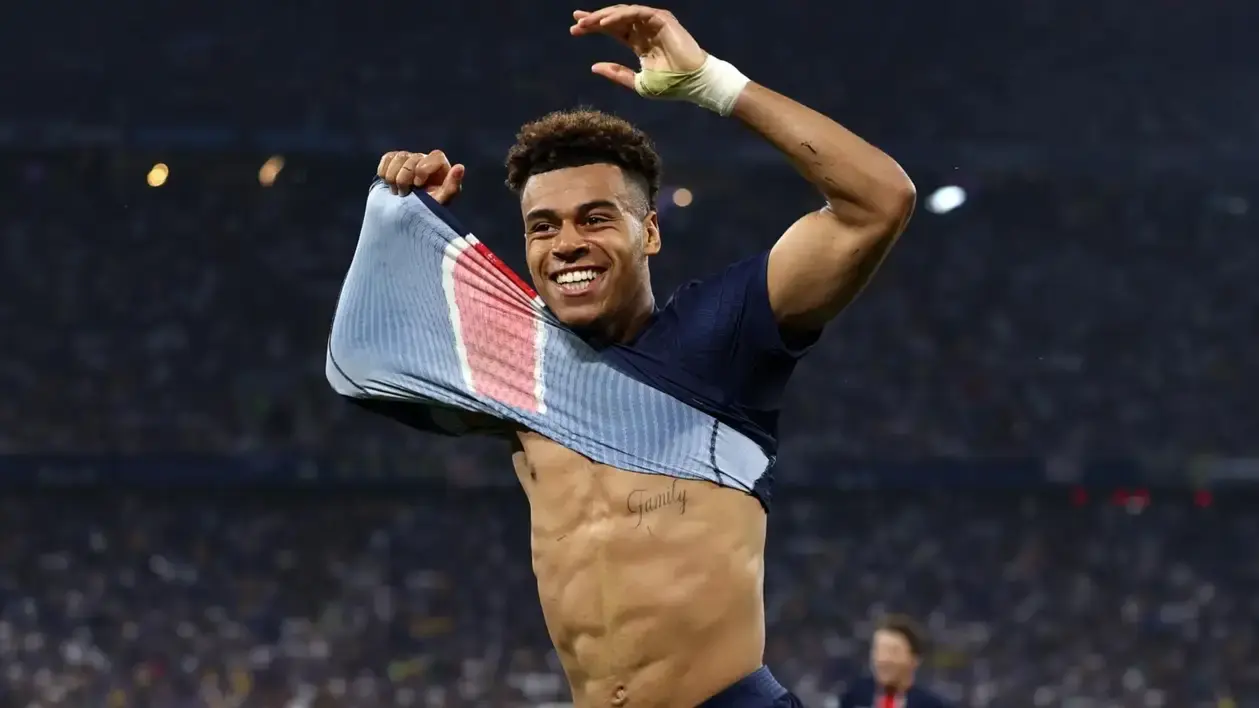
The celebration image documents the torso lettering in a moment when it was visible. It should be read as another tattoo, not as an explanation of the winged figure.
Forearm lettering appears in the match-day record
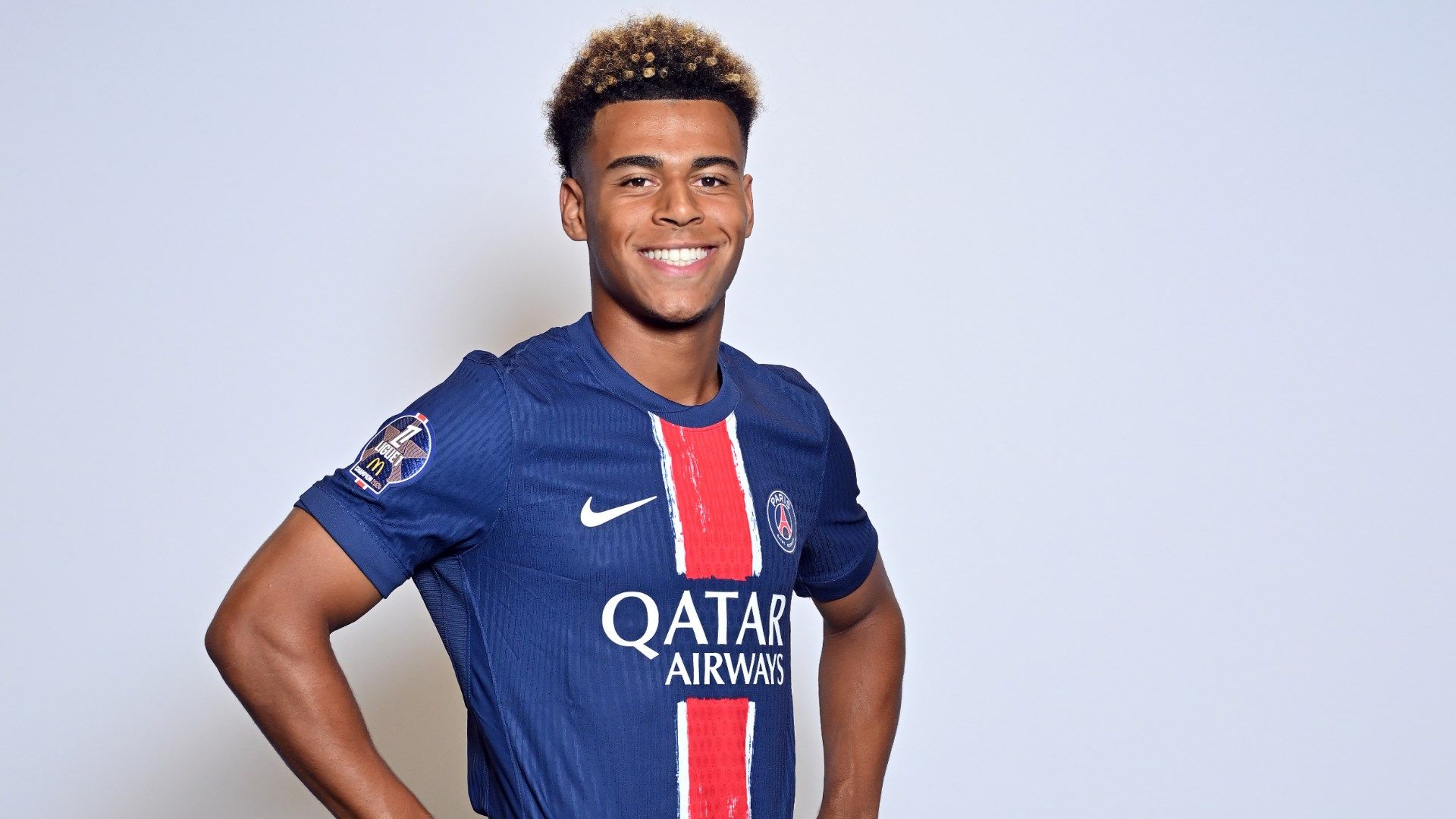
A PSG portrait shows smaller vertical lettering on Doué’s exposed forearm. It is less prominent than the upper-arm illustration or the word across his abdomen, and the image does not make the letters clear enough to transcribe.
The photo adds a third placement to the record: upper arm, abdomen and forearm. Describing the script as lettering is more reliable than guessing at words from a small image.
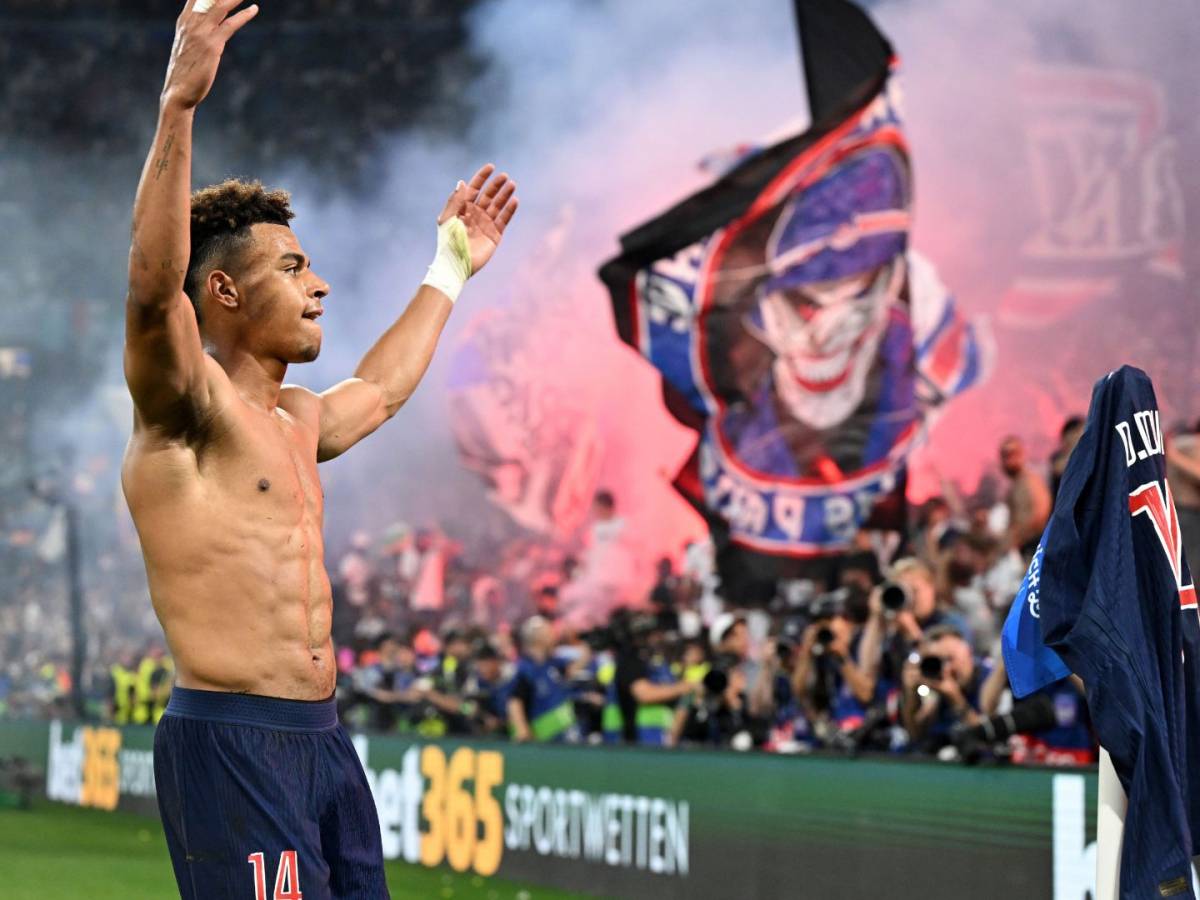
The separate portrait also confirms that this is not a detail from the TouchlineX reveal or the final celebration photo.
Movement changes the surrounding context
Most coverage shows Doué in a football setting. PSG records his part in the 2025 Champions League final, and the French Football Federation lists him as an international. Le Parisien’s 2026 reporting discusses his work and development, but none of those career details explains the tattoos.
A distant PSG action frame offers a view of the public athlete, not a close look at his skin. Keeping it separate from the tattoo photos avoids treating general football coverage as evidence about a design.
The wider public profile adds identity, not invented meaning
Doué was born in Angers and came through Rennes’ youth system before joining Paris Saint-Germain. PSG, the French Football Federation and UEFA document different parts of that career, including the Champions League final.
The next portrait shows him in action for France. It is included as an identity image, not counted as a tattoo-bearing photograph.
What the photographs establish and what they leave open
The available images show three separate tattoos: a winged figure across the shoulder and upper arm, the readable word “Family” across the abdomen, and smaller forearm lettering. The TouchlineX reveal, the Champions League celebration and the PSG portrait each document a different placement.
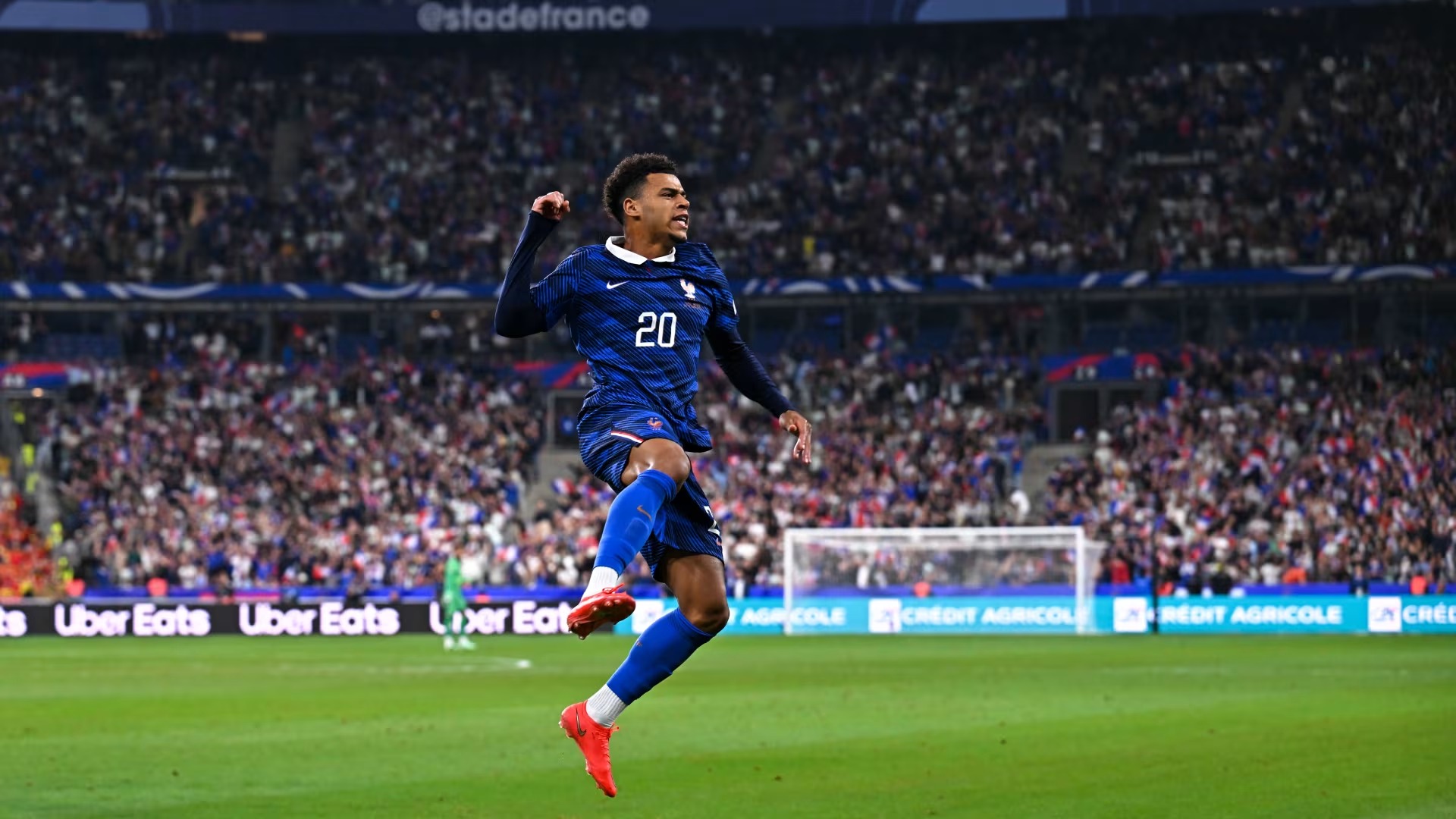
The photographs do not provide a complete inventory, identify the artist for each piece or confirm a personal meaning beyond the visible word. The final two portraits help identify Doué in football settings; they do not add tattoo details.
That is the boundary of the record: an angel-like upper-arm design, “Family” on the torso and lettering on the forearm. Anything beyond those visible details would need a direct explanation from Doué or clearer source material.