Mattia Bellucci has said he is drawn to Japanese culture and chose a traditional Japanese style for his tattoos. TennisTalker and Sportskeeda connect that interest to time he spent in Japan. The interviews identify two figures, Raijin and Fujin, but do not give a meaning for every line or surrounding mark.
The photos show the tattoos’ scale and placement; the reporting supplies the names. Keeping those separate avoids reading more into an action shot than it can show.
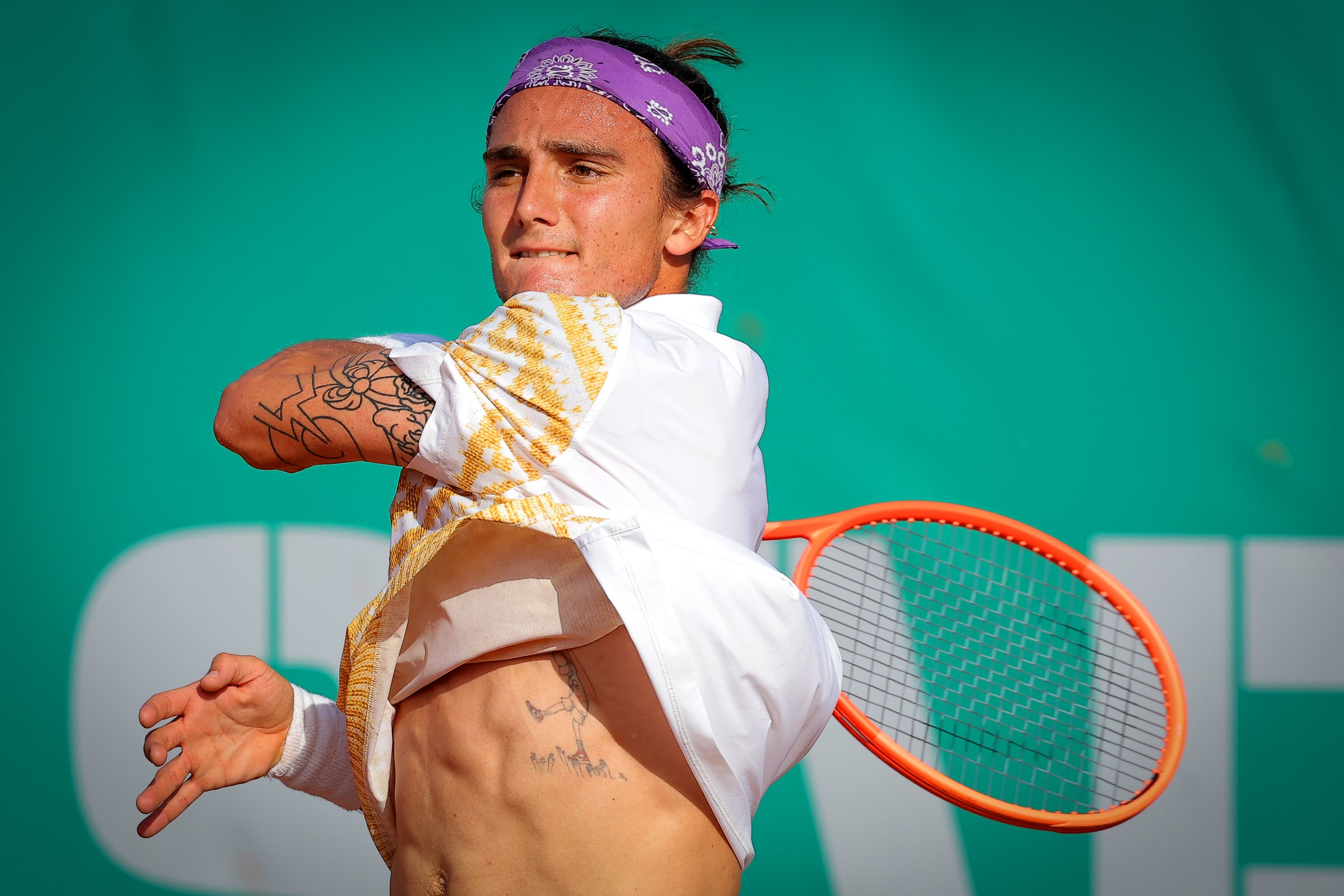
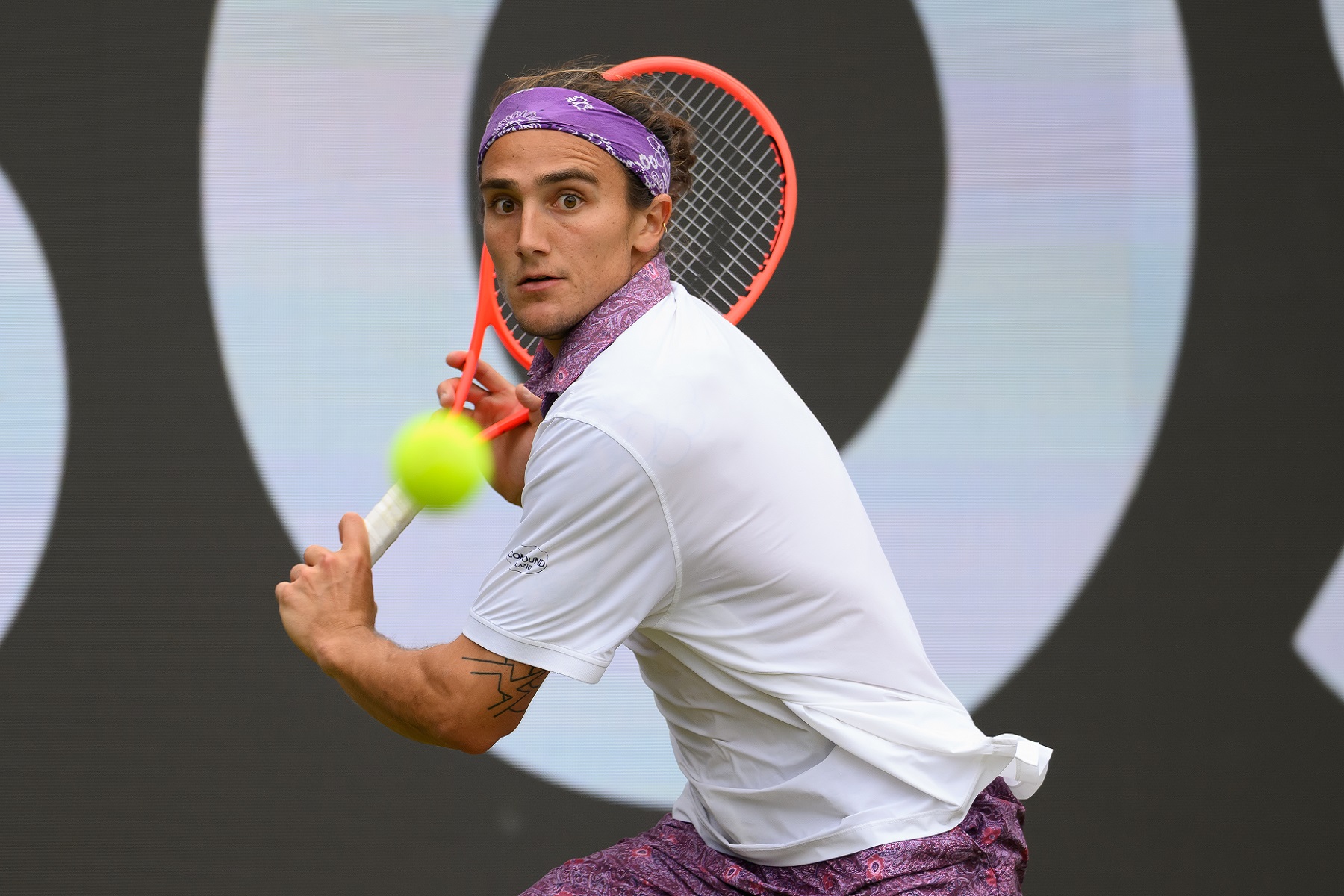
In the Stuttgart frame, Bellucci turns into a forehand with his right arm extended. The outlined design follows the arm through the swing, though the photograph is not clear enough to name every small detail.
The right arm introduces Raijin and Fujin
TennisTalker identifies Raijin, a Japanese thunder god, on one arm and Fujin, the wind god, on the other. The Hawk reports that Bellucci began with line work and has been adding colour over time. The interviews do not specify which figure appears on which side in these images.
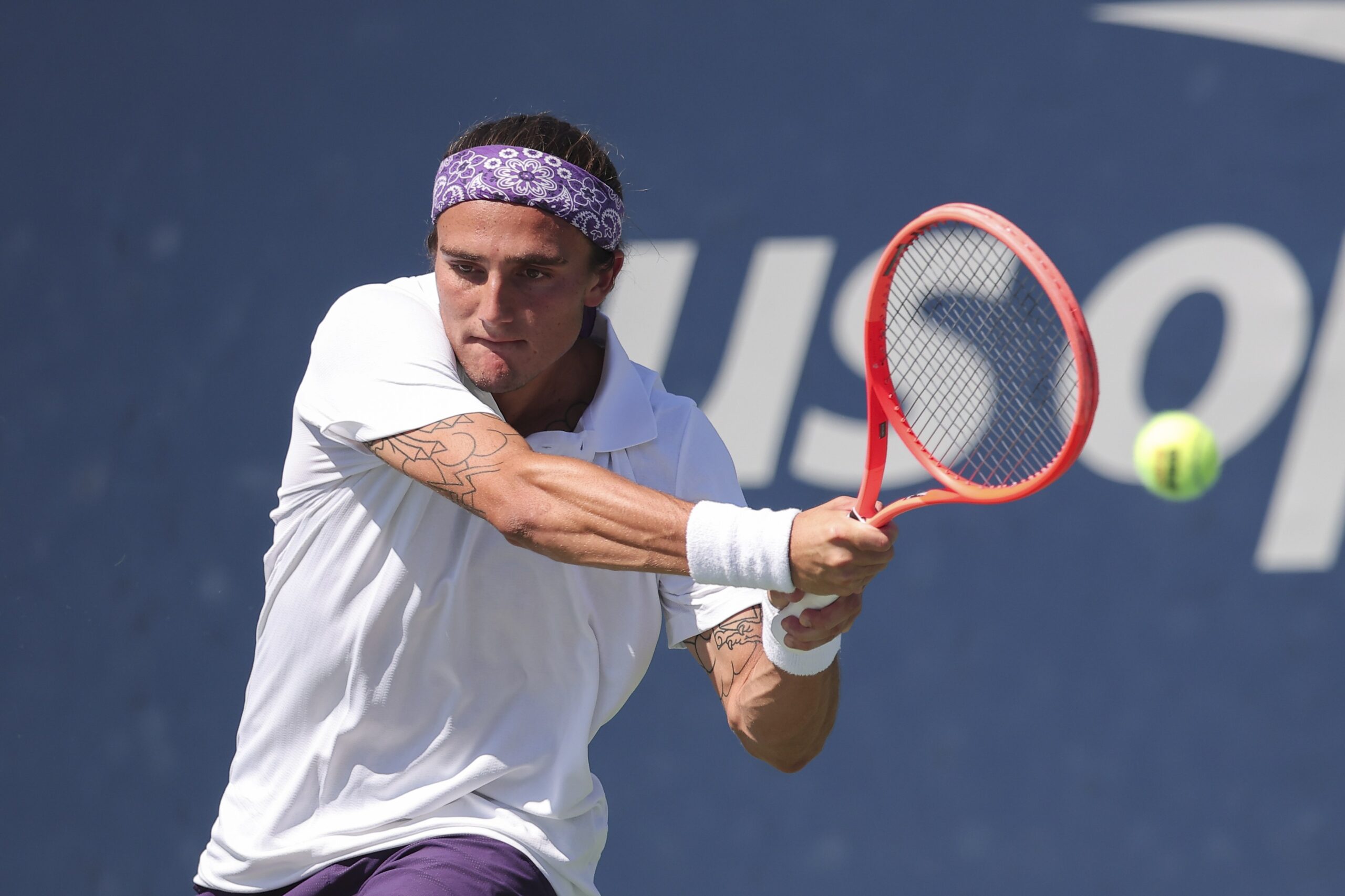
The US Open frame shows both arms from another angle. It helps document the scale of the work, but does not settle the figure placement. A wider or tighter view can make the same sleeve look quite different as the elbow and shoulder turn.
The tattoo changes with movement
Tennis photos catch Bellucci’s arms in motion instead of a fixed portrait pose. In the Cincinnati frame he stretches across the court, with a bold outlined design visible on the near forearm and a darker mark higher up. It is another view of the same work, not evidence of a separate symbol.
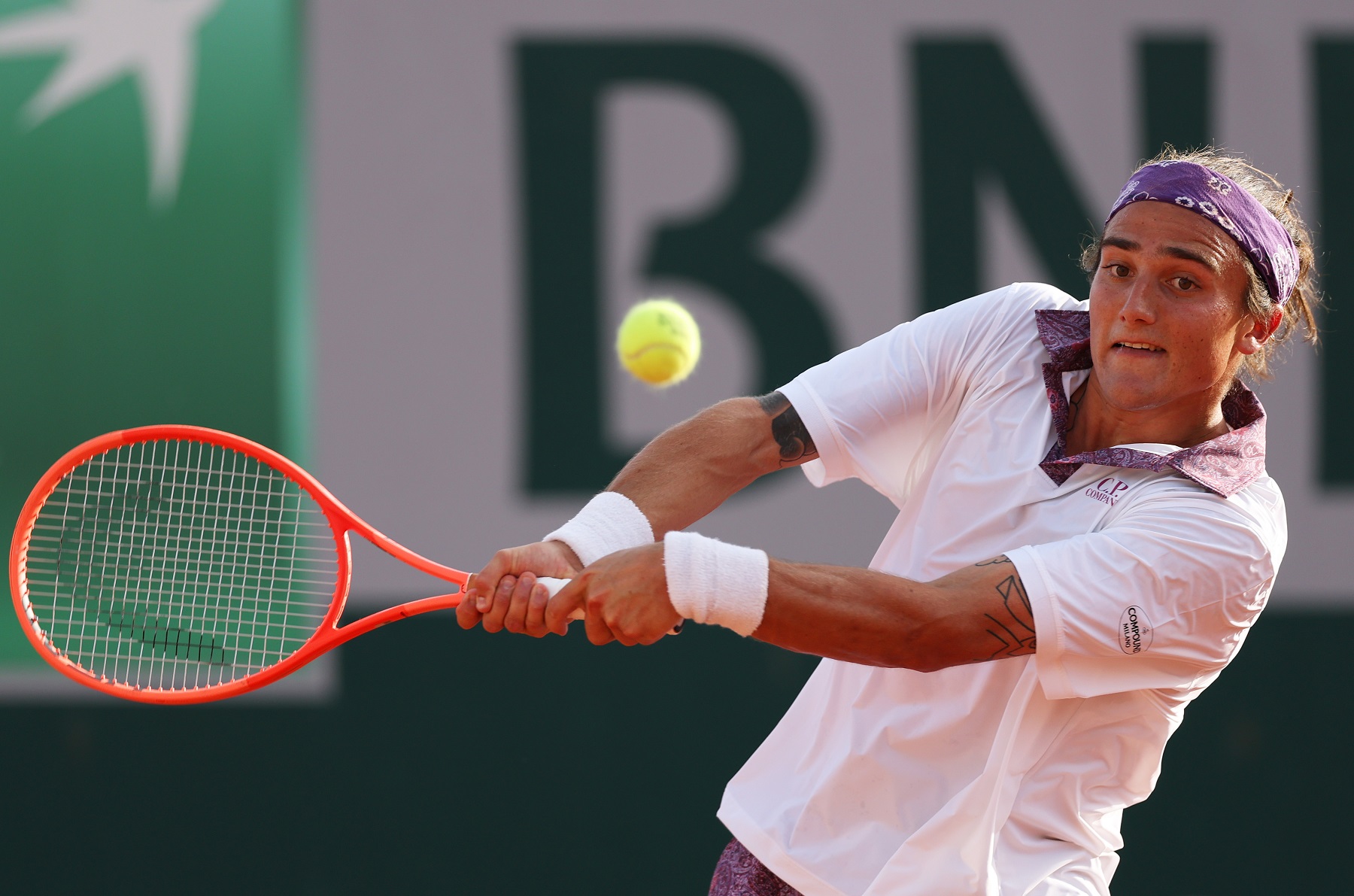
Seen together, the Stuttgart, US Open and Cincinnati photos show the tattoos under different light and arm positions. That variety helps establish their coverage without assigning meanings the sources do not report.
Different dates show the work in progress
The Hawk says Bellucci began the process in Milan and continues adding colour around his tennis schedule. The work is still developing, so photos from different events may show line work or shading at different stages.
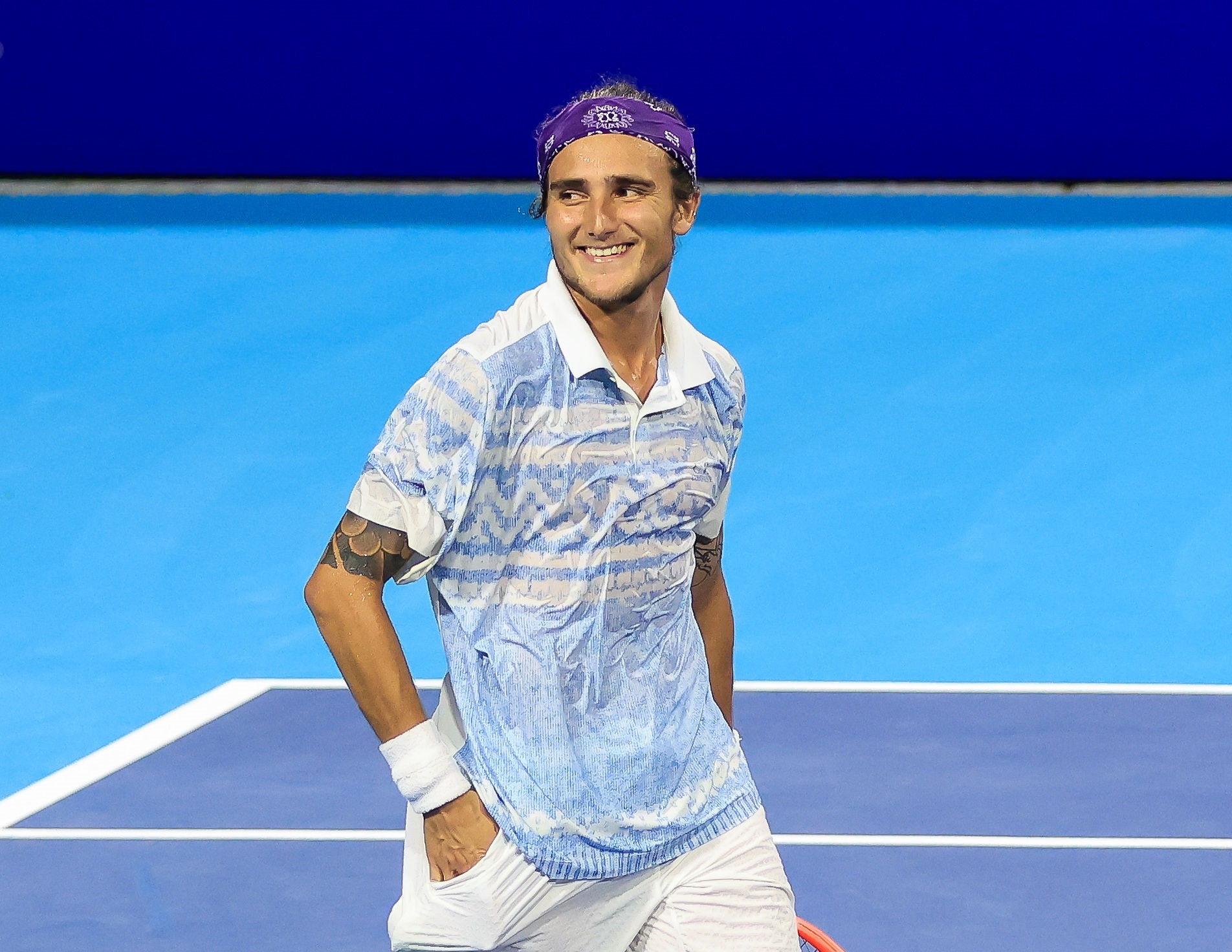
The Hangzhou image gives a later view, with one arm lowered and the other partly hidden by his shirt. It shows how tennis clothing can cover much of a sleeve; it does not establish when the whole design will be finished.
Bellucci’s public image keeps the arms visible
ATP has described Bellucci’s interest in Japanese culture and vintage clothes. His tattoos appear alongside the bandana and left-handed game in sports coverage, part of the look people recognize on court.
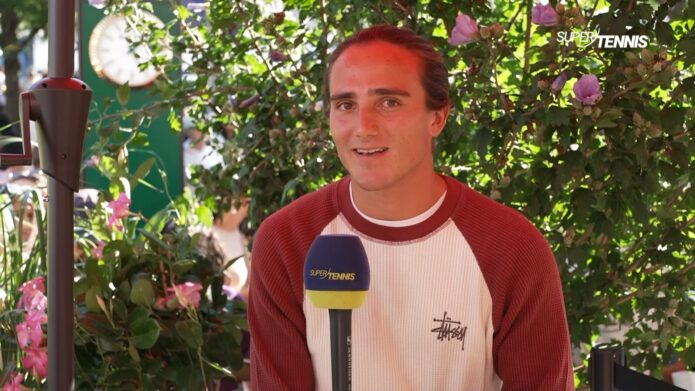
The Time Break image is an interview portrait in a garden, with a sweater and microphone. It helps identify Bellucci, while the five action photos provide the clearer views of his arm work.
The collection has a clear visual grammar
The arm designs are broad, connected compositions with strong outlines. The reported Raijin and Fujin figures give the Japanese-style work its clearest named reference; the images show how the ink sits across his arms, but not a confirmed personal story for each element.
Travel and timing are part of the story
The interviews connect the tattoos with Bellucci’s interest in Japan. He began the work in Milan and described a positive reaction from Japanese colleagues in Kobe. He has continued it around travel and competition, though the sources do not say that a particular trip or tournament led to a new tattoo.
The photographs come from Stuttgart, the US Open, Cincinnati, Hangzhou and an interview setting. They document the designs across different dates rather than one staged shoot.
The published record is specific, not complete
Published accounts describe Japanese-style tattoos on both arms, name Raijin and Fujin, and report that Bellucci is gradually adding colour. ATP and other coverage also connect the style to his interest in Japanese culture. Five original images show the arm work in match and interview settings.
The sources do not provide a complete inventory or explain the personal meaning of every part. The reliable account is limited to the two named figures, the developing colour, and what can be seen in the photographs.