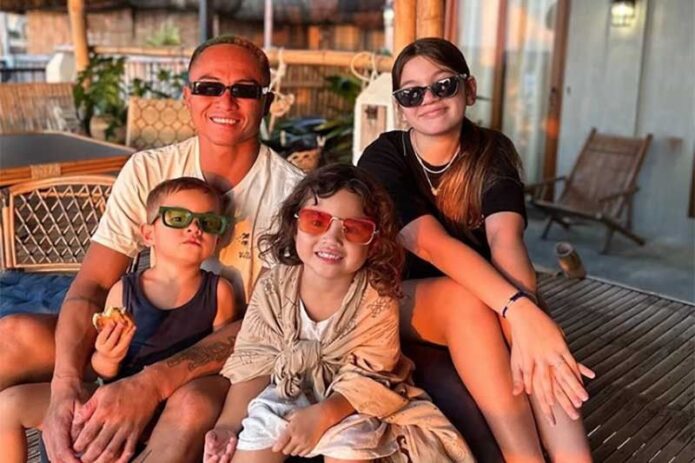
Philmar Alipayo is a professional surfer from Siargao. Published photos show his tattoos outdoors and in a studio; reports also document the 224 forearm mark and its cover-up. The images record different moments, not a full inventory or an explanation of every tattoo.
GMA News and Philstar documented his 2025 studio visit with Andi Eigenmann at Island Tattoo Piercing Studio. KAMI later reported that Philmar shared a reel showing portraits of the couple’s two dogs being added to his right arm.
The featured family photo identifies Philmar but isn’t tattoo evidence. Five inline originals show separate placements and stages, with the reporting and visible details kept distinct below.
A surf portrait exposes the original body map
KS Boardriders’ profile shows Philmar shirtless on a lawn with a coconut in his hands. The open pose makes his chest, shoulder and forearm visible, while the greenery and hut place the portrait in an outdoor Siargao setting.
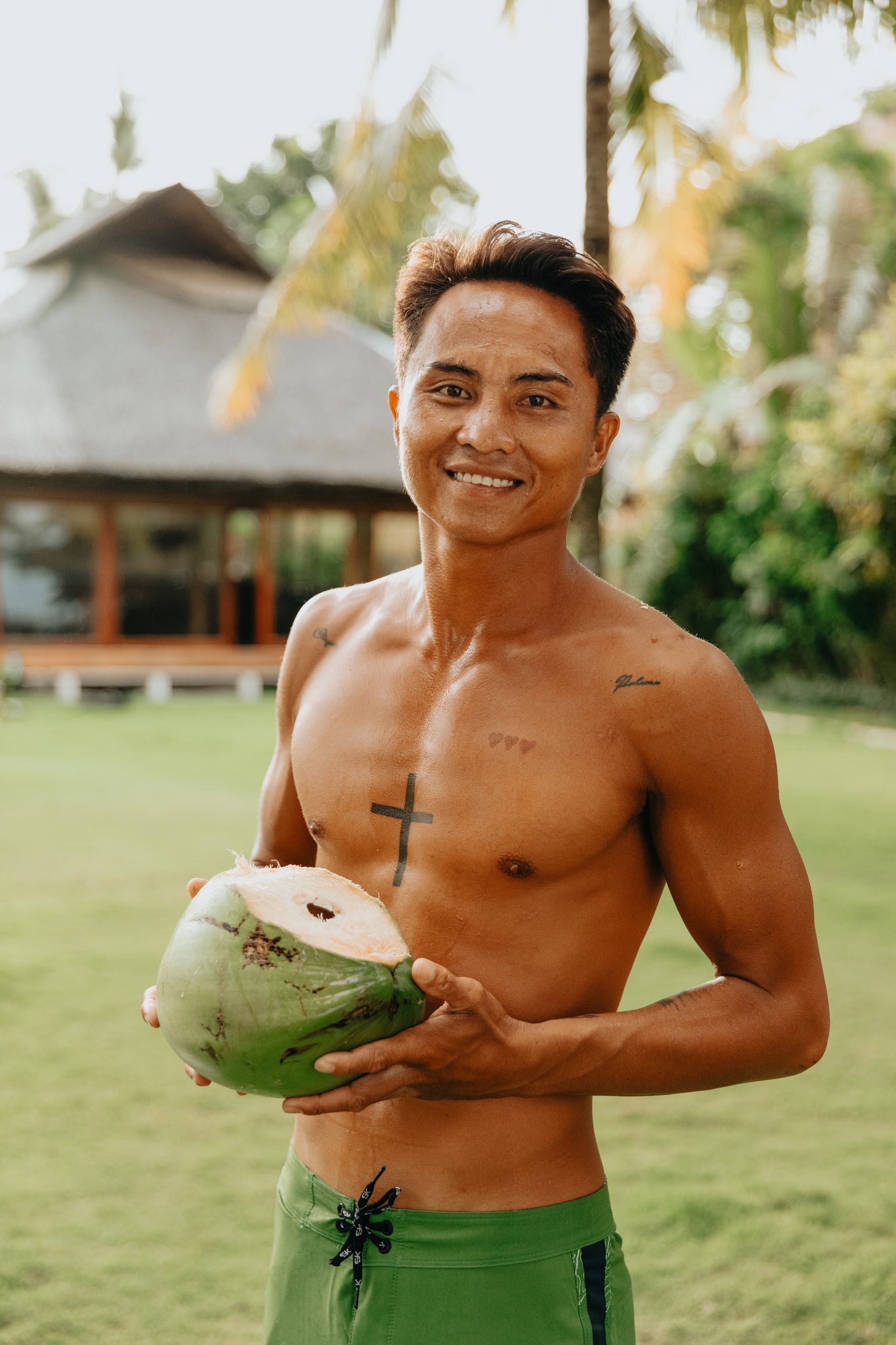
This is the broadest view of the collection. It shows separate marks across his torso and arms, but distance and light soften smaller details. The photo supports placement and coverage; it can’t identify every line.
The setting adds context, not an explanation for why he chose any particular tattoo. The closer images document events this wide portrait can’t show.
The number 224 becomes the center of the archive
GMA News’ comparison shows the earlier 224 forearm tattoo beside a later design that covers it. The report describes the number as a matching tattoo shared by Philmar and a female friend, and the paired images make the change visible over time.
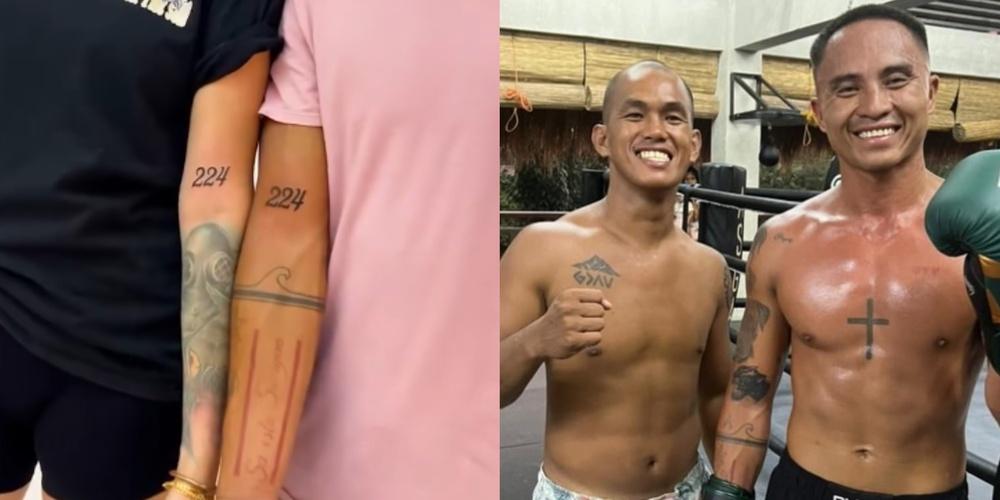
This is the clearest documented tattoo story in the set. The before-and-after records the mark and its cover-up without guessing what the new design means.
A single portrait could show only one stage. Keeping the comparison here makes the chronology clear and avoids using it as a stand-in for all of Philmar’s tattoos.
A tattoo session records the act of adding ink
A separate GMA report photographed Philmar at Island Tattoo Piercing Studio, reclining while an artist works on his forearm. Andi Eigenmann was also getting tattooed during the visit. The frame captures the appointment underway, with the artist, chair and arm position in view.
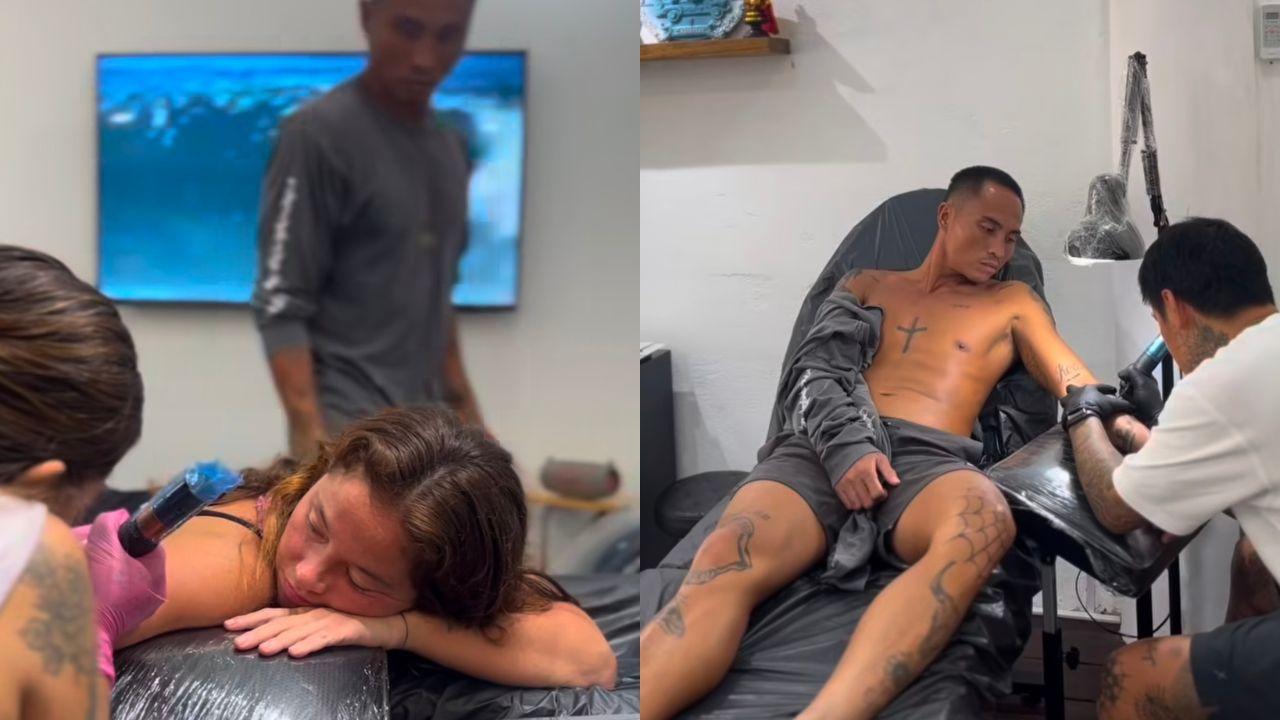
The photograph shows ink being applied, not the finished design. The artist and camera angle partly obscure the work, so the image can’t support a precise reading of every shape.
GMA placed the visit after attention to the earlier 224 tattoo. That sequence is documented; the coverage doesn’t establish the new work as a resolution or give a private reason for it.
The matching-ink portrait shows the public reveal
The GMA Entertainment portrait shows Philmar and Andi together after their studio visit. Their forearm marks are in view, and the relaxed pose makes this a public reveal rather than a photograph of the artist at work.
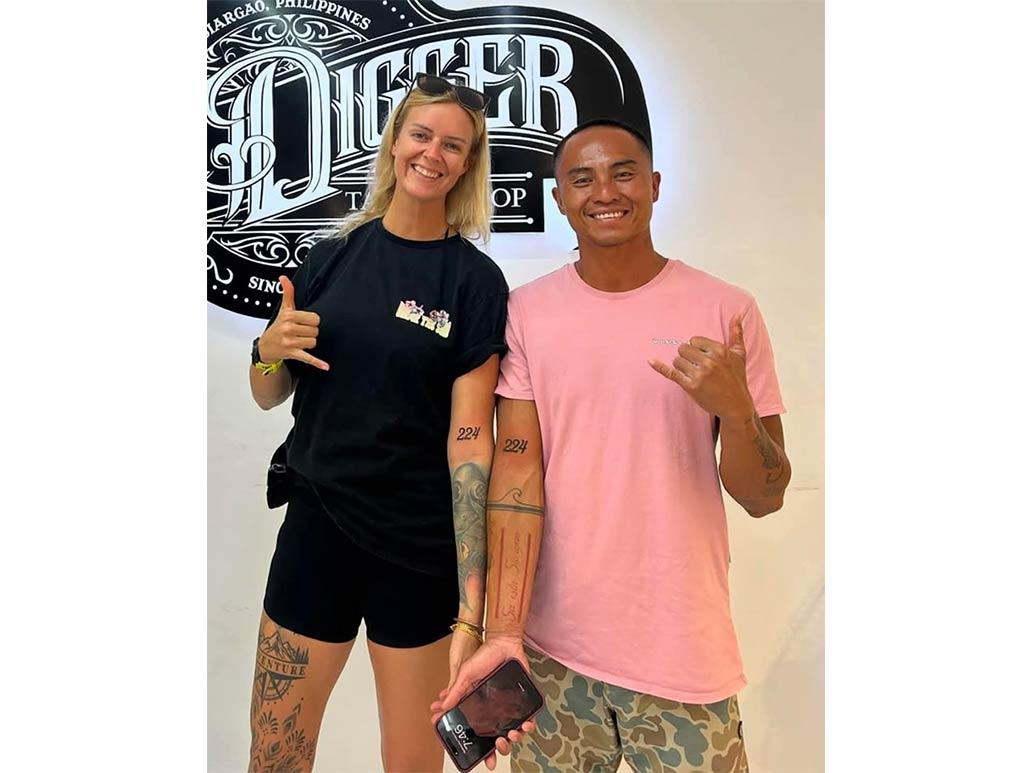
The photo shows the couple presenting the result together. It adds social context to the in-chair image without telling us what either person privately associates with the tattoos.
This is a later moment than the session photograph, but it isn’t the 224 comparison. The images document different points in the timeline.
The studio tattoo composite keeps the process visible
Philstar’s composite also covers the studio visit, with Philmar and Andi shown in separate panels. One shows Philmar receiving work; the other follows Andi in the chair. The split frame brings both sessions into one image without merging their tattoos.
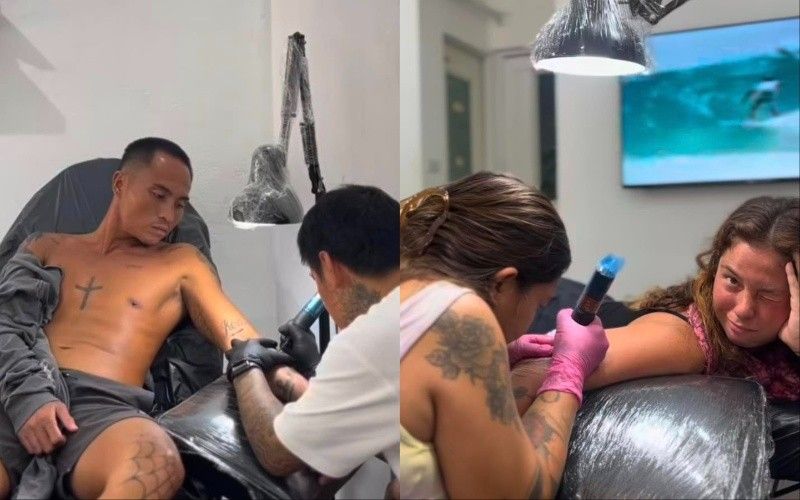
The composite records a shared appointment, not one matching design. Its panels show two people in different positions as their own tattoos are being worked on.
Because the work is mid-session, parts may look shadowed, unfinished or covered by the artist. That is a limit of the photograph, not evidence of another design.
From Siargao life to a public timeline
Philmar’s surfer profile and family photographs place the tattoo coverage in the settings he shares publicly: Siargao, work and family. The selected images trace the record through the 2025 studio visit; KAMI later reported dog portraits on his right arm, but they aren’t among these five photos.
The featured family portrait identifies him, while the surf image documents his body art in an outdoor setting. The photos don’t establish when each older mark was added or what it means to Philmar.
What the photographs establish
Across the five originals, tattoos are visible on Philmar’s chest, shoulders, forearms and right arm. The images include a wide outdoor view, the 224 comparison, a session in progress, a couple portrait and Philstar’s split-panel image.
The 224 mark is the only design here with a clearly described history. Other tattoos can be located in the photographs, but the material doesn’t identify each one or explain its meaning.
How the placements work together
The surf portrait gives the broadest view of Philmar’s chest and shoulders. The comparison brings the forearm number closer; the studio photos show arm placement while an artist works. Read together, they cover different areas and moments without supplying a complete body map.
Crop, distance and lighting change what can be seen. The outdoor portrait is brighter, while the studio images leave some areas in shadow. Compare placement before drawing conclusions about colour or a design’s edge.
A careful reading order
Use the featured family portrait to identify Philmar, then look at the KS Boardriders image for the overall view. The GMA comparison follows the 224 cover-up. The GMA portrait and Philstar composite show the studio visit from different angles.
Check lighting before comparing apparent ink colour: outdoor sunlight and indoor studio shadows don’t show the same detail. The 224 comparison is best read as a record of the mark and its replacement, not as a full inventory.
The documented story in brief
The sources document a matching 224 tattoo and its later cover-up, a 2025 studio visit with Andi, an outdoor surf portrait, and KAMI’s later report about dog portraits on Philmar’s right arm. The five inline images show the surf portrait, cover-up comparison and studio visit; the dog portraits aren’t pictured.
That record supports the timeline, but not a verified count of every tattoo or explanations for marks that Philmar hasn’t discussed.
Final takeaways from the collection
The photographs are strongest when read alongside the reports: the 224 cover-up has a documented history, while the other marks are best described by placement and appearance. The collection changes across the public images, but the photos don’t reveal every design or its private meaning.