
Elena Linari has described tattoos as part of her life off the pitch, and interviews connect several designs to family, Florence, football and places she has visited. Her career has taken her from Italy to Madrid and London; photographs show ink across her arms and on her left calf.
The images come from different settings: an Italy portrait, a London City arrival shoot, a Vanity Fair field portrait, a Euro celebration and training. They show how much the tattoos cover, though not every mark is clear enough to identify.
The arm sleeve carries a life story rather than one single motif
The London City Lionesses interview describes Linari’s arms as covered with tattoos and places them within her life beyond football. The visible work includes flowers, lettering and shaded areas, but photographs don’t explain every design.
Her career provides some of the context around the collection. Florence is where her football began; Rome, Madrid and London mark later chapters. The ink is visible beside club and national-team shirts, but that doesn’t make it club branding.
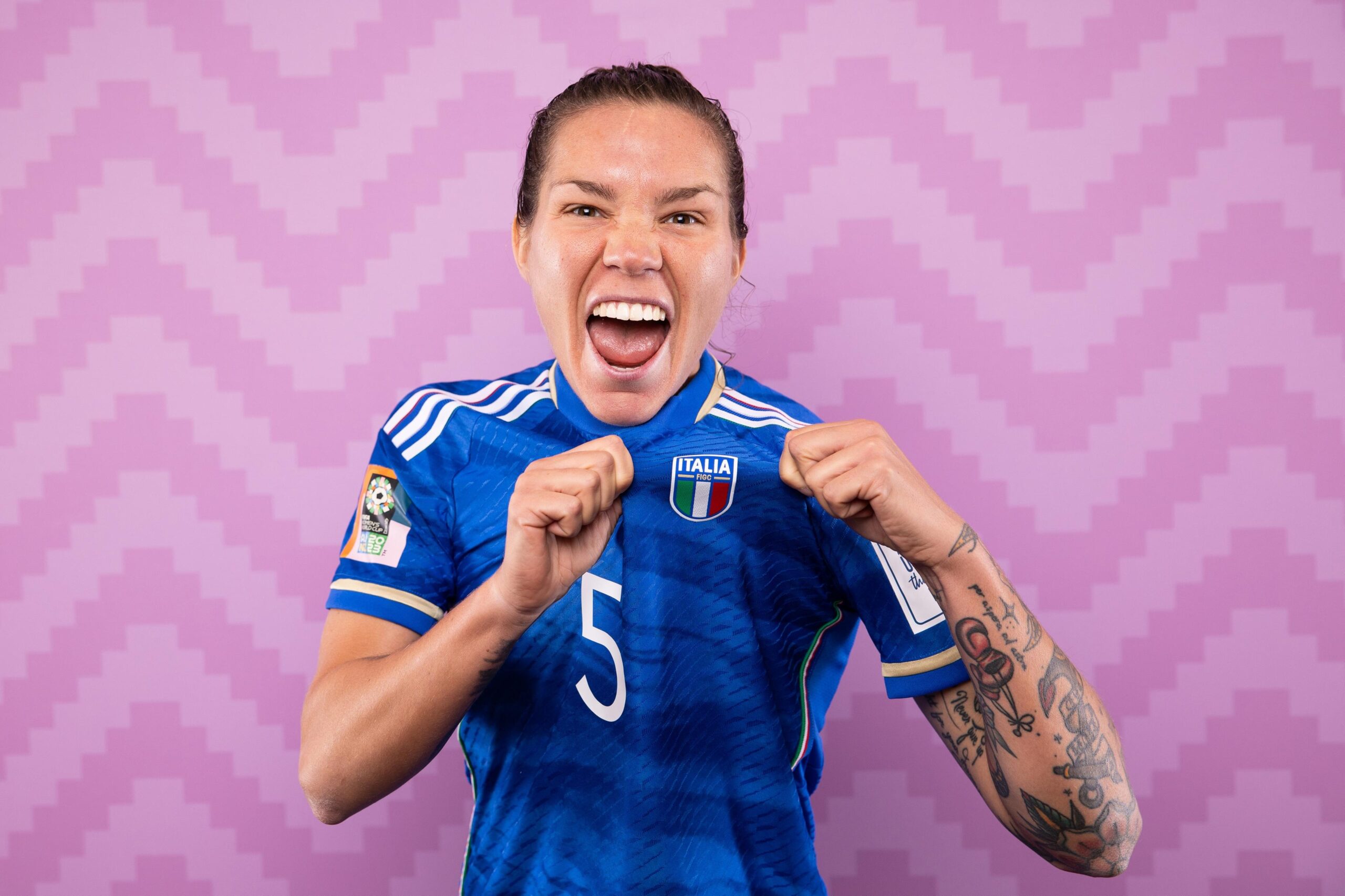
In the FIGC portrait, Linari grips the Italy badge while both tattooed forearms are raised into view. The image connects her face, shirt and arm work in one frame.
Family and Florence sit behind the most personal designs
Italian profiles link some tattoos to Linari’s family. One describes her sister as represented by a light and her mother by a butterfly, and refers to her family and grandfather in the wider collection. Those are reported meanings; a photograph alone can’t tell which visible mark is theirs.
The same coverage says her father supported her football from childhood and her family encouraged her to keep playing while it made her happy. Another profile connects a tattoo to Florence. These references give the designs a personal history without turning every flower or symbol into a guess.

The London City arrival photo shows Linari seated beneath a large HOME sign, arms crossed over her navy kit. The pose brings the sleeve into view while the setting marks a newer chapter in her career.
The butterfly, moon and family references need careful captioning
Reported references include family, the moon and a butterfly. A player profile also identifies the phrase “per aspera ad astra,” meaning “through difficulties, to the stars.” Linari has spoken about hard transitions and feeling she found herself again after changing clubs; the phrase can be discussed because reporting connects it to her.
That source-based approach matters when tattoos overlap. A butterfly or bright shape in a photograph may be hard to distinguish, so the documented reference should not be assigned to every similar-looking mark.

The Vanity Fair field portrait shows Linari in an Italy shirt with a ball under one arm and tattoos along both forearms. Natural light and an open field make this a different view from the FIGC portrait and the London City shoot.
The leg tattoo links sport, travel and the places she admires
Reporting on Linari’s connection to New Zealand and rugby identifies a fern-leaf tattoo on her leg. The interview links it to her admiration for the All Blacks and the country where she played a World Cup.
In a newer Italian interview, Linari said she continued the Aristocats on her left calf—one of her favourite cartoons—and planned to use her right arm to tell her story. That makes clear the collection is still developing.

The Euro celebration photo shows both arms raised and the tattoos exposed during a sporting moment. The rainbow captain’s armband and match setting belong to the scene; they don’t explain the tattoos.
The training image shows the tattooed wrist beneath the kit
In the Sky Sport training photo, Linari smiles with a red equipment bag. A pale green layer covers most of her arms, leaving a small mark near the wrist visible. It offers only a partial view, but shows how kit can conceal much of the collection.

That limited view is a useful contrast with the portraits where both forearms are exposed. The wrist mark is visible; the photograph doesn’t provide enough detail to identify its meaning.
The opening frame establishes the subject
The featured image is a separate face-visible portrait from an Adidas media preview. Linari wears an Italy kit with footballs beside her. It helps identify her at the start of the article, while the five inline photos carry the tattoo details.
Why the collection reads like a moving archive
The published accounts connect Linari’s tattoos with family, Florence, her football career, New Zealand and a favourite cartoon. Photos add the visible placements, from forearm coverage to the fern on her leg, but they can’t reveal every private meaning.
The clearest account keeps those two kinds of evidence together: describe what can be seen, and attribute a design’s meaning only when Linari or a named report has done so. Her own comments also leave room for the collection to keep changing.