Rhea Ripley’s tattoos are part of her wrestling identity, but they are not only stage decoration. The collection includes a date linked to her career, horror references, mythic female figures, a scorpion, hand work and large leg pieces. WWE’s own tattoo photography and WWE Tattooed video provide unusually strong evidence because Ripley discusses the journey while the cameras show the designs. Other accounts add dates and newer pieces, but the official material should remain the foundation.
Her collection has grown alongside her public career. Early tattoos are linked with milestones and influences, while later work covers more of the arm, thigh, torso and chest. That expansion explains why quick lists often miss important details. A single entrance photograph may show one side of the body, while an official gallery can reveal the hand, leg and torso pieces separately. The article therefore keeps the designs in groups that match the available images.
The arm collection mixes daggers symbols and heavy black work
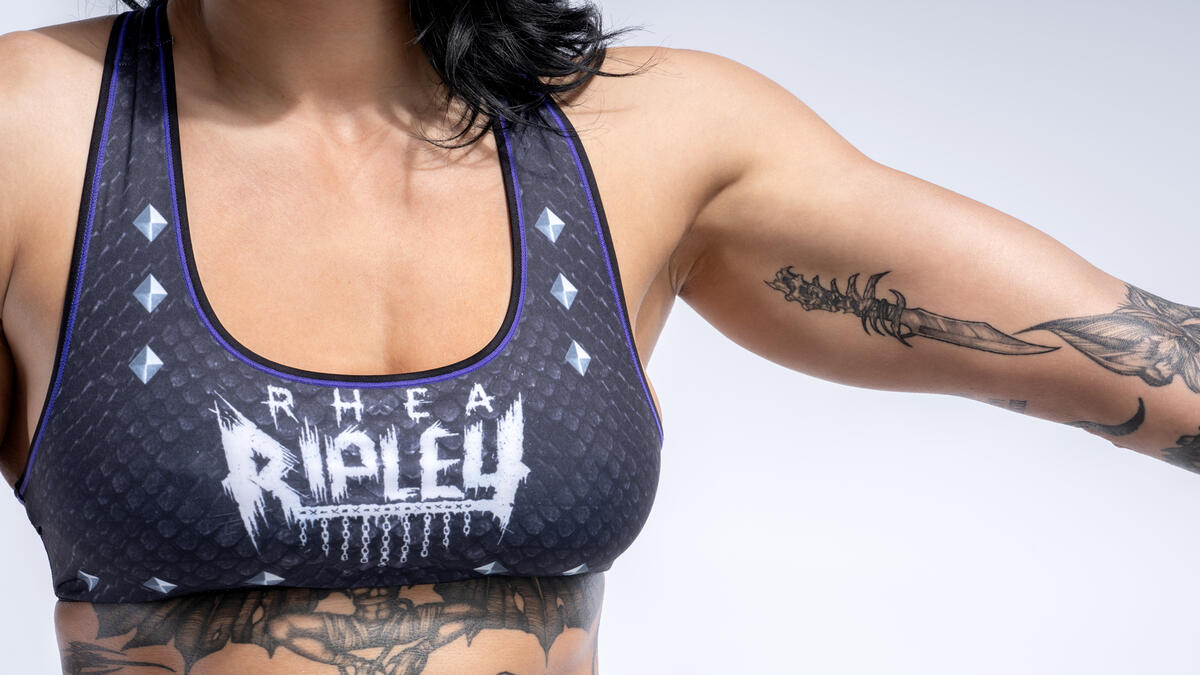
Ripley’s arms carry some of the most immediately recognisable parts of her collection. WWE photography shows a stylised dagger on the forearm alongside darker linework and smaller symbols. The designs do not all point to one confirmed story, but they share a strong visual weight. Black ink, sharp edges and compact shapes suit the aggressive presentation she brings to the ring without reducing the tattoos to a costume accessory.
The dagger is a clear example of a design that can be described without guessing. It has a defined outline, a readable position and enough contrast to survive a sports photograph. It may suggest danger or strength to a viewer, but this guide should not assign a personal meaning unless Ripley has done so. The fact that she chose a blade and placed it on a visible part of the forearm is already useful information.
The surrounding marks make the arm feel built over time. Some designs sit close enough to read as a cluster, while others leave open skin between them. That spacing keeps the collection from becoming a single black block and gives each image room to be recognised. A close frame also shows how jewelry, wrist movement and ring gear can change the way the tattoo appears during a match.
Ripley’s arms are often the first part of her tattoo map viewers notice because wrestling gear leaves them exposed. That visibility can create the impression that the arms contain everything, when the official gallery shows a much wider collection. The forearm work is important, but it is one chapter in a tattoo record that also moves down the legs and across the side of the body.
The arm tattoos also connect with the mood of her horror-inspired pieces. Sharp lines and dark shading can make a symbol feel ominous even when the source does not identify a story. That is why visual description is better than a generic claim that every design represents rebellion. The source shows the ink. Ripley’s interviews explain the broader passion for tattooing.
The scorpion is one of Ripley’s clearest standalone designs
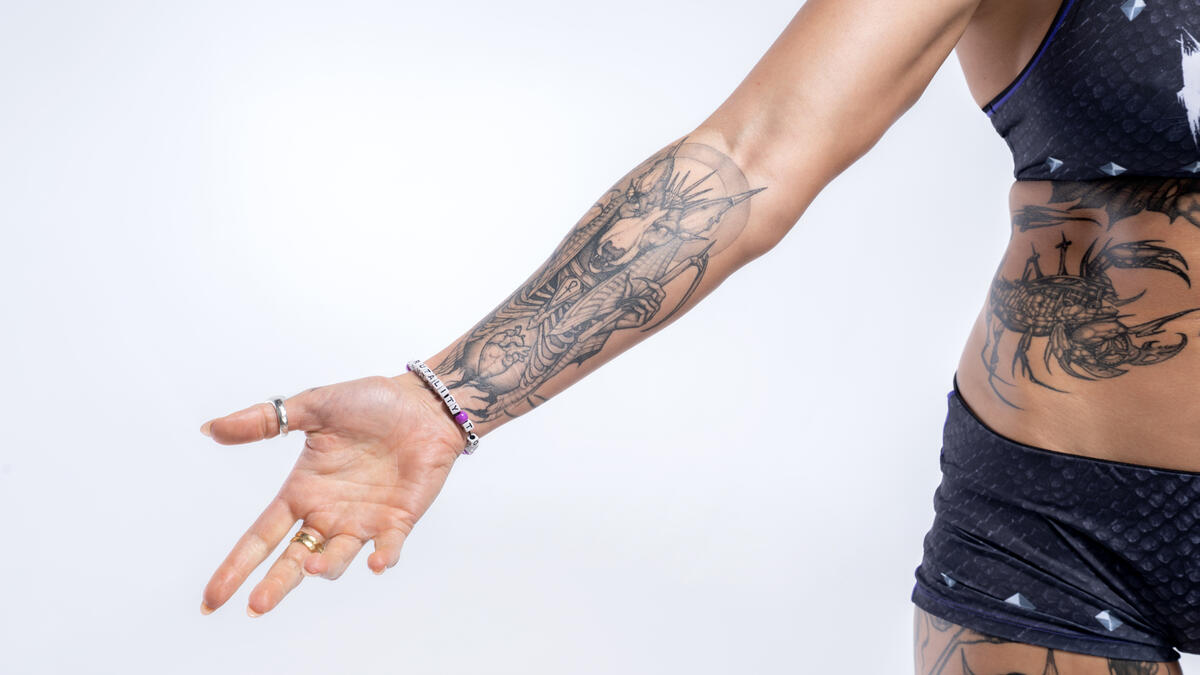
The scorpion on Ripley’s side is one of the easiest tattoos to isolate in the official photographs. Its segmented body, legs and pincers create a strong outline that follows the curve of the torso. Unlike a small mark hidden among the arm work, the scorpion reads as a complete image in its own right. It has the kind of silhouette that remains recognisable even when the photograph is viewed quickly.
A scorpion naturally invites symbolic readings about danger, defence and survival, but those meanings should not be presented as Ripley’s confirmed explanation without a source. The design already fits the visual language of her collection: it is dark, precise and slightly threatening. Its placement on the side also changes how it is seen. A front-facing ring photograph may hide it, while a profile pose or a dedicated tattoo session reveals the whole body.
The scorpion also shows how tattoo placement affects wrestling presentation. Ripley moves constantly, and the torso stretches when she poses or performs. A design on the side can look compressed in one image and extended in another. A good guide compares the photographs rather than treating every change of angle as a different tattoo.
Her body art is often discussed alongside her ring character because the two share a dark, confrontational mood. That connection is understandable, but the tattoo record should still keep the person and performance separate. The scorpion existed as ink, not just as part of an entrance look. It remains visible in ordinary portraits and official studio images when the character presentation is reduced.
The hand and thigh work carries the collection into mythic imagery
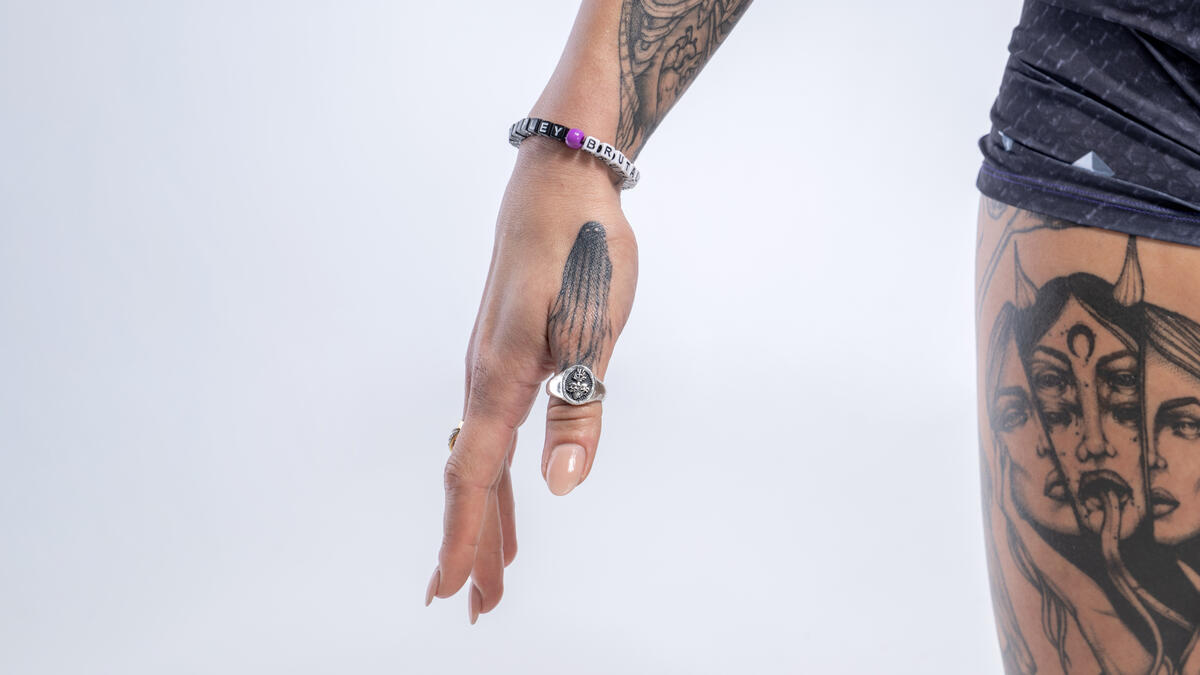
Another WWE image brings together the hand and thigh tattoos. The back of the hand carries a linear design near rings and bracelets, while the upper thigh shows a three-faced woman with flowing hair and a crescent moon. Those pieces expand the collection beyond the obvious dagger and scorpion. They also demonstrate why hand and thigh tattoos deserve their own visual coverage rather than being squeezed into a general paragraph about full-body ink.
The three-faced woman is a particularly striking figure. The faces create repetition, while the hair and crescent give the design a mythic or night-time mood. The image supports a description of the figure and its placement. It does not establish whether the design is a specific goddess, a personal portrait or an original tattoo composition. Calling it a three-faced woman with a crescent is more accurate than choosing a name the source does not provide.
Hand tattoos have a different practical history. They are exposed constantly, so they become part of gestures, photographs and the visual shorthand of a performer. The linear design on Ripley’s hand is not as large as the thigh image, but it can be more visible in everyday pictures. Rings and bracelets may obscure part of it, which is why a close official photograph is better evidence than a distant entrance shot.
The thigh pieces are harder to see in regular WWE coverage because shorts and ring gear control the frame. When they are shown, however, they add scale to the collection. A design that covers a broad section of the upper leg cannot be understood from a cropped waist-up portrait. This is one reason Ripley’s tattoo guide needs several images rather than one generic celebrity photograph.
Medusa and horror references give the tattoos their darker mood
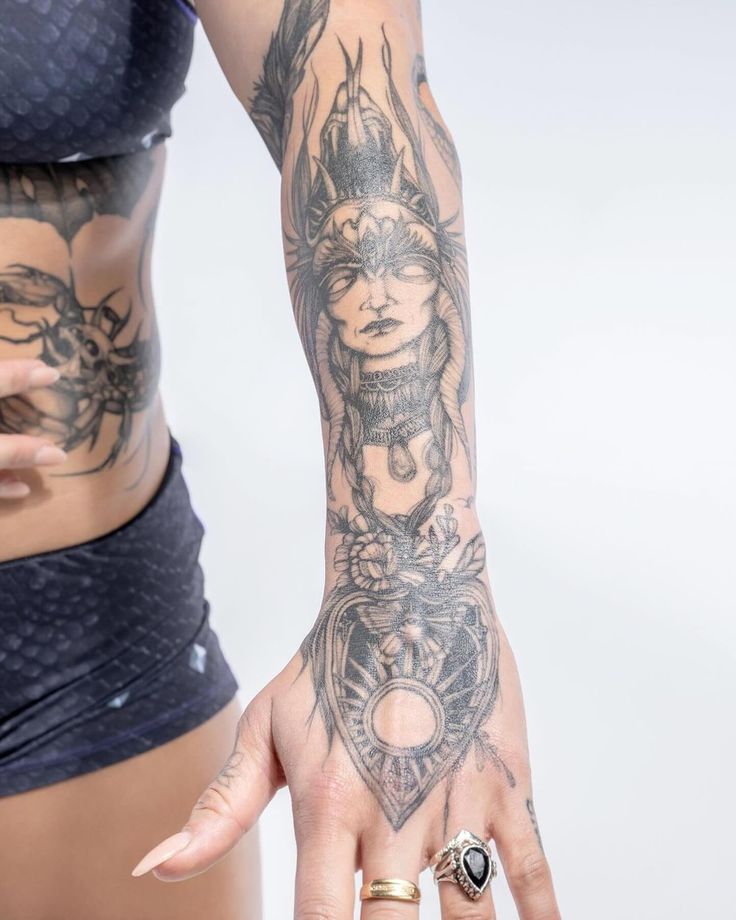
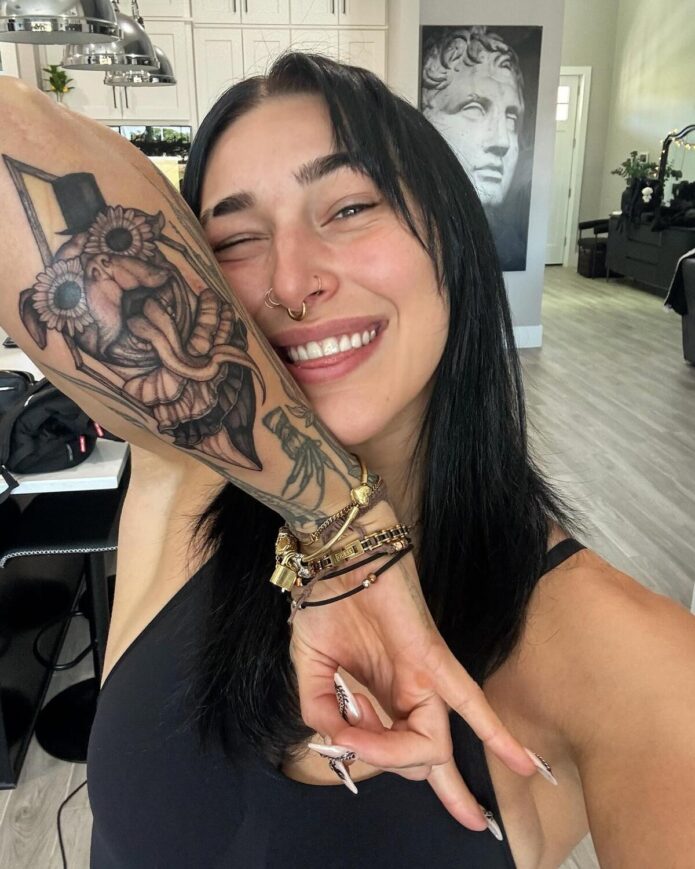
Medusa is one of the most recognisable ideas associated with Ripley’s tattoo collection. The close image shows a female face framed by braided or snake-like hair, ornamental detail and floral elements that continue toward the hand. The design is intricate rather than a simple symbol. Fine lines, dot shading and the surrounding shapes make it look like a portrait built into a larger sleeve.
The Medusa reference fits the horror vocabulary that appears elsewhere in Ripley’s tattoos. WWE’s Halloween coverage has highlighted her Freddy Krueger glove and other spooky Superstar designs, while her wider collection includes grim and monstrous imagery. These sources support the claim that horror is an important visual influence. They do not mean that every dark tattoo is a direct movie reference, so the individual designs should remain separate.
The Medusa image also shows how a sleeve can be arranged around the body. The face gives viewers a focal point, while the hair and decorative marks fill the spaces around it. The sun-like detail near the hand changes the direction of the design and makes it feel connected to the wrist rather than ending abruptly at the forearm. These are tattoo-specific details that disappear when the collection is described only as “a sleeve.”
Ripley has spoken about loving tattoos from a young age, with both parents also having ink. That family background gives the collection a starting point, but it does not supply a meaning for each later design. Her tattoos can be personal, aesthetic and tied to horror at the same time. The useful distinction is between the documented influence and the meanings that remain private.
The date tattoo on her wrist is the clearest personal milestone. Reports identify Roman numerals for 10.28, linking the date with her 2012 Riot City Wrestling tryout and the 2018 WWE Evolution event. That design turns career history into a small piece of lettering and numbers. It is a stronger meaning claim than the usual symbolic guesses because the reported events are specific and connected to Ripley’s professional path.
That date also explains why the collection is more than a visual mood board. Some tattoos preserve milestones, some reflect horror interests and some simply build a body map that suits her taste. Newer pieces continue to appear, including a large chest addition and a reported Italian phrase, so any guide should be dated rather than treated as a final count. The photographs show what can be seen now, while interviews and wrestling coverage explain the moments that carry the strongest evidence.
Rhea Ripley’s tattoos are best read as a growing archive of wrestling milestones, dark imagery and personal style. The arms carry daggers and symbols. The scorpion stands alone on the side. The hand and thigh pieces add mythic figures, and the Medusa and horror designs give the collection its recognisable mood. The 10.28 date connects the ink directly to her career. Together, those details make a more useful guide than a generic list, while leaving private meanings private where Ripley has not supplied them.