Kalvin Phillips tattoos form a visual record of family, football and the life he built between Leeds and Manchester. The clearest written source is Manchester City’s City Ink feature, where Phillips talks through pieces on his hand and arms. A SoccerBible interview adds the emotional context: he describes portraits and memorial work for family members, including his younger sister who died. Those sources give the article a reliable starting point because they connect visible designs with Phillips’s own explanations.
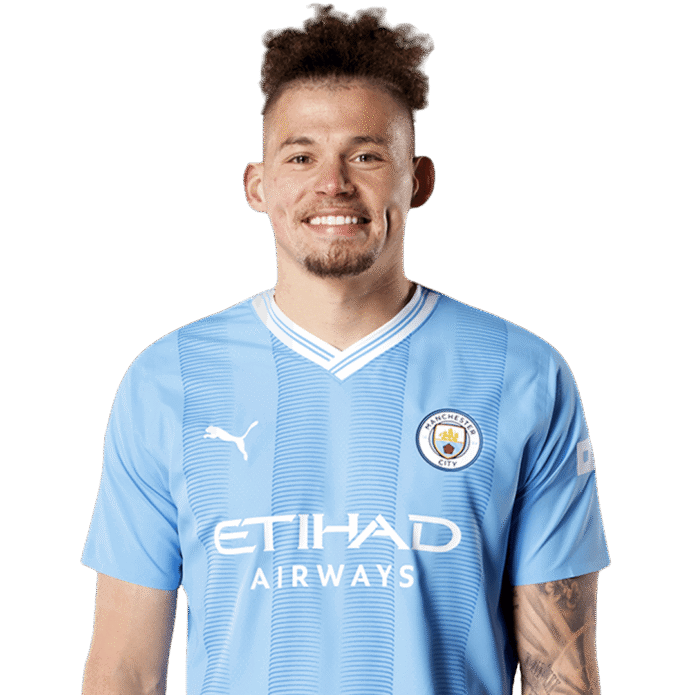
The photographs below are deliberately distributed through the article. Each one is a different original image, and each is placed after prose that explains what the frame can actually show. The gallery uses tattoo-bearing photographs first. They are not repeated crops, resized copies or generic football portraits. The featured image is a separate face-visible player portrait for identification, while the inline gallery concentrates on his visible arm and hand work.
The hand and forearm tattoos in the first match photograph
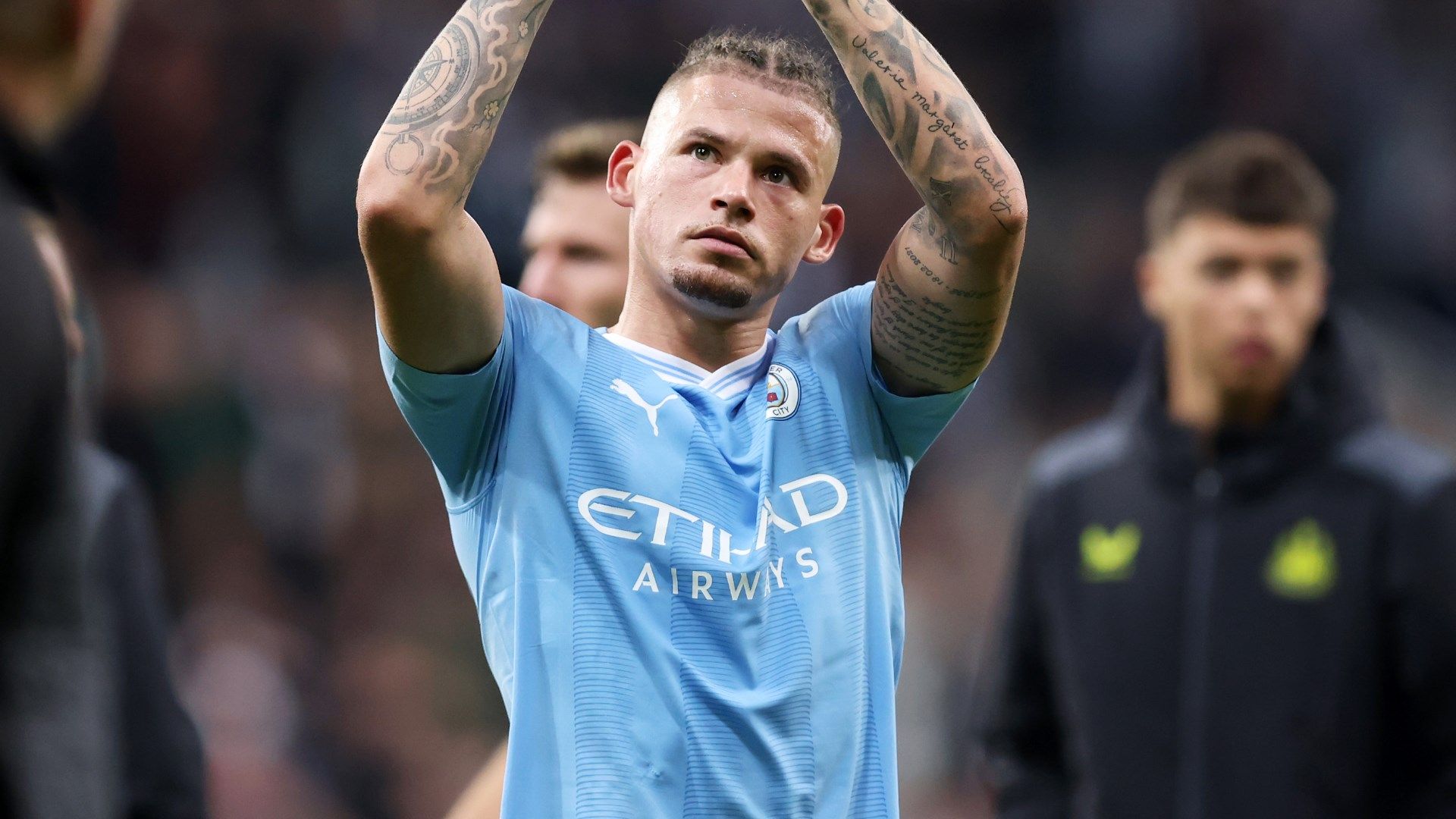
One of the most useful views shows Phillips applauding with both hands raised. The camera catches the back of his hand and the forearm beneath it, where dark linework and shaded forms continue toward the elbow. The face is visible, so the subject can be checked without relying on a shirt number alone. The image is a match photograph rather than a studio tattoo tour, but the raised arms expose a substantial amount of ink.

What this frame establishes: Phillips has prominent tattoo coverage over the hand and forearm, with several designs layered into a larger composition. The image does not by itself identify every figure or confirm when each piece was added. It does, however, show genuine ink on the footballer and provides a useful reference for scale, density and placement.
The hand matters because City Ink identifies the black panther on Phillips’s hand as his first tattoo. The photograph does not need to be treated as a perfect stencil to be valuable. It confirms that the hand piece is part of a broader arm collection and that the work continues beyond the wrist. That relationship between one named first tattoo and a larger sleeve is more informative than a generic portrait in which the hands are hidden.
A Leeds-era view of the memorial tattoos and family work
A separate photograph from Phillips’s Leeds period shows him in a white shirt with the tattooed arm turned toward the camera. The change of kit and setting makes the source visibly different from the first match frame. The black and grey work is easier to read across the forearm, including larger shaded areas and the portrait-style forms that fit with Phillips’s discussion of family remembrance.
The personal story is documented separately: in the SoccerBible interview, Phillips says he has his little sister on his arm and plans to add his grandmother. That statement gives a meaningful explanation for part of the collection, but it should not be used to label every visible shape. A photograph can show an image, a placement and an approximate style. Only Phillips’s own words can establish which family member a particular portrait represents.
This is also why a dated Leeds photograph is useful. Tattoos can expand between seasons, and a later image may show new work that was not present earlier. Keeping the image’s period in mind prevents the article from treating the entire arm as if it appeared at one sitting. The visual record is a timeline as much as it is a catalogue.
The Japanese blossom tree on the right arm
Manchester City’s City Ink feature names a Japanese blossom tree on Phillips’s right arm. A different match photograph shows both arms lifted and exposes that side of the sleeve beneath the short shirt. The light catches the contours of the arm while the face remains clear in the center of the frame. Compared with the previous images, the composition gives more attention to the upper arm and shoulder connection.

Design reading: the visible floral and branch-like forms create a softer counterpoint to the denser blackwork around the hand. The phrase Japanese blossom tree comes from the club’s editorial description, not from an invented caption. That distinction matters when tattoo articles turn recognizable shapes into overconfident names. Here the named design is supported by an official source and a photograph that shows the arm area being discussed.
The image also shows how the sleeve works as a composition. Individual flowers do not sit in isolation; they are connected by shaded transitions, negative skin and other marks. Anyone using the photograph for inspiration should study the flow around the elbow and upper arm rather than copying a cropped flower without considering how it joins the surrounding work.
Script, dates and the inside of the arm
A side-on photograph offers a different angle on the collection. Phillips points across the pitch, and the extended arm reveals a large circular design near the upper forearm, smaller marks around it and script running along the inside of the opposite arm. This is a useful example of why the gallery needs more than one pose. A front-facing celebration image and a side profile expose different planes of the same body.
What is safe to say: the inspected photograph shows script and circular linework on Phillips’s arm. It does not make every word legible, and it does not establish the private meaning of every date or phrase. The article therefore records the visual qualities without pretending that a blurred match image is a readable transcript.
Script tattoos are especially sensitive to image quality. Distance, sweat, motion and compression can change the appearance of a thin line. The best editorial practice is to describe the placement and general form, then return to a named interview when discussing a story. That keeps the photo useful for visual reference without turning uncertain pixels into a false quotation.
The raised-arm celebration frame
Another original frame catches Phillips during a City celebration with both tattooed arms lifted. The shirt, background and posture differ from the earlier examples, and the wider composition makes the full span from hand to upper arm easier to understand. It is still not a tattoo artist’s close-up, but it provides a clear sense of how much of the visible arm is covered when Phillips is moving rather than posing.

Comparison point: the same broad collection appears from a new angle, but this should not be confused with a duplicate asset. The source file is a separate photograph with different framing and a different moment. It contributes a new view of the coverage, especially the relationship between the hand piece, the forearm shading and the upper-arm designs.
Sports photography often gives tattoo coverage an honest scale. A studio crop can make a small mark look enormous, while a full match frame shows how the ink sits on an active athlete’s body. Phillips’s collection reads as substantial even when the camera pulls back. That is useful for readers comparing sleeve ideas, memorial portraits and smaller hand or finger placements.
The memorial collection and Phillips’s own explanation
Phillips has explained that his tattoos are connected to remembrance. In the SoccerBible interview he describes a portrait of his sister who passed away and says that he wants to add his grandmother. The club’s official feature also frames the collection around important people in his life. Those statements make family the strongest documented theme, but they do not license a caption that assigns a name to every visible portrait.
The emotional meaning is important because the designs are not simply decorative sleeve filler. A black panther can be linked to a film that inspired the first piece, while a family portrait carries a different kind of memory. The collection therefore mixes pop-culture influence with private commemoration. That contrast gives the arm its character and explains why Phillips describes tattoos as a way to express memories and things he feels strongly about.
How the collection changed across football clubs
Phillips’s public career supplies a natural chronology for the photographs. Leeds-era images show the arm in one stage of development. Manchester City coverage shows the same body art in newer shirts and later match settings, while the City Ink video documents his own explanations. The images should be read as dated snapshots, not as evidence that every visible design was added at the same time.
This matters for articles about footballers because club changes can make repeated photography look like a complete catalogue. A player may reveal a new piece during a transfer window, cover an old mark with a larger design or simply wear clothing that changes what is visible. Phillips’s tattoos are best understood through the combination of official video, interview context and distinct photographs from different periods.
How the collection fits together
Seen together, the images show a sleeve built from different visual languages. Floral forms, circular geometry, script, shaded portraits and hand work occupy different areas but share the same black and grey atmosphere. The pieces do not look like a single flash sheet. They read as a collection that grew through personal events, family memories and choices made at different points in Phillips’s life.
For tattoo reference: the most useful design point is the way the pieces follow the anatomy. A wrist or hand mark has to move with the joints. A portrait needs enough uninterrupted skin to remain readable. A branch or floral form can bridge sections that would otherwise feel disconnected. The photographs are inspiration and evidence of placement, not a substitute for a consultation with a professional artist.
The later profile photograph and visible upper-arm coverage
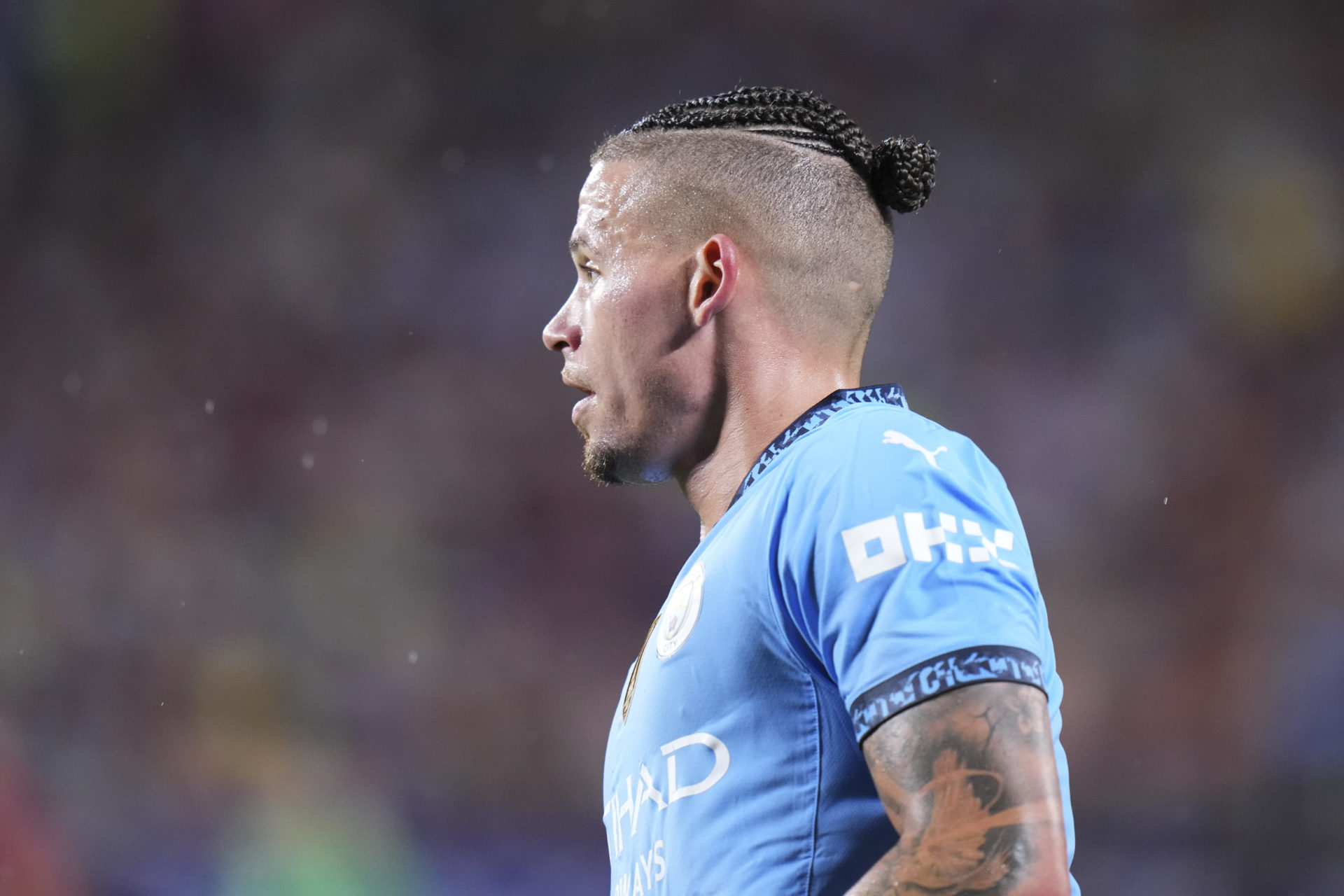
A separate profile image places Phillips in a blue Manchester City shirt and shows a different section of the upper arm. The face is turned to the side, and the visible ink extends below the sleeve in a way that contrasts with the earlier front-facing frames. Because it comes from a different match setting, it adds another independent view rather than repeating the same applause sequence.

Why this image belongs in the record: it demonstrates that the tattoos remain identifiable across different shirts, lighting conditions and body positions. The photograph does not reveal every design, but it supports the broader observation that Phillips’s arm coverage is extensive and visually consistent. It is especially useful for readers who want to understand how a sleeve reads when the arm hangs naturally instead of being raised for a celebration.
The article keeps the claim narrow. It does not name an unseen tattoo, infer a new piece from a shadow or treat a sponsor logo as part of the ink. The source shows Phillips, his face and his tattooed upper arm. That is enough to make it a worthwhile reference image without adding speculation.
Confirmed facts and open questions
The strongest confirmed details are the black panther on the hand, the Japanese blossom tree, and family-related work on the arm. Phillips’s own interview also confirms the memorial purpose of portraits and his intention to continue the collection. The photographs support the existence of extensive hand and arm coverage across several football periods.
Some details remain open. The complete artist list, the exact order of every addition and the meaning of each small mark are not established by the available sources. A source that names a design should be credited for that name. A photograph that only shows a dark shape should be described visually rather than given an invented title. This division protects the reader from turning a plausible guess into a false tattoo history.
A concise visual guide to the collection
Start with the hand and forearm photographs to understand the first-tattoo reference and the density of the sleeve. Compare the Leeds-era frame with the Manchester City images to see how changes in kit, light and posture affect visibility. Then use the official City Ink account and the SoccerBible interview for the meanings that Phillips has actually discussed.
The result is a more useful guide than a repeated gallery of generic football portraits. Six distinct tattoo-visible originals show different angles and periods, while the separate featured portrait identifies Phillips without being counted as inline tattoo evidence. The evidence supports a collection shaped by family, remembrance, football and personal taste, with enough visual variety to study the real placement of the work.
Final notes for readers and artists
Kalvin Phillips tattoos are best approached as a connected personal archive rather than a checklist of symbols. The hand, forearms and upper arms carry different kinds of stories, and the documented family references explain why several designs matter beyond their appearance. The photographs show the ink clearly enough to discuss placement and composition, but the individual meanings should stay tied to Phillips’s own words.
Anyone adapting the ideas should bring clean references to an artist, confirm the design before the needle starts and consider how movement will affect the placement. Phillips’s sleeve works because it follows the body and because separate memories have been allowed to accumulate over time. That is the central design lesson in this visual record: distinct photographs, careful attribution and a personal reason for the work are more valuable than a crowded page of repeated images.
Watch: CITY INK: What film inspired Kalvin Phillips Tattoos? Channel: Manchester City FC. Why it fits: Phillips discusses his own tattoos in the candidate-specific video.