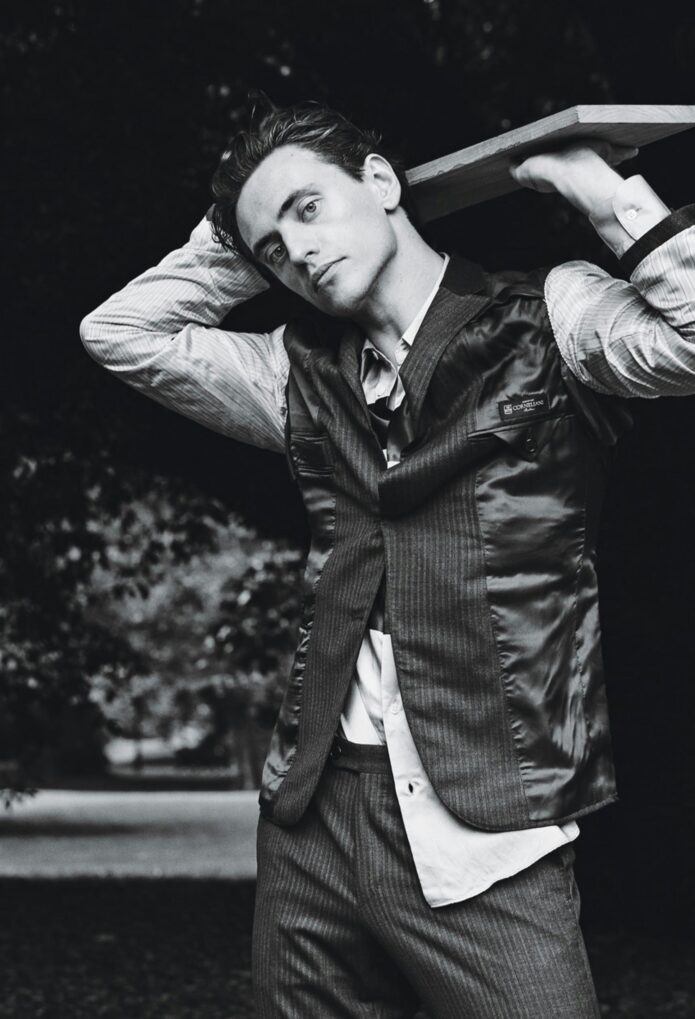
Sergei Polunin has visible tattoos across his shoulder, upper arm, abdomen, chest, hands and wrists. Five inline photographs show them in editorial and outdoor settings; the featured portrait is used only to identify him.
W Magazine portraits show several placements. The Guardian’s 2019 interview covers the Putin chest portrait and Polunin’s explanation, while earlier Guardian coverage describes tiger-scratch imagery across his torso. No source supplies a full inventory.
Sergei Polunin’s shoulder and upper-arm tattoos
W Magazine portraits show dark illustrative ink across Polunin’s shoulder and upper arm. In this frame, the marks follow the rounded shoulder toward the arm, with the rest of his torso still visible.
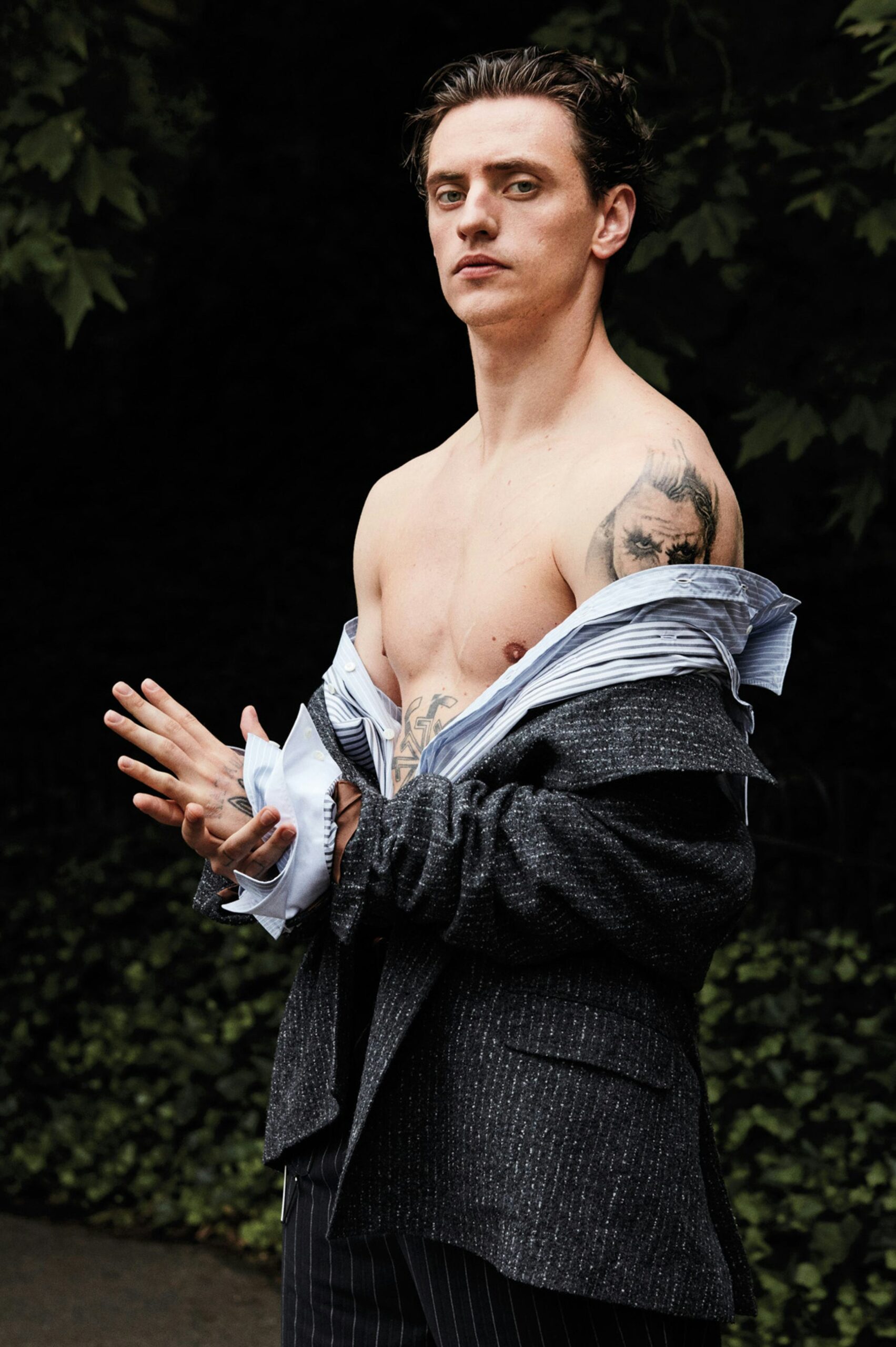
The angle shows how the upper-arm work meets the shoulder. It doesn’t identify the artist, date or every shape in the design.
Scars or other marks are visible nearby, but this photograph doesn’t establish their cause.
The geometric symbols across his abdomen
Several W Magazine photographs show geometric marks across Polunin’s abdomen. In this open-shirt portrait, the central shapes spread toward the side of his torso. The sources don’t give each component an official name.
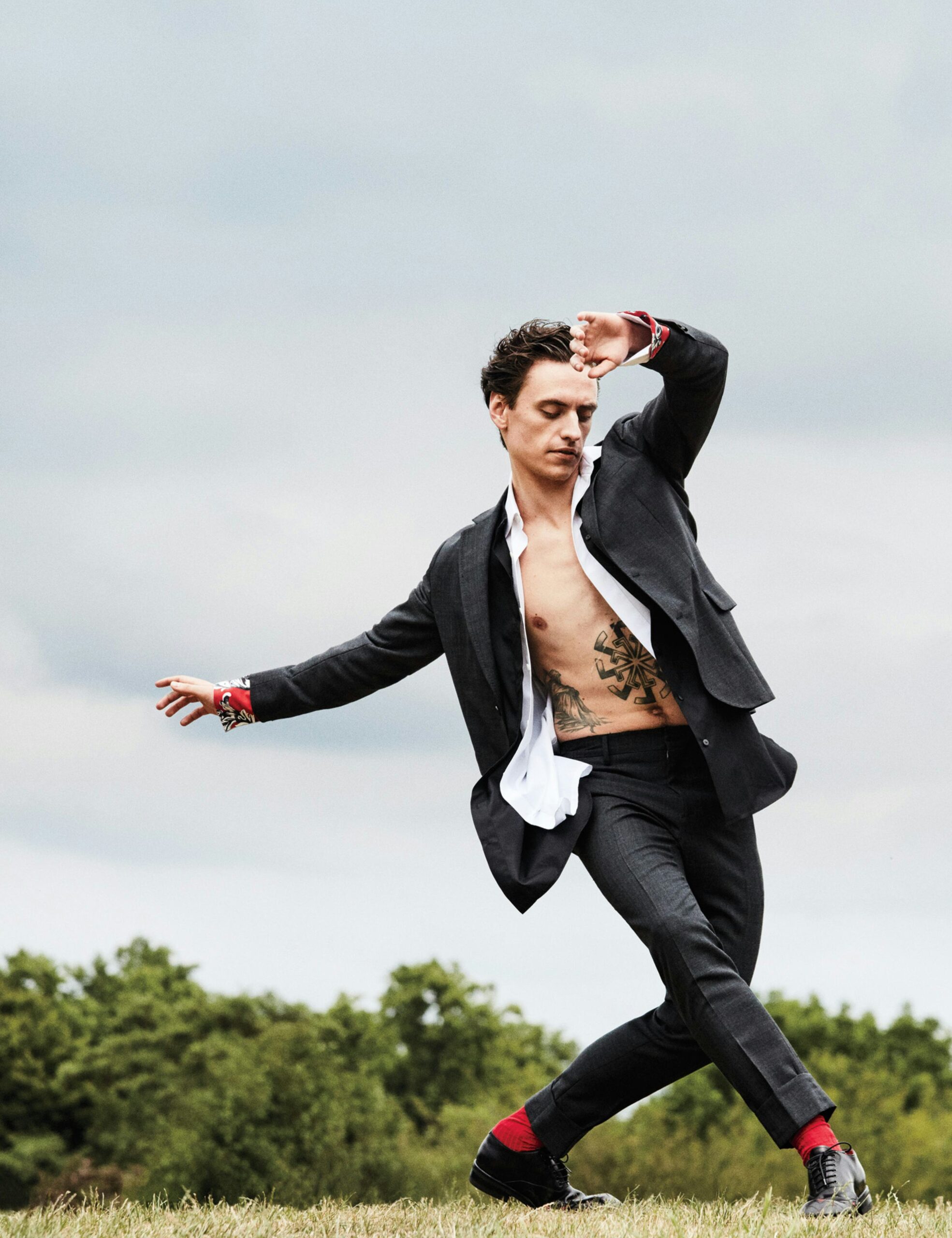
“Geometric” describes the forms without guessing at a symbol name. His pose changes their proportions: leaning compresses the lower edge, while extending through his back and ribs exposes more of the design.
Hand and wrist tattoos in the fashion portraits
A seated W Magazine portrait shows smaller marks on Polunin’s hands and wrists while keeping his face and forearm in frame. The ink sits near joints that bend as he rests or moves his fingers.
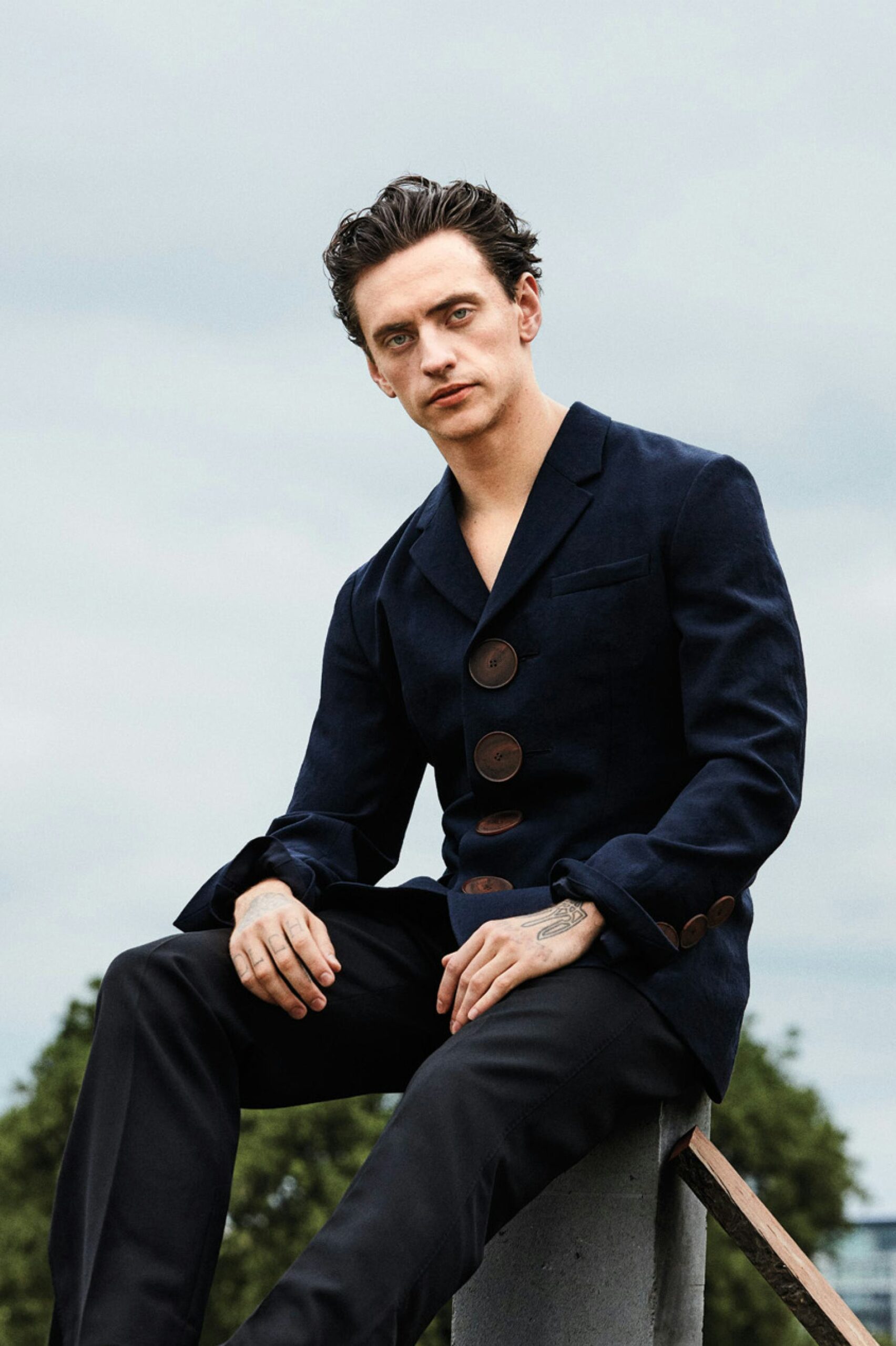
Some lines are too small to read clearly, but the photograph shows where the ink sits. It gives a different view from the torso portraits.
The torso coverage and side tattoos
This outdoor portrait shows several areas at once: shoulder ink, chest marks, abdominal geometry and work near Polunin’s side. Seeing them together helps keep separate designs from being treated as one large piece.
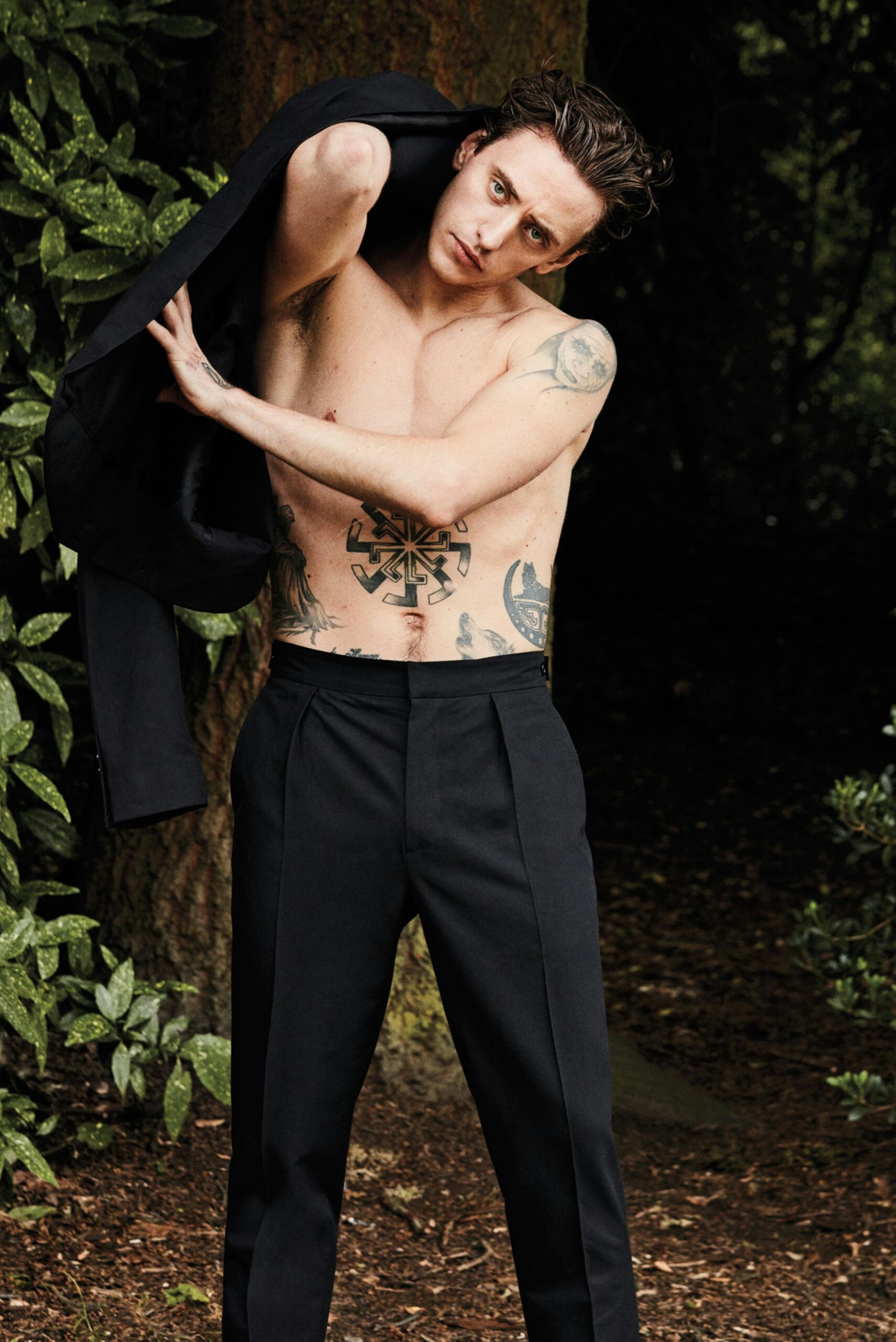
Shadows and nearby marks can make edges hard to follow. A twist in the ribs also reveals one area while hiding another, so the photograph supports visible placement but not a precise outline around every design.
The Putin portrait and the public story around it
The Guardian’s 2019 interview identified a Vladimir Putin portrait on Polunin’s chest and reported his explanation, linking it to his public statements about Russia and Putin. That account gives the design a clearer public history than the other tattoos in this set.
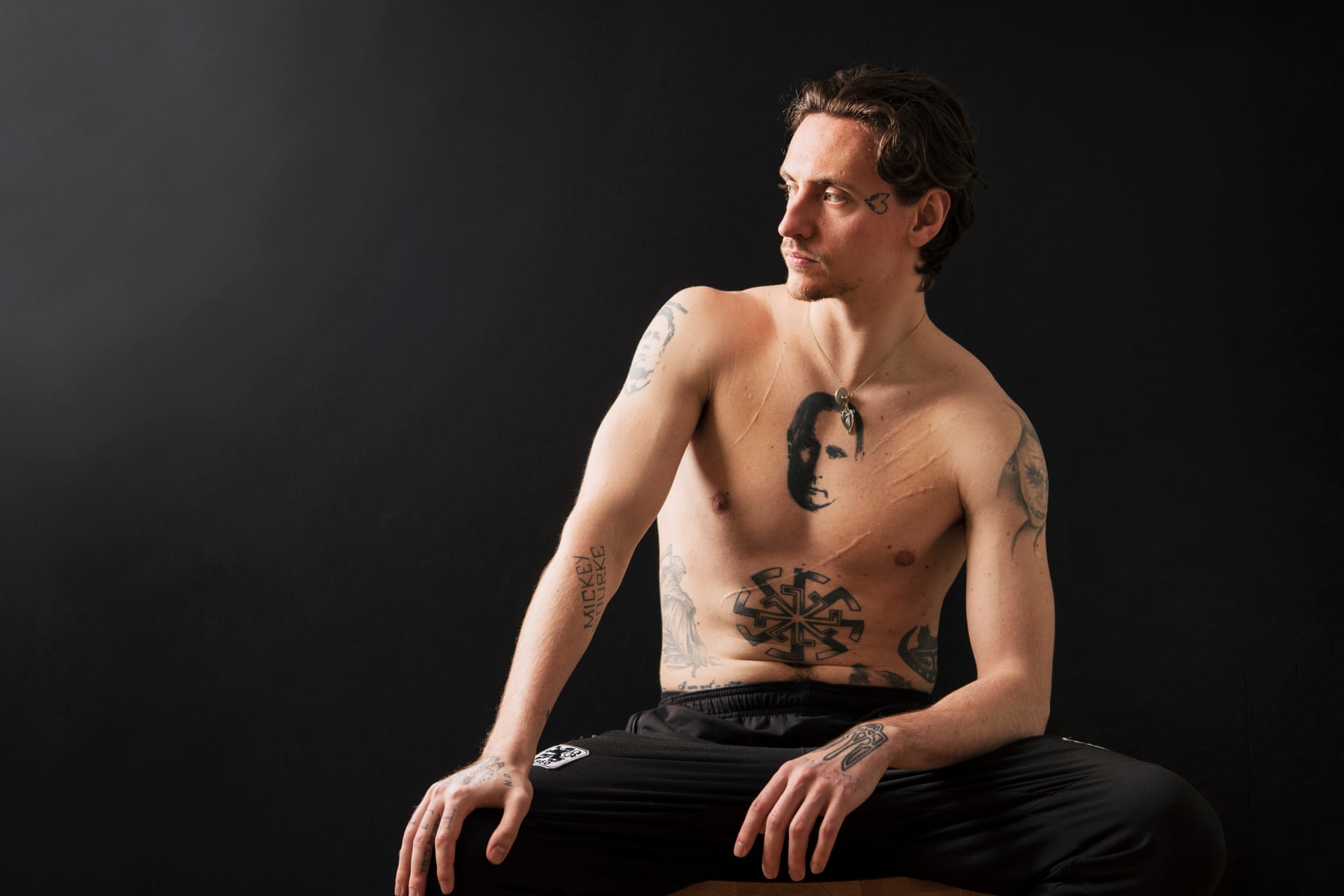
The photograph shows the portrait within a broader chest composition. The interview explains the attention around this design; it doesn’t assign the same subject or meaning to the marks around it.
Tiger scratches, scars and older visual references
Earlier Guardian coverage described tiger-scratch imagery across Polunin’s torso. That phrase is useful as an attributed description, not a technical inventory of every line in a later photograph.
The older report records how the tattoos were described at the time. Later photos and different lighting may show the marks differently; the source doesn’t establish that every detail has stayed identical.
How the photographs show movement through the body
A hand close to the camera can look larger, while a turn through the ribs reveals one tattoo and hides another. These images show a body in changing poses, so no single frame gives the whole view.
W Magazine’s editorial portraits and the Guardian images also serve different purposes. Compare them as separate views rather than treating similar crops as duplicate evidence.
What the published sources confirm and what they cannot
Together, the photographs and named reporting support extensive tattoo coverage across Polunin’s torso and limbs, including the chest portrait discussed in the 2019 Guardian interview and the earlier tiger-scratch description.
The sources don’t establish a current total, a full artist list or the meaning of every symbol. Those details remain open unless Polunin or a named source confirms them.
How to use the images as responsible body-art references
Use the original photographs to compare placement and scale: shoulder ink follows a rounded area, abdominal geometry crosses a wider plane, and hand designs sit near moving joints. The photos document how those areas look in particular poses, not a finished template for another person.
A cropped repost can hide an edge or make separate frames look alike. For a new design, work from a clear reference and discuss scale and placement with a tattoo artist rather than guessing at Polunin’s private meaning.
Polunin’s wider performance identity
Costumes sometimes expose Polunin’s shoulders, chest or arms, making the ink part of the silhouette in performance photographs. The contrast between classical movement and dark illustrative work is visible; it doesn’t explain when each tattoo was made or why.
Performance clip and closing notes
TheEllenShow clip below gives movement context, showing how gesture and extension change the view of Polunin’s body. The editorial photographs and reporting above remain the sources for tattoo placement.
Watch: “Sergei Polunin Performs to Take Me To Church.” Channel: TheEllenShow.